
Contents
Is your skin becoming loose and losing elasticity, with signs of aging gradually showing? Have you tried many brands of RF and ultrasound devices without results? Are you afraid of surgery but still want firm skin again? This article compares the 3 most popular ways to lift and tighten skin: radiofrequency (RF), ultrasound, and facelift surgery. Besides explaining how each works, it tells you who each suits and, finally, gives you a 1-step self-test to see whether facelift surgery is right for you!
What Is RF?
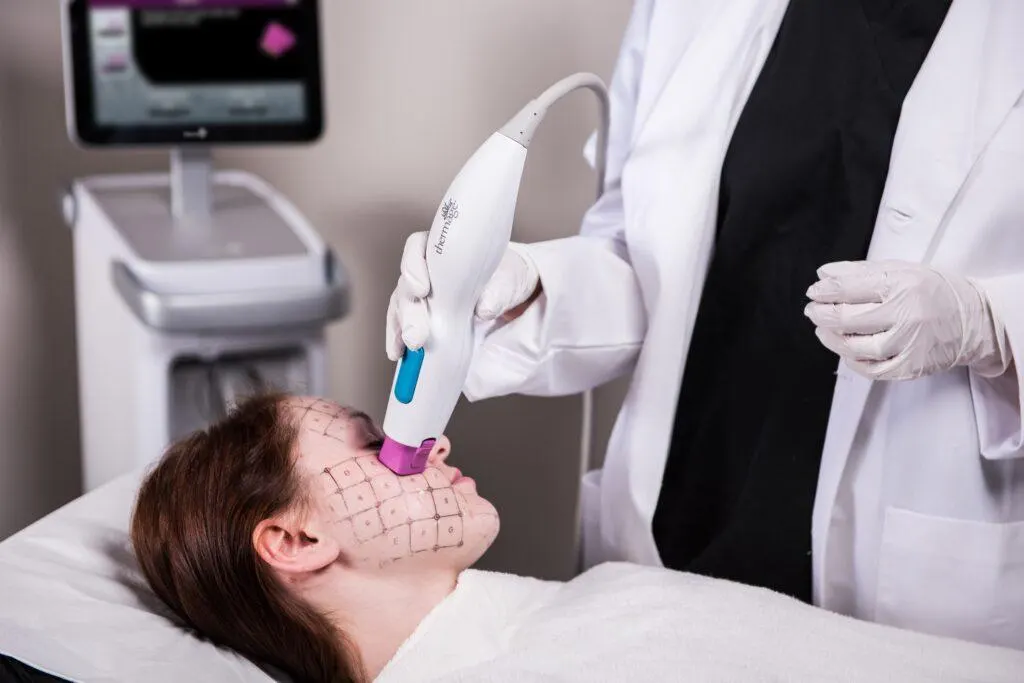
How it works: The energy travels from the epidermis through the dermis to the fat layer, heating the whole block of skin tissue in a 3D, volumetric way from the outside in. You can think of skin tissue as a big piece of meat: when heated, its volume shrinks, and collagen and elastin growth is stimulated. After the collagen is rearranged, skin density increases, which firms facial contours and gives the skin more elasticity, smoothing wrinkles and lines and improving enlarged pores. Results last about 2 years, with no downtime
Who it suits: People with loose, sagging skin tissue or fuller faces, such as those with nasolabial folds, forehead lines, prominent jowls, or sagging cheeks. RF can address these concerns and boost skin firmness so the overall look appears younger.
Common devices: Thermage FLX, Morpheus8, Gold RF
Treatable areas: face, abdomen, arms, waist and hips, neck, thighs, and accessory breast tissue
[Further Reading]
Is Thermage FLX Pricing Reasonable? Are There Side Effects? The 10 Most Common Questions, Answered
What Is Ultrasound (HIFU)?
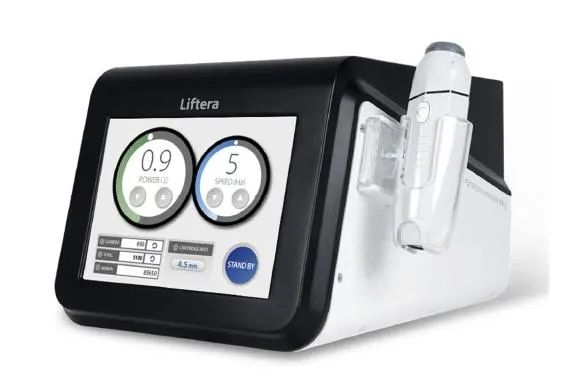
How it works: It uses focused ultrasound to concentrate heat energy into coagulation points, heating the deep fascia layer "point by point" from the inside out. You can imagine the fascia layer as a thin slice of meat that shrinks when it meets high heat. As the fascia contracts, it pulls on the skin tissue and muscle and stimulates collagen growth, producing an upward lift and stronger contours. Results last about 1 year, with no downtime
Who it suits: People whose skin still has elasticity but whose fat is not too thick, such as those with a double chin, baby fat, or sagging facial contours. Ultrasound facial lifting can improve the jawline and make the overall look a size smaller.
Common devices: Ultraformer MPT, Liftera, Doublo, Q+ Ultrasound
Treatable areas: face, abdomen, arms, waist and hips, neck, thighs, and accessory breast tissue
[Further Reading]
Ditch the Cheek Contouring: Lifted, Firmer Skin With Morpheus8, a First-Timer's Experience
What Is Facelift Surgery?
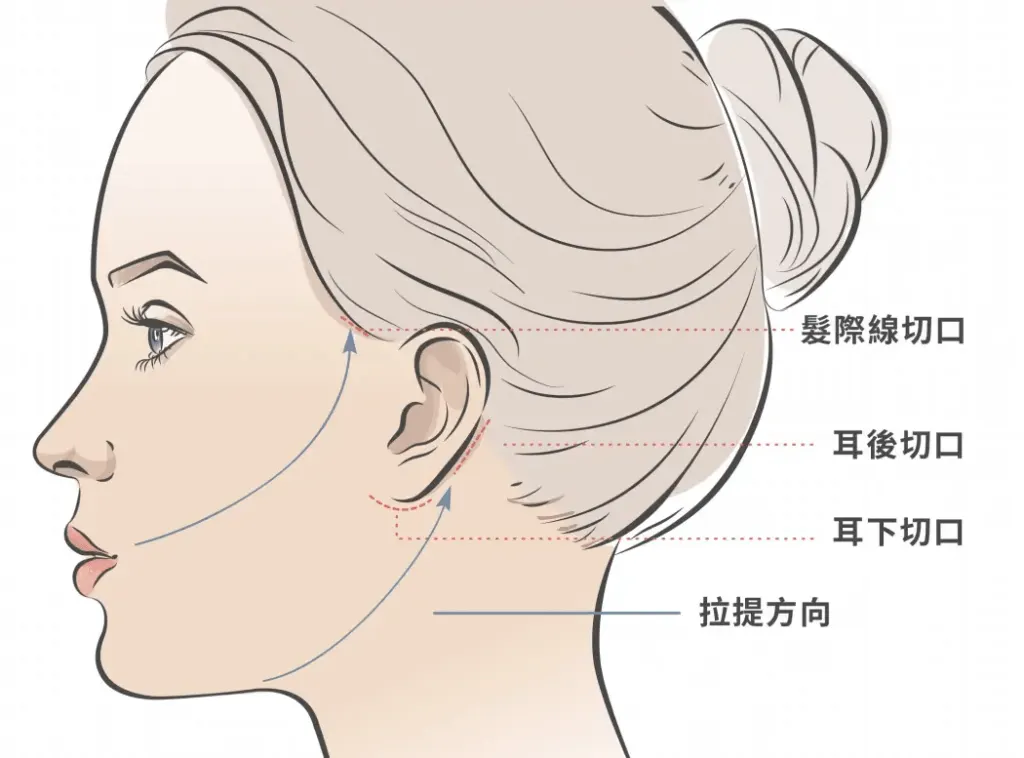
How it works: Surgery is used to fix the tissue and fascia in the desired position and tighten loose skin, and if needed, excess skin is removed, creating a lifting and firming effect. The face is the most common surgical site, but facelift surgery can also be performed on the body. Results last about 8 to 10 years, with a long recovery period.
Who it suits: Drooping brows that press on the eyes, no results from RF or ultrasound lifting, loose abdominal skin after childbirth, severely sagging cheeks, severe nasolabial folds, deep forehead lines, and rapid weight loss in a short time
Treatable areas: face, abdomen, arms, waist and hips, neck, legs
I want to learn about facelift surgery
RF vs. Ultrasound vs. Facelift Surgery
| RF | Ultrasound | Facelift surgery | |
|---|---|---|---|
| How it works | Like ironing clothes with an iron, it tightens the skin's surface | Uses focused ultrasound to lift the skin upward | Cuts the skin, pulls it tight, and removes the excess skin |
| Pain | * | ** | *** |
| Best for | People with loose, sagging skin tissue or fuller faces, such as those with nasolabial folds, forehead lines, prominent jowls, or sagging cheeks | People whose skin still has elasticity but whose fat is not too thick, such as those with a double chin, baby fat, or sagging facial contours | Drooping brows that press on the eyes, no results from RF or ultrasound lifting, loose abdominal skin after childbirth, severely sagging cheeks, severe nasolabial folds, deep forehead lines, or rapid weight loss in a short time |
| How long results last | About 2 years | About 1 year | About 8-10 years |
| Recovery time | X | X | 7 days or more |
| Incision size | X | X | 2 cm or more |
| Treatment time | About 45-60 minutes | About 60 minutes | 2 hours or more |
| Cost | * | ** | *** |
RF vs. Ultrasound: How They Work, Prices, and Who They Suit, All in One Place!
Doctor Reveals: A 1-Step Self-Test for Facelift Candidacy

Dr. Kuo-Chun Liao of NAISS CLINIC says that if you need to lift the skin upward by 3 cm or more before you can feel a tightening effect, facelift surgery may be used. This self-test works not only on the face but on any part of the body with skin, such as bat wings and the abdomen. Not all facelift surgery involves large incisions and a long recovery period. Dr. Liao says the most common facelift areas are the forehead and neck, and both can be done with endoscopic facelift surgery, which has small, scarless incisions and a shorter recovery period.
Dr. Liao also explained why RF and ultrasound lifting fail for some people. These treatments work by stimulating collagen growth to firm and lift the skin, but collagen declines with age. Once a person reaches a certain age, collagen no longer regenerates. The doctor says that at that point, the only option is to tighten the skin with facelift surgery, and then use RF and ultrasound after surgery to prolong the results of the surgery.
This article is for general information only. Results vary from person to person; please consult a doctor in person before deciding on any treatment.