
Contents
- How Thread Lifts Work and Who They Suit
- Is Thread Embedding for Weight Loss the Same as Aesthetic Thread Lifts?
- Approved Types of Lifting Threads
- Can Threads Protrude or Break?
- Do Thread Lifts Risk Disfigurement?
- Aftercare
- How Long Do Results Last and When Will They Show?
- Post-Procedure Complications
- What Procedures Can Be Combined with Thread Lifts?
Does a thread lift ruin your face?? Facial thread lifts have become a trend in recent years. People seeking a small V-shaped face and defined contours choose minimally invasive facial threads over salon treatments or surgery. But the claim that “thread lifts can ruin your face” has been spreading online. Is it true? Are thread lifts really that scary? We have put together everything about thread lifts! Let’s learn how facial thread lifts work, which threads are approved, whether there are complications after the procedure, and more.
How Thread Lifts Work and Who They Suit
The principle of a thread lift is to use barbed, absorbable threads and a minimally invasive approach, so the entry and exit wounds are both very small. The threads act at the junction of the dermis and the fascial layer (that is, the fat layer).
Any loose area can be improved, so thread lifts are relatively flexible in application and suit younger, early-onset sagging cheeks, such as modern office workers whose busy jobs cause cheeks to age and sag early or who develop jowl problems; they also suit older patients who are not suited for surgery because of age, for example because of heart or lung problems. For safety, if they want to improve laxity, threads or a customized approach can deliver a certain degree of improvement.
Of course, many people who have tried other injectable treatments and found the results poor or unsatisfying are also good candidates for a thread lift to achieve a certain degree of improvement. In addition, many patients who have already had a facelift surgery and are still unsatisfied with the result can also use threads to enhance the effect.
What Is Thread-Lift Rhinoplasty? Pros, Cons, and Suitable Candidates Summarized
Before You Get Threads: Things to Know, Details Guide
Is Thread Embedding for Weight Loss the Same as Aesthetic Thread Lifts?
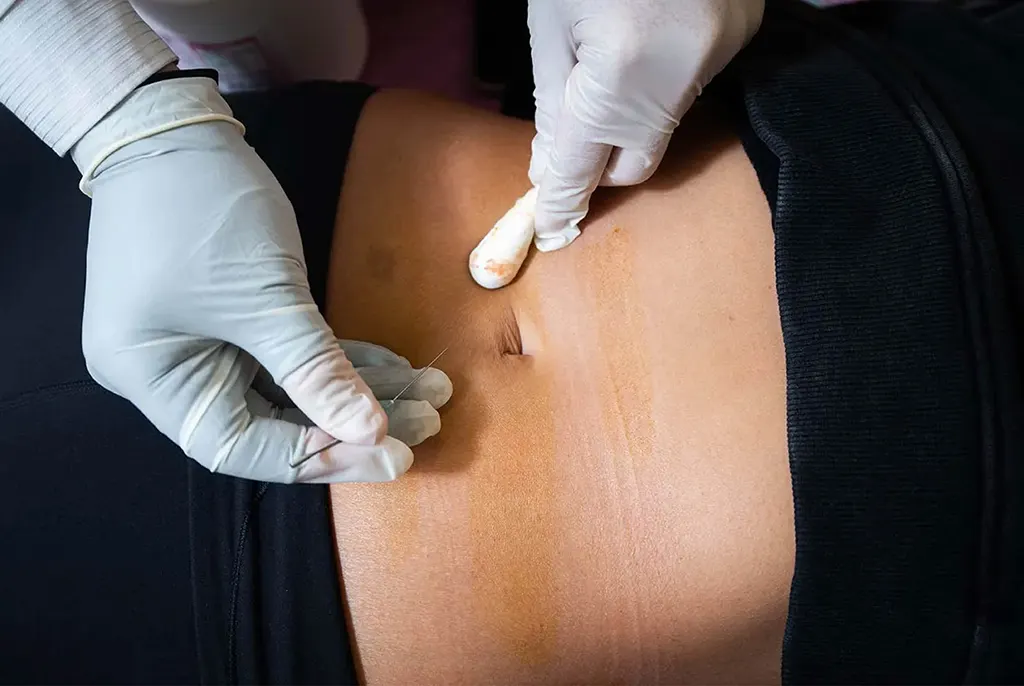
Many traditional Chinese medicine weight-loss clinics now use “thread embedding” together with medication to sculpt the body.
But is thread embedding for weight loss really good? Are there side effects?
Thread embedding for weight loss involves placing threads under the abdominal skin to cause an inflammatory reaction, so that fat is continuously burned over 3-6 months, achieving local slimming. Some experts also explain: “Thread embedding is not actually a therapy from classical Chinese medicine texts; it combines Western surgery with Chinese acupuncture.” The catgut used in Western surgical suturing can be absorbed by the body, so modern Chinese medicine uses acupuncture to implant a small piece of catgut at an acupoint, letting the catgut keep stimulating the acupoint in the body. This shows that the threads and applications used for weight-loss thread embedding differ greatly from those used for facial threads.
| Thread method | Traditional Chinese medicine thread embedding | Aesthetic thread lift |
|---|---|---|
| Material | Catgut | Stratafix fishbone thread, feather thread, rose thread, bell thread |
| Absorbed by the body? | Yes | Yes |
| Duration | Recommended once a week, combined with diet control for better results | Lasts 1-2 years |
| Downtime | None | None |
| Results | The number of sessions needed varies by person, and each session builds on the last. Follow your doctor’s instructions and complete the course, and you will gradually see results! | Immediate results, with collagen continuing to build; the fullest results are seen in about 1-2 months |
Therefore, the thread embedding or Chinese medicine used in weight-loss clinics can help suppress appetite and increase fat burning, but we still remind everyone that in addition to thread embedding, you need to combine exercise and diet control for the greatest effect, so you can slim down in a shorter time and reach your ideal figure!
Approved Types of Lifting Threads
There are many threads on the market, but do you know the four approved types? And how do they differ?
| Stratafix | Quill | V-Loc | Silhouette (Shiliai) | |
|---|---|---|---|---|
| Also known as | Blue Diamond fishbone thread | Feather thread | Rose thread | Bell thread |
| U.S. FDA approved | Yes | Yes | Yes | Yes |
| Taiwan FDA approved | Yes | Yes | Yes | Yes |
| Indications | Soft tissue, fascial layer lift | Soft tissue | Soft tissue | Soft tissue, fascial layer lift |
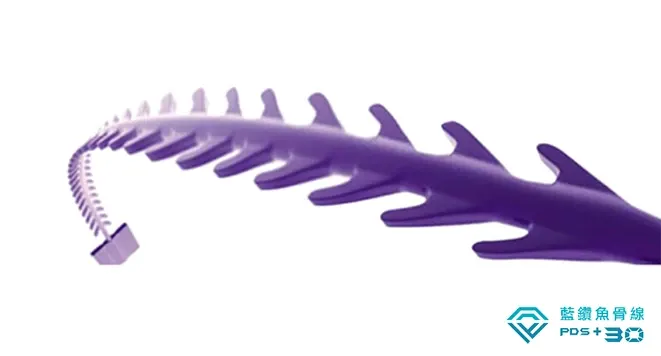
| Thread features | 1. 8 barbs per centimeter, like a fishbone 2. Outer layer has an antibacterial coating that is metabolized | 1. Barbed design 2. Resembles a feather | 1. Barbed design 2. Resembles a rose stem | 1. Several cones on the thread 2. Resembles a bell |
| Material | Absorbable (antibacterial design) | Absorbable | Absorbable | Non-absorbable |
Thread Lift vs. Radiofrequency/Ultrasound Lift? Differences and Common Threads at a Glance
Can Threads Protrude or Break?
A thread lift depends heavily on the doctor’s skill, so besides choosing an approved thread suited to you, you also need to choose your doctor and clinic carefully, since a professional and experienced doctor will give professional advice. From thread selection, entry points, and the skin layer in which the thread is placed to the final fixation, every step matters, so choosing the right doctor can greatly reduce problems such as thread protrusion!
As for whether the threads can break? If you do not follow your doctor’s instructions after surgery and keep getting facials or massaging your face, excessive pulling could cause them to break, and two situations can occur:
1. The thread does not move and stays in the face.
2. Because of gravity, the thread migrates and pushes against the skin, creating a small bump (like a pimple). The thread end then needs to be trimmed out with a needle.
Do Thread Lifts Risk Disfigurement?
As mentioned above, a thread lift seems simple and fast but also tests the doctor’s experience and expertise. If the doctor’s assessment is inadequate or the doctor lacks experience, there is a high chance of “thread protrusion” and “inflammatory reaction,” and in severe cases it may cause disfigurement!!! So choosing your doctor and clinic carefully is how you get the greatest benefit.
Aftercare
1. For 3 days after surgery, follow your doctor’s instructions: keep the tape in place and take anti-inflammatory and pain medication.
2. For 1 month after surgery, do not have any dental treatment or facial massage, and avoid large facial expressions, such as laughing hard or chewing forcefully.
3. You can apply ice 2-3 days after surgery to relieve pain or bruising.
4. For 3 days after surgery, keep the wound and surrounding area clean and dry, and try not to wash your hair, to avoid wound infection.
5. After surgery, swelling and discomfort vary by individual constitution. Itching, a pulling sensation, and tightness are all normal.
6. If you need to apply makeup, do so gently and avoid excessive rubbing.
7. For 2 weeks after surgery, do not use whitening products or other products with irritating ingredients (such as fruit acid and other acid peels, retinoic acid, alcohol, or high-concentration vitamin C).
8. Avoid behaviors that may cause infection or skin irritation (such as facials, exfoliation, saunas, swimming, and hot springs, etc.).
9. Swelling, itching, a pulling sensation, and tightness may occur after surgery. This is normal.
10. For 1 week after surgery, do not smoke or drink alcohol, to avoid affecting wound healing, and take and apply anti-inflammatory medication as your doctor instructs.
How Long Do Results Last and When Will They Show?
Facial thread lifts can last about one to two years, with the duration affected by individual constitution, rate of aging, daily skincare, and lifestyle.
After surgery you will clearly feel skin tightness and a foreign-body sensation, but it does not affect daily life, so there is no need to worry! In addition, the treated area will have a slight feeling of discomfort, which is also normal and gradually heals in about 7-10 days.
Post-Procedure Complications
According to what doctors have said in talks, common side effects and complications of thread lifts include: thread migration or protrusion, skin dimpling, skin wrinkling, redness and swelling, bruising, facial muscle paralysis, abnormal skin sensation, granulomas at the wound, hair loss at the wound, and bacterial infection and other problems.
However, thread lift technology keeps improving. In the past only non-absorbable sutures could be used, but there are now threads the body can absorb, which reduces side effects. Still, minimally invasive procedures like this carry some risk, so they really test the doctor’s skill and experience!
What Procedures Can Be Combined with Thread Lifts?
Other treatments can be combined with a thread lift according to your needs, such as radiofrequency lifting, ultrasound lifting, hyaluronic acid, and Botox treatments, with a professional doctor customizing the combination to make the results more complete and reach overall satisfaction.
This article is for general information only. Results vary from person to person; please consult a doctor in person before deciding on any treatment.