Concerned about uneven skin tone in treatment areas
CHECK IT!
Before & After
Underarm
Arm
Calf
More Case Comparisons
Before beardAfter beard
NAISS Service Process
Consultants understand customer needs
1
Consultation
Numbing cream is applied if needed, based on the treatment area and individual needs
2
Pre-treatment Numbing
Performing Triton hair removal laser to eliminate hair
3
Laser Hair Removal
Post-treatment home care, enhancing moisturization and sun
protection
4
Post-treatment Care
Triton Hair Removal BENEFITS
Multi-Wavelength Hair Removal
Triton combines multiple wavelengths, allowing treatment to be planned around different skin tones, hair thickness and follicle depth, offering a more flexible hair removal option.
Assessment for Diverse Skin and Hair Types
With different wavelength combinations, treatment can be planned around your skin tone, hair color and treatment area. Results vary by individual.
3P Triple Cooling Technology
Cooling before, during and after each pulse helps reduce surface heat and treatment discomfort, making the process more comfortable.
Triton uses multi-wavelength technology with triple cooling, and hair removal is personalized based on skin tone, hair condition and treatment area, offering a more flexible treatment option.
3P Triple Cooling Technology
Triton has 3 cooling stages: a pre-cooling plate cools the skin before the laser fires, the sapphire tip cools during firing, and a post-cooling plate cools again afterward. Cooling before, during and after treatment helps reduce surface heat and treatment discomfort, making the process more comfortable.
Multi-Wavelength Technology and the Hair Growth Cycle
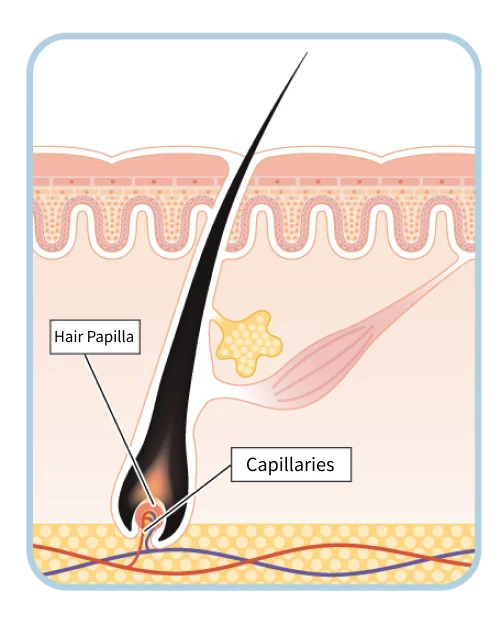
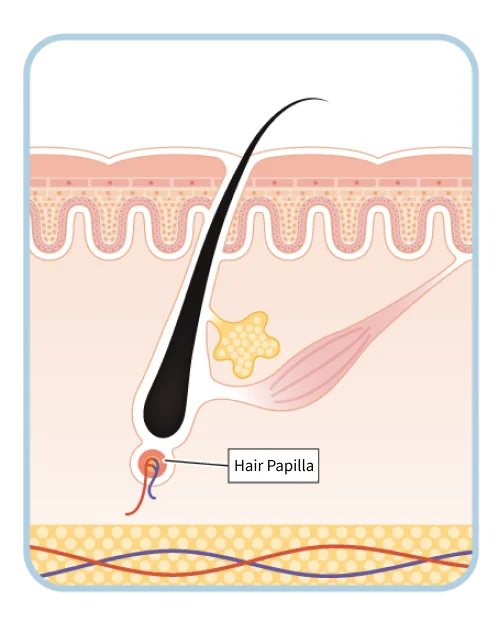
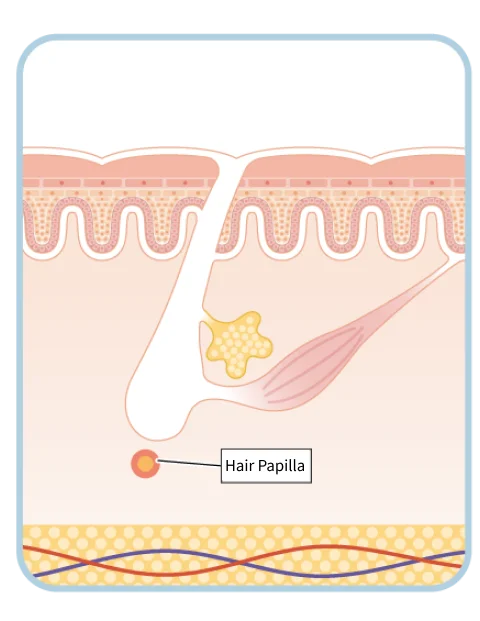
Hair cycles through growth, regression and resting phases, and hairs in the growth phase usually respond best to laser treatment.
Triton combines multiple wavelengths that can act at different depths and on different hair conditions, and a doctor plans treatment based on skin tone, hair thickness and treatment area.
Growth Phase
At this stage, the hair and follicle are intact. Melanin at the hair base absorbs laser energy, and heat acts on follicle-related tissue to reduce regrowth; this is the stage most responsive to laser hair removal.
Regression Phase
Melanin at the follicle base decreases as follicle cells begin to regress, so hairs in this phase usually respond less to laser treatment than in the growth phase.
Resting Phase
As the hair bulb detaches, entering the shedding phase,
almost no melanin is present near stem cells, making this
phase untreatable by lasers.
COMPARISON Triton Hair Removal vs Other
Laser Brands
Comparison
Triton
Alexandrite Laser
Diode (Vacuum) Laser
IPL
Light Source
Multi-wavelength laser
Single-wavelength laser
Single-wavelength laser
Broadband light (not a laser)
Typical Wavelength
755nm, 810nm, 1064nm (depending on handpiece)
755nm
810nm
About 560–1200nm (depending on filter)
Cooling
3P triple cooling
Varies by device
Varies by device
Varies by device
Sessions
All require multiple sessions; the number is assessed by a doctor based on treatment area, hair and skin type
*This table describes common hair removal technologies in general terms. Actual specifications vary by brand, model and handpiece, and results vary by individual.
ATTENTION Triton Hair Removal Laser Precautions
1
Shave the hair in the desired area in the direction of hair
growth a day before undergoing Triton laser hair removal.
2
Avoid excessive sun exposure on the hair removal area.
3
If pregnant or having special physical conditions, consult a
professional doctor before proceeding with the treatment.
Post-treatment Care for Triton Hair Removal Laser
1
Slight redness or swelling around the hair follicles may occur after treatment. Mild redness usually eases gradually, and recovery time varies by individual.
2
Apply ice to the treated area after the procedure to reduce
heat discomfort.
3
Avoid high-temperature environments or excessive sun
exposure for a week after the procedure.
4
Do not overly wipe or exfoliate the treated area after the
procedure.
5
Daily skincare should enhance moisturizing and sun
protection.
FAQ About Triton Hair Removal Laser
The hair follicle cycles through phases of growth, including
anagen (growth phase), catagen (transitional phase), and telogen
(resting phase), with each hair follicle in a different phase at
any given time. Laser hair removal mainly acts on follicles in the anagen phase, which usually respond best to laser treatment, to reduce hair growth. Therefore, multiple
treatments are required to address all hair follicles.
Hair growth cycles vary by body area and individual, so the interval between sessions is assessed based on the treatment area and hair cycle, usually about 4–6 weeks. Since hair in the anagen
phase is most responsive to laser hair removal, multiple
sessions are needed for significant results. The number of
sessions varies based on individual hair growth patterns.
Yes! Shave the day before treatment and avoid excessive sun
exposure on the treated area.
The number of treatments varies by individual hair density. Multiple sessions are usually needed, commonly about 6–10, to achieve long-term hair reduction; the actual number and results depend on the treatment area, hair and skin type.
Triton uses 3P triple cooling to cool the skin before, during and after treatment, helping reduce surface heat and discomfort. Sensations vary by individual.
It is recommended to wait 4-6 weeks between sessions. The growth
speed of hair varies by body part, so the actual interval may be
assessed by the physician.
It is not recommended. Because safety data on laser hair removal during pregnancy and breastfeeding are limited, it is advised to wait until after pregnancy and breastfeeding.