Contents
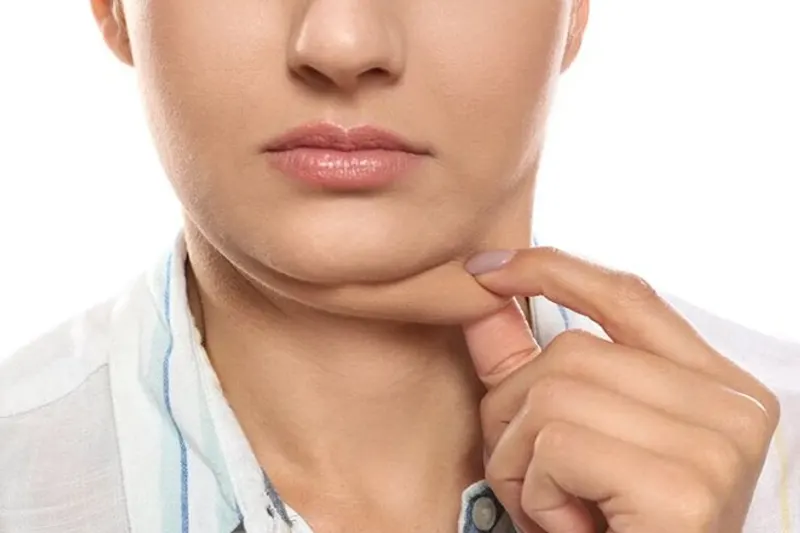
Still relying on fat loss to get rid of jowls? Jowls sag faster than you think. In the process of losing fat, you may lose the jowls but also hollow out your cheeks overall!? Every extra bit of jowl instantly adds years to your age, and your contour and facial dimension gradually fade. Common ways to treat jowls include lipolysis injections, RF and ultrasound, and thread lifts, and each can bring a certain degree of improvement. This article analyzes jowls, helps you work out which type you have so you can understand your own condition better, and helps you find the most suitable approach so you don't end up wasting money!
3 main causes of jowls
Superficial layer laxity: skin and subcutaneous fat
Middle layer fascial laxity: SMAS fascia
Deep layer fat pad sagging: fat pads and fascial compartments
Types of jowls
Type 1 jowls
Tissue hanging down in strips is a problem caused by laxity of the superficial layer. The superficial layer includes the skin and subcutaneous fat, so at treatment time we need to determine whether the current condition is a buildup of subcutaneous fat or whether the skin has also become loose along with it (as one doctor described it, imagine the cheek tissue as a landslide of debris piled up in one place).
If it is purely a buildup of fat, lipolysis injections are no problem! But if the skin is also loose and lipolysis injections are used anyway, it can end up even looser or uneven (once the fat within the skin is removed, there is even less support, so it looks looser than before). So depending on your condition, the doctor may decide whether to pair it with RF and ultrasound treatment.
Read more:
Can lipolysis injections fail? Causes, contraindications, and post-injection massage explained
Type 2 jowls
The fat pad beneath the fascia drops over time, about 0.89 mm per year, which means about one centimeter in ten years. A round lump of jowl tissue (also called the buccal fat pad) shows up at the corners of the mouth. You can notice it in the mirror: when the two cheeks sag asymmetrically, it may be caused by a sagging fat pad!
This type of jowl often occurs in people who have had baby fat all along, so it doesn't happen only to older people! Treating this type not only lifts the entire cheek and restores the original jawline, but also improves hollow cheeks, turning a U-shaped face into a V-shaped face!
Type 2 jowls cannot be treated with lipolysis injections, because the deep buccal fat pad contains firm fat. Treating it with lipolysis injections may cause oil cysts and lead to an inflammatory reaction. Once the fat pad hardens, attempts to remove it will only speed up aging and laxity, and may even risk facial deformity. We therefore recommend deep thread lifting (3rd-generation figure-8 thread sculpting).
Type 3 jowls
When the jawline becomes less defined, there are two causes: a double chin, or loose “fascia.” Visually, the face and neck seem to blend together.
For type 3 jowls, lipolysis injections only treat the symptoms, not the root cause, and doing it is as good as not doing it. The fat is removed, but the loose skin is not improved, so of course there won't be much visible effect. This type of jowl is also best improved with deep thread lifting (3rd-generation figure-8 thread sculpting).
Also, although jowls are divided into three main types, common jowls are usually the “mixed type,” combining 1+2, 2+3, or 1+2+3. So never blindly choose any treatment. Be sure to have a doctor evaluate you so the treatment matches the cause! Spend your money where it counts and make every treatment worthwhile!!
What is the modiolus? How is it different from jowls, and do they affect each other?
There is a structure in the face called the “modiolus,” which visually has a similar effect to jowls. A deeper modiolus makes marionette lines more noticeable, which troubles and confuses many people: how does the modiolus differ from jowls, and can it be removed?
The “modiolus” is where seven facial muscles meet, including the orbicularis oris, depressor anguli oris, risorius, zygomaticus major, levator anguli oris, levator labii superioris, and buccinator. Without it, the face would become very stiff and smiling would look strange, so it cannot be removed, but there are ways to make the modiolus look less noticeable.
The difference between the modiolus and jowls is that the modiolus is a kind of muscle tissue. It cannot be eliminated and becomes more noticeable with age. If you really want to improve it, part of the fat over the modiolus can be removed first, and then the hollow areas around it lifted to achieve improvement. Jowls, on the other hand, are made of fat and the superficial layer of the skin, and can be improved with thread lifts, fat reduction, and RF and ultrasound, while also lifting the face.
How to improve and prevent jowls
How can we prevent jowls before they form, and how can we improve them as they develop? As mentioned above, jowls are tied to aging, and daily habits also have some influence! An irregular routine and a heavily flavored diet can also cause facial swelling, and when tissue accumulates too much water, the skin and subcutaneous fat shift, causing laxity and sagging.
So to prevent jowls, pay attention to your diet and routine every day. You can also use skincare to prevent and improve them: applying moisturizing and firming products with an “upward lifting” motion can effectively slow the degree of aging and laxity.
In addition, as the last step of your skincare routine, you can do a facial massage with “cream.” It helps the skincare products absorb quickly and also reduces swelling!
Minimally invasive treatments
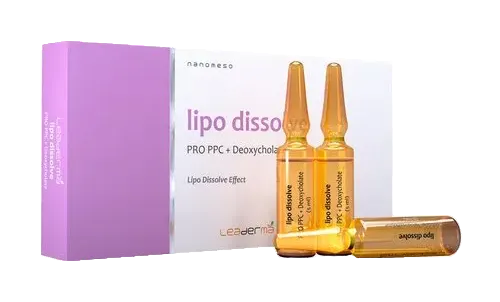
“Lipolysis injection” does what its name says: it removes excess fat. A medication is injected into the subcutaneous tissue, where it acts on fat cells and destroys them, emulsifying the fat cells (breaking them down into small particles) to achieve local fat reduction and sculpting. It is suitable for small areas of superficial fat.
Surgical treatments
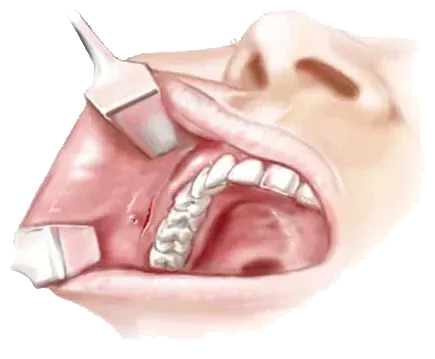
“Buccal fat removal” can improve concerns such as “baby fat” and “noticeably thick cheeks.” Excess deep fat pads are removed from inside the mouth during the surgery. The surgery is safe, recovery after the procedure is short, and the hidden incision needs no stitch removal, so it does not affect daily life.
Finally, a reminder to anyone troubled by jowls: be sure to find your underlying problem and have a professional doctor evaluate it before deciding how to improve it! Only by matching the treatment to the cause can you solve the real problem!
Read more
This article is for general information only. Results vary from person to person; please consult a doctor in person before deciding on any treatment.