Contents
Wrinkles fall into two main categories, dynamic and static. Does your whole face crease the moment you make an expression? How do you deal with expression lines caused by long-term muscle compression? Will dynamic wrinkles turn into static wrinkles over time? How should they be treated and prevented? This is where the wrinkle-fighting hero, botulinum toxin, comes in. This article explains how to tell the two types of wrinkles apart and introduces Botox, the world's best-selling botulinum toxin, and how it can improve facial wrinkles.
Do You Have Dynamic Wrinkles or Static Wrinkles?
1. What Are Dynamic Wrinkles?
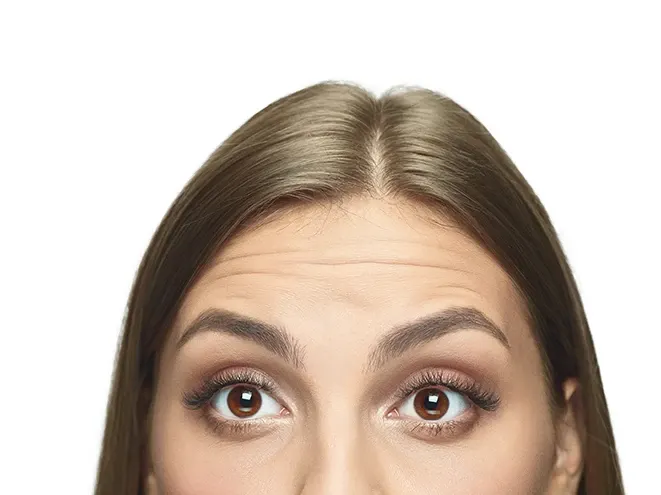
Dynamic wrinkles are wrinkles formed by facial muscle contraction during changes in expression. They occur in areas of facial expression muscle activity and are also called expression lines. Common dynamic wrinkles include forehead lines, crow's feet, and laugh lines. Dynamic wrinkles usually appear only when the muscles contract and disappear when they relax, but if they are not treated in time, then over time, repeated muscle compression combined with skin aging will eventually turn dynamic wrinkles into static wrinkles.
Cause:
When facial muscles contract or stretch, the skin surface is pulled and compressed. Over time, the skin develops lines related to changes in expression.
Treatment:
Botulinum toxin injections
2. What Are Static Wrinkles?
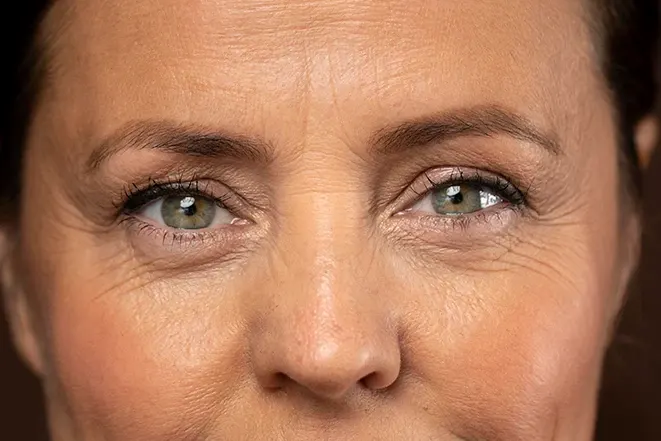
Static wrinkles are wrinkles that remain visible even when you make no expression at all, appearing as obvious depressions. They are also called true wrinkles and usually occur in areas of static facial muscle activity, such as around the eyes, lips, and cheeks. Static wrinkles are further divided into “superficial fine lines,” “shallow static wrinkles,” and “deep static wrinkles.” Common static wrinkles include eyelid lines, nasolabial folds, marionette (mouth corner) lines, and neck lines, among others.
Cause:
The main cause is related to long-term repetitive movement of the facial muscles and aging. As skin tissue loses elasticity with age and collagen is gradually lost, with its support gone, the loosened skin folds and compresses to form lasting wrinkles and depressions.
Treatment:
Hyaluronic acid fillers, collagen stimulators, and RF and ultrasound lifting
3. How to Tell Dynamic Wrinkles from Static Wrinkles
To tell whether a wrinkle is dynamic or static, relax your face in front of a mirror, then make exaggerated expressions and watch how the lines on your face change. If a wrinkle appears during a certain expression and disappears when the face relaxes, it is most likely a dynamic wrinkle. Then relax your face again with no expression and look at the distribution and location of wrinkles. If wrinkles are still present, they are most likely static wrinkles.
How Botulinum Toxin Smooths Wrinkles
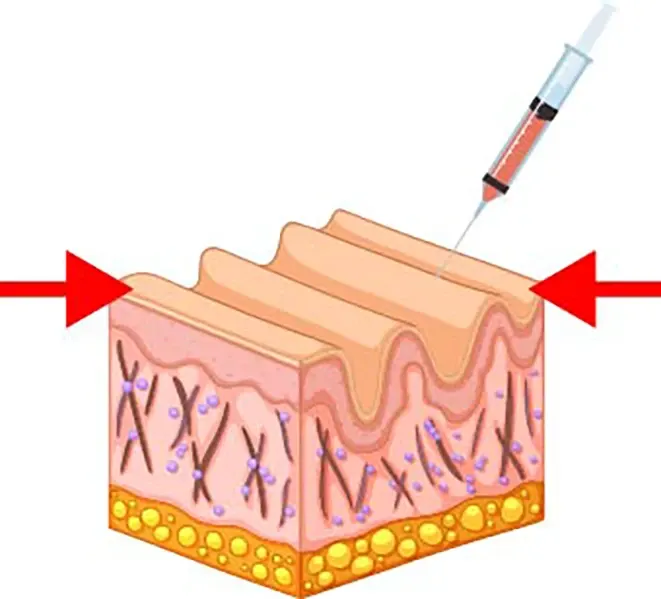
The neurotoxins produced by Clostridium botulinum come in 7 serotypes: A, B, C (C1 and C2), D, E, F, and G. Of these, type A neurotoxin is the most potent and is currently the serotype most widely used in aesthetic medicine. After botulinum toxin enters the body, it binds to nerve endings and inhibits the release of acetylcholine from the nerve endings, so it effectively relaxes the muscles. By paralyzing the underlying muscle, it treats overactive muscles, and once the muscle relaxes, fine lines and wrinkles on the face improve, making skin smoother and younger. It can work on the vast majority of dynamic wrinkles on the face.
[Read more: The Complete Botox Guide: Aftereffects, Precautions, Indications, and Side Effects All in One Place]
The Wrinkle Fighter: Botox
What Is Botox?
Botox is a botulinum toxin brand developed by US aesthetic medicine leader Allergan. Botox has been on the market for over 30 years and was the world's first botulinum toxin product to launch, with more than 100 million vials sold worldwide and approval in hundreds of countries. It is used to improve dynamic wrinkles, masseter muscles, hyperhidrosis, and more. Botox uses type A botulinum toxin, which has the strongest potency and the longest duration.
Conditions Botox Treats
1. Dynamic wrinkles
2. Muscular calves
3. Square face
4. Trapezius hypertrophy (“buffalo shoulders”)
5. Hyperhidrosis
6. Facial lifting

[Read more: Why Can Botox Smooth Wrinkles, Fight Aging, and Slim the Face? 4 Major Botox Effects Explained]
5 Key Features of Botox
1. Made by a well-known pharmaceutical company, No. 1 in market sales
2. More than 100 million vials sold, with high satisfaction
3. FDA approved, for peace of mind
4. Launched in over 100 countries, with wide recognition
5. On the market for over 30 years, with a long and trusted history
Botox vs. Other Botulinum Toxin Brands
The type A botulinum toxins commonly found on the market fall into two categories: Western brands and Korean brands
Western brands: Botox (United States), Dysport (United Kingdom, “Royal Toxin”), Xeomin (Germany, “Angel Toxin”)
Korean brands: Neuronox (known as Meditoxin in Korea), Letybo (known as Botulax in Korea), Nabota (“Rainbow Toxin”)
| Botox | Dysport (Royal Toxin) | Xeomin (Angel Toxin) | Neuronox (Miracle-Skin Toxin) | Letybo | Nabota | |
|---|---|---|---|---|---|---|
| Origin | United States | United Kingdom | Germany | South Korea | South Korea | South Korea |
| Molecular Size | 900kDa | 900kDa | 150kDa | 900kDa | 900kDa | 900kDa |
| Excipients | HSA, NaCl | HSA, Lactose | HSA, Sucrose | HSA, NaCl | HSA, NaCl | HSA, NaCl |
| Storage | 2-8°C, 36 months | 2-8°C, 24 months | Room temperature OK, 36 months | 2-8°C, 36 months | 2-8°C, 36 months | 2-8°C, 24 months |
| Onset Time | 5-7 days | 3-5 days | 2-4 days | 5-7 days | 5-7 days | 5-7 days |
| Time on Market | Longest | Long | Medium | Long | Short | Short |
| Units per Vial | 50/100 U | 300/500 U | 50/100 U | 200 U | 100/200 U | 100 U |
| Features | Long history Widely used Can treat fine areas | Suited to large areas | Free of complexing proteins | First Korean brand developed and launched | High market share in Korea | Suited to Asian patients |
Botulinum toxin mainly treats dynamic wrinkles; for static wrinkles it only softens and prevents them. To effectively improve static wrinkles, we recommend combining it with filler injections such as hyaluronic acid. Everyone's skin is different, so before any treatment you should still consult a professional doctor, who will design a treatment suited to your individual situation.
This article is for general information only. Results vary from person to person; please consult a doctor in person before deciding on any treatment.