Contents
When it comes to treating forehead lines, is Botox the first thing you think of? But why do some people get Botox and see no improvement in their forehead lines, only to end up with brows that press down on the eyes and eyes that won't open fully? It turns out that “this type” of forehead line cannot be improved by botulinum toxin alone! Before you try to get rid of those annoying forehead lines, first understand what causes yours. This article explains it in detail!
Why Does Botox for Forehead Lines Cause Heavy, Drooping Brows?
1. Understanding the Forehead Structure
The forehead is made up of the frontalis, corrugator, procerus, and orbicularis oculi muscles. Among them, the frontalis is the only muscle that helps lift the eyebrows, but it is also the upward contraction of the frontalis that creates forehead lines.
2. How Botox Works on Forehead Lines
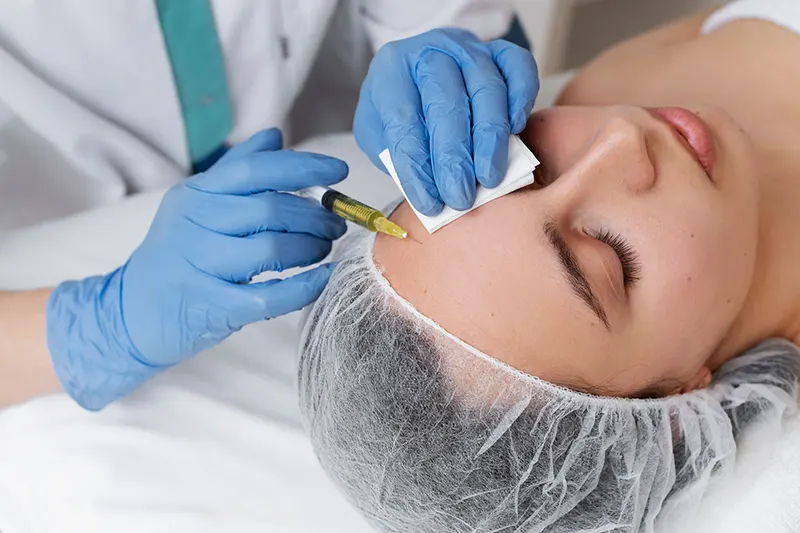
Botox works by relaxing muscles. Injecting botulinum toxin into the frontalis relaxes it and suppresses the overactive muscle, which treats forehead lines.
3. What Causes Heavy, Drooping Brows
When treating dynamic wrinkles in the upper face, inaccuracies in the injection site, depth, dose, or later diffusion can temporarily weaken the muscles around the brows and eye sockets, so they lose the upward lifting force that counters gravity, and as a result the brow or eyelid muscles sag and cover the eyes, causing eyelid ptosis, heavy brows pressing on the eyes, and similar symptoms. This also makes the eyes look smaller, tired, and lifeless.
US influencer Whitney Buha is one example: after a Botox injection, the toxin spread to the levator palpebrae muscle and weakened it, leaving her with a severely drooping right eyelid, uneven brows, and uneven eyes. If this happens, eye drops used for glaucoma can be used for treatment.
Diagnosing Forehead Lines: Ordinary Dynamic Lines
Ordinary forehead lines are mainly caused by repeated contraction of the forehead muscle group. From the eyebrows up toward the top of the head, when the frontalis contracts it creates horizontal wrinkles. Forehead lines that appear only when you raise your eyebrows are “dynamic forehead lines”, and if dynamic lines build up over time they become “static forehead lines,” visible even when you make no expression. Therefore, you should treat dynamic lines as soon as you notice them, to improve forehead lines more effectively.
Learn more:Understanding Forehead Lines! Is There Hope for Deep Lines?
Treating Dynamic Forehead Lines: Botulinum Toxin
Forehead lines caused by excessive muscle contraction can be treated with botulinum toxin injections. As a neuromuscular transmission blocker, botulinum toxin treats overactive, over-contracting muscles and relaxes the muscles that cause dynamic lines, smoothing out wrinkles.
Recommended Botulinum Toxin Brands
1. Botox
Botox is a botulinum toxin brand developed by Allergan, a leader in US aesthetic medicine. It has been on the market for more than 30 years, as the world's first botulinum toxin product to launch. It has sold more than 100 million vials worldwide and is on the market in more than a hundred countries.
2. Neuronox
Neuronox is a botulinum toxin brand from Korea, launched in 2006 by the aesthetic medicine company Medytox. Also marketed in Taiwan as “Qi Ji” botulinum toxin, it has been on the market for more than 15 years and was the first botulinum toxin product developed and launched in Korea. It has sold more than 20 million vials worldwide and is on the market in 60 countries.
Learn more:
Wrinkles Come in Dynamic and Static Types? How Botox Keeps Dynamic Lines from Becoming Static Lines
Diagnosing Forehead Lines: Drooping Brows and Eyelids
If the cause of your forehead lines is diagnosed as drooping brows and eyelids that make you involuntarily raise your eyebrows, so the frontalis pulls upward and creates wrinkles while the forehead skin becomes even looser, it becomes a vicious cycle in which the heavy brows get worse and worse, creating a type of forehead line with “skin laxity plus static lines.” In this case, Botox cannot effectively improve the forehead lines.
Treating Forehead Lines from Drooping Brows and Eyelids: Forehead Lift
The upper forehead is made up mainly of skin and subcutaneous soft tissue. Once it loosens, deep localized wrinkles can appear, and in more severe cases it presses on the eyebrows, which in turn press on the eyes, resulting in “heavy brows pressing on the eyes.”If you are over 45, the forehead skin is severely loose, and static lines are already present, Botox not only has no effect but can make heavy brows even worse. In this case, the drooping brows and eyelids should be treated first, solving the forehead line problem at its root.
1. RF and Ultrasound Lifting
For static lines, RF and ultrasound energy can heat the deeper layers of the skin to stimulate collagen production, firming the skin and reducing wrinkles. This can improve forehead lines caused by laxity, but note that if the lines are very deep, RF and ultrasound treatments can only improve them, not smooth them away completely, and a complete forehead lift still requires facelift surgery.
Recommended treatments:Thermage FLX, 4th-Generation Ultraformer MPT
Learn more:
The Latest Thermage FLX Guide: Treatment Details and Key Points Before and After the Procedure
The New-Generation Ultraformer MPT: 3 Types of People Who Shouldn't Miss It!
2. Facelift Surgery
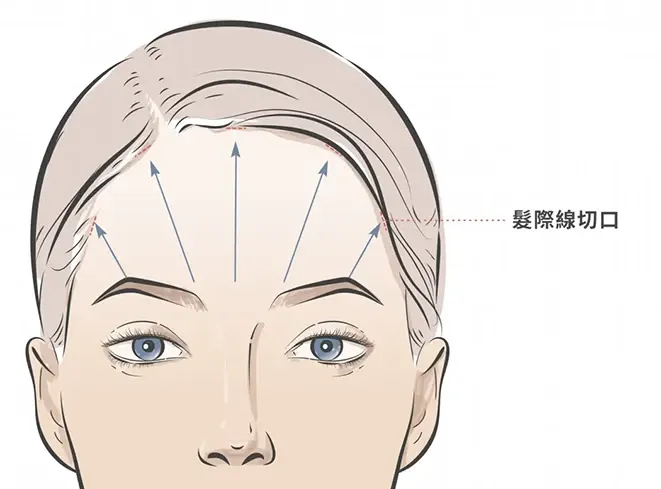
Forehead and brow lift surgery is performed endoscopically, re-lifting the loose, sagging tissue beneath the deep periosteum, restoring firmness and radiance to the skin and forehead, treating heavy brows pressing on the eyes and also improving forehead lines, frown lines, fine lines around the eyes, double eyelid problems, and more.
Learn more:
This article is for general information only. Results vary from person to person; please consult a doctor in person before deciding on any treatment.