Contents
The amount and thickness of body hair are determined at birth, but whether you have a lot or a little, more and more people now groom or remove it (underarm, arm, and leg hair, as well as intimate areas and facial hair). Common methods include shaving with a razor, waxing, depilatory cream, and laser hair removal. With more and more hair removal methods on the market, at different price points, which one is right for you? Do different body areas call for different methods? This article analyzes and introduces hair removal. Let's take a look at the hair removal basics you need to know!
What Is Honey Wax / Hot Wax Hair Removal?

Honey wax and hot wax hair removal mainly relies on the stickiness of wax to pull hair out. Honey wax is made of honey, sugar, lemon juice, and unrefined resin. It is mostly used on larger areas such as the thighs and calves, and the hair must be at least 1.5 cm long to be removed more easily. It is mainly applied as cold wax together with depilatory wax, pressed on and then ripped off. Because honey wax is extremely sticky, it grabs the skin as well as the hair during removal, and this pulling makes the pain more noticeable.
Hot wax hair removal literally means heating the wax. Once it reaches a temperature close to that of the skin, applying it opens the pores, so hair can be removed more easily and with less pain. After waiting for the wax to harden and grip the hair, it is ripped off. There are no particular restrictions on the area, so it works for both large and small areas, and the hair only needs to be 0.3 cm long.
The biggest problem with honey wax hair removal is that "it hurts." It also works by pulling out the hair from the pore opening.Honey wax hair removal is better suited to people with fine hair, for example people who naturally have fine hair, or fine hair in certain areas (whole body, face, arms, back) that is so fine that even lasers cannot remove it. In these cases, honey wax hair removal is recommended. In addition, fine hair is also less painful to pull out; but for underarm hair and hair in intimate areas, it will really hurt.
P.S. Pre-delivery hair removal for pregnant women: hot wax hair removal is recommended.
What Is Laser Hair Removal?
Laser hair removal is currently the most popular hair removal method, and new devices keep appearing. The principle of laser hair removal is that melanin selectively absorbs laser light especially strongly, and the treatment mainly targets follicles in the growth phase, because at this stage the follicles contain a lot of melanin, which absorbs intense heat and destroys the follicle, suppressing or delaying hair growth.
What about follicles in the regression and resting phases? At these stages the follicle contains little melanin, and what is there is faint, so it absorbs hardly any heat energy and has no chance of being destroyed.
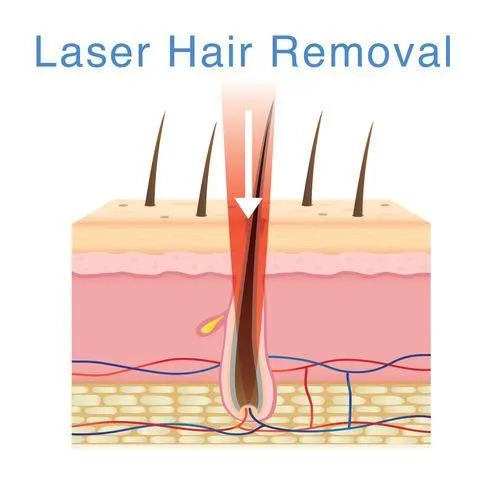
Please note: at any given moment, some follicles are in the regression and resting phases! This means that no matter when you go for hair removal, there will always be hairs that cannot be removed! So hair removal is not ineffective; rather, each hair has a different growth cycle. To achieve so-called "permanent hair removal," you must be very diligent about regular sessions! If you only go once every two months, results will suffer considerably, and the money you invest will be wasted!
Is Hair Removal Permanent?
Hair removal falls into two types: "semi-permanent hair removal" and "permanent hair removal."
Semi-Permanent Hair Removal
This works more like treating the hair shaft, so it is much less painful than permanent hair removal. In fact, semi-permanent hair removal burns the hair off, which gives immediate results, but since the hair root is not treated, hair will still grow back after the treatment.
Permanent Hair Removal
Because the laser penetrates deeper, you may feel it more. After a permanent laser treatment, the hair gradually stops growing.A single permanent hair removal session clears roughly 7-8% of the hair, so to see a noticeable difference, we recommend five to six sessions; if you want the hair removed extremely thoroughly, you may need around 10 to 20 sessions. (The actual number of sessions depends on how often you go and how much body hair you have!)
Understanding the Hair Growth Cycle
Before hair removal, you need to understand the hair growth cycle so you can remove hair at the right time, in the right phase, for the best results.

Hair growth has three phases:
The growth phase (anagen), the regression phase (catagen), and the resting phase (telogen). The length of hair in each phase varies by body area.
1. Growth Phase (Anagen):
Accounts for 85-90% of the whole cycle; the hair shaft and follicle are both fully intact at this stage. The melanin at the hair root absorbs heat and destroys the neighboring stem cells, so this is the best time for laser hair removal.
2. Regression Phase (Catagen):
About 5% of hairs are in the regression phase. After a growth phase of 1 to 6 months, hair growth briefly stalls. Melanin at the follicle root gradually decreases and the follicle cells begin to die off. There is less melanin near the stem cells at this stage, but Triton hair removal, with its combined wavelengths, can still treat hair in this phase.
3. Resting Phase (Telogen):
10-15% of follicles enter the resting state and shed; the hair bulb gradually moves away from the follicle, and the hair enters the shedding state. There is almost no melanin near the follicle stem cells, so this is a phase of the growth cycle that laser hair removal cannot treat.
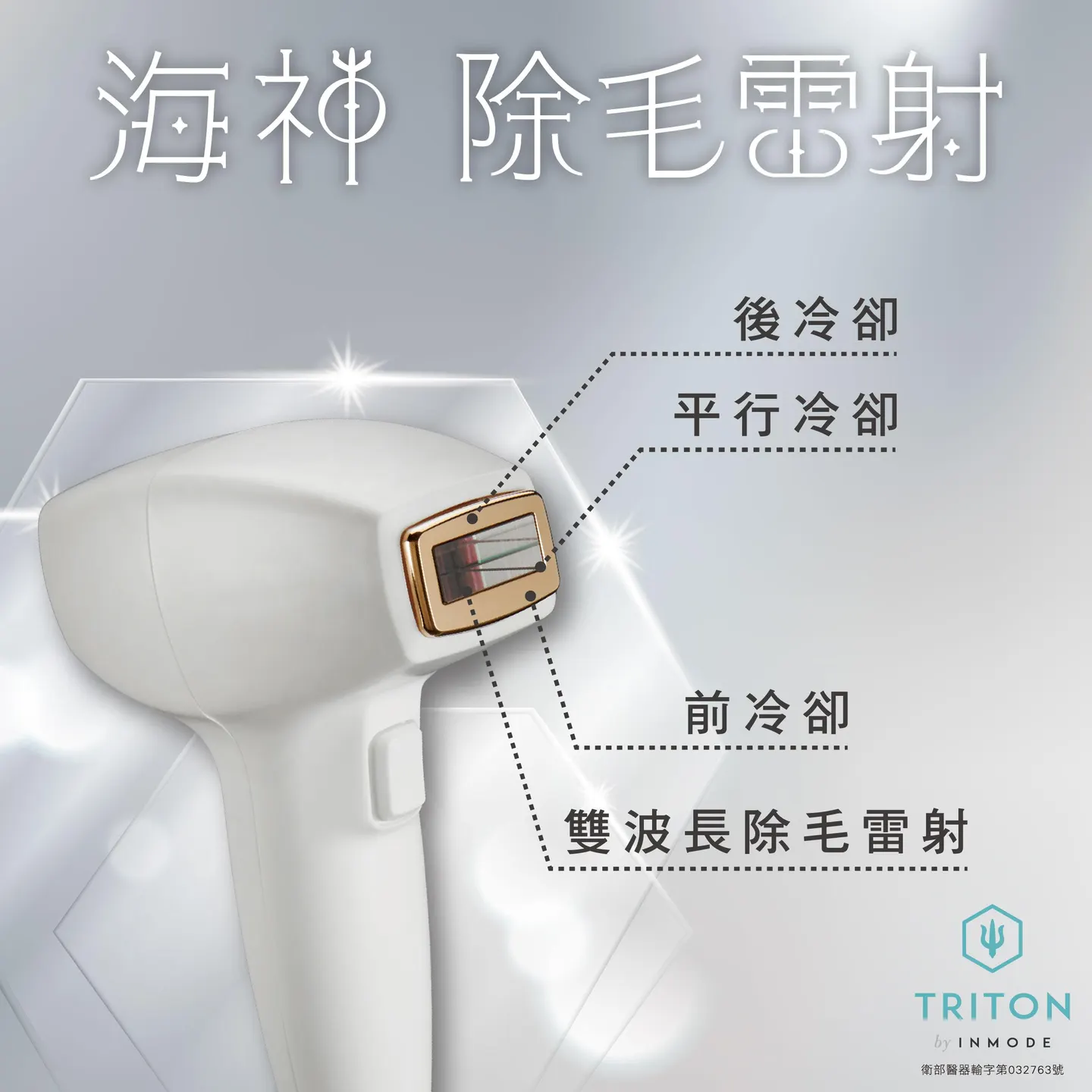
Triton hair removal has the advantage of combined wavelengths, which lets it treat hairs in both the growth and regression phases at the same time, removing new follicles and deep-seated hair together. It is a highly efficient laser hair removal treatment.
Waxing vs. Laser Hair Removal: How to Choose?
As described in the previous sections, each method suits a different group of people. If you really have to choose between hot wax and laser hair removal, start by making your end goal the top consideration! If you want to achieve no regrowth at all, you can consider laser hair removal (such as Alexandrite or Triton); if you prefer enjoying clean, smooth skin, or only want to slow hair growth and keep hair from looking so untidy, hot wax hair removal is a very suitable choice.
Of course, many people use both: after laser treatment, they remove the few remaining hairs with hot wax for even better results!
Before Hair Removal: Do You Need to Leave Some Hair Length?
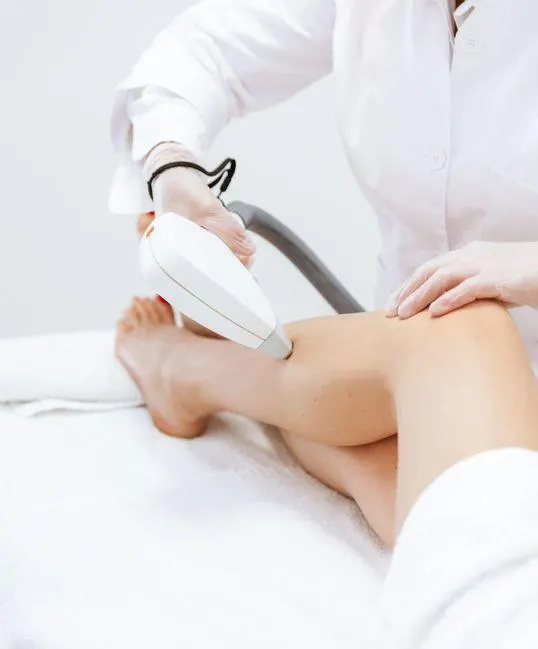
Precautions before hair removal vary slightly depending on the method you choose; some devices require more hair length to be left, while others do not. Whether to leave hair depends on the device. Generally, with direct laser treatment, a little hair must be left so it can absorb the energy to achieve hair removal; but a vacuum-assisted hair removal laser uses vacuum suction to lift the epidermis and bring the hair close to the energy, so the laser energy directly destroys the follicle tissue. So preparation before laser hair removal differs depending on the device.
Laser Hair Removal Pre- and Post-Treatment Care Tips
1. Laser hair removal is not suitable for people with diabetes, pregnancy, photosensitivity, cancer (especially skin cancer), or epilepsy; those taking photosensitizing medications; those with a herpes simplex infection in the treatment area or a history of keloids; those with sensitive, damaged, or extremely dry skin; those taking anticoagulants or with a history of clotting disorders; or those with an unhealed skin condition in the treatment area (psoriasis, vitiligo, lupus)
2. Shave the treatment area in the direction of hair growth the day before the procedure, and avoid excessive sun exposure
3. Apply ice packs after the procedure to reduce the warm sensation
4. Avoid soaking in a bath, steam rooms, dry saunas, or other sauna facilities for one week
5. Wash the treatment area with lukewarm water; do not rub hard or use exfoliating products
6. In your daily routine, step up moisturizing and sun protection
Aesthetic Hair Removal This Summer: A Complete Guide to Aftercare and FAQs
This article is for general information only. Results vary from person to person; please consult a doctor in person before deciding on any treatment.