Contents
- Regaining Weight After Dieting? What Is the Yo-Yo Effect
- Understanding the Active Ingredient in Weight-Loss Injections: GLP-1
- 6 Benefits of Weight-Loss Injections
- What the Weight-Loss Injection Looks Like
- How Do You Use the Weight-Loss Injection? The 6 Steps Explained
- How Often Do You Inject a Weight-Loss Injection?
“Eat less, move more” is genuinely difficult for busy modern people who eat out all the time. This creates the dilemma of not being able to lose weight no matter what, or even a vicious cycle of dieting and regaining. Now a new weight-loss aid has appeared on the market: the weight-loss injection! It is notably effective at suppressing appetite and breaking a sweet-tooth habit, helping weight loss go more smoothly. Let’s use this article to learn about the weight-loss injection and how to use it correctly.
Regaining Weight After Dieting? What Is the Yo-Yo Effect
The Yo-Yo Effect
In order to lose weight quickly, dieters adopt extreme dieting methods, causing rapid weight loss. Over time, however, this extreme dieting causes negative psychological reactions in the dieter, such as depression and fatigue. Eventually the dieter returns to their previous eating habits, which leads to rapid weight rebound. In the yo-yo effect, the dieter initially succeeds in losing weight, but because the weight rebounds rapidly afterward, they start dieting again, forming a cycle.
Everyone on a weight-loss journey has heard the principle “control what you eat and get moving”! But to actually maintain weight-loss results, “70% diet, 30% exercise” is the key, which means “eating less” matters more than “moving more.” However, during weight loss, the body’s protective mechanisms trigger an alarm system and release large amounts of hunger hormones, which instead makes the body more inclined to take in high-calorie foods and store fat. This leads to the “yo-yo effect” of finally losing weight and then regaining it again and again.
This rapid rebound is especially likely to happen with drastic methods such as rapid short-term weight loss, dieting, or fasting. So how to satisfy your appetite without taking in too many calories is a big challenge for modern people who eat out constantly and live busy lives.
Understanding the Active Ingredient in Weight-Loss Injections: GLP-1
“Weight-loss injections” are actually incretin GLP-1 injectable drugs, which have set off a craze because of their significant weight-lowering effect. In some controlled studies, incretin GLP-1 drugs have shown weight loss of up to 20%, and they were once regarded as the most effective weight-loss drugs to date. Before learning about weight-loss injections, let’s first understand what GLP-1 is:
What Is Incretin GLP-1?
Incretins are gut hormones secreted by L cells (endocrine epithelial cells) in the distal ileum and part of the large intestine. They include glucagon-like peptide-1 (GLP-1) and glucose-dependent insulinotropic polypeptide (GIP), which help secrete insulin and suppress glucagon secretion, thereby regulating blood sugar.
How GLP-1 Works in the Body
After you eat, GLP-1 begins to be secreted once food enters the intestine. Its effects on various organs are as follows:
Although GLP-1 seems miraculous, the gut hormones the body makes on its own last only a very short time and quickly lose their effect, and in people with type 2 diabetes the duration is cut to half that of a normal person. Many pharmaceutical companies have therefore worked to develop GLP-1 receptor agonists with a similar structure, to prolong gastric emptying and the duration of the fullness effect and to improve quality of life for diabetes patients. As medical technology has advanced, similar technology has extended into weight management. Among them, the Danish pharmaceutical company Novo Nordisk launched the first injectable approved by both the US FDA and the European EMA that people without diabetes can also use for everyday weight management: the Saxenda weight-loss injection.
6 Benefits of Weight-Loss Injections
What Is the Saxenda Weight-Loss Injection?
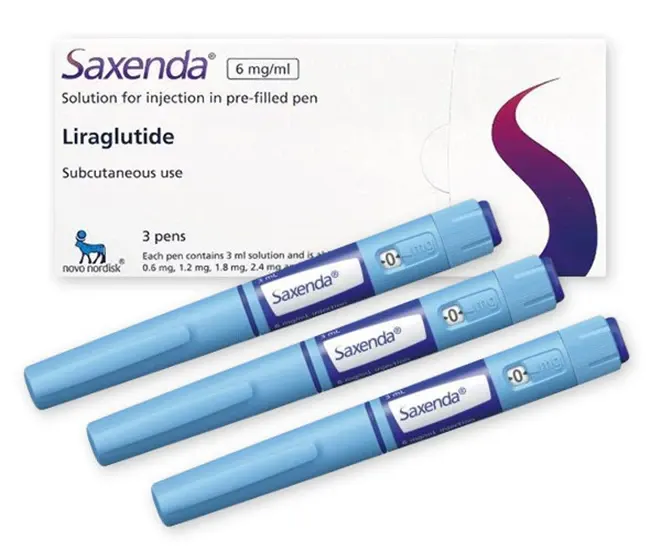
Saxenda® is adapted from Victoza, the prescription drug originally used only for type 2 diabetes patients, and was developed specifically for the weight-loss indication in general adults. Saxenda is up to 97% similar to the GLP-1 the body uses to regulate appetite, but acts longer than the fullness hormone the body secretes naturally, with a half-life of up to 13 hours. Taken once daily, it can reduce hunger and increase fullness, thereby reducing the problem of obesity caused by eating too many calories or being unable to lose weight over the long term, and it can also reduce stubborn visceral fat. Because of its method of injection and its appearance, it is also called a weight-loss injection, weight-loss pen, and other nicknames. It was approved by Taiwan FDA and entered the Taiwan market in 2020.
6 Benefits of the Saxenda Weight-Loss Injection
Learn more:Losing Weight With a “Weight-Loss Pen”? Beware of Side Effects, and Who Should Never Use It!
What the Weight-Loss Injection Looks Like
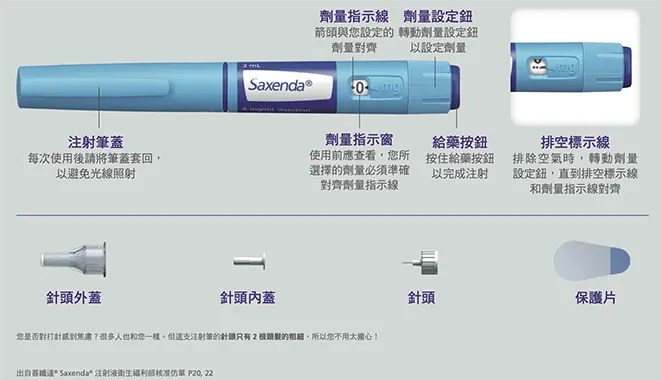
Although Saxenda is also called a weight-loss injection, it has a pen-shaped, pre-filled injector design, which makes it very easy to use and is why it is also called a weight-loss pen.
Because Saxenda must be kept refrigerated (2-8°C) before opening, when you receive it you must check that it has been kept cold, check that the solution in the pen is clear and colorless, and note that it should be refrigerated after opening and used up within one month.
- Pen cap: Put the cap back on after each use to keep light from degrading the medication
- Needle: Disposable, single use. The needle is only about as thick as 2 hairs, so even people who are afraid of pain can inject with confidence
- Dose pointer: The selected dose must line up exactly with the dose indicator line
- Dose selector: Turn the dose selector until the dose window shows the dose you want to inject (0.6 to 3.0 mg)
- Injection button: Press and hold to inject the dose
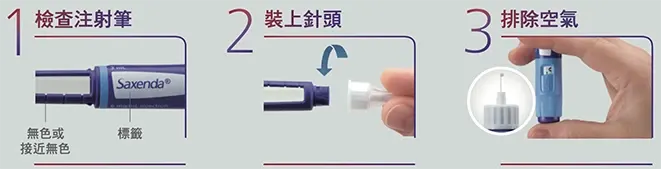
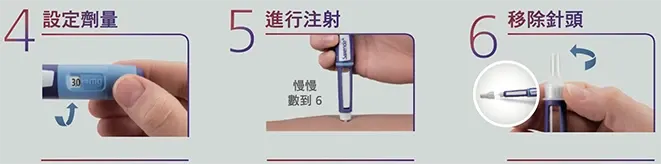
How Do You Use the Weight-Loss Injection? The 6 Steps Explained
Saxenda Injection Sites
Step 1: Check the injection pen
Step 2: Attach the needle
Step 3: Prime out the air
Step 4: Set the dose
Step 5: Inject
Step 6: Remove the needle
Learn more:Influencer Tested: Is the “Weight-Loss Pen” Really Effective? 6 kg Lost in Under a Month?
How Often Do You Inject a Weight-Loss Injection?
The common “weight-loss injections” on the market today (such as Saxenda, Wegovy, and Mounjaro and other formulations) fall mainly into “daily injection” and “weekly injection” dosing frequencies, and the exact frequency depends on the type of medication your doctor prescribes.
- Daily type (such as Saxenda): Injected once a day. We recommend injecting at the same time every day to keep the drug concentration in the blood stable.
- Weekly type (such as some long-acting formulations): Injected once a week. It is usually set for a fixed day of the week, such as “Monday morning,” which suits users with busy schedules who prefer less hassle.
- Doctor’s perspective: With weight-loss injections, more is not better. We recommend starting from a lower dose and then adjusting in stages, gradually increasing the dose.
This article is for general information only. Results vary from person to person; please consult a doctor in person before deciding on any treatment.