Contents
Have you tried every weight-loss method, from eating less and moving more, to exercising every day, to cutting out sugar and starch, or even hunting for all kinds of quick-fix remedies, only to find the number on the scale won't budge, or you even gain more? In fact, losing weight is hard not just because eating less isn't enough; it takes a comprehensive adjustment of your diet, sleep, exercise, and even your body constitution.
In this article, we analyze why weight-loss attempts keep failing and walk you through weight-loss methods and eating tips that actually work, common weight-loss plans, and slimming approaches from a medical perspective, so you stop trying things blindly and stop regaining weight.
Why Can't You Lose Weight? 5 Common Reasons Weight Loss Fails

Not Enough Sleep or Poor Sleep Quality
According to research in the US, sleeping fewer than 4 hours leads to consuming an extra 300 calories and 21 grams of fat the next day. Sleep quality also affects weight, for example through stress, hormones, caffeine, and artificial light. Another US study found that 17% of people who sleep with the lights or TV on gain at least 5 kg more than those who sleep in complete darkness! So we recommend that you get a full 6–8 hours of sleep every day and fall asleep by 11 p.m. to keep your body functioning well and boost your metabolism.
Not Enough Protein
Compared with carbohydrates and fat, the body burns more calories breaking down protein, and digestion takes longer. As a result, protein helps reduce appetite, increase fullness, and limit weight regain. We recommend eating more high-protein foods while dieting, such as legumes, quinoa, and meat. The recommended intake is 0.5–1 gram of protein for every 0.45 kg of body weight.
Not Drinking Enough Water
Water is very helpful for boosting metabolism and supporting weight loss. Drinking water before meals can effectively increase fullness and reduce how much you eat. Drinking more water can also improve mood and brain function. The following formula calculates how much water you need per day: in winter, your body weight × 30; in summer, your body weight × 40.
Only Wanting to Lose Weight Fast
Fast weight loss almost always ends in the “yo-yo effect.” Using extreme methods such as deliberately undereating can make the number on the scale drop, but the weight quickly rebounds. In severe cases it can also cause insulin resistance and affect kidney and heart function, raising the future risk of cardiometabolic disease. We recommend setting a goal first and using a safe, gradual approach, losing about 2–3 kg a month.
Too Little or Too Much Exercise
Exercise increases muscle mass and raises your basal metabolic rate and calorie expenditure, which gives better results for future fat loss and body sculpting and makes it harder to regain weight. However, excessive exercise also has negative effects. If you exercise every day, fatigue accumulates and muscle damage doesn't recover properly. Overtraining also produces the stress hormone cortisol, which can easily cause mood instability, irritability, and increased appetite. When planning exercise, avoid exercising for many days in a row or overdoing it, and schedule a few rest days in between.
Does Crash Dieting Work? Is Rebound Likely?
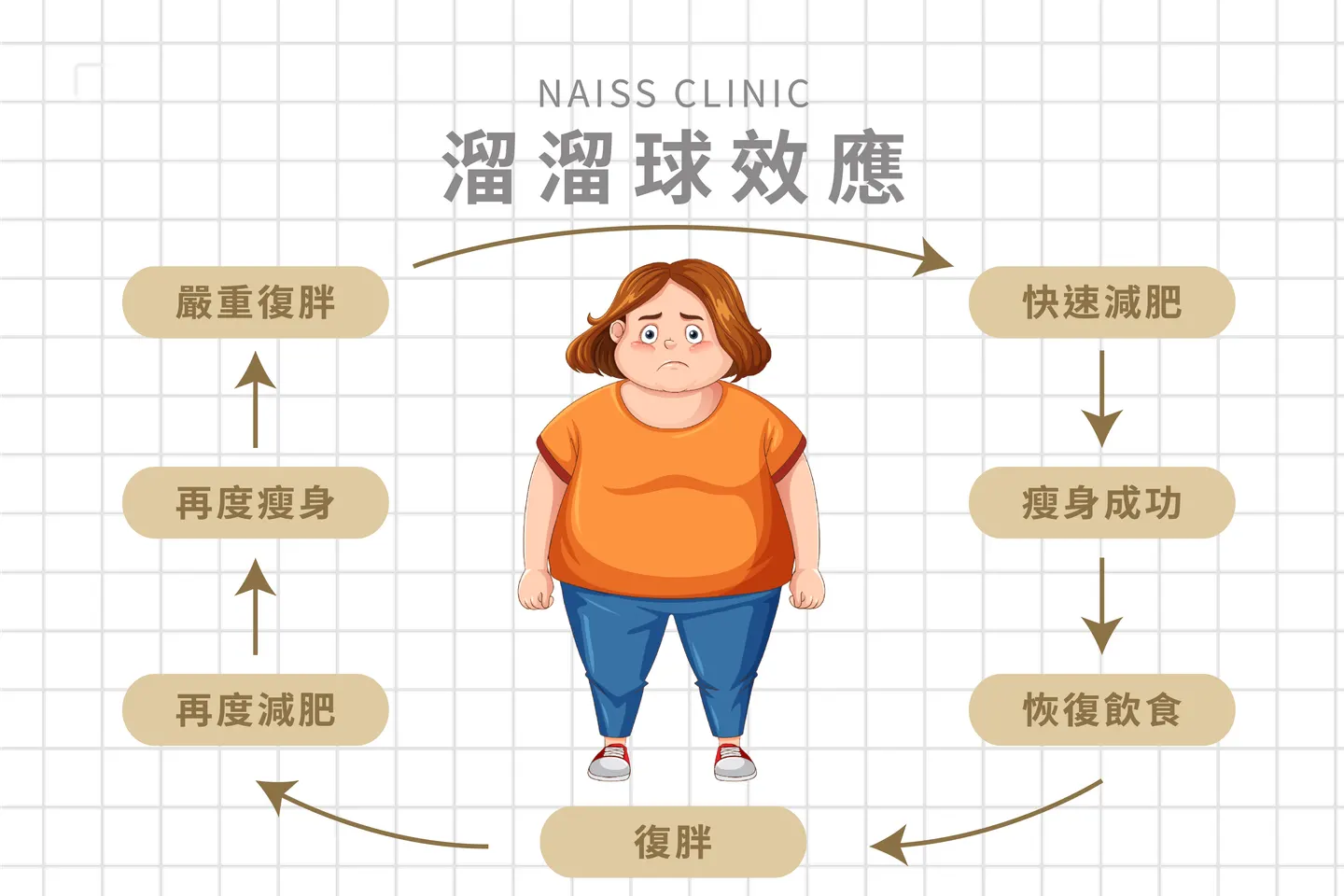
Clinical observation has found that many people who lose weight quickly (5–10 kg in a short time) easily run into the yo-yo effect: their weight fluctuates up and down and keeps coming back, and it becomes harder to return to their former ideal weight. This usually happens more easily in frequent, habitual dieters.
For people who lose weight improperly and fast, once they return to normal eating, the body's absorption rate increases and fat accumulates faster. The reason is that the basal metabolic rate has dropped, so regaining weight is unavoidable. Once weight starts to rebound, every later diet becomes harder, eventually creating an “easy to gain, hard to lose” constitution.
People who experience the “yo-yo effect” have usually used extreme weight-loss methods (for example, extreme dieting or intense exercise). These may work at first, but over time the body starts to show symptoms of discomfort, and anxiety and depression can also appear.
5 Popular Weight-Loss Methods Compared: Which Suits You Best?
Diet Control
The most common and popular approach, with many well-known diet methods today, such as keto and the Mediterranean diet. The main principle is to create a “calorie deficit,” so that the calories you take in each day are less than the calories your body expends. It is highly sustainable, but it also requires more self-discipline and time for meal prep, so it suits people whose eating habits are controllable and whose daily routine is stable.
- Eat more whole foods: fresh vegetables, fruit, meat, eggs, etc.
- Eat more protein: eggs, soy, fish, and meat (for example, soy milk, tofu, yogurt, chicken breast)
- Avoid refined starches such as white rice, bread, and cake; focus on sweet potato, pumpkin, and brown rice
- Reduce processed foods high in sugar, fat, and salt
- Drink more water
Intermittent Fasting
Reduces total calorie intake by limiting eating time, without strictly controlling what you eat, and you don't need to count the calories of each meal, so it is quite flexible to carry out, but it is less suitable for people with blood sugar problems or an unstable daily routine.
- 16:8 fasting: fast for 16 hours a day and eat all your food within an 8-hour window
- 234 diet: 500 calories per meal, with protein making up 25%, starch 35%, and fat 40%
- 5:2 fasting: eat normally 5 days a week, and fast completely or eat only 500–600 calories on the other 2 days
- Alternate-day fasting: on a fasting day, eat only 25% of your usual calories or 500 calories, then eat normally the next day
- Periodic fasting: fast for 2–3 days at a time, several times a year
Exercise and Strength Training
First burn calories with cardio, then add strength training to build muscle, which further raises calorie expenditure and basal metabolic rate. Besides improving body shape, it also helps prevent weight regain, but it takes more time and physical effort, so it suits people who already exercise regularly or want to improve their physique.
- Jump rope: 667–990 calories/hour (120 jumps per minute)
- Sprinting: 639–946 calories/hour
- Boxing: 582–864 calories/hour
- Spin class: 568–841 calories/hour
- Jogging: 566–839 calories/hour
- Kettlebell: 554–822 calories/hour
- Rowing: 481–713 calories/hour
- Dumbbells: 476–705 calories/hour
- Stair climbing: 452–670 calories/hour
Meal Replacements
A powder or drink containing protein, dietary fiber, vitamins, and minerals, with an average of 200–400 calories. Many kinds of meal replacements and enzyme drinks on the market claim to control calories and boost metabolism. They all use low calories to create a “calorie deficit,” and many add extra protein and fiber to make you feel full and reduce appetite. They can help in the short term, but in the long term you still need to return to normal eating. Before using them, check whether they contain too much sugar or artificial additives. Their convenience and speed are an advantage for busy people, so they suit people with busy lives who mostly eat out.
Medical Weight Loss and Weight-Loss Clinics
Doctors and dietitians at a clinic plan the weight-loss program, using tests (for example, blood tests, blood pressure, and body composition analysis) to propose a customized plan for each person (medication, device-assisted treatments, etc.). It suits people who have failed at dieting on their own several times, or who have a high BMI or abnormal body fat. The advantage is that you can see results through regular follow-ups and tests, but you need to see the doctor regularly and the cost is higher.
| Diet Control | Intermittent Fasting | Exercise and Strength Training | Meal Replacements | Medical Weight Loss / Weight-Loss Clinic | |
|---|---|---|---|---|---|
| How It Works | Control total calories and choose whole foods | Limit eating hours to extend fat-burning time | Build muscle and burn fat, boosting metabolism and energy expenditure | Low-calorie meal replacements substitute regular meals to create a calorie deficit | Customized management with scientific health checkups, physician prescriptions, and supporting treatments |
| Pros | Sustainable long term; fits easily into daily routines | Simple to follow; no need to count calories for each meal | Great body-shaping results; helps prevent regain | Convenient, fast, and time-saving; calories are controlled | Visible results, professional follow-up, safe and effective |
| Cons | Requires preparing your own meals and self-discipline | Hunger can be stronger at first | Requires consistency | Monotonous taste; hard to rely on long term | Higher cost |
| Best For | People with a stable routine who can prepare their own meals | People with regular routines and no need for fixed three meals a day | People who exercise regularly and want to improve their physique | People who eat out often and have busy lives | People with moderate to severe obesity or multiple failed diets |
What Can You Eat on a Diet Without Gaining Weight?

First, check whether your ingredients have these qualities: high dietary fiber, high protein, and low GI.
- High dietary fiber: adds volume to food and feeds beneficial gut bacteria, promoting gut motility, easing bowel movements, smoothing metabolism, and increasing fullness
- High protein: helps boost metabolism and maintain muscle mass; we recommend plant-based proteins or lean meats
- Low GI: GI stands for glycemic index, which measures how fast blood sugar rises within 2 hours after eating. Low-GI foods release sugar into the bloodstream slowly, keeping blood sugar stable and reducing hunger
Why Are You Still Hungry After Eating?
- The food lacks satiating qualities (for example, high protein, high fiber, and healthy fats)
- Not enough water; dehydration can make the body mistake thirst for hunger
- Eating too fast, so the body cannot send the signal that you are full in time
How to Make a Weight-Loss Plan
Before making a weight-loss plan, you first need to know your weight, body fat, muscle mass, visceral fat, and body measurements, and also understand your basal metabolic rate and daily calorie needs.
- Basal metabolic rate (BMR): when a person is at rest, this is the basic calories the body needs to maintain vital signs (such as body temperature, heartbeat, and breathing), and it varies with age, muscle mass, and daily activity level
- Total daily energy expenditure (TDEE): includes basal metabolic rate and the calories needed for activity. As long as the calories you take in each day are below your TDEE, you may be able to lose weight
Weight-Loss Plan Tips
- Adjust your plan at any time as your situation changes
- Understand your body composition, including weight, body fat, and muscle mass
- Set reasonable goals and timelines, for example losing 0.5–1 kg per week
- Choose suitable exercise and eating methods
- Record changes in your body regularly, using measuring devices and photos
Leave Professional Weight Loss to NAISS CLINIC
Losing weight shouldn't be a solo battle, and it shouldn't be endless trial and error.NAISS CLINIC's weight-loss clinic is planned jointly by professional doctors and a nutrition team, using scientific health checkups such as blood tests, body fat analysis, X-rays, and ECG, after which the doctor evaluates whether to use diet, medication, surgery, or other treatments. One-on-one consultations with a dietitian are also provided to tailor the most suitable slimming plan for you. Instead of just losing weight temporarily, we improve your constitution from the root, so you can lose weight steadily and healthily and stay out of the vicious cycle of repeated regain.
Diverse Treatments for Mild, Moderate, and Severe Obesity
NAISS CLINIC offers a variety of weight-loss and fat-reduction treatments and recommends the most suitable one based on each person's needs and data from scientific health checkups.
- Mild obesity: weight-loss pens, lipolysis injections, cryolipolysis, fat-burning IV drips
- Moderate obesity: liposuction, intragastric Botox
- Severe obesity: gastric balloon, Bai's 2.0 stapler stomach suturing (ESG)
This article is for general information only. Results vary from person to person; please consult a doctor in person before deciding on any treatment.