Contents
Troubled by baby fat for a long time? Your figure is well proportioned, yet your baby face makes you look several sizes bigger and rather childlike, and dieting and face massage just will not slim it down. Some people are born with more deep fat in the mouth, or build up baby fat through daily habits such as frequent facial expressions that enlarge the masseter muscles, so it has no absolute link to body weight! Aging and gravity also make the cheeks loosen and sag, making the face look older and heavier.
What Is Buccal Fat Removal?

"Buccal fat removal" is a procedure that excises deep facial fat in blocks. This differs from traditional facial liposuction, which focuses on suctioning superficial fat under pressure and can cause skin laxity and sagging if too much is removed. Buccal fat removal can precisely control the amount of fat removed, and because the incisions are inside the mouth, no marks are visible on the outside, giving a scarless, aesthetic result with short downtime and an immediate slimmer V-shaped face.
3 Key Advantages of Buccal Fat Removal:
1. Short operating time, high safety: Buccal fat removal takes only 1-2 hours. It is a direct removal of deep facial fat, a minimally invasive surgery that is low-risk, efficient, and highly safe, with a short recovery period.
2. Minimally invasive, hidden scars, instant V-line: Buccal fat removal excises deep facial fat in blocks, so the amount removed can be precisely controlled and a V-shaped face shows immediately.
3. Lightens the load on the cheeks and rescues aging jowls: If the deep fat inside the mouth is thick, it will make the facial contour look less defined. With buccal fat removal, the excess fat can be precisely taken out to reduce the facial outline, with immediate results, and it can also help prevent jowls, an early sign of aging!
Causes of Jowls and Baby Fat
"Baby fat" refers to cheeks that stay as round and full as a baby's through the teen years and adulthood. Baby fat is fat and does not go away as you grow up. In fact, everyone has a buccal fat pad inside each cheek, whose main role is to cushion the space between the cheeks and gums. Some people are born with more deep fat in the mouth, or build up baby fat through daily habits such as facial expressions that develop the masseter muscles. It has no absolute link to body weight, and even slender people can struggle with baby fat.
Why Do Jowls Form?
Jowls mainly have two causes: fluid retention and aging. An irregular lifestyle and heavily seasoned eating habits make tissues hold too much water that is hard to metabolize, leading to sagging at the corners of the mouth. They also develop as a result of advancing age and natural skin aging, in which the superficial skin, subcutaneous fat, middle fascia, and deep fat pads all lose water and collagen over time, gradually forming what are called jowls.
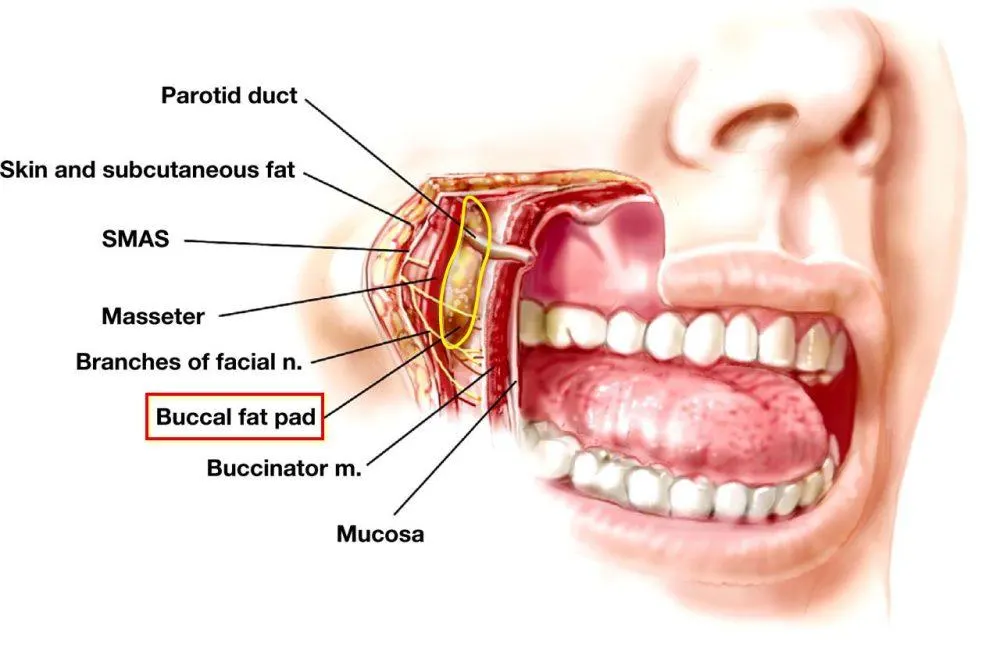
* What Is the Buccal Fat Pad?
The buccal fat pad is one of the deep tissues on the inside of the mouth. Because it is not superficial subcutaneous fat, it is not affected by changes in body weight. The buccal fat pad is generally present after puberty and sits between the masseter muscle and the mandible, in the middle third of the face. It mainly serves as a cushion between the cheeks and gums and also protects the teeth from impact.
What Buccal Fat Removal Can Improve, and Its Risks
First, understand that not everyone and not every situation is suited to buccal fat removal! Let's look at the three types of full face.
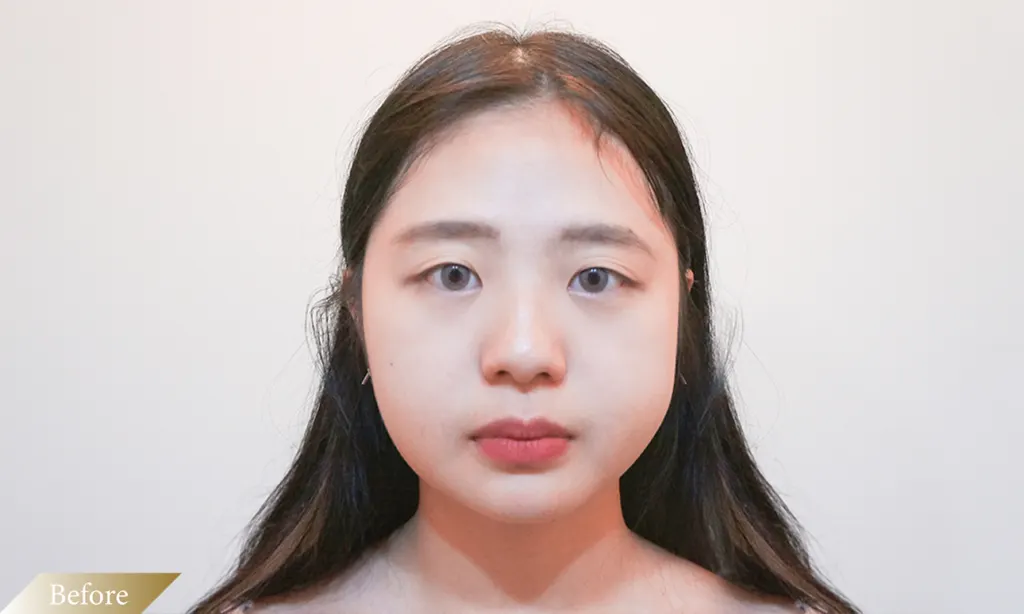

1. Muscle-type full face: A muscle-type full face is usually an enlarged face caused by well-developed masseter muscles in both cheeks, and it is suited to relaxation with botulinum toxin injections.
2. Fat-type full face: A fat-type full face comes from an overly thick buccal fat pad, so it is well suited to buccal fat removal!
3. Poor facial lines caused by the facial bones: If poor facial lines are caused by the bones, facial contouring surgery is recommended to improve them.
Who Is a Good Candidate for Buccal Fat Removal?
1. Those with a round, wide, flat face and noticeably full cheeks.
2. Those whose cheeks bulge when they smile or make other facial expressions.
3. Those prone to baby fat.
4. Those who have had facial liposuction with clearly unsatisfactory results.
And does buccal fat removal carry risks? Every surgery carries some risk, and whether risks occur depends on the doctor's expertise and the clinic's environment and equipment. Buccal fat removal is performed throughout under light sedation, sedative and pain relief, and local anesthesia. A 0.3 cm incision is made inside the mouth at the spot corresponding to each cheek, the excess buccal fat pad is removed as appropriate, and finally the wounds are closed with medical-grade absorbable sutures. The operation takes about 30-60 minutes.
The difficulty of buccal fat removal lies in this: the amount of fat removed must be carefully calculated! If too little is removed, the result after surgery will be poor, and if too much is removed, the face may become slack or hollow, so the pre-op examination is very important. Your individual condition is assessed to decide how much fat to remove and whether you are suited to buccal fat removal.
Care Before and After Buccal Fat Removal
Pre-op preparation, please note the following:
1. Fast for 6-8 hours before surgery (including food and drinks)
2. Temporarily stop vitamins, health supplements, anticoagulants, and other blood-circulation-promoting medicines
3. No smoking or drinking alcohol for 24 hours before surgery
4. Patients with diabetes or high blood pressure must tell the doctor in advance and discuss medication timing
5. Patients with mild asthma should let the doctor know
Although recovery from buccal fat removal is quick, post-op care must still be done well. If you have any problems, be sure to return for a check by your attending doctor to avoid complications!
Post-op care, please note the following:
1. Avoid opening your mouth wide for a week, such as singing or laughing loudly.
2. After surgery there are sutures inside the mouth, which are generally removed after one week. No ointment is needed on the suture wounds. For the first three days, rinse your mouth with water several times a day, and do not use toothpaste when brushing, to avoid irritating the mouth. After meals you may use mouthwash to clean your mouth.
3. Do not eat solid food for the first three days; you can have warm liquid or soft foods, such as congee, oatmeal, tofu, and toast.
4. There will be local bruising and swelling at the wounds for the first 1-2 weeks. For the first three days, you can hold cold water in your mouth and apply ice packs; from the fourth day, switch to warm compresses to speed up the clearing of bruising and swelling.
5. For one week, do not eat irritating foods such as spicy food, alcohol, and tonic supplements, to avoid wound inflammation and swelling! We recommend eating more protein foods, such as eggs, beans, fish, and meat, plus collagen and vitamin C, which help wounds heal.
6. Avoid smoking and secondhand smoke, because nicotine uses up too much vitamin C and slows wound healing.
7. In the early period after surgery, do not rub the surgical area too hard when washing your face or removing makeup.
This article is for general information only. Results vary from person to person; please consult a doctor in person before deciding on any treatment.