Contents
When taking selfies with friends, do you always stand at the back because it makes your face look smaller? Do you open a photo-editing app to slim your face after every shot? Are the influencers and celebrities you like all oval-faced, and do you want to look like them too? Before trying to slim your face, find out why your face looks round. This article explains the causes of a round face and the many ways to slim it, and finally compares all the face-slimming treatments head to head!
5 Main Causes of a Round Face
Water retention type:
The whole face, including the eyelids, looks puffy, and when you press it with a finger it does not spring back quickly. The cause may be too little sleep the night before, eating too much salt, slowed metabolism, and so on, which keep excess water from leaving the body and cause facial swelling. There are many causes of water retention, and common ones include drinking too much water, drinking too much alcohol, heavily flavored food, sitting for long periods, not getting enough sleep, and hormonal imbalance.
Bone structure type:
This usually comes from genetics. Some people are born with a wider, more prominent bone structure, so even without much fat in the cheeks the face still looks larger, for example a square face or a “home plate” face shape. This type usually cannot be changed by massage or similar methods. We recommend using hyaluronic acid filler in the chin to lengthen the facial contour and proportions, or reshaping the facial contour with facial contouring surgery.
Fat type:
This is what is commonly called “baby fat.” Some people are born with plenty of fat in the cheek skin, which makes the cheeks plump, though as people age the subcutaneous fat decreases and baby fat usually disappears with it. The signature of the fat type is a face that feels soft when poked and springs back, with more than 1 cm of pinchable flesh, usually caused by overeating, lack of exercise, physiological factors, or genetics.
Aging type:
With age, besides skin aging and collagen loss, the bone structure and ligaments change, causing the skin to become loose and sag, for example: sagging apple cheeks and deepening nasolabial folds. Because of gravity, displaced fat settles in the lower face, making the chin contour increasingly blurred.
Muscle type:
It is mainly caused by “well-developed masseter muscles,” resulting from long-term chewing habits, such as liking chewy or hard foods, unconsciously clenching your jaw, or grinding your teeth in your sleep. These all make the lower jaw wider and more prominent. Besides feeling hard muscle when you press with your hand, the masseter muscles on both sides of the cheeks bulge out, and may eventually form a square face.
4 Self-Tests to Find Out Why Your Face Looks Big
1. How developed your masseter muscles are
Place your index fingers on both sides of your jaw, close your lips, and clench your teeth hard. If you can feel hard muscle bulging outward, that is the “masseter muscle.” Some people even chew habitually on one side, which makes the two sides of the face uneven in size (a “big face, small face”).
2. How much your facial skin sags
Use your fingers to push your facial skin backward. If there is clearly room for it to move, and when the skin is lifted upward you can see the jowls and nasolabial folds visibly improve, it means the skin has gradually been losing elasticity.
3. Whether the mandible protrudes
In fact, you can tell just by looking. In profile, the angle is close to a 90-degree right angle, and when you press, you feel bone rather than fat causing the protrusion. This can only be changed through aesthetic procedures.
4. Thickness of facial fat
Pinch the fleshier parts of your face. If it feels soft like flab and is more than 1 cm thick, you have more subcutaneous fat. People with more facial fat usually also have a less defined chin contour in profile, and a double chin.
4 Non-Aesthetic-Medicine Ways to Slim Your Face
Exercise: Burns fat and improves fat-type round faces
Adjusting your diet: Eat more fruits and vegetables to reduce fluid buildup and improve water-retention-type round faces; eat foods rich in collagen to improve aging-type round faces; eat fewer hard or chewy foods to improve muscle-type round faces
Massage: Promotes circulation to improve water-retention-type round faces; slows skin sagging to improve aging-type round faces; helps relax tense muscles to improve muscle-type round faces
Regular lifestyle: Less alcohol, less salt, and enough sleep reduce the chance of facial swelling and improve water-retention-type round faces
3 Types of Aesthetic Treatments to Slim the Face
1. Injectables

Botulinum toxin: the most common face-slimming method, a natural protein that blocks the acetylcholine signal between nerves and muscles so that the muscle cannot contract. The masseter muscles on both sides of the face lose tension and activity, which relaxes the masseters and reduces their volume.
Read more:
Why Can Botox Smooth Wrinkles, Fight Aging, and Slim the Face? The 4 Major Botox Effects Explained
4 Major Botox Brands Compared! Treatment Areas, Prices, Pros and Cons Revealed
Lipolysis injections: Also known as “subcutaneous fat-reducing injections,” these use a special drug to break fat cells into smaller fat particles, which are then metabolized out of the body through circulation. Lipolysis injections suit localized fat, so they are especially good for jowls, a double chin, and similar areas
2. RF and ultrasound
Ultrasound: High-intensity focused ultrasound concentrates energy on the SMAS fascia layer to lift the contour, improving skin elasticity and contour firmness
DOUBLO ultrasound: a V-line and firmer skin you can really feel
Liftera focused ultrasound, a needle-free thread lift
4th-generation Ultraformer MPT: lifting, fat reduction, and skin care all in one
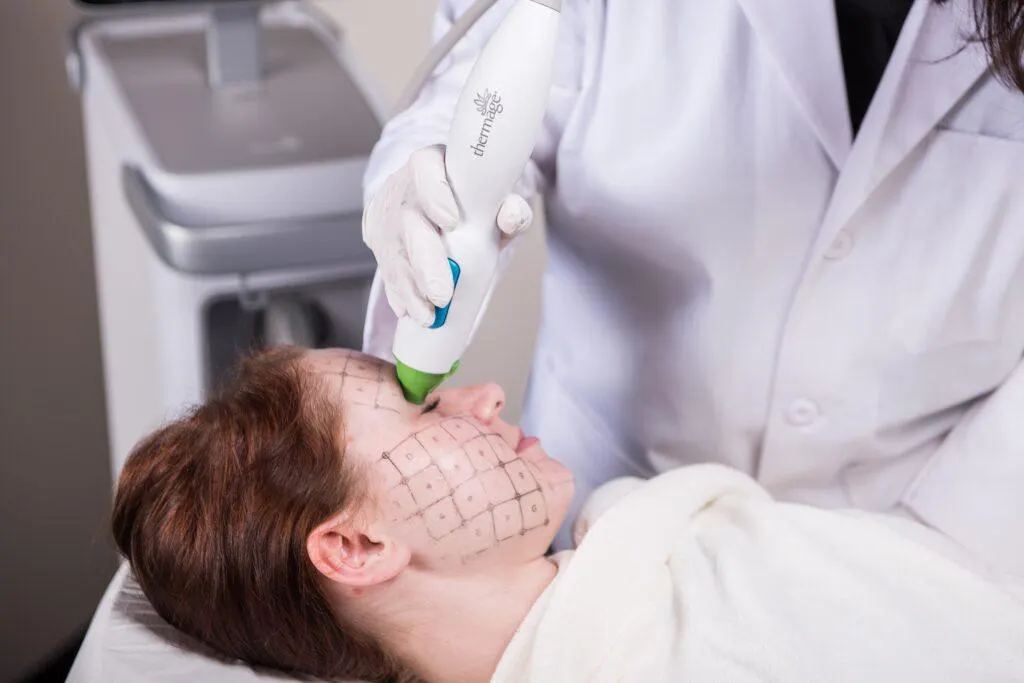
RF: Radiofrequency precisely heats the deep fascia layer of the skin to stimulate collagen growth and gently breaks down some subcutaneous fat, helping to improve laxity and eliminate small amounts of fat
Thermage FLX: a non-invasive skin tightening treatment
Morpheus8 microneedling RF: tightening and lifting
EXILIS facial RF: meticulous care for your face
Read more:
RF vs. Ultrasound: Principles, Prices, and Who It's For, Explained in One Article!
3. Surgery
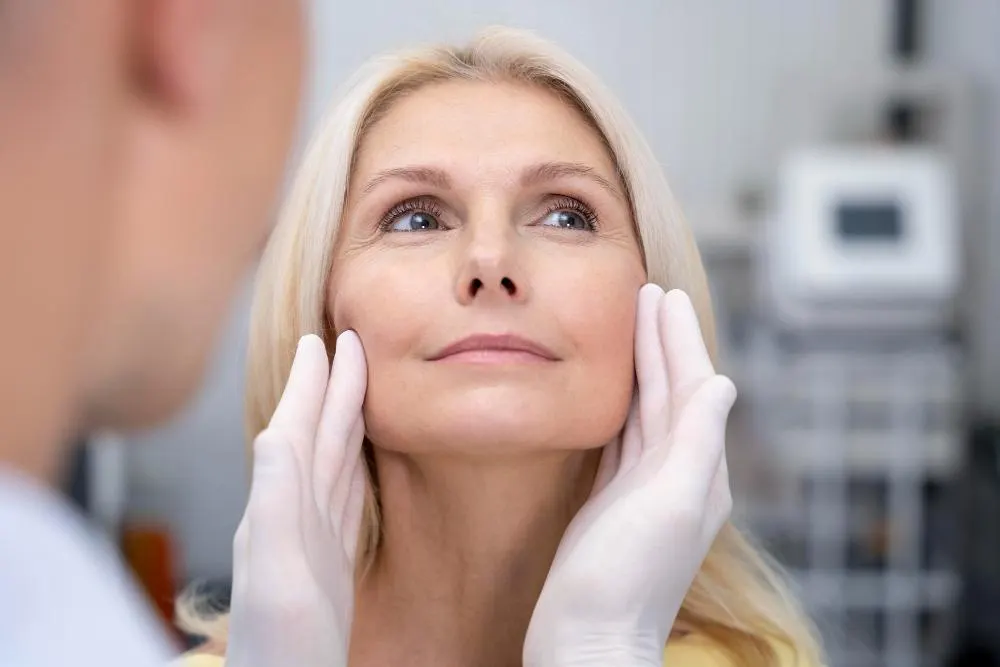
Facial contouring surgery: There are different bone-reduction methods for different problems, for example zygoma L-shaped reduction, mandibular angle reduction, and chin reduction. For the bone-structure square face discussed in this article, mandibular angle reduction is used, removing the angular edges of the face to balance the lines of both cheeks
Buccal fat removal: Surgically removes the excess deep fat pad in the mouth by making a small incision in the oral mucosa of each cheek, avoiding the facial nerves, blood vessels, salivary glands, and other structures. After removing an appropriate amount of fat, the incisions are closed with medical-grade absorbable sutures, easily getting rid of troublesome baby fat.
Injectables vs. RF vs. Ultrasound vs. Facial Contouring Surgery vs. Buccal Fat Removal
| Injectables | RF | Ultrasound | Facial contouring surgery | Buccal fat removal | |
|---|---|---|---|---|---|
| Suitable type | Muscle/fat | Aging | Aging | Bone | Fat |
| Treatment time | 10-15 minutes | 45-60 minutes | 40-60 minutes | 3 hours | 1-2 hours |
| Recovery | None | None | None | 2-3 weeks | 5-7 days |
| Duration of results | 6-12 months | 18-24 months | 18-24 months | Permanent | Permanent |
| Cost | * | ** | ** | **** | *** |
This article is for general information only. Results vary from person to person; please consult a doctor in person before deciding on any treatment.