Contents
Busted just like that! A “humped nose” is not only a feature of appearance; it is also said to influence a person's personality and fortune. Whether you want a more refined look or a confidence boost, improving the nose shape is not actually hard. With today's advanced medicine, are there ways to improve or solve it besides surgery? And is having a humped nose necessarily a bad thing? This article introduces this nose type and shares the ways to adjust the nose.
What Is a Humped Nose?
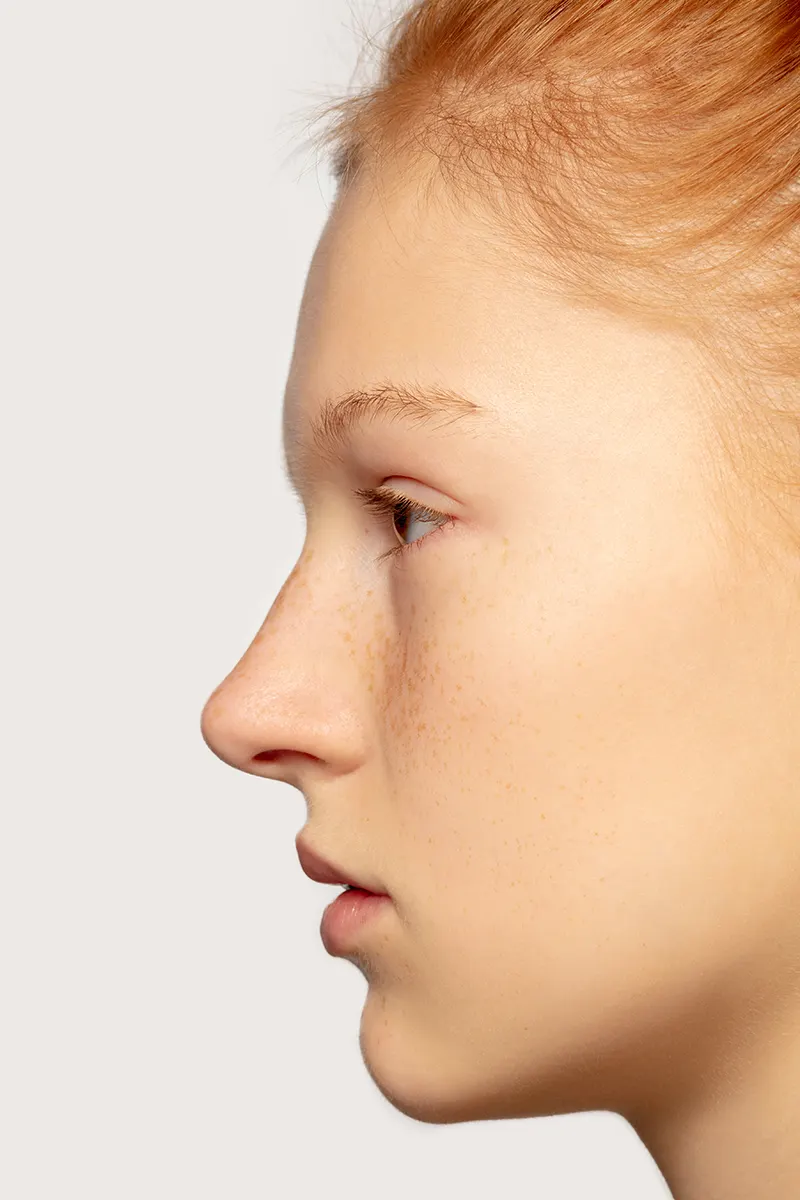
A “humped nose” is also called a “nasal bump” or “bony bump.” As the name suggests, a hard bump like a camel's hump rises on the upper third of the nasal bridge, called the “hump” of the bridge. The main cause is incomplete or excessive joining of the bony and cartilaginous parts of the bridge during development. It is usually congenital, with the nasal bone and cartilage growing at different rates, or the result of a nose injury in childhood that causes the nasal bone and cartilage to overgrow, which may produce a raised area on the bridge! In more severe cases, besides an overly raised bridge, the nasal tip may also droop excessively, which is commonly called a “witch's nose.”
Why Do Humped Noses Happen?
Causes include family heredity, acquired injury, and incomplete development, and they are further divided into “false humps” and “congenital humps,” among others:
- “Hump”: caused by heredity, trauma, or abnormal congenital overgrowth of cartilage and bone.
- “False hump”: caused by underdeveloped or collapsed nasal tip cartilage or septal cartilage.
How Does a Humped Nose Affect Facial Impression?
Compared with East Asians, Westerners generally have higher, more prominent noses, so a hump on a Westerner makes the nose look even more prominent visually, even somewhat abrupt. In contrast, among East Asians, aesthetic preferences for the nose differ slightly by gender (related to traditional impressions from the past). For men, a slight hump is seen as a sign of maturity and steadiness.
For East Asian women, however, a humped nose can leave a different impression. Because East Asian women's features are generally softer, if a fairly prominent hump appears, it can easily give an impression of being strong-willed and less approachable. This conflicts with the gentle, delicate image we are conditioned to pursue, so many women choose to correct a humped nose through aesthetic surgery.
P.S. The above analyzes past stereotypes about East Asians and Westerners. Whether something looks good is highly subjective, and of course what matters most is that you like it yourself!
Rhinoplasty methods analyzed! How to get rid of a bulbous nose
Say no to a bulbous nose! Three major nasal tip reduction surgeries explained
Types of Humped Nose
From a medical standpoint, an ideal nose shape generally has these 3 features:
- Nasal tip and lobule: An ideal nasal tip should be round and full, slightly upturned, and naturally connected to the bridge, and the width of the lobule should be neither too large nor too small.
- Dorsum: The dorsum connects the nasal root to the nasal tip. The line of the dorsum should be natural, smooth, and flowing; a dorsum that is too steep or too flat affects the overall look.
- Nasal root: The nasal root is where the bridge meets the forehead. The ideal nasal root position is recommended to be between the pupil and the double eyelid crease, slightly toward the pupil, which makes the nose look more dimensional. If the root is too high, the nose looks abrupt and can even give an exotic look, such as the Na'vi in the movie Avatar.
Ways to Improve a Humped Nose
Thread Nose Lift (Also Called 4D Scaffold Rhinoplasty or Nose Threads)
A needle-hole approach is used at the nasal tip to implant absorbable protein threads into the nose with minimally invasive technique, and the barbs on the threads lift while the angle chosen by the doctor sculpts a higher nose.
A thread nose lift is not simply burying threads in the nasal bridge. It is usually combined with collagen or hyaluronic acid injections, like the concept of rebar and cement: the filler forms a cement-like structure, and the threads act as the scaffold, the soft rebar that supports the nose. When the two work well together, a nose structure with the feel of an implant can be built.
Hyaluronic Acid Injection
Using hyaluronic acid's strong water retention and filling ability, injection creates a stable support beneath the skin of the nose, improving the nose shape.
Hyaluronic acid molecules have good biocompatibility, so side effects after injection are relatively few, but the results gradually fade over time, usually needing a top-up every 6–12 months, and the effect varies with individual constitution and metabolic rate.It suits people with a decent nose to start with, people who want to fine-tune the nose shape, people who want to see results in a short time, people who don't want to risk surgery, and people who want to preview the result before rhinoplasty surgery.
Nasal Hump Surgery
“Nasal hump surgery” involves making a small incision of about 1 cm or less along the inner edge of the nostril and working directly on the raised bony bump. Depending on the case, bone rasping or osteotomy is used: one way is to smooth down the raised hard bone with a special bone rasp, the other is to remove excess cartilage. The ratio of bone to cartilage in the bump differs from person to person, so the doctor chooses the technique based on your condition.
The procedure is done under general anesthesia, so there is no need to worry about pain, and an anesthesiologist accompanies you throughout to make the surgery safer and smoother. The surgery also uses “medical-grade absorbable sutures” that are gradually absorbed by the body, so no suture removal is needed, and there is almost no scar!
Aftercare and Risks of Nasal Hump Correction
Post-op risks and side effects:
- Local bleeding, bruising, or hematoma
- Wound infection
- Hypertrophic scarring, which is uncommon
- Smoking after surgery, which can cause skin necrosis or increase the chance of wound-healing complications
- Damage to the nasal mucosa, which mostly heals on its own
- Capsule formation, which can make the skin uneven
Post-op care:
- Avoid irritating foods and alcohol.
- Stop smoking completely for one month before surgery, and stay away from secondhand smoke as much as possible. Smoking affects the later absorption rate and recovery.
- For the first 3 days after surgery, keep applying cold compresses to the forehead, around the eyes, and between the brows, 5–6 times a day for 15–30 minutes each time. Do not press hard while icing.
- After the stitches are removed, switch to warm compresses at least four times a day for 15–30 minutes each.
- Avoid sleeping face-down for the first week, and try not to wear glasses, to avoid pressure on the nasal root.
- Pay attention to eye cleanliness after surgery and avoid conjunctivitis and other eye inflammation, so that infection does not spread to the nose via the nasolacrimal duct.
- Avoid blowing your nose hard or picking your nose after surgery to prevent bleeding from the wound.
- Avoid bending over, lowering your head, and strenuous exercise after surgery.
- Prop your pillow up when sleeping after surgery to prevent swelling.
- In the 2 weeks after rhinoplasty, the nose is prone to swelling and bruising, with tissue fluid and blood seepage. Swelling starts to go down about 1 month after rhinoplasty, and the wound no longer oozes much blood. After about 4–6 weeks the shape will have mostly settled, looking more and more like a natural nose.
This article is for general information only. Results vary from person to person; please consult a doctor in person before deciding on any treatment.