Contents
Anyone with pores runs into this problem: large pores. Why is it so annoying? Makeup can't cover them, they are very obvious up close, and they affect the overall condition of your skin. Besides neglected skin care, oiliness, and your skin's natural type, are there other causes of large pores? Is there a chance of getting your original skin back? And besides acid-based skin care, is there a more effective, faster way? We'll share everything about large pores in the text below, so bring along your friends with pore problems and read together!
About “Pores”
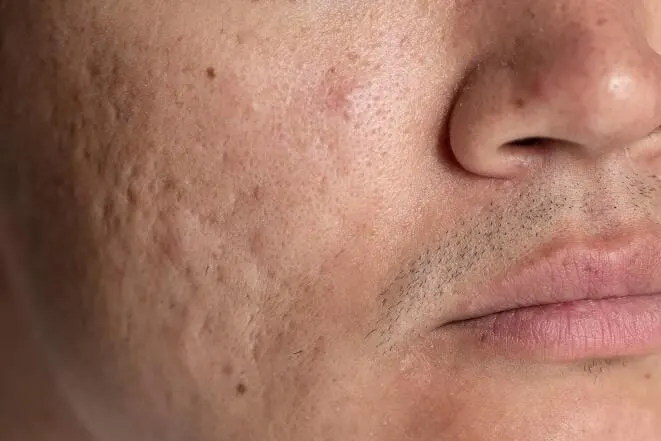
In fact, pores change every day, and it is basically impossible to treat pore problems completely. But you can improve and prevent the problems that concern you or that come with the seasons. For example, in winter, oil output is lower and pores are smaller; in summer, oil output is higher and pores become larger. Pores also vary with “hormone” changes: for women, pores are especially large before the period, and in the week after the period ends, the skin is in great condition. So there is no “definite” or “fixed” state when it comes to pore changes.
Causes of Large Pores
Large pores are mainly caused by three conditions: sebaceous gland inflammation, aging, and sun exposure
The sebaceous glands beneath our pores are very thick, and people with large pores are mostly those with “oily skin”. When the sebaceous glands are constantly inflamed (the area around the pore looks brownish), it creates a chronic inflammation in the surrounding skin. The surrounding skin then hardens and stays fixed in place, and as the enlarged sebaceous gland pushes upward, it creates a large opening. Of course, unavoidable factors such as aging and sun exposure are also causes of large pores. Aging: the main cause is collagen loss, which makes the skin lose elasticity, and the skin's ability to retain water also drops noticeably.
What to Do About Large Pores!? Can Picosecond Lasers Really Help?
How to Fix Large Pores
If you really care about large pores and urgently want to solve them, there are a few things you must do first before undergoing so-called picosecond or fractional lasers:
1. Reduce Sebum from the Sebaceous Glands
You first need to lower the amount of sebum your face produces. Otherwise, as mentioned above, the pores are already stretched and have large openings, and no matter how many laser treatments you get, there will still be no noticeable improvement or big difference.
There are two ways to reduce sebum: oral retinoic acid or topical retinol. If the problem is not severe, you can choose the topical option. Note in particular that topical retinol can cause dryness, itching, and peeling, all of which are normal and not a sign that your skin is rejecting it; in medicine this is called a “predictable skin reaction.”
At this point, many people ask: “I've already chosen a laser, so do I still need topical retinol or oral retinoic acid?” Yes! Whether you choose oral or topical, only by using both together can you get the best treatment results.
2. Moisturizing
Everyone knows that moisturizing is basic and key to skin care, but people with oily skin and large pores need to take special care! When very oily skin is exposed to strong moisturizing products such as lotions, so that the skin is constantly damp, it causes abnormal keratin turnover and actually makes pores look larger. So people with oily skin and large pores are advised to use retinoic acid and retinol products to promote keratin turnover and reduce skin oil, so the skin returns to a good state.
This Is Where Large Pores Come From! How Many of These Bad Skin Care Habits Are You Guilty Of?
What Pore Lasers Are There? Which One Do We Recommend?
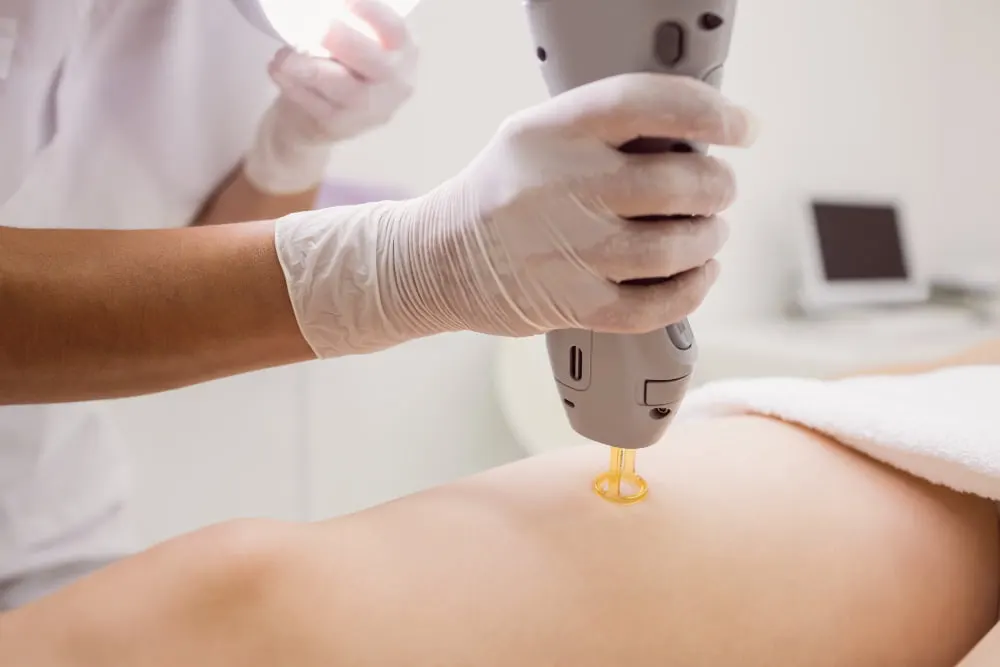
There are many lasers for treating pores, and we recommend a laser treatment based on each person's skin condition. Some patients' skin has no major problems, but they want to improve some small blackheads and small pores, for which we recommend the gentlest option, the “Q-switched laser,” for maintenance. For skin that leans dry, also without obvious problems, and for those who want to pursue a glowing complexion, we recommend the non-ablative “fractional laser,” whose results go a bit deeper than the Q-switched laser. There is no need to worry too much, as its chance of darkening is close to zero, so you can choose it with peace of mind.
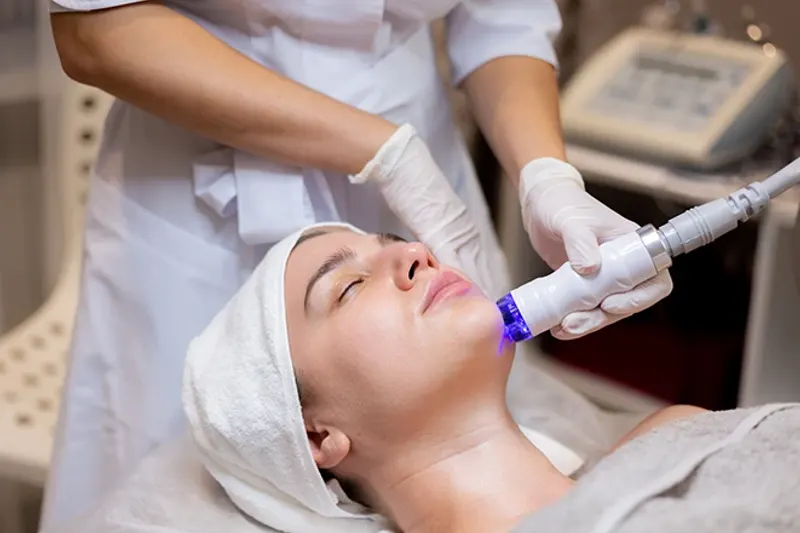
Next, a step up, is the picosecond laser, the one most commonly seen and chosen. A picosecond laser can be adjusted in wavelength and energy according to the condition of the pores, to break up the hardening around the hair follicles. Finally, the most advanced pore treatment is UP laser treatment, which is hailed as the most effective pore laser treatment and can remove bad tissue so that it regrows. Its treatment depth is the deepest of all laser machines (up to 4.0 mm), and it has a very significant effect on scar treatment, with downtime shortened to 7-10 days. If you have a sufficient budget and your pore problems are very severe (even pathological), you can consider UP laser treatment.
Lastly, let's introduce the newer IPL (intense pulsed light) laser. The advanced version is also known as “Lumecca IPL.” It is an optimized IPL that uses patented technology to filter out the useless wavelengths of traditional IPL and delivers pulsed flashes with 3 times the energy in the 500-600 nm range. Its firing speed and efficiency are three times those of traditional IPL, and it targets problem areas with low energy, low thermal damage, and high precision. The energy released in an instant can effectively treat skin problems such as erythema, brown spots, vascular lesions, uneven skin tone, and large pores, and it is a safe, non-invasive, gentle, and effective “nourish the skin with light” treatment.
Rescue Large Pores! Can Lasers Really Shrink Pores?
Seasonal Change Ready! Picosecond Lasers to Improve Pore Problems
| Laser | Q-switched laser | Fractional laser | Picosecond laser | Lumecca IPL | UP laser |
|---|---|---|---|---|---|
| How it works | Uses a laser system with fractionated photothermal delivery so the laser light acts evenly on the skin, producing heat that stimulates collagen and elastic fibers. It not only solves the original concerns but also firms the skin. | Uses a nearly wound-free method that evenly disperses laser beams to heat and disrupt the epidermis and dermis, stimulating the skin's regenerative ability. | Uses the photoacoustic effect, with tremendous pressure striking melanin so that it is shattered and expelled from the body. Pulse technology shortens the time and strengthens the effect of shattering melanin, which reduces thermal damage to the skin and the chance of post-inflammatory hyperpigmentation. | Uses light of 500-1200 nm to create photothermal stimulation for skin treatment. It is a “composite” wavelength light-energy system, so its range of applications is broader than a single-wavelength picosecond laser. | Ablative, fractionated treatment with three treatment modes to improve acne scars and skin problems of different severity. Treatment depth reaches 4 mm, helping rebuild healthy skin tissue and solve the most fundamental problems Suitable for those who have tried other laser treatments without effect or without noticing a difference |
| Advantages | 1. A multi-purpose laser with very low pain and the gentlest of the laser treatments, suitable as a routine maintenance treatment | 1. Noticeable results on acne scars, with a fast, stable treatment; very low chance of darkening 2. Small treatment area, with a very low chance of side effects | Very significant effect on dullness and melanin removal, and can be combined with the honeycomb handpiece to repair depressed acne scars and large pores | 1. Does not break the skin or cause injury during treatment 2. Noticeable results in just 1-2 sessions 3. Once a month, it can serve as maintenance, stimulating collagen production for plumper, bouncier skin | The best for scar treatment; a multi-functional, precise machine that lets doctors perform more treatments more safely; noticeable improvement after treatment |
| Downtime | None | 1-2 days | 2-4 days | None | 7-10 days |
| Treatment frequency | Every 3-4 weeks recommended | Every 3-4 weeks recommended | Every 1.5-2 months recommended | Once a month recommended | Every three months recommended |
| Disadvantages | Skin feeling dry after treatment is normal; just boost moisturizing or combine with a hydrating treatment to relieve dryness and tightness | 1. A gradual treatment that requires at least three sessions for noticeable results 2. Suited to mild rolling acne scars; it cannot target individual depressed scars | No makeup for a week, cleanse with lukewarm water, and strengthen sun protection to avoid darkening | Pay special attention to sun protection before treatment, and acids such as retinoic acid must be stopped temporarily | Temporary darkening |
| Gentleness | 5/5 | 4/5 | 3/5 | 4/5 | 1/5 |
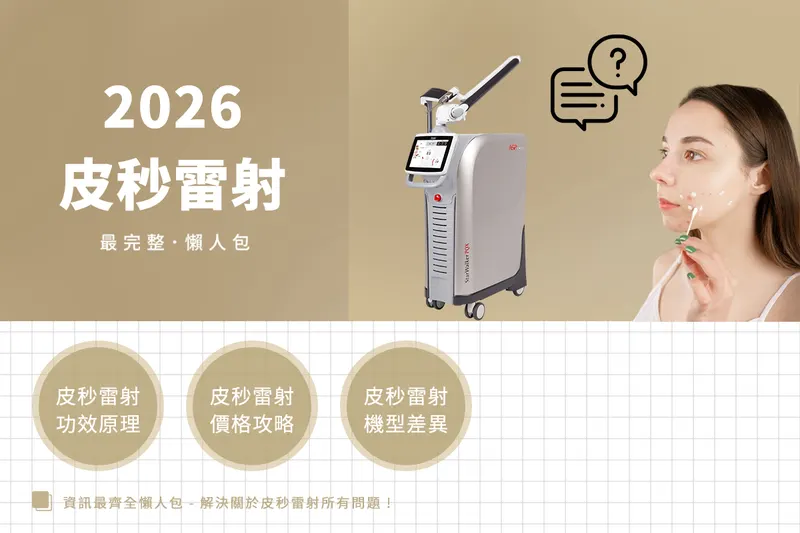
NAISS CLINIC's picosecond lasers come in two types, “StarWalker PQX” and “Discovery Pico”:
“Discovery Pico” has the advantage of its pulse duration, and it can produce a powerful photoacoustic effect in an extremely short time, shattering melanin into fine dust, which the body can absorb and metabolize more easily. With low residual thermal damage to the skin and a short recovery period, it is also less likely to cause post-treatment darkening than earlier picosecond lasers, and its results are more pronounced.
“StarWalker PQX” is the king of picosecond lasers today! It is especially suitable for people who have had picosecond treatment before and felt the results were poor or unnoticeable. Besides the same fast pulse energy, it also promotes collagen production and skin tissue repair, with better results than other brands' picosecond laser treatments and an even shorter recovery period, making it the most popular laser treatment. In addition, the 3rd-generation StarWalker PQX has patented “automatic energy feedback control,” so every laser shot delivers stable energy, which effectively lowers the chance of darkening after treatment.
| Picosecond laser | StarWalker PQX | Discovery Pico |
|---|---|---|
| Brand origin | Europe | Italy |
| How it works | Photoacoustic + photothermal effects | Photoacoustic effect |
| Advantages | Low chance of darkening; compared with ordinary picosecond lasers, the 3rd-generation StarWalker has a photothermal effect as well as a photoacoustic effect, and can improve pigmentation, smooth fine lines, and remove tattoos; short downtime | 1. Suitable for all skin types, a boon for sensitive skin 2. Excellent at removing spots; suitable for those who want to remove spots, shrink pores, improve aging skin and large pores, and get finer-textured skin |
| Downtime | 1 day | 7-10 days |
| Treatment frequency | Every 1-1.5 months recommended | Every 1-1.5 months recommended |
| Disadvantages | Higher price | May cause darkening; energy can only be adjusted in large increments |
| Treatment areas | Spot removal, whitening, acne scars, fine lines, pores, tattoos, vascular lesions, redness, acne | Spot removal, whitening, acne scars, pores, tattoos, fine lines |
This article is for general information only. Results vary from person to person; please consult a doctor in person before deciding on any treatment.