Contents
- What Is Picosecond Laser? How It Works and What It Does
- What Can Picosecond Laser Do? A Doctor Explains 3 Core Indications
- Why Do Picosecond Laser Prices Vary So Much? Devices, Wavelengths, and Traps to Avoid
- Picosecond Laser Recovery Explained: How to Minimize Side Effects
- Our Picosecond Laser Pick: Why Choose StarWalker PQX at NAISS CLINIC?
- FAQ
If you want glowing, porcelain-smooth “glass skin” even without makeup, picosecond laser is undoubtedly one of the most popular skin-clarifying choices in modern aesthetic medicine. But faced with a dizzying array of device names, wildly different prices, and fears of “post-treatment hyperpigmentation” or “breakouts during recovery”, do you also feel unsure where to start?
From a doctor's perspective, this article takes an in-depth look at the core benefits of picosecond laser, compiles a complete 2026 device comparison table, and shares a guide to choosing wavelengths and prices without falling into traps. Whether you want to tackle stubborn spots, enlarged pores, or troublesome depressed scars, this “2026 Picosecond Laser Guide” will help you find the skin solution that suits you best, so every shot delivers precise results!
What Is Picosecond Laser? How It Works and What It Does
You've probably heard that picosecond laser can tackle dullness and spots and refine imperfections for smooth, radiant skin. Why has it become a favorite in aesthetic medicine? Below, we explain how picosecond laser works and its key differences from traditional lasers.
How Picosecond Laser Works: Does Speed Determine Results?
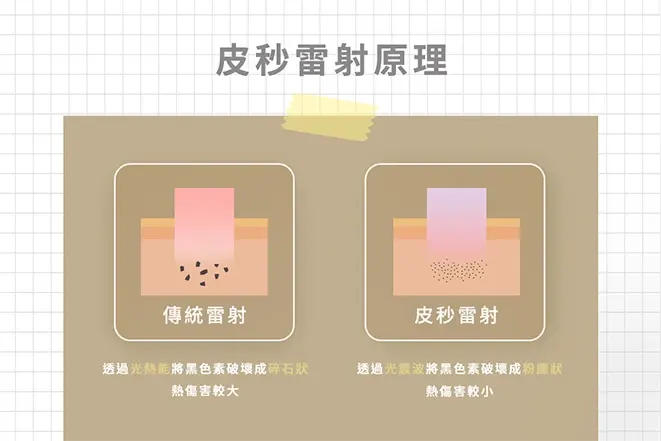
A “picosecond” is an extremely short unit of time (10⁻¹² seconds, or one trillionth of a second). Picosecond laser uses ultrashort pulses to fire high-speed laser energy within this tiny window, producing a powerful “photoacoustic shockwave effect.”
- Breaking up pigment: It shatters melanin into fine dust-like particles, like a “machine gun.” Compared with the granules produced by traditional lasers, dust-like particles are more easily cleared by the immune system, greatly improving clarifying efficiency.
- Low thermal injury: Because the action time is extremely short, heat stays in the skin for less time, precisely targeting melanin without harming surrounding tissue and greatly reducing the risk of hyperpigmentation and the period of redness and swelling.
Picosecond vs. Traditional Laser: Photoacoustic Shockwave vs. Photothermal Effect
Why do people now prefer picosecond over traditional lasers? Although both can treat skin imperfections, their core mechanisms differ significantly. Traditional lasers rely mainly on the “photothermal effect”, converting light energy into heat to destroy the target, but heat easily spreads to surrounding tissue this way, increasing thermal injury and the risk of post-treatment “hyperpigmentation”.
By contrast, picosecond laser's extremely short pulse duration elevates its mechanism to a “photoacoustic shockwave effect”. This physical impact shatters melanin at extreme speed into tiny “dust-like” particles rather than the traditional “granules.” This not only makes melanin easier for the body to clear but also greatly shortens recovery, offering a safer, more comfortable, and more comprehensive skin renewal experience.
| Feature | Picosecond laser | Traditional laser |
|---|---|---|
| Mechanism | Photoacoustic shockwave (physical shattering) | Photothermal effect (heat destruction) |
| Particle size | Dust-like (very easily cleared) | Granular (cleared more slowly) |
| Thermal injury | Very low; short downtime | Higher; prone to redness, swelling, and hyperpigmentation |
| Main uses | Spots, pores, fine lines, uneven skin tone | Deep pigmentation, tattoo removal |
Is Picosecond Laser the Same as Honeycomb Pico? The Power of the Focusing Lens
Besides picosecond laser, “honeycomb pico,” “pico honeycomb,” and “honeycomb laser” are all popular search terms online. Simply put, the core difference between the two is whether a “focusing lens” is used.
What Is a “Honeycomb Lens”?
“Honeycomb pico” isn't a different laser device; it is a picosecond laser fitted with a special focusing lens. It concentrates the laser energy into hundreds of tiny dots, distributed evenly like a honeycomb.
- Key technology, the LIOB cavitation effect: This high energy produces “laser-induced optical breakdown” (LIOB) in the dermis without damaging the epidermis. It's like setting off “micro-explosions” deep in the skin, creating tiny cavities.
- Repair and renewal: These cavities activate the body's self-repair mechanism, inducing natural collagen regeneration to improve the underlying skin structure.
A Doctor's View: Should You Choose “Standard Mode” or “Honeycomb Mode”?
| Recommended mode | Treatment needs | Expected results |
|---|---|---|
| Standard picosecond laser | Improves sallowness and superficial spots; evens skin tone | Brighter skin tone, faded spots |
| Honeycomb pico | Shrinks pores, smooths depressed scars, improves fine lines | Smoother skin, collagen growth |
What Can Picosecond Laser Do? A Doctor Explains 3 Core Indications
When it comes to picosecond laser, people most want to know: “How well does it work?” “Is it right for me?” or “Does laser really work on spots?” In fact, picosecond laser has a very wide range of uses, which can be summarized into three core benefits:
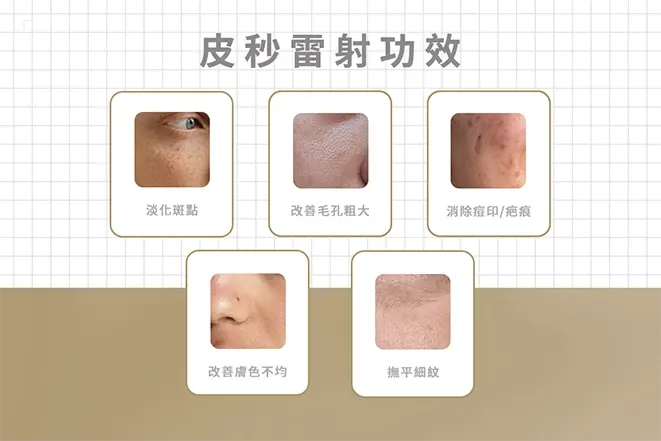
1. Clearing Melanin: Fading Spots and Brightening Skin Tone
Picosecond laser is best known for releasing energy in an extremely short time, shattering melanin into “dust.” This is more easily cleared than with traditional lasers and causes very little thermal injury, greatly reducing the chance of post-treatment “hyperpigmentation.”
- Indications: Sunspots, freckles, age spots, melasma, uneven skin tone, sallow and dull skin
- Advanced uses: Removal of tattoos of various colors, pigmented acne scars (red/dark brown marks)
2. Stimulating Collagen: Smoothing Fine Lines and Boosting Elasticity
When picosecond laser is paired with a “focusing lens (honeycomb mode),” energy reaches deep into the dermis and, through the LIOB cavitation effect, strongly activates fibroblasts.
- Indications: Fine lines around the eyes, dry lines around the mouth, loss of skin elasticity, early tired-looking skin.
- Expected results: After treatment, skin feels softer and smoother and makeup goes on better, achieving a “skin rejuvenation” effect.
- Doctor's reminder: Picosecond laser effectively improves “superficial” fine lines, but for deep dynamic wrinkles (such as crow's feet) or tissue loss (such as nasolabial folds), combining it with treatments such as Botox or RF will give better results.
3. Repairing Damaged Tissue: Improving Enlarged Pores and Fading Depressed Scars
The honeycomb focusing lens produces extremely high energy density, which can remodel damaged underlying tissue without harming the epidermis.
- Indications: Depressed acne scars, enlarged pores, excessive oil production in oily skin.
- How it works: The micro-injuries created by the cavitation effect trigger the “wound repair mechanism,” rearranging collagen to support collapsed tissue from the inside out, shrinking pores and smoothing scars.
Why Do Picosecond Laser Prices Vary So Much? Devices, Wavelengths, and Traps to Avoid
4 Factors That Affect Picosecond Laser Prices
Picosecond laser prices on the market vary enormously; a reasonable price falls between NT$6,000 and NT$15,000, and the factors affecting price can be divided into the following four:
1. Device and Lenses
When choosing a treatment, first confirm whether the device is genuine. Does it have a Taiwan FDA medical device license? Which lenses (handpieces) will be used?
Different devices use different patented lenses and wavelengths, and lenses affect laser energy intensity, so each device suits different indications, and of course, picosecond laser prices differ as well.
2. Number of Shots and Treatment Area
Most packages you see on the market offer “unlimited shots,” while some limit the number of shots and treatment area (which may affect results). So before buying a package, besides checking the price, be sure to ask about these details!
3. The Doctor's Experience and Expertise
For any treatment, the doctor's experience and expertise greatly affect the overall results. From pre-treatment assessment and analysis, energy distribution during treatment, device technique, and handpiece wavelength to post-treatment follow-up and observation, everything relies heavily on the doctor's experience!
4. Add-On Items
Finally, note that some very cheap picosecond laser prices may not include numbing cream, handpiece use, or post-treatment care, so we recommend asking about all the details before treatment to avoid getting shortchanged.
In addition, many patients add “honeycomb” treatment during their laser session to improve acne scars and pores, which also affects the price!
2026 Picosecond Laser Device Comparison
There are many picosecond laser devices, each with different patented technology, wavelengths, and advantages. Here are 6 devices commonly found on the market:
| StarWalker PQX | Discovery Pico | PicoPlus (4D) | PicoQ | PicoWay (holographic) | PicoSure (alexandrite) | |
|---|---|---|---|---|---|---|
| Origin | Europe | Italy | Korea | USA | USA | USA |
| Pulse duration (ps) | 300 ps (ultrafast) | 450 ps | 450 ps | 750 ps | 450 ps | 550-750 ps |
| Peak power | 2.7 GW | 1.8 GW | 1.8 GW | 0.8 GW | 0.9 GW | 0.36 GW |
| Core wavelengths (nm) | 1064 / 532 | 1064 / 532 / 694 | 1064 / 532 / 595 / 660 | 1064 / 532 | 1064 / 532 / 785 | 755 |
| Lens technology | Smart fine-tuned star focusing | ReFix super lens | Hexa honeycomb multifocal | Golden honeycomb, traditional Microlans technology | Holographic lens | Honeycomb lens |
| Indications | All-round, stubborn spots | Depressed scars, deep pigmentation | Vascular lesions, tattoos | Hyperpigmentation | Superficial spots, tattoos | Pigmented spots, skin rejuvenation |
| International certification | FDA/CE/TFDA | FDA/CE/TFDA | FDA/CE/TFDA | FDA/CE/TFDA | FDA/CE/TFDA | FDA/CE/TFDA |
| Medical device license no. | No. 034171 | No. 030388 | No. 030366 | No. 028340 | No. 029879 | No. 028802 |
How to Choose a Picosecond Laser Wavelength: Is Longer Better?
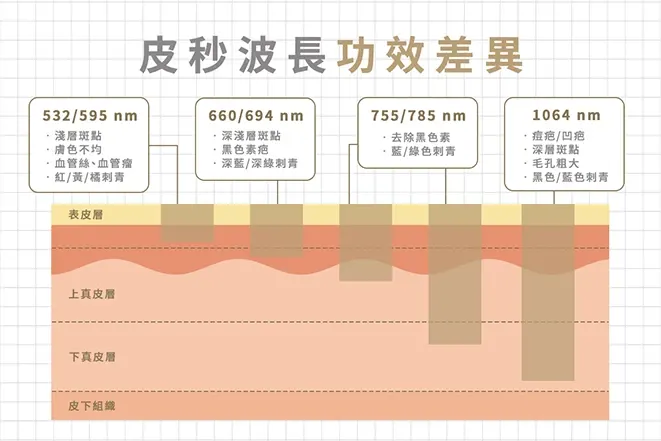
Did you know that laser wavelength affects treatment depth and results? That's why it's essential to talk with your doctor and get an assessment before treatment, so the most appropriate energy and results can be delivered. Here is a brief introduction to 5 wavelengths and the skin concerns they address:
1. 532/595 nm Wavelength
Acts on the “epidermis.” Suitable for superficial spots (sunspots/freckles), uneven skin tone, lighter-colored tattoos (red/yellow/orange), and conditions caused by vascular proliferation or dilation.
2. 660/694 nm Wavelength
Also acts on the “epidermis,” but slightly deeper than 532 and 595. Suitable for pigmented scars, tattoos in mainly dark blue and dark green tones, and deep and superficial spots (melasma/sunspots/freckles).
3. 755 nm Wavelength
Acts on the “upper dermis,” precisely focusing energy on removing melanin particles without affecting the surrounding skin tissue and blood vessels.
4. 785 nm Wavelength
Acts on the “lower dermis,” slightly deeper than the 755 wavelength, so it is mostly used to remove sky-blue and green tattoos.
5. 1064 nm Wavelength
The deepest-acting wavelength, reaching the area close to the subcutaneous tissue. It is more effective at treating melanin, is also suitable for treating acne scars, and can remove black and blue tattoos.
Picosecond Laser Recovery Explained: How to Minimize Side Effects
Although picosecond laser is non-invasive, the laser energy still temporarily affects the skin barrier. For perfectly clear results, the “first 7 days after treatment” are the golden period that determines success. Below, a doctor breaks down post-treatment reactions and how to avoid pitfalls.
A Doctor Explains: Does Picosecond Laser Have “Side Effects”?
Many of the drawbacks people worry about with picosecond laser are actually normal physiological repair processes. The key is managing them correctly:
- Localized redness and itchy dryness: This is a mild inflammatory reaction after the skin is heated.
- Pinpoint bleeding under the skin: When treating deep spots or depressed scars, the energy produces the LIOB cavitation effect in the dermis, which may cause tiny pinpoint bleeding. These are not wounds and are usually absorbed naturally within 3–5 days.
- Darkening at the treated area: This is post-inflammatory hyperpigmentation.
- Doctor's tip: Apply cold compresses frequently within 24 hours after treatment, and use medical-grade repair products containing vitamin B5 or ceramides, which can significantly reduce discomfort.
How Long Is Picosecond Laser Recovery? A 7-Day Aftercare Guide
| Time | Skin condition | Care focus |
|---|---|---|
| 1–3 hours after treatment | Face noticeably hot, red, and swollen | Intensive cold compresses; wet compresses with saline |
| Day 1–2 | Redness and swelling subside; tiny scabs may appear | Avoid picking or scratching; use a medical-grade hydrating serum morning and night |
| Day 3–5 | Scabs start to fall off naturally; skin tone slightly darker | Critical period for sun protection! Avoid direct sunlight as much as possible |
| Day 7+ | Skin starts to look rosy and radiant | Collagen begins to grow; resume your normal skincare routine |
A Doctor's Golden Rules: 3 Hidden Pitfalls After Picosecond Laser!
To maximize results after picosecond laser, be sure to follow these “three don'ts and one do”:
[Do] Step Up Sun Protection and Hydration
After treatment, skin is extremely “thirsty,” so a hydrating mist and fragrance-free cream are a must. For sun protection, use products with SPF50+ / PA++++ and add “physical shade” such as a sun hat.
[Don't] Use Acids or Whitening Products
For 7 days after treatment, strictly avoid retinoic acid, salicylic acid, and high-concentration vitamin C, to avoid irritating the sensitive stratum corneum.
[Don't] Expose Yourself to High Heat
Keep shower water lukewarm. Strictly avoid hot springs, saunas, and hot yoga for 1 week after treatment. High heat dilates blood vessels, worsening redness and prolonging recovery.
[Don't] Rub Excessively
When cleansing, “press” instead of “wipe” to reduce physical friction on the fragile barrier.
Our Picosecond Laser Pick: Why Choose StarWalker PQX at NAISS CLINIC?
After learning about how picosecond laser works and the various devices, you may ask: why do experienced doctors recommend the StarWalker PQX? The new-generation flagship PQX at NAISS CLINIC not only combines the advantages of the photoacoustic shockwave and photothermal effects, but also redefines the treatment standard for picosecond laser with 3 core technologies.
1. Shortest Pulse Duration: 300ps
The shorter the pulse duration, the less time heat stays in the skin.
- Advantage: The ultrashort 300ps pulse precisely shatters melanin while greatly reducing thermal injury to surrounding tissue.
- Benefit: Very low pain, low risk of hyperpigmentation, and very fast fading of redness (usually recovered within 1–3 days), making it a top “lunchtime beauty” choice for busy people.
2. Maximum Output Energy: 800mJ
The energy level directly affects the depth and breadth of each treatment.
- Advantage: Stable high-energy output ensures excellent results even against stubborn, deep spots.
- Professional oversight: NAISS CLINIC doctors precisely calibrate energy parameters based on each patient's pigment distribution and skin thickness to achieve the best expected results safely.
3. Maximum Peak Power: 2.7GW
Power determines how finely melanin is shattered.
- Result: The powerful 2.7GW peak power thoroughly shatters melanin into “fine dust” rather than traditional granules.
- Benefit: Once pigment is turned to dust, the body's lymphatic system can clear it more quickly, which means you need fewer total sessions than with traditional lasers, for better value.
FAQ
Does picosecond laser hurt?
Picosecond laser works by shattering melanin in a very short time, so pain is relatively mild. Numbing cream is applied before treatment, and you'll only feel a slight prickling sensation. Pain may vary depending on the handpiece and energy, and you can tell the doctor during treatment so the energy can be adjusted.
Which skin conditions are not suitable for picosecond laser?
It is suitable for almost everyone! However, if any of the following apply, we recommend a doctor's assessment before treatment:
1. Highly photosensitive skin, or recently taking photosensitizing medications
2. Pregnant or breastfeeding women.
3. Sunburned skin, use of tanning products, or use of acid-based skincare products such as retinoic acid or AHAs.
4. Wounds, dryness and itching, rashes, or inflammation on the skin surface.
5. A tendency to form keloids, or a history of epilepsy.
6. A medical history related to the blood or immune system.
How many picosecond laser sessions do I need? Will I notice a difference after one?
Doctor's answer: Most people clearly notice brighter, smoother skin after the first session. During the maintenance phase, good sun protection and lifestyle habits are recommended, and it can be treated as an annual high-end skincare treatment.
- For spots: Depending on the depth of the spots, 3–6 sessions are usually recommended for the best clarifying results.
- For pores and depressed scars: 4–8 sessions are recommended, giving collagen enough cycles to grow.
What if I get “hyperpigmentation” after picosecond laser? How can I prevent it?
Under normal circumstances, the chance of hyperpigmentation from picosecond laser is very low.
How to prevent it? Choosing the 300ps StarWalker PQX physically reduces thermal injury. After treatment, be sure to step up sun protection, take extra vitamin C, and drink plenty of water to support metabolism. If temporary pigmentation appears, it usually fades naturally within 2–3 months.
Is hyperpigmentation more likely if I get picosecond laser in summer?
As long as you take care with sun protection and moisturizing, there's no need to worry about hyperpigmentation! Summer isn't a bad time for laser treatment. On the contrary, pores produce more oil in summer, and this oil can soothe the tiny post-laser wounds and prevent dryness, redness, and itching. In addition, the body's metabolism is faster in summer and skin repairs better than in winter, making it a good time for laser treatments with small wounds and quick recovery.
Who is picosecond laser best suited for?
If you have any of the following concerns, picosecond laser is your go-to solution:
- Enlarged pores: makeup often settles into visible pores
- Spots: sunspots, age spots, Hori's nevus, or hyperpigmentation on the face
- Smoother, refined skin: want to improve rough texture, dullness, fine lines, and early signs of aging
- Removing spots and pits: want a more efficient way to remove multicolored tattoos or pitted acne scars
Why do I break out after picosecond laser, and what should I do?
Why do breakouts happen? Laser energy reaches deep into the skin and creates thermal stimulation. If there are hidden comedones or clogged pores beneath the surface, the energy can speed up their expulsion, causing “inflammatory acne.” In addition, if you have rosacea or Demodex mite issues, post-treatment reactions may be more noticeable.
What should I do?
- Don't squeeze: The skin barrier is fragile after treatment, and squeezing can easily cause infection or leave pigmentation (hyperpigmentation).
- Topical ointment: Apply a thin layer of the anti-inflammatory ointment prescribed by the clinic; breakouts usually clear up on their own within 1–2 weeks.
- Simplify your skincare: Stop using products with complex ingredients, alcohol, or acids, and stick to basic moisturizing.
How can I prevent it? Step up moisturizing one week before treatment to keep your skin stable. If breakouts after treatment are severe, be sure to return to the clinic for a doctor's assessment, and don't apply strong acne ointments on your own.
How long do picosecond laser results last, and how often should I get it?
Generally speaking, you will see some results after every session, but they vary depending on the treatment goal, individual constitution, aftercare, and other factors. In addition, skin changes cyclically, and dead skin cells and pigmentation may build up again, so we recommend treating picosecond laser as regular maintenance. First-timers can discuss with their doctor a plan of one session every 1–2 months, then switching to one session every 3–6 months once the skin is stable, to maintain the best results.
This article is for general information only. Results vary from person to person; please consult a doctor in person before deciding on any treatment.