Contents
Do enlarged pores make your skin look a notch worse than everyone else's? Will a picosecond laser definitely shrink them? To improve enlarged pores, you first need to know which type you have, because each type calls for a different treatment. This article explains what pores do, breaks down the five main types of enlarged pores, and recommends the matching aesthetic medicine treatments.
What Do Pores Do?
Besides growing hair, pores are also responsible for expelling the oil secreted by the sebaceous glands and shedding dead skin cells, letting the oil form a protective film on the skin that moisturizes and shields against external irritation. When pore sebum secretion is well balanced, pores protect the skin.
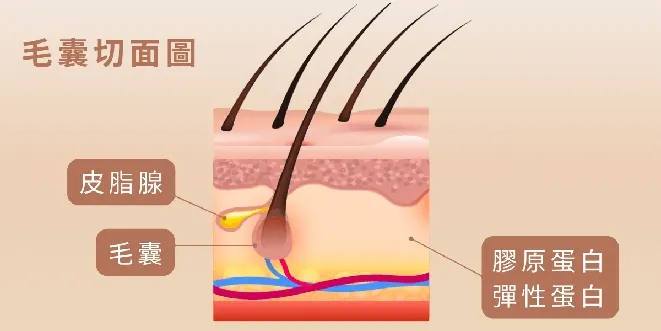
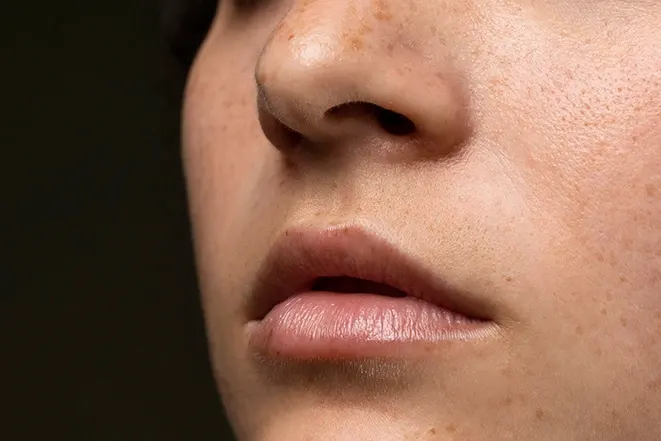
Pores are beneficial to the body, but if they become too large, they can hurt your appearance or make makeup cake. Factors that affect pores include genetics, ethnicity, and sex. For example, men's pores are generally larger than women's, pores of people of African descent are larger than those of people of European descent, and pores of people of European descent are larger than those of people of East Asian descent.
Many people turn to aesthetic medicine lasers to deal with enlarged pores, and picosecond lasers can indeed solve many skin problems, even effectively improving pitted acne scars. So why do some cases of enlarged pores respond poorly to laser treatment? First, learn about the different types of enlarged pores below, understand the cause, and then treat accordingly.
1. Enlarged Pores From Demodex Mites
Analysis:
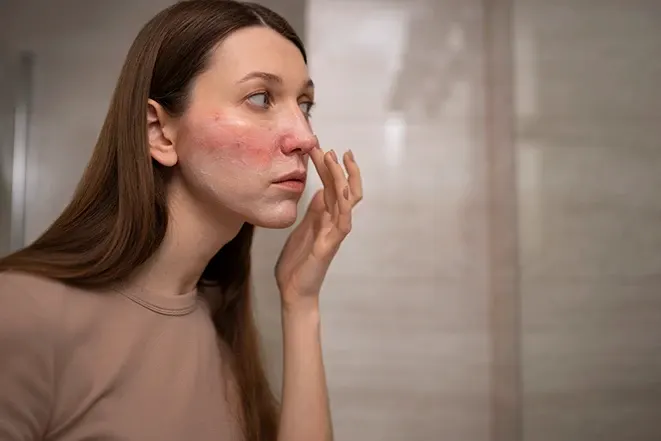
Demodex mites are parasites found on the faces of nearly all adults. Generally, they are present in very small numbers and coexist peacefully with the skin. But if a medical condition requires long-term use of oral or topical steroids, causing a decline in local immunity, or if skincare habits are improper, Demodex mites may proliferate in large numbers and lead to skin problems such as rosacea. In addition, large numbers of Demodex mites clog pores and stretch them wider.
How to Improve It:
Treatment for this type of enlarged pores has a clear goal. You can use medications such as Soolantra to eliminate the Demodex mites, and the pores will shrink as a result and the skin will no longer feel rough. If you don't check whether there are too many Demodex mites and rashly use a laser to shrink pores, it may cause pustules and inflammation after the procedure.
2. Enlarged Pores From Sebaceous Filaments and Comedones
Analysis:
The sebaceous filament type occurs when pores are open but too much oil is secreted and clogs them, stretching the pores wider. Excess sebum, dead skin cells, and metabolic waste lodged in the pores make the hair follicles swell and form comedones. If not handled properly, they can trigger inflammation and turn into red, swollen, pus-filled pimples, and in severe cases may even leave acne scars.
How to Improve It:
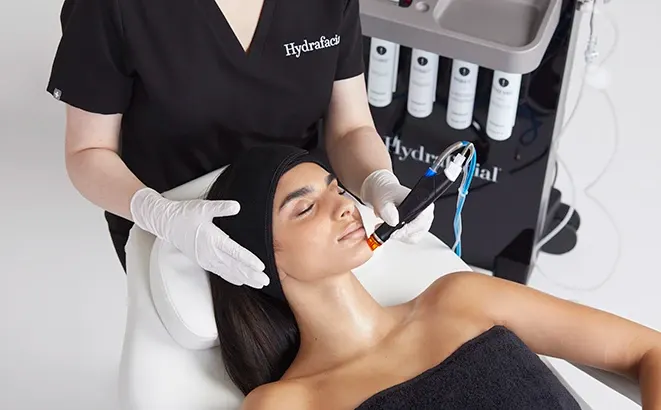
Proper cleansing can remove sebaceous filaments. You can have a HydraFacial treatment to cleanse the skin gently, paired with AHA and mandelic acid peels, to quickly clear large amounts of sebaceous filaments and unclog pores. Comedones and pimples can also be deep-cleansed and conditioned with HydraFacial to remove impurities from the face and protect the stratum corneum, helping to shrink pores.
Learn about the treatment:
What Is HydraFacial? A Breakdown of This Skin Management Method
Learn more:
The Complete Guide to Saying Goodbye to Comedones: Refresh Your Skin!
Get Rid of Acne Scars and Dull, Dark Pores: Mandelic Acid Gives Your Skin a Fresh Start
3. Oily-Type Enlarged Pores
Analysis:
As mentioned above, the function of pores is to expel the oil secreted by the sebaceous glands in order to protect and moisturize the skin. But when oil production is too heavy, causing oil and old dead skin cells to build up inside the pores, the pore channels are stretched open and the pores become enlarged, and the oily type is the most common type of enlarged pores, which tends to come with sallow, dull skin and other problems.
How to Improve It:
For oily-type enlarged pores, you need to control oil secretion and improve unclogging. You can use oral retinoids (vitamin A acid) to control oil and shrink pores, and the dose does not need to be as high as for treating acne. However, oral retinoids are still a medication, so they must be evaluated by a professional doctor.
Many oil-control products on the market mostly use powder ingredients to absorb large amounts of oil, but the rate at which your own sebaceous glands produce oil does not change, so it is hard for them to truly shrink pores.
Aesthetic medicine can use HydraFacial to absorb oil and cleanse the skin while hydrating and moisturizing, improving oily skin and clogged pores in a gentler, skin-friendly way. Some approaches also pair it with Botox injections, which can likewise effectively reduce oil secretion and shrink pores.
Learn more:
Severe Facial Oiliness, Blackheads, and Acne? Proper Skincare Tips to Improve Skin Problems
4. Enlarged Pores From Acne Scars
Analysis:
Enlarged pores from acne scars come in two kinds: icepick scars, and enlarged pores combined with pitted acne scars.
| Cause | Distribution | |
|---|---|---|
| Icepick scars | Severe acne inflammation leaves icepick scars; when icepick scars are very small, they look like enlarged pores | Irregular and scattered |
| Enlarged pores combined with pitted acne scars | Oily-type enlarged pores with pitted acne scars next to them | More regularly distributed |
How to Improve It:
This type of enlarged pores can be treated with a picosecond laser, which uses laser energy to remove pigment while stimulating collagen production, improving pitted acne scars and shrinking pores. It can treat multiple skin problems at once, such as spots and fine lines, for a thorough improvement in skin quality.
Learn about the treatments: Discovery Pico, StarWalker PQX
A Laser That Doesn't Cause Rebound Darkening! StarWalker PQX Improves Skin Condition
Learn more:
Ready for the Change of Seasons! Picosecond Laser for Enlarged Pores
5. Aging-Type Enlarged Pores
Analysis:
When we are young, the skin around the hair follicles is well supported, so pores are not noticeable. But as the skin ages and collagen is lost, the support around the pores decreases and the skin lacks elasticity. In addition, older skin tends to be drier, the tissue that holds up the follicles becomes slack, and pores enlarge once they lose support. Aging-type enlarged pores may appear teardrop-shaped or oval. This type of enlarged pores usually comes with other signs of skin aging, such as dryness, dullness, and sagging.
How to Improve It:
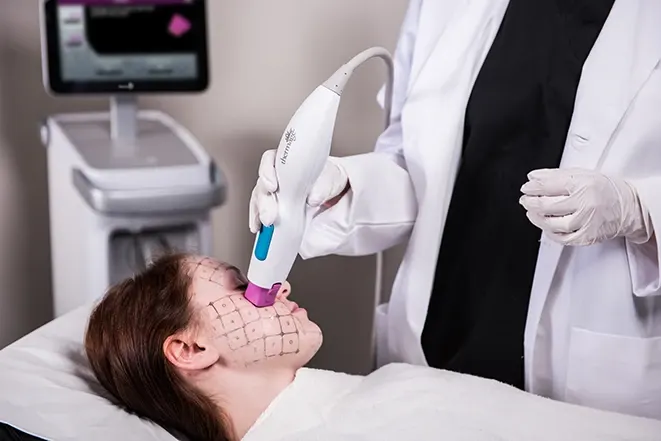
To improve aging-type enlarged pores, the main goal is to restore the skin to a youthful state. There are many treatments to choose from, such as picosecond laser, Thermage FLX lifting, and Ultraformer MPT, among others. They promote collagen production and restore elasticity to the tissue structure, so the slack tissue around the follicles is supported again and the pores shrink as well.
Learn more:
The Latest Thermage FLX Guide: Detailed Treatment Breakdown and Key Points Before and After
The New-Generation Ultraformer MPT: Three Types of People Who Should Not Miss It!
Thermage FLX vs. 4th-Generation Ultraformer MPT: Differences Compared at a Glance
To effectively treat enlarged pores, you must know which type you have. Sometimes two or three causes are combined, and in that case you need to choose the treatment that matches the causes in order to get noticeable results.
This article is for general information only. Results vary from person to person; please consult a doctor in person before deciding on any treatment.