Contents
Do you know where people look first when they meet? Looks, figure, height, outfit? The answer is "the eyes." A pair of captivating eyes can change the whole impression of your features and earn you plenty of points at first glance! Besides those born with big eyes, many people reshape their eyes with "double eyelid surgery," yet some ask: "Why do the same procedures give such different results?" Today we solve that mystery and share what you need to know about double eyelid surgery!
Same Double Eyelid Surgery, So Why Does One Person Look Better?
Even when two people choose the same clinic and doctor and the same surgical method, why do the results differ? Did the doctor make a mistake? In fact, eye surgery is not just about creating a double eyelid! It also depends on your own gaze, the size of your eyes, and how much the epicanthal fold affects them, which is why the same surgery can give different results!
Suture vs. Incisional Double Eyelid Surgery: What's the Difference?
The biggest difference is the "surgical method."
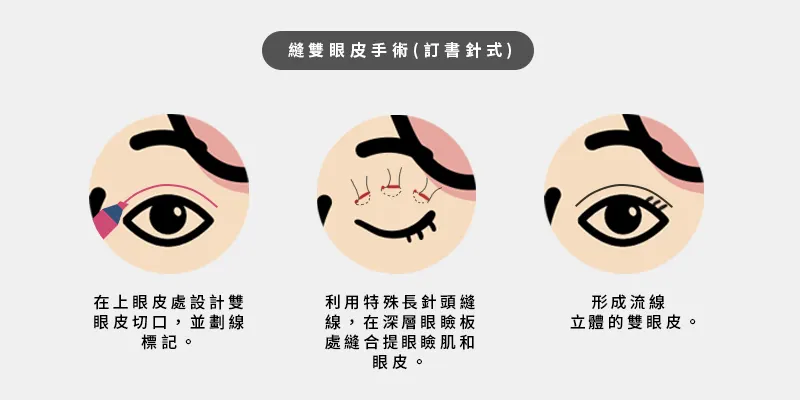
Suture double eyelid surgery uses sutures to create the eyelid crease. It suits young people without thick eyelids who have simple monolids or hidden double lids, with no problems of dull-looking eyes or uneven eyes. The results look natural, the incisions are small, and recovery is very short, with swelling going down in about 3-5 days.
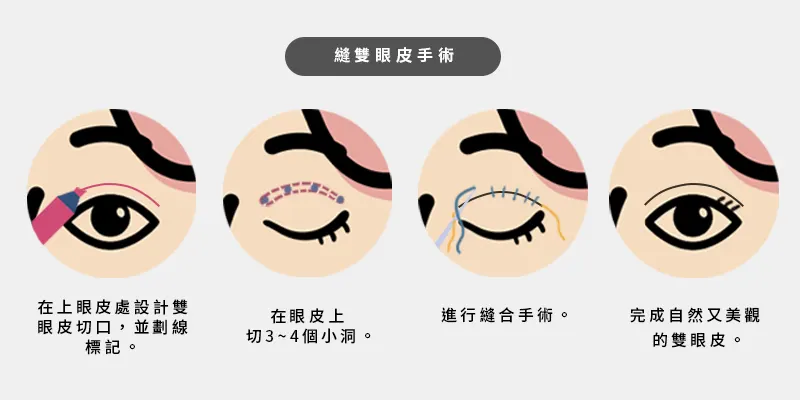
In addition, the crease from suture double eyelid surgery may disappear because the suture loosens, the fat is thick, or with aging; it cannot permanently keep the crease once and for all.
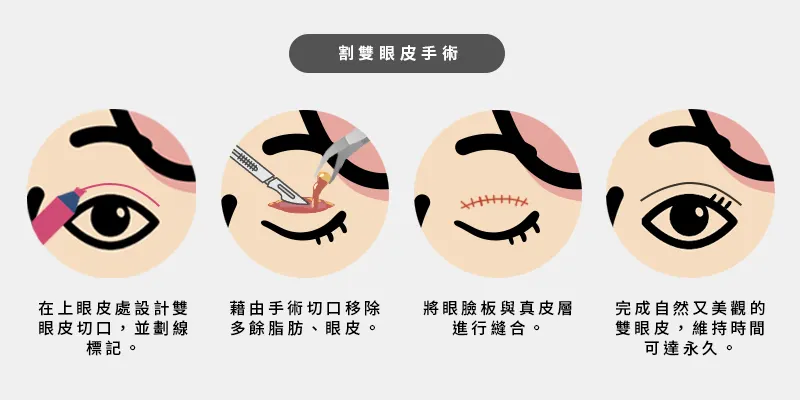
Incisional double eyelid surgery makes an arc-shaped incision in the upper eyelid and secures the deep and superficial anatomical tissues with sutures. Notably, in the end the permanent double eyelid is formed by adhesion between tissues. It suits aging or drooping eyelids, uneven eyes, and dull-looking eyes, and we also recommend combining it with epicanthoplasty (inner corner opening), levator muscle surgery, forehead lift, and similar methods for a comprehensive adjustment.
What Is "Staple" Double Eyelid Surgery?
Because the wound looks like staples, it is called "staple double eyelid surgery." The method also sutures inside the eyelid to create the crease. Compared with suture double eyelid surgery, the technique is different, so it is relatively more secure. It also offers customization (adjusted to your eye shape), and the surgery is simple and quick, though we still recommend that patients come to the clinic for an assessment with professional instruments! This type of surgery suits dull-looking eyes, uneven eyes, and people who do NOT have much loose skin.
A Little Background: Who Is a Candidate for Levator Muscle Surgery, and How Can You Tell?
At home, you can use "raising your eyebrows" to help judge whether you have a weak levator muscle or uneven eyes! People with a healthy levator muscle don't need to raise their eyebrows to open their eyes wider. If you habitually raise your brows, watch out for a weak levator muscle, and if you habitually "raise just one brow," watch out for uneven eyes!
What Is an Open-Type Double Eyelid? Do You Always Need Inner Corner Surgery?
An open-type double eyelid means the "inner crease" is separate from the "inner corner," runs parallel to the curve of the eye, and does not connect to the inner corner of the eye, making the eyes look deeper, larger, and longer.
The degree to which the epicanthal fold wraps the inner corner is divided into "severe, moderate, and mild" three categories:
- Patients with a severe fold have no visible caruncle (the "pink flesh" at the inner corner) and may look cross-eyed. For these patients we recommend "opening the inner corner," which gives better results!
- In patients with a moderate fold, the epicanthal fold makes the inner end of the double eyelid line "droop" (running vertically), so the line looks uneven. For these patients we also recommend opening the inner corner to improve the curve of the eyelid and make the overall look smoother.
- For patients with a mild epicanthal fold, whether to open the inner corner is a matter of personal preference.
Double Eyelid Surgery Precautions and Common Q&A

- How long does double eyelid surgery last?
Incisional double eyelid surgery is relatively secure. Staple double eyelid surgery needs special care: after surgery, try not to rub your eyes, and the chance of it loosening later will be lower than with traditional suture double eyelid surgery.
Incisional double eyelid > staple double eyelid > suture double eyelid - Rubbing your eyes makes the skin slide easily, which makes the crease less distinct.
- After suture double eyelid surgery, you only need to pay attention to "not pulling excessively"; after incisional double eyelid surgery, three days of rest is enough to return to your normal routine, but avoid "foods containing alcohol," such as sesame oil chicken, and avoid getting overly excited or lifting heavy objects, so that bleeding does not cause swelling; after staple double eyelid surgery, recovery is short and has little impact on daily life.
- Within seven days after surgery, use cold compresses to constrict the blood vessels, ease swelling, and relieve pain; after seven days, use warm compresses to dilate the skin's blood vessels and improve circulation, which helps reduce swelling. If, because of your constitution, warm compresses make the swelling worse, stop them immediately and keep using cold compresses!
P.S. Never apply a cold or warm compress for more than 20 minutes at a time, and lay a layer of gauze so it does not touch the skin directly, to avoid frostbite or burns. - Recovery after surgery takes about 1-2 weeks, and it takes 1-2 months for the eyes to look natural. Because everyone's constitution differs, even for the same person the degree and timing of recovery in the two eyes can differ a little! So at first it is normal to have an "uneven curve and different widths," which will disappear once the swelling goes down.
- Suture double eyelid surgery is most vulnerable to pulling, so in the early period do not wear contact lenses or pull on the wound. After 1-2 weeks you can wear makeup as usual, but we recommend not wearing false lashes. (Judge for yourself whether a movement might pull on the upper eyelid, and take careful care of it in the early period.)
- Incisional double eyelid surgery patients are advised to wait one month after surgery before applying eye makeup, since the scar may cause powder to cake, and improper cleansing can cause pigmentation.
- What if incisional double eyelid surgery fails? Is a revision hard?
Although the scar from incisional surgery is larger and a revision is somewhat harder than for suture double eyelid surgery, after a second revision the scar is still just one crease line. The surgery takes longer, but it does not enlarge the scar area.
This article is for general information only. Results vary from person to person; please consult a doctor in person before deciding on any treatment.