
Contents
"Facial bone contouring is terrifying!!" Many people shake their heads at the very mention of it. Even though they know the results, they hold back, worrying about regret that can't be undone, surgical risks, aftercare, side effects, and so on. Today the NAISS editorial team has put together a "complete guide to facial contouring" to help you get a first idea of your face shape, judge whether you need contouring surgery or what kind of approach suits you, in the hope of giving some direction to those still watching and waiting or holding back.
What Is Facial Contouring Surgery?

"Facial contouring surgery" aims to correct the relative position of the upper and lower jaws, using osteotomy, bone shaving, or bone grafting to improve the facial skeletal structure and refine face shape and contour. The most common use is treating bite problems caused by skeletal abnormalities that cannot be fixed by orthodontics alone, using craniofacial reconstructive surgery to move the bones and teeth together to the ideal position.
Orthognathic Surgery vs. Facial Contouring: What Does Your Face Shape Really Need?
When braces can't correct a problem, orthognathic (jaw) surgery is the only option, and thinking of orthognathic surgery makes people think of bone contouring. So is orthognathic surgery the same as contouring surgery? In fact, both soften the facial lines, and in many cases the two must be combined for the best result. So what exactly is the difference between these seemingly similar surgeries?
Orthognathic Surgery:
This is surgery to correct abnormalities of the upper and lower jaw bones and the bite of the teeth. After the patient has had a general dental, oral, and whole-body evaluation, the doctor uses X-rays or dental models to understand the development of the facial bones and teeth, then performs surgery according to a suitable plan to achieve the correction.
How orthognathic surgery works: Basically, the upper and lower jaw bones are cut, repositioned, and then fixed. After surgery the cheeks will be swollen and numb for about two weeks, and will gradually return to normal after about two months.
Facial Contouring Surgery:
Facial contouring surgery differs from orthognathic surgery in that it "does not change the bite" and only adjusts the facial contour, so some people also call it contour surgery. This type of surgery includes cheekbone reduction, mandible (jaw angle) reduction, and chin reduction.
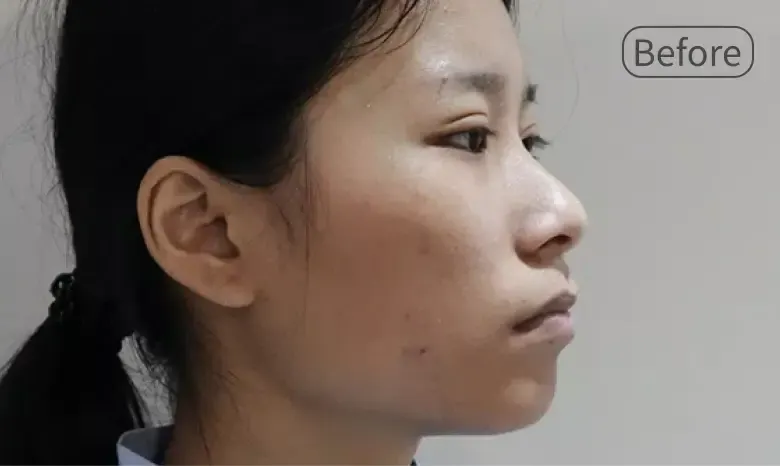



1. Cheekbone reduction: The cheekbones are an important part of the facial contour. In Western countries, people generally have deeper facial contours, so prominent cheekbones help highlight the eye sockets. East Asians are the opposite: with less defined contours, overly prominent cheekbones can make the face look "too wide" and "abrupt and out of proportion," so cheekbone surgery is needed to improve this.
2. Mandible (jaw angle) reduction: Keyword: "square face." If this is your concern, mandible reduction is a good fit. As the name implies, it shaves off the angle of the lower jaw to create a smooth, egg-shaped line.

3. Chin reduction: It is suited to those whose lower face flares outward too much, square faces, and chins that are thick, too wide, or too long. It can also narrow the face width and chin at the same time and sculpt a V-shaped face.
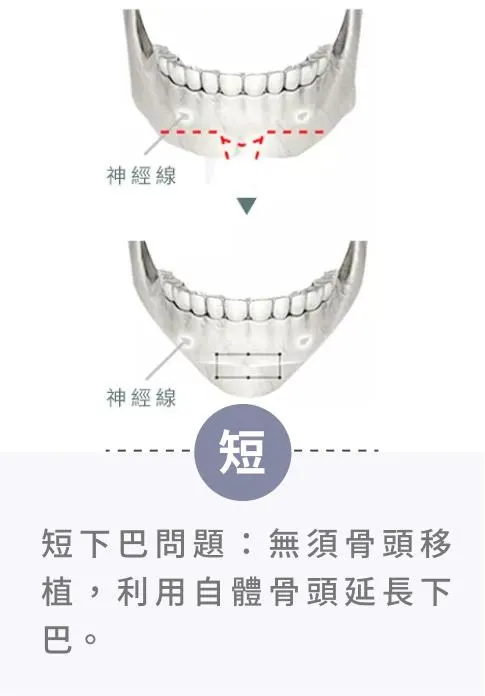
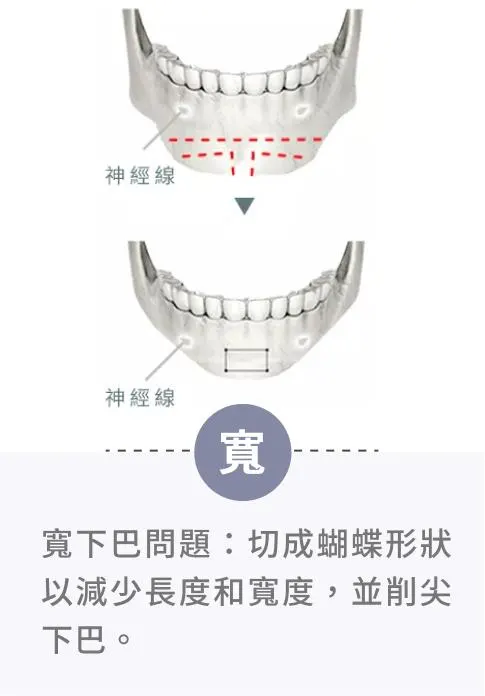
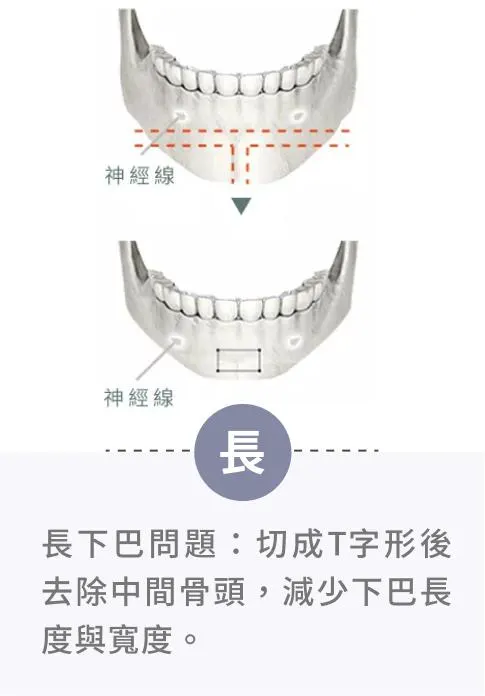
P.S. Both procedures are intraoral facial bone surgeries, each requiring 1-2 weeks of recovery, and we generally recommend doing them in one session. So pre-op examination and consultation are very important, to avoid operating twice on the same area and lengthening recovery!
Can Contouring Be Done on Only One Side?
Patients who have already had orthodontic and bite correction but still have facial asymmetry, whose asymmetry is concentrated in one area (such as the chin), or whose bite is normal but one side of the jaw angle is particularly prominent: in these special cases, one-sided contouring surgery can be attempted to improve the asymmetry. However! If the area to be removed is too close to a nerve, further surgical discussion and planning are needed, and orthognathic surgery is usually recommended instead.
Are There Many Side Effects After Contouring? Is Aftercare a Hassle?
Facial contouring surgery may lead to the following problems:
1. Facial swelling: Generally most obvious on days 2-3 after surgery and clearly improved after 1 week. Icing the cheeks and elevating the head of the bed can reduce swelling. Complete resolution usually takes about three months.
2. Postoperative bleeding and wound hematoma: If swelling keeps increasing over a short time, it may be bleeding from the surgical wound. Ice and moderate pressure on the wound can reduce the chance of bleeding. If bleeding does not stop, another operation may be needed to stop it, and if hemoglobin is too low a blood transfusion may be required. A few patients develop a hematoma only a few weeks after surgery.
3. Wound infection: Because the incisions are all inside the mouth, these are clean-contaminated wounds. According to U.S. CDC reports, there is still a wound infection rate of less than 10%.
4. Abrasions of the lips and skin around the mouth: Because most of the surgery is performed inside the mouth, instruments going in and out may cause superficial injury to the surrounding skin. This usually heals within 1 to 2 weeks and generally leaves no scar.
5. Reduced sensation in the lower lip and chin skin, and numb gums: Because of vibration and traction during surgery, temporary numbness can occur even if the inferior alveolar nerve is not damaged, causing numb gums and reduced sensation in the lower lip and chin skin after surgery. It usually recovers in about 3 months to half a year.
6. Reduced sensation in the cheek skin: Upper jaw surgery is performed very close to the infraorbital nerve, which can cause temporary nerve numbness and affect facial sensation. It generally recovers completely.
7. Sagging of facial soft tissue: After bone is removed or set back, support for the facial tissue also decreases, which can cause the facial tissue to sag. This may happen in older patients, patients whose bone position changes more, or those with insufficient skin elasticity, and further plastic surgery may then be needed to improve it.
Facial Contouring Surgery to Sculpt Your Own Natural Look
Is Aftercare Hard? Just Keep These Points in Mind
1. Keeping your mouth clean, caring for the wound properly, keeping a regular routine, and avoiding bad habits all lower the chance of infection.
2. For one month after surgery, avoid raw food, seafood, and foods with bits or residue; for one week after surgery, avoid spicy and irritating foods, and no smoking or alcohol.
3. Contouring patients wear a compression head wrap, which reduces bleeding and swelling and helps the tissue settle for a good recovery.
4. In the first three days after surgery, because the wounds haven't healed, keep applying cold packs to reduce bleeding and swelling; use ice packs at least 4-6 times a day, 15-20 minutes each time.
5. From day four, once the wounds have healed, you can start warm compresses; use a towel or heat pack at least 4-6 times a day, 15-20 minutes each time, to promote metabolism and circulation, which can quickly improve swelling.
6. Do not massage vigorously within one month after surgery, to avoid bleeding and reduce the side effect of skin laxity.
7. Within one week after surgery, avoid keeping your head down for long periods, strenuous exercise, and lifting heavy objects.
Quick Guide to Post-Op Care Steps:
First four days after surgery: After meals, rinse with iodine solution first, then with saline and distilled water. A drain is placed in the mouth for the first three days to help blood fluid drain out, and it is removed on day three.
Day five after surgery: Rinse with mouthwash; eat liquid foods and foods without residue.
Day seven after surgery: You can start eating foods that need chewing, but keep rinsing.
This article is for general information only. Results vary from person to person; please consult a doctor in person before deciding on any treatment.