
Contents
Hyaluronic acid filler is one of the most popular aesthetic treatments in recent years. The treatment is quick, results are immediate, and, best of all, the price is affordable, so it is the first choice for many people who want to smooth fine lines, correct facial hollows, or enhance the lips. What filler fears most, however, is shifting after the treatment or unnatural facial contours. This article gives you a complete guide to hyaluronic acid filler, including complications, precautions, indications, and side effects!
What Is Hyaluronic Acid?
Hyaluronic acid, also called hyaluronan, is a substance the human body naturally makes, with high viscoelasticity, water retention, and lubricating properties. In the joints it acts as a lubricant, and in the dermis it keeps the skin hydrated and elastic, making it widely regarded as the best moisturizing ingredient. As we age, the skin produces much less hyaluronic acid, so tear troughs, nasolabial folds, and other lines begin to appear, and injecting hyaluronic acid into these hollow areas can restore a plump, full face.
Types of Hyaluronic Acid
Hyaluronic acid fillers on the market fall into three basic types: particulate, gel, and flexible.
Particulate Type

Large pieces of gel-like hyaluronic acid are sieved into small particles, and the particles are clearly visible, which is also called biphasic hyaluronic acid and has better overall support. Common brand: Hya-Dermis
Gel Type

There is no sieving step. Large pieces of gel-like hyaluronic acid are ground directly into smooth, uniform particles, which is also called monophasic hyaluronic acid, with formulations distinguished by different degrees of cross-linking. Common brands: Juvéderm, Teoxane
What Hyaluronic Acid Brands Are There?
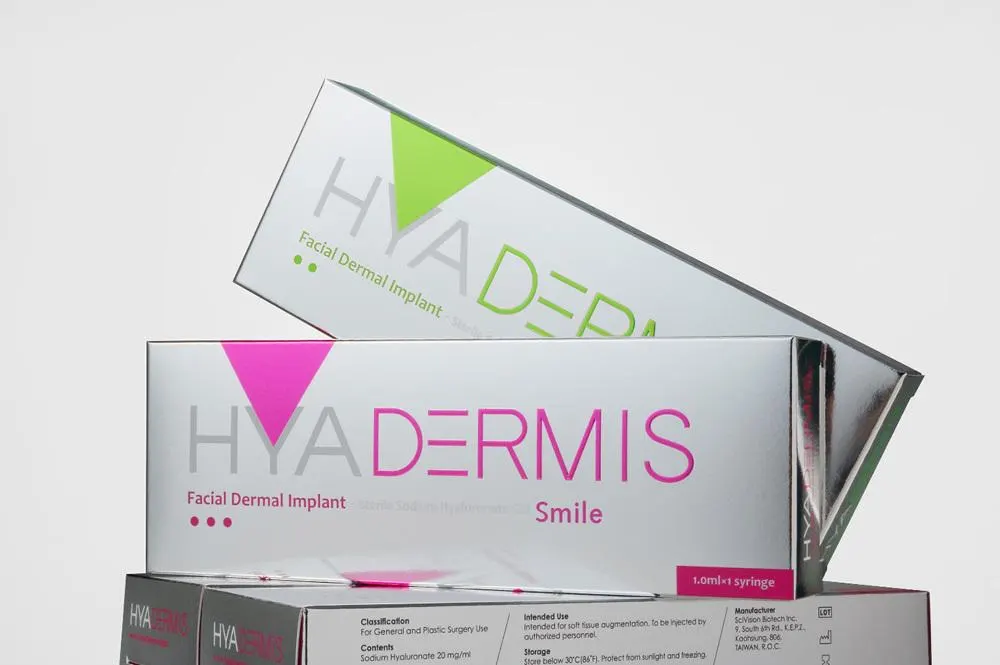
There are many common hyaluronic acid brands on the market. The main differences come from different cross-linking methods, which produce different particle sizes, viscosities, and cohesiveness. We usually distinguish them by molecule size: large-molecule hyaluronic acid is thicker and more supportive, suitable for nose augmentation and chin augmentation, while small-molecule is softer and suited to fine lines in the superficial layers of the skin.
Small molecule: can be injected into the superficial layers of the skin to fade fine lines, improve mild wrinkles, and provide highly effective hydration
Medium molecule: works in the middle to deep layers of the skin to fill hollows and wrinkles
Large molecule: suitable for filling large areas of the whole face, with stronger shaping and three-dimensional effect, for example the nose and chin.
Common brands on the market include: Neuramis, Restylane, Hya-Dermis, Juvéderm, Teoxane, Animers, and more.
Indications for Hyaluronic Acid
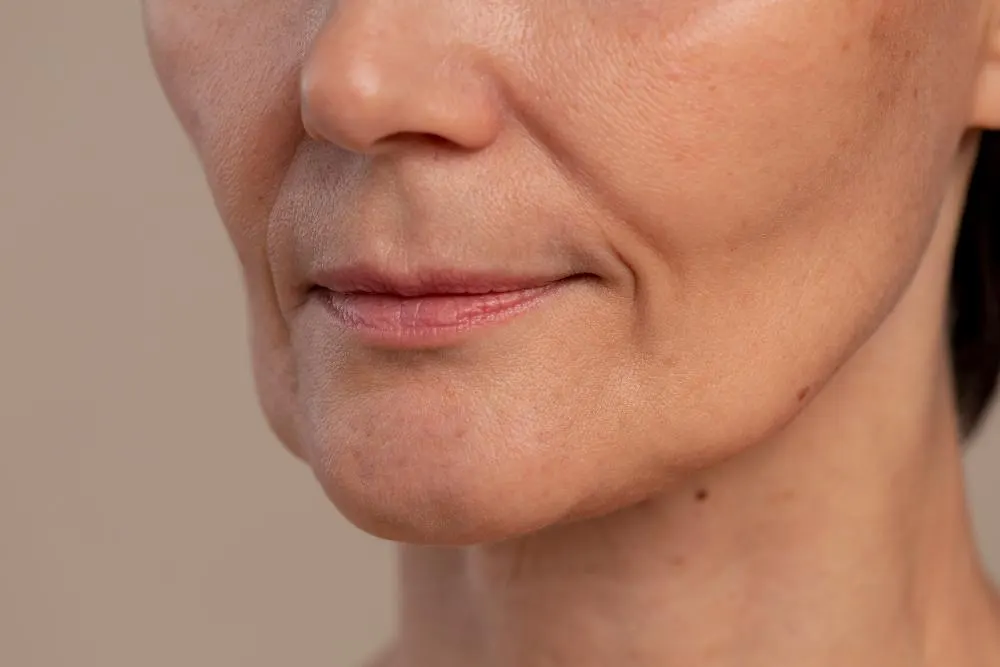
Wrinkle/hollow filling: temples, glabellar lines, nasolabial folds, tear troughs, cheek hollows, marionette lines
Contouring: nose, chin, lips, forehead
Anti-aging and lifting: apple cheeks, neck lines
Eliminate Dark Circles: Understand the 3 Main Causes and Solutions
Common Complications and Side Effects of Hyaluronic Acid
Local redness, swelling, and pain
Itching and bruising
Foreign-body sensation
Granuloma formation
Severe pain, blurred vision
Stiff, unnatural look
Hyaluronic acid is a natural ingredient, and the chance of allergic or rejection reactions is extremely low, but some people still experience the conditions above after injection. These mild to moderate symptoms usually ease on their own within a few days to 1 week after injection. If there is no improvement more than 1 week after injection, return to your doctor as soon as possible.
NAISS CLINIC's Professional Doctor Team
Not Everyone Can Get Hyaluronic Acid! 4 Types of People Advised Not to Get It

1. Pregnant or breastfeeding women, children, and people with abnormal liver or kidney function or major illness
2. People with abnormal blood clotting or taking anticoagulants; hyaluronic acid injection may increase the risk of bleeding
3. People with cancer or a history of cancer; some studies suggest hyaluronic acid injection may promote cancer cell growth
4. People with a history of severe allergies or allergy to any ingredient of hyaluronic acid
Precautions After Hyaluronic Acid Injection
Applying ice after the treatment effectively reduces the chance of redness, swelling, and bruising.
Avoid vigorous exercise and high-heat environments such as saunas and hot springs for one week after injection.
After the treatment, we recommend stepping up moisturizing and soothing skin care at home.
For 7 days, avoid pressing hard on, kneading, or massaging the injection area yourself, to avoid displacement and distortion.
Avoid spicy or irritating foods for one week.
This article is for general information only. Results vary from person to person; please consult a doctor in person before deciding on any treatment.