Contents
Unhappy with your nose? Born without a nasal bridge? Always envious of people with high, defined noses? Rhinoplasty can solve these concerns, but how should you care for your nose afterward? What are the side effects? How can you reduce swelling faster? This article covers every aspect of rhinoplasty aftercare.
4 Rhinoplasty Implant Materials
1. Second-Generation Silicone (Bistool)
Pros: Second-generation silicone suits Asian nose shapes better, comes in many sizes and styles without needing to be trimmed, and fits closely with body tissue, so it greatly reduces the chance of rejection, and it is also relatively inexpensive.
Cons: Silicone cannot solve the problem of capsular contracture, and because it is softer, it cannot sculpt the nose perfectly for people with a poor nasal shape, so the improvement is limited.
2. Gore-Tex
Pros: Gore-Tex is highly compatible with the human body, so it does not cause a rejection reaction, and it is also unlikely to develop capsular contracture and can be used long term without deforming, and it can be sculpted layer by layer to meet fine detail requirements.
Cons: It is more expensive and relies on the doctor's experience and advanced surgical skill.
3. Chimera
Pros: It combines the good support of a silicone nasal implant with GORE-TEX's effectiveness in reducing capsular contracture, and it has high compatibility with the body.
Cons: Everyone's nose is different, so the implant always has to be modified, but the Chimera is hard to sculpt: the GORE-TEX outer layer is only 0.3 mm thick, and sculpting breaks the surface coating and exposes the silicone, which loses GORE-TEX's advantage of reducing capsular contracture.
4. Autologous Tissue (Rib Cartilage, Ear Cartilage, Nasal Septal Cartilage)
Pros: Because autologous tissue comes from your own body, the biggest benefit is that it is fully compatible with body tissue. Compared with artificial materials, there is no rejection reaction, and the chances of capsular contracture and infection are also lower.
Cons: Harvesting your own cartilage means a second wound on the body, which lengthens recovery and may leave a scar. In addition, autologous cartilage carries a 10% risk of being absorbed, and the surgery is more difficult and more expensive.
Introduction to Rhinoplasty
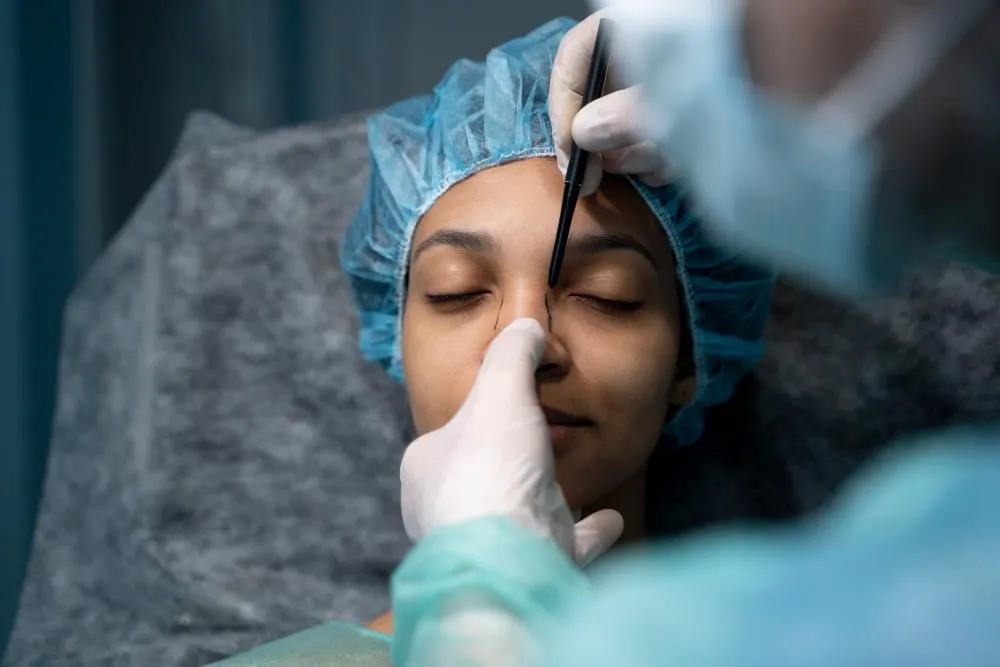
Rhinoplasty falls mainly into one-stage conventional rhinoplasty, two-stage Korean-style rhinoplasty, and three-stage structural rhinoplasty.
One-stage conventional rhinoplasty: An I-shaped or L-shaped implant is placed inside the nose to create height. It is suited to people who already have a nasal root but want a higher, more defined bridge. Conventional rhinoplasty is inexpensive and the surgery is relatively simple, but the implant is more noticeable, and a small number of people face a risk of the implant protruding through the skin.
Two-stage Korean-style rhinoplasty: An I-shaped or L-shaped implant is placed inside the nose to create height, and your own ear cartilage is then used to build up the curve of the nasal tip. Besides looking more natural, the ear cartilage cushions the tip, which greatly lowers the risk of the implant protruding, and it can also make the tip sharper, more upturned, and cute.
The surgery uses an “endonasal (closed) incision,” the advantage being that the incision is sutured inside the nostrils and leaves almost no visible scar after healing. The downside is limited sculpting ability and the inability to perform complex nasal correction. It suits people who want a higher, more defined bridge.
Three-stage structural rhinoplasty: It works on three parts, the nasal bridge, the columella, and the nasal tip, with the implant “cut into segments” to raise the bridge. This approach can make major adjustments to the nose shape for different problems: your own ear cartilage is used to build up the curve of the tip and refine it, while the tip and nostril wings are sculpted at the same time and problems such as a deviated nasal septum are improved.
This approach uses an “open incision” made across the columella. It can sculpt complex nose shapes such as a bridge that is too low, nostril wings that are too wide, or an upturned nose. The advantage is high customizability: it can tailor the result to your needs in every respect and sculpt the perfect nose that belongs to you.
Pre-Op Restrictions

1. For 1 week before surgery, avoid spicy or irritating foods, excessive drinking, and smoking
2. Fast from food and water for 8 hours before surgery
3. Within 2 weeks before surgery, do not use aspirin-type drugs or anticoagulants
4. Tell your doctor if you are prone to keloids or hypertrophic scars
5. Women should avoid surgery during menstruation, pregnancy, and breastfeeding
Post-Op Care

Within 1 week:
1. For the first 3 days, apply cold packs to the forehead and the area between the eyebrows (do not press hard), for at least 15 and at most 30 minutes at a time, 5–6 times a day, with a cloth between the pack and your skin to prevent frostbite
2. In the first 2 days, more blood-tinged fluid will seep from the wound; gently blot it dry with tissue, and seek medical care right away if there is heavy bleeding or severe nasal congestion
3. It is normal to have more runny nose and slight oozing of blood because the foreign material irritates the nasal cavity
4. From the seventh day after surgery (after the stitches are removed), begin warm compresses. Warm compresses mainly reduce swelling and bruising, and should continue until the bruising fades
Within 2 weeks:
1. Avoid blowing your nose hard or picking your nose, to prevent the wound from bleeding
2. Avoid irritating foods (hot, spicy, tobacco, alcohol)
3. Avoid strenuous activity (sun exposure, lifting heavy objects, running, fitness tests, etc.)
4. Avoid wearing glasses. If you must, wear framed glasses and tape the middle of the frame to your forehead so the frame does not press directly on the nasal bridge
5. Drink plenty of water, which can reduce the chance of wound bleeding
Common Q&A

1. Can I rub my nose or blow it after surgery?
The area is held in place with tape for 10 days after surgery. During recovery, avoid bumping the nose, rubbing it too hard, or sleeping face down to prevent displacement and deformity.
2. Will surgery affect my sense of smell or cause breathing problems?
No! The surgery is performed in the tissue layer between the skin of the nose and the inner nasal lining, so it does not affect the olfactory nerves or damage the structure of the nasal mucosa. Therefore it will not affect your sense of smell or cause any breathing discomfort.
3. How soon after surgery can I start exercising?
We recommend waiting one month after surgery before exercising, because exercise involves breathing in through the nose and out through the mouth, and overly large movements can cause bloody discharge. Both implants and your own tissue can shift. After 1 month you can do light exercise (brisk walking, cycling, etc.); we recommend waiting until 3 months to start swimming, ball sports, and the like.
4. How long does the swelling take to go down?
About 50% of the swelling goes down within 2 weeks, and the nasal root subsides faster than the tip. At one month about 80–90% of the swelling is gone, and at 3 months the nose looks its most natural.
This article is for general information only. Results vary from person to person; please consult a doctor in person before deciding on any treatment.