Contents
Do you struggle with nasolabial folds? Did you know they aren't only for older people? This article explains how nasolabial folds form and how to prevent and improve them, and finally introduces 4 non-surgical aesthetic treatments to get rid of them. If nasolabial folds bother you, this is a must-read!
What Are Nasolabial Folds?
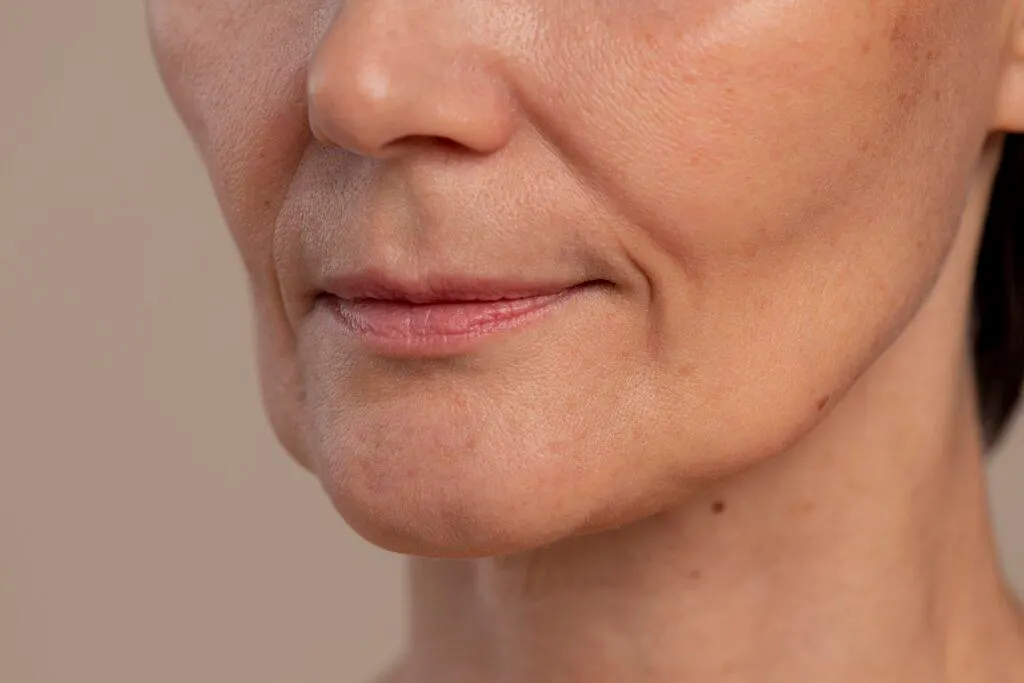
Nasolabial folds are the grooves that run from both sides of the nostrils down toward the cheeks and the corners of the mouth. Everyone has them to some degree; they are just deeper in some people than in others. As we age, the soft tissue gradually atrophies, the face loses its support and starts to hollow, and a distinct nasolabial fold forms.
Nasolabial folds can be divided into 2 types, “dynamic lines” and “static lines”:
Dynamic lines: usually appear only when making expressions or moving the muscles
Static lines: visible even when the face is at rest
Everyone starts out with faint dynamic lines, but over time, with long-term muscle pulling and gradually aging skin, dynamic lines turn into static lines.
3 Causes of Nasolabial Folds
Aging type
The most common type of nasolabial fold. As we age, collagen is gradually lost and muscles gradually loosen, so the skin loses elasticity, which easily leads to sagging skin and fat buildup, forming nasolabial folds.
Bone structure / hollow type
Mainly caused by a marked height difference in the facial bones, for example: naturally high cheekbones, a protruding upper jaw, or buck teeth. Because there is a step between the cheek and the mouth, a deep, distinct nasolabial fold forms
Muscle type
When we make expressions or talk, we move our facial muscles, and excessive contraction and pulling can produce nasolabial folds. For example, habitual movements such as frequently sniffling, scrunching your eyebrows and eyes, and pursing your lips can all make nasolabial folds deeper and deeper over time
Reduce and Prevent Mild Nasolabial Folds Through Daily Habits
1. Moisturize
Moisturizing is the foundation of all skincare, because dry, dehydrated skin makes fine lines much more visible. So when choosing skincare for nasolabial folds, look for moisturizing ingredients such as hyaluronic acid and collagen
2. Sun protection
UV rays are one of the culprits of skin aging, and long-term exposure damages the epidermis and dermis. Besides nasolabial folds, it also causes dark spots, dullness, laxity, and sagging. UV is present all year round, so you need to protect your skin from the sun in every season.
3. Massage
4 Non-Surgical Aesthetic Ways to Get Rid of Nasolabial Folds
1. Radiofrequency (RF)
RF is a non-invasive treatment. It uses heat to stimulate collagen growth, tightening the skin, restoring elasticity, and smoothing wrinkles, and can also make nasolabial folds shallower. Recovery time differs between RF types, but most treatments have no downtime and do not affect daily life. One session shows results, which last 1-3 years. NAISS CLINIC offers 3 RF lifting options: Morpheus8, Thermage FLX, and EXILIS RF.
Morpheus8: One of NAISS CLINIC's most popular treatments in the first half of 2023, it combines “microneedling” and “RF” to precisely heat the dermis and stimulate collagen growth for tightening, lifting, and wrinkle-smoothing effects, while also treating loose skin, orange-peel skin, stretch marks, and depressions and other concerns. It offers 3 types of tips to treat different areas and depths.
Read more:
NAISS CLINIC's Non-Surgical Treatments in the First Half of 2023
Thermage FLX: Heats the deep layers of the skin to stimulate collagen growth, achieving wrinkle reduction, fine-line smoothing, and skin tightening and more. Thermage FLX is suitable for the whole face and body areas, with 4 types of tips for different areas, and results last 18-24 months
EXILIS RF: Uses monopolar RF plus high-speed ultrasound conduction technology to make collagen fibers contract and reorganize and to produce new collagen, achieving skin tightening, sculpting and lifting, and improved skin texture, among other effects. A full course is 4-6 sessions, and results can last 1-2 years.
2. Ultrasound
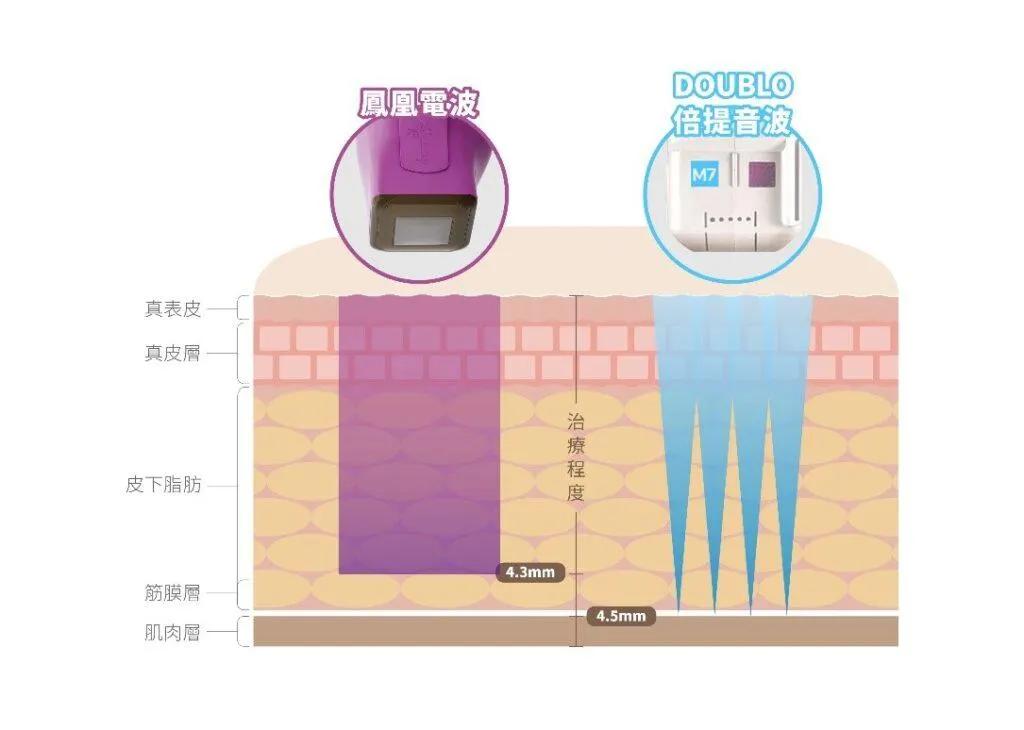
Ultrasound is also a non-invasive treatment. High-intensity focused ultrasound energy is concentrated on the fascia layer, likewise stimulating collagen growth, improving fine lines, pores, and evenness of skin tone. Ultrasound mainly targets aging-type nasolabial folds by firming loose skin. There are no wounds, no downtime, and no scars, results are visible immediately after treatment, and they last 1-2 years. NAISS CLINIC offers 2 ultrasound treatments: Doublo lifting and Liftera focused ultrasound.
Doublo lifting: Uses high-intensity focused ultrasound to concentrate energy on the fascia layer for a contour-lifting effect, which can improve skin aging, skin laxity, drooping eyelids, wrinkles, and other concerns, and one course lasts 1-2 years
Liftera focused ultrasound: Uses high-intensity focused heat technology to make collagen in the treated area tighten and grow, improving fine lines, pores, and evenness of skin tone, and hydrating the skin. Compared with traditional linear ultrasound, Liftera is faster to treat, less painful, needs no anesthesia, and effectively improves laxity and sagging across the whole face.
4th-generation Ultraformer MPT: Based on the principle of “high-intensity focused ultrasound” (HIFU), but it can concentrate 65-75°C of thermal energy at the target depth. Besides causing immediate tightening, these tiny thermal coagulation points stimulate collagen to reorganize and regenerate, so the skin tissue gradually regains firmness and bounce over one to three months after treatment, and can even achieve a firmer contour.
What is the difference between ultrasound and RF?
Ultrasound: Think of the fascia layer as a thin slice of meat that shrinks when it meets high heat
RF: Think of skin tissue as a large piece of meat that shrinks in volume when heated
In simple terms, RF is like ironing clothes with an electric iron, making the surface skin firmer, while ultrasound gives the skin an overall “upward lift”
Read more:
RF vs. Ultrasound: Principles, Prices, and Who It's For, Explained in One Article!
3. Filler injections
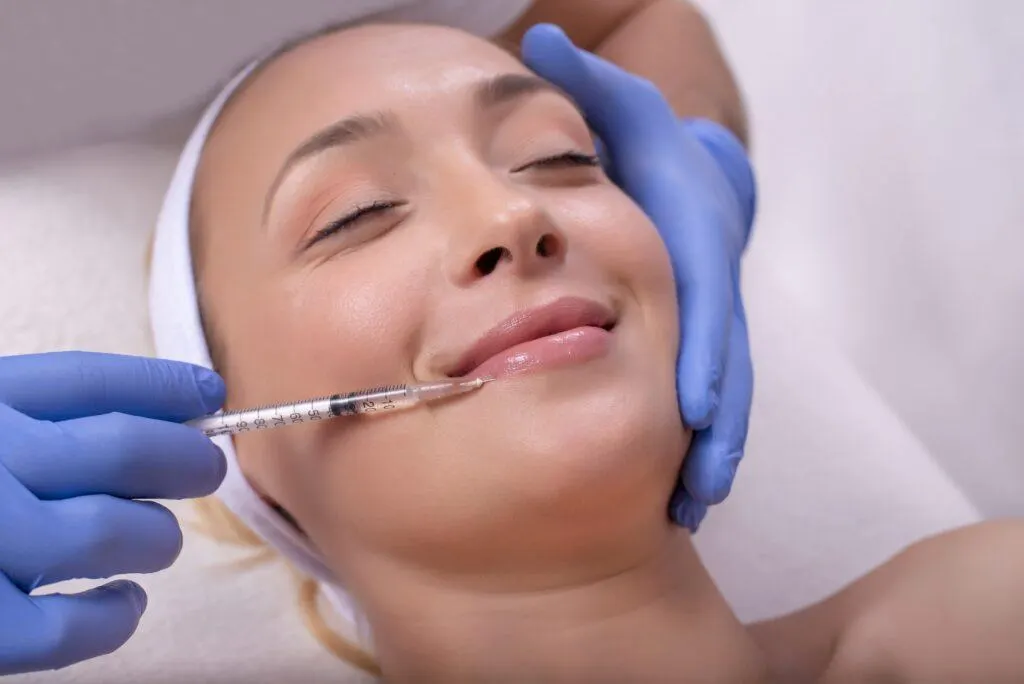
Injectables are the most common way to improve nasolabial folds. Different injectables work differently: some induce collagen growth, and others bind directly with water to give the skin a hydrated look. For example, hyaluronic acid filler fills nasolabial folds by injecting a “filler” into the creased hollows of the dermis, using the filling principle to support the skin. You can return to normal activities right after injection without affecting daily life, and how long it lasts depends on the type of injectable and your individual constitution, roughly 8 months to 2 years. NAISS CLINIC offers a variety of injectables: hyaluronic acid filler, botulinum toxin, Ellansé, Sculptra, and AestheFill
Read more:
The Best Value for Money! Sculptra, Ellansé, and AestheFill Prices, Pros, and Cons Revealed
4. Thread lift
Thread lifting uses medical threads that the body can absorb. Using minimally invasive technique, the medical threads are placed under the skin to lift its deeper layers, and their barbs tighten the skin tissue, achieving a lifting effect on nasolabial folds. Collagen is also produced in the skin tissue around the threads, which tightens the skin as well. Besides nasolabial folds, marionette lines and the jawline can also be treated with lifting.
Everyone gets nasolabial folds, and they become more noticeable with age. Prevention starts with daily skincare and massage, which can delay their appearance by a few years. If you want to get rid of nasolabial folds, we suggest starting with non-surgical treatments: consult a qualified doctor and choose the treatment that suits you based on the doctor's advice. If nasolabial folds are bothering you now, consider booking a clinic consultation.
This article is for general information only. Results vary from person to person; please consult a doctor in person before deciding on any treatment.