Contents
- Apocrine glands are the key to sweating
- Caught underarm odor from a girlfriend? A PhD wore his old shirt to get rid of the smell (story adapted from Li Ke Tai Tai)
- Are opposite sexes attracted by “odor”? European “scent dating” and the Sweaty T-shirt study
- Solving the sweat problem, but creating compensatory problems?
- Ways to reduce underarm odor and body odor
- Treatments for underarm odor: botulinum toxin and surgery
Everyone has a scent of their own. Some people have a natural fresh fragrance, while others have a distinctive body odor, and these scents are closely tied to your hormones and eating habits. Beyond better hygiene, skincare habits, and a touch of perfume, did you know that body odor can actually be “contagious”? From scientific and medical perspectives, this article shares some fun facts about body odor, along with an interesting little story! Let's take a look at these fascinating findings!
Apocrine glands are the key to sweating
Apocrine glands are what people worry about most. They are mainly located in the “armpits, behind the ears, areolas, and private areas” and other areas. Their outlets, like those of sebaceous glands, are in the hair shaft. Apocrine glands begin to secrete a rich, sebum-like mixture during puberty, containing proteins and fatty acids, in the form of a white liquid. Bacteria on the skin surface then use this mixture and break down its nutrients, and the armpits are humid, stuffy areas, and with the body supplying sweat as food for bacteria, the right temperature, humidity, and plenty of sweat naturally allow large numbers of bacteria to multiply. In fact, the skin hosts many symbiotic bacteria that form a barrier on the skin surface and block harmful outside germs.
Scientists have found that people with underarm odor have a higher proportion of Corynebacterium in the armpits, and Corynebacterium releases molecules containing “sulfur,” which easily produce odor.
Caught underarm odor from a girlfriend? A PhD wore his old shirt to get rid of the smell (story adapted from Li Ke Tai Tai)
Abroad, a Belgian PhD had not been dating his girlfriend long when, one day in her bed, he suddenly noticed a scent on his body that was not his own. He suspected that odor-producing bacteria from his girlfriend had transferred to him, raising the proportion of Corynebacterium in his armpits to as high as 50%. To avoid unnecessary arguments, he decided to get his own bacteria back and transplant them onto himself.
The PhD knew that Staphylococcus haemolyticus, which is not prone to producing odor, likes to grow on cotton. So he found an old T-shirt and wore it for several days, and the Corynebacterium dropped noticeably! He also got rid of the odor his girlfriend had passed to him. Why did wearing his own old T-shirt again solve the problem?
Because the old T-shirt carried his original bacterial flora, and the bacteria began to “fight” over the environment to grow in. The PhD's original bacteria won the battle, which helped him get rid of the stubborn odor.
Are opposite sexes attracted by “odor”? European “scent dating” and the Sweaty T-shirt study

Different countries hold quite different views on “odor.” In the United States, people have a stereotype about body odor and try to eliminate or cover it up as soon as it appears, while the French try to work with it, looking for a scent that matches their own body odor. That is why in Europe a kind of “scent dating” is popular, where participants are asked to collect “underarm sweat” and everyone rates it according to which scents they like. Although scientists have not yet identified human pheromones, people really do choose partners through “scent”!
In 1995 there was a classic Sweaty T-shirt study. Scientists believed women could use smell to find a partner whose genes are compatible with their own, so they collected T-shirts full of men's sweat and had women choose the most attractive scents. They found that the men the women chose mostly carried MHC genes different from their own, and offspring from a sperm and egg carrying different MHC genes tend to have better immunity. So looking for a partner by scent really can help produce a healthier next generation from an evolutionary standpoint.
Solving the sweat problem, but creating compensatory problems?
Many people who worry about excessive sweating and odor try surgery to fix the problem, but the body is very smart! Once the sweat gland problem is solved, sweat still needs a way out, so it may come out of the chest, back, groin, and other areas. Apocrine gland secretions carry a sebum-like mixture, so the food you eat enters the bloodstream and is then excreted through these channels as well. For example, men who love red meat often have body odor that women find unacceptable, so eating less spicy food, garlic, coffee, and curry can help reduce the odor of sweat a little.
Ways to reduce underarm odor and body odor
Ways to improve body odor in summer include: reducing sweat gland secretion, wearing loose clothing, and carrying a few changes of clothes with you. These all prevent sweat buildup and stuffiness, and also inhibit bacterial growth, lowering the chance of odor. When you have a moment at noon or in the afternoon, you can also gently wipe or rinse your armpits so that sweat, secretions, and bacteria don't stay trapped in one place.
Is it “heavy sweating” or “smelly sweat”? A comparison of underarm odor treatments
Treatments for underarm odor: botulinum toxin and surgery
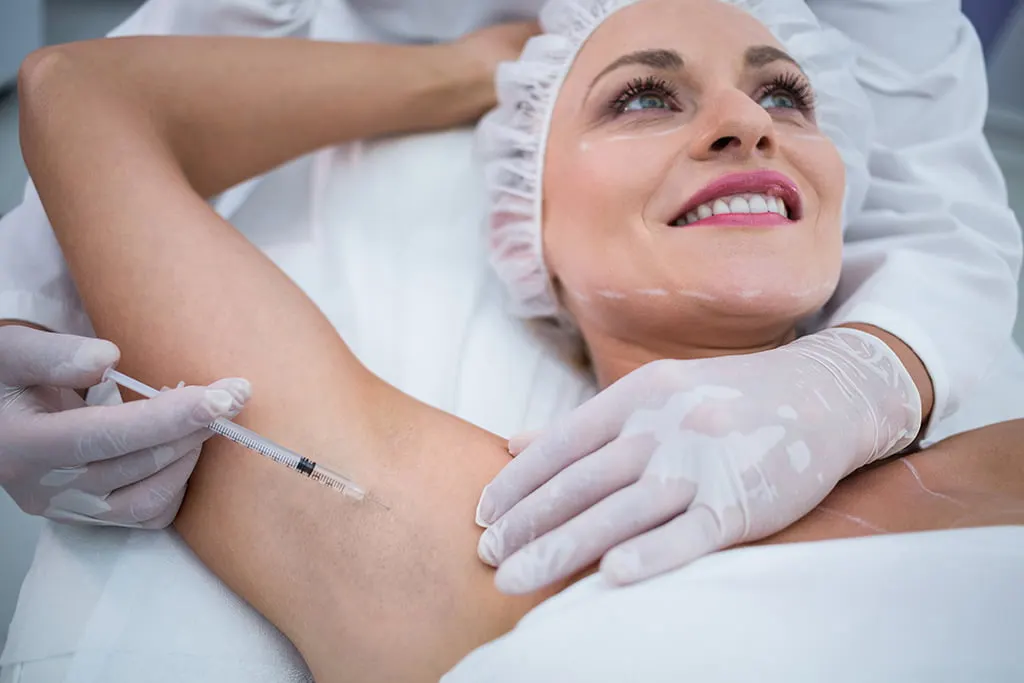
“Botulinum toxin” mainly puts the nerves that trigger sweat gland secretion to sleep, which reduces apocrine gland secretion. When the apocrine glands cannot secrete, the odor naturally decreases. One thing to note about botulinum toxin is that its effect lasts up to six months, so we recommend starting botulinum toxin injections one month before summer arrives (for example, in March), so the effect lasts through September, when the weather outside is no longer so hot and you don't need to worry about the effect fading. So if you want to treat odor with botulinum toxin, we recommend starting in spring!
Read more:
4 major botulinum toxin brands compared! Suitable areas, prices, pros and cons revealed
Patients who want a permanent fix or have more severe odor choose surgery, which comes in three types:
1. Powered rotating blade: the apocrine glands are removed directly, with an incision of only 1-2 cm. The rotating blade is inserted under the skin and destroys the apocrine glands through high-speed rotating scraping, permanently solving the odor problem.
2. Ultrasonic microwave thermal energy: using the high-frequency vibration of ultrasound, a special ultrasonic probe is inserted through a tiny incision (about 0.2-0.5 cm) to burn away the apocrine glands and reduce odor. The procedure is less painful and preserves the integrity and elasticity of the skin, so you can go back to work as usual the next day!
3. VASER liposuction: VASER ultrasound, known for liposuction, also has the advantage of treating underarm odor! Using 36,000 Hz ultrasound, it emulsifies the apocrine glands buried in the subcutaneous fat and then suctions them out, reducing the glands left in the body. After the procedure, underarm odor improves by 80-90%, which in terms of surgical results already exceeds many other approaches. Also, because VASER uses a probe through a tiny opening to suction the apocrine glands, the wound is small and recovery is quick, so it does not affect daily life!
In addition, because VASER's liposuction technology is excellent and the device is a professional liposuction system, while improving underarm odor it can also address problems such as accessory breast tissue and bat wings at the same time! You could say it solves several concerns in one go!
This article is for general information only. Results vary from person to person; please consult a doctor in person before deciding on any treatment.