Contents
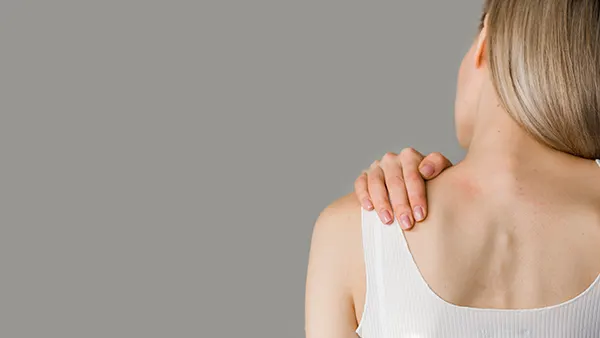
You!! Why are you so hunched? Stand up straight! Once “rounded shoulders” set in, you look bulkier, your neck looks short, thick, and clunky, your clothes take on a frumpy air, and you're forced to say goodbye to boat necklines and spaghetti straps! You'd like to change this predicament, but modern people are busy at work, either in front of a computer or looking down at a phone, which makes muscle development even more unbalanced and leads to a hunched back, raised shoulder blades, forward head posture, an exaggerated neck curve, and even insomnia, muscle tightness, and other modern-life ailments. Today we'll go over the ways to create the perfect “right-angle shoulders” and also help you understand what right-angle shoulders really are!
The Trapezius: Common Trouble for Office Workers and Phone Users
You often hear about the trapezius, but what is it? The trapezius is one of the shoulder and back muscles of the body, spread broadly across the upper back, neck, and back of the shoulders. It may seem like a “bad” muscle in people's impressions, but it actually has important functions!
Main functions of the trapezius include:
- Scapular stability: The trapezius is closely connected to the shoulder blade and stabilizes it so that it can move and rotate correctly when you exercise, thereby ensuring the stability and normal function of the shoulder joint.
- Head and neck movement: The upper trapezius helps the head tilt back, bend sideways, and rotate, and plays an important role in adjusting head posture. The middle and lower trapezius help the shoulder blade rotate backward and move downward.
- Upper limb movement: The trapezius also takes part in movements of the upper limb, especially at the shoulder joint. It helps stabilize the shoulder blade so that the shoulder joint stays in the correct position and movement during upper limb motion.
With so many important functions, why does everyone always want to get rid of it?Long-term poor posture, overuse, stress and anxiety, sports injuries, muscle imbalance, and so on can make the trapezius “bulge” or “tighten” (this is the main reason people dislike it and want to improve it). To prevent the problem, we recommend keeping good posture, exercising in moderation, and avoiding prolonged stress and anxiety.
If the trapezius is severely bulging or too tight, it may be related to the following causes:
- Poor posture: Holding an incorrect posture for a long time, especially keeping your head down, bending over, or sitting poorly for long periods, can lead to excessive fatigue and tension, then muscle discomfort, and over time chronic trapezius tension.
- Overuse: If the trapezius is overused for long periods, for example by lifting weights for long periods or continuous high-intensity training or doing shoulder-and-neck work for long periods, this can lead to excessive fatigue and tightness.
- Stress and anxiety: Stress and anxiety can both cause muscles in the body to tense up. Long-term stress and anxiety can keep the trapezius tight for extended periods, causing discomfort, and tension can also easily lead to tension headaches and discomfort.
- Sports injuries: Accidental injuries during exercise, such as severe strains, sprains, or muscle pulls, can all cause the trapezius to bulge and tighten.
- Muscle imbalance: If the strength and balance of other muscle groups in the body are off, for example overdeveloped chest muscles with weak back muscles, the trapezius may bear an extra burden, leading to bulging and tightness.
- Chronic conditions: Certain chronic conditions, such as fibromyalgia, rheumatoid arthritis, or degenerative osteoarthritis, can all cause trapezius tightness and bulging.
What Are Right-Angle Shoulders?
Having looked at the causes of trapezius problems, let's now understand what right-angle shoulders are. As the name suggests, they are when the neck and shoulders form a perfect 90-degree angle with no excess flesh, giving an impression that is sexy and slim. The most famous examples are BLACKPINK's Lisa and Jennie. There are many exercises online for “training” right-angle shoulders to help correct posture and body shape, but if your case is more severe, or you're the naturally lazy type, we've also compiled cost-effective, easy-to-access aesthetic treatments for you!
Neuronox: The Botulinum Toxin Korean Stars Get, and the Secret to a Natural, Youthful Look
BOTOX botulinum toxin | Smooth away the signs of aging while sculpting a slim, small V-line face
Creating Right-Angle Shoulders with Botox
Most people know of botulinum toxin only as a way to improve dynamic facial wrinkles, with effects such as smoothing forehead lines and frown lines, treating masseter hypertrophy, softening a square jaw, and slimming bulky calf muscles for shapely legs. All of this is true, but the effects and range of botulinum toxin are far broader than most people imagine! So if you want to solve trapezius problems and create right-angle shoulders, you can use Botox too!
Fatigue and soreness in the body are related not only to muscles but also to the “fascia” that surrounds them. Fascia is like a spider web that wraps muscles, bones, nerves, blood vessels, the heart, lungs, and the various organs, encircling our body from head to toe. Recently, more and more international studies have shown that the “acupoints” of traditional Chinese medicine are closely tied to fascia and the concept of trigger points. The principle by which traditional acupuncture relieves soreness is in fact to release pressure at the trigger points in the fascia and so bring relief. This concept can also be applied in Western medicine!
Relieving fascial tension with botulinum toxin has even been formally approved by the UK's Medicines and Healthcare products Regulatory Agency (MHRA) and the US FDA, and it is now widely used to treat tightness-type pain caused by fascial compression. So besides creating perfect right-angle shoulders, botulinum toxin offers plenty of added value.
Why is American Botox so popular? A beginner's guide
Which botulinum toxin brand is best? Is Botox ranked number one? Effects compared at a glance
Right-Angle Shoulders: How Botulinum Toxin Works and What It Does

Right-angle shoulder aesthetics mainly use the “use it or lose it” concept to improve bulky shoulders, using botulinum toxin to “temporarily” block the connection between muscles and nerve signals, letting tight, contracted muscles relax. When the muscle no longer overworks, its volume gradually shrinks, creating a visually slimmer look and sculpting the shoulder line.
Botulinum toxin is a natural protein extracted from Clostridium botulinum and purified with advanced technology that inhibits the release of acetylcholine from nerve endings (the chemical that makes muscles contract and stimulates glandular secretion), so it can effectively relax muscles. By paralyzing the underlying muscle, it treats overactive muscles. Once the muscles relax, fine lines and wrinkles on the face improve, making the skin smoother and younger. It has significant effects on most dynamic facial wrinkles, as well as on the square jaw caused by an overdeveloped masseter.
4 major botulinum toxin brands compared! Treatment areas, prices, and pros and cons revealed
Aftercare for Right-Angle Shoulder Botox
Botulinum toxin does not work instantly; it takes 2–7 days to take effect, so during this period please follow the points below to avoid undermining the results of your right-angle shoulder Botox treatment!
- For 4 hours after the injection, try to stay upright, and avoid tilting your head forward, exercising, or lying flat.
- On the day of the injection, avoid touching the treated area and do not massage it directly with your hands. You may clean it gently with cold water at or below room temperature.
- Avoid strenuous exercise for 24 hours after the injection.
- For 72 hours after the injection, avoid hot places such as spa baths, dry saunas, steam rooms, hot springs, and Finnish saunas.
- People taking aspirin or other similar anticoagulants may have a higher chance of bruising and bleeding, which can affect how quickly the wound heals.
- The muscle-relaxing, gradual slimming effect appears in about 2 weeks to 1 month.
The most complete Botox guide! Complications, precautions, indications, and side effects revealed
This article is for general information only. Results vary from person to person; please consult a doctor in person before deciding on any treatment.