Contents
As we age, many people face collagen loss, hair loss, and vaginal laxity. PLT lyophilized is a personalized precision treatment extracted from platelets that improves on the drawbacks of traditional PRP and solves these problems more efficiently. This article explains what PLT lyophilized is, how effective it is, and how it is used, and answers common questions about it.
What is PLT lyophilized technology?
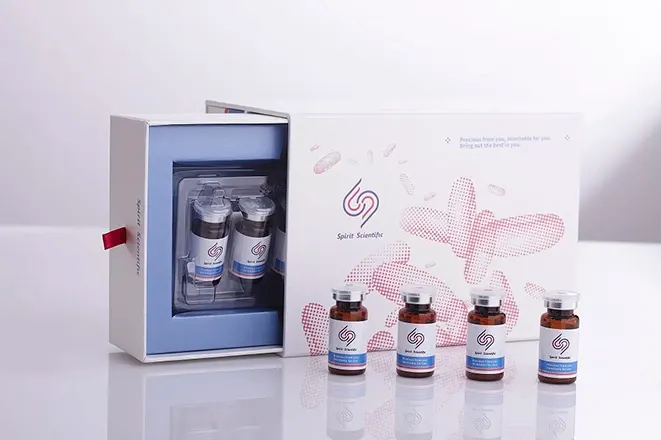
PLT is short for Platelet-Lyophilized Treatment (platelet lyophilization technology). It is a patented technique for refining high-concentration platelets: the patient's blood is drawn, and the platelets are processed into a crystalline form to make PLT lyophilized product. Besides playing a key role in stopping bleeding, platelets are rich in growth factors that can stimulate tissue cell growth and repair, increase cell survival, and promote collagen synthesis, so PLT is widely used in aesthetic medicine, plastic surgery, gynecology, and other fields.
Because it is extracted from your own blood, the risk of rejection with PLT lyophilized is extremely low. After evaluation by a professional doctor, it can be combined with laser treatments, hyaluronic acid, intimate area treatments, or the skin booster gun to amplify the results and greatly shorten recovery time. It is also suitable for hair transplant procedures.
How PLT lyophilized is made
What are the functions of platelets?
- Platelet functions
- The 6 major platelet growth factors
Platelets contain many growth factors, such as PDGF and EGF. These can be released from activated platelets to help and promote the growth and repair of various tissue cells. Among them, PDGF can stimulate cell proliferation, differentiation, and collagen synthesis, and also promotes bone cell proliferation, while EGF can stimulate cell proliferation and differentiation, among other effects. These growth factors are an indispensable part of the body's self-repair mechanism and help the body recover faster.
Uses and benefits of PLT
Platelets are enclosed in cytoplasmic granules and normally do not release their contents, so they are inactive. PLT lyophilized technology makes platelets release growth factors, replenishing the nutrients that fibroblasts in the skin lack. Activated fibroblasts release collagen and elastin, bringing back firmness and elasticity to the skin and slowing the aging process.
PLT lyophilized application 1: hair regrowth and hair transplant
Because platelets are rich in growth factors, using PLT lyophilized growth factors for hair regrowth and hair transplant can strongly stimulate cell regeneration in the hair follicles and promote follicle activation.
PLT lyophilized application 2: orthopedics and rehabilitation
Platelets can speed up the repair of vascular cells and collagen fibers and enhance healing, so they can be used for repairing injured cells in bone grafts, tendon injuries, and other orthopedic and rehabilitation conditions, especially at joints such as the shoulders, wrists, and knees, for faster recovery.
PLT lyophilized application 3: aesthetic medicine
PLT lyophilized supports cell growth and the regeneration and repair of collagen, so when it is injected into the face and skin, it provides firming of the skin and fading of melanin spots and sunken acne scars, and can even help smooth postpartum stretch marks, as well as help repair wounds after aesthetic procedures and reduce rebound pigmentation, among other benefits.
PLT lyophilized application 4: gynecology
Breastfeeding and menopausal women often face vaginal laxity and dryness. Injecting PLT lyophilized can speed up collagen production and help tissue return to health, restoring the tightness and sensitivity of the intimate area as well as firmness inside the vagina; in addition, if you have intimate area laser treatment or surgery, PLT lyophilized treatment can also be used alongside to shorten wound healing time after the procedure and lower the chance of vaginal infection.
PLT lyophilized vs. PRP comparison
PRP stands for platelet-rich plasma, the traditional way of purifying platelets, and it is still widely used. In the past, PRP required a fresh blood draw for each session, and its concentration could not be measured precisely and it was hard to store, which made it inconvenient to use. PLT lyophilized is a new type of platelet refining technology that extracts the most effective components, less than 1% of PRP, with growth factors 5-8 times higher than PRP, and it is more convenient and unrestricted in use.
| PLT lyophilized | Traditional PRP | |
|---|---|---|
| Method | Patented platelet separation and lyophilization technology | On-site centrifugation |
| Processing time | About 2 weeks | About 20 minutes |
| Processing environment | Sterile laboratory | In the clinic or hospital |
| Output | About 10-20 vials of PLT Lyophilized product is dissolved and injected into the treatment area | 3-5 cc PRP |
| Number of injections | One blood draw, multiple sessions | One blood draw per session, single session |
| Shelf life | Vacuum-packed; can be stored at room temperature for 3 years | Must be used on the spot |
| Content | 1 billion platelets per vial Growth factor concentration report included | Cannot be measured on site |
| Suitable for | People who need multiple, long-term treatments | People who need a small-scale treatment for immediate use |
PLT lyophilized precautions
- Before the treatment
- After the treatment
- Contraindications for PLT lyophilized
PLT FAQ
Q1. How long does PLT lyophilized last?
Q2. Does PLT lyophilized have side effects?
Q3. How much does PLT lyophilized cost?
Q4. Does PLT lyophilized cause rejection?
This article is for general information only. Results vary from person to person; please consult a doctor in person before deciding on any treatment.