Contents
For new mothers, the biggest worry after childbirth is often stretch marks. During pregnancy, as the belly stretches, lines gradually form on the skin. They are also called pregnancy marks and usually begin to appear after about 24 weeks of pregnancy. Because the baby grows so quickly, the belly is not only stretched but stretched rapidly, so the skin is under great tension. This article is a complete guide to stretch marks. Can you predict whether they will form? And what is the most effective way to treat them? You'll find the answers you are looking for here!
What Are Stretch Marks and How Do They Form?
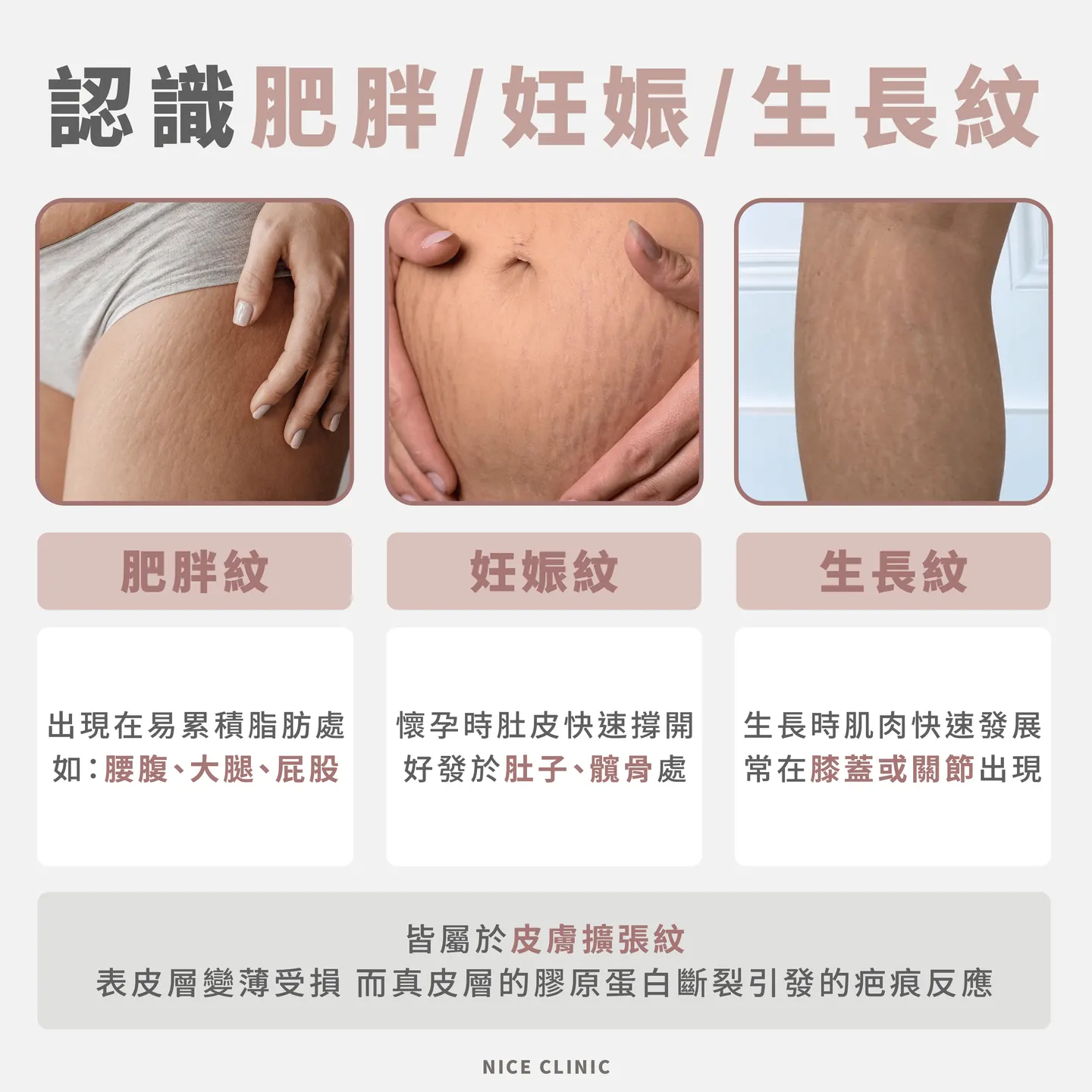
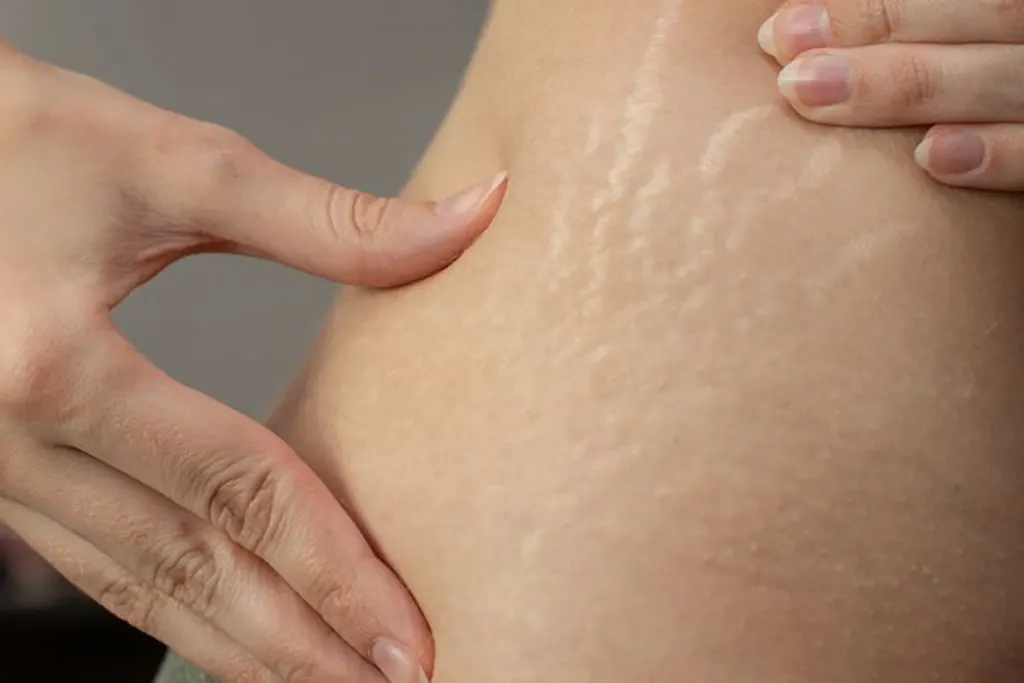
Stretch marks (striae) are broadly defined as “scars caused by stretching.” They can occur in many situations. For example, rapid weight gain may cause red and white lines, also called obesity marks; sudden height growth causes growth marks, which are also a type of stretch mark; and finally, the most familiar kind, the lines that form when an expecting mother's belly suddenly expands in the 8th-9th month of pregnancy.
From a medical point of view, dermatologists explain that if you take a small piece of skin with stretch marks and look at it under a microscope, it is actually no different from normal skin. However, if you apply a special stain for “elastic fibers” to it, you will find that the elastin has broken, and this is what produces the so-called lines.
Stretch marks are essentially a break in collagen and elastin, which you can imagine as a straight line. Once that line breaks, fully repairing it is quite difficult. However, if the lines are recent (still red), scar treatment can keep them from turning into white lines.
Itchy Skin in Pregnancy May Be a Warning Sign of Stretch Marks
Many expecting mothers say that as delivery approaches, their belly itches constantly and no amount of scratching helps. This is a small hint from the skin! There are two key reasons for itchy skin:
1. Rapid Belly Expansion
In mid-to-late pregnancy, the belly grows extremely fast, swelling up in no time. This rapid expansion changes the structure of collagen and fibrous proteins, and excessive stretching produces stretch marks.
In addition, the baby's weight also affects how fast and how much the belly expands. This is why doctors often advise mothers to get adequate nutrition but not overeat, to avoid becoming overweight. Setting aside the situations that come up during delivery, being overweight alone affects the formation of stretch marks. So eating a balanced diet to get the nutrition you need and controlling your weight are also ways to reduce excessive skin stretching!
2. Dry Skin
In fact, whether or not you are pregnant, and in any part of the body, dry skin can cause itching. During pregnancy, because the mother must supply nutrients and water to the baby, the skin's water content drops very quickly, which also reduces the skin's protective ability and causes itching. At this point you can boost skin moisture by drinking more water and applying skin care products to prevent and soothe the itching.
Mom Recovery Guide! The 6 Best Aesthetic Treatments for Postpartum Mothers at a Glance
When Do Stretch Marks Appear?
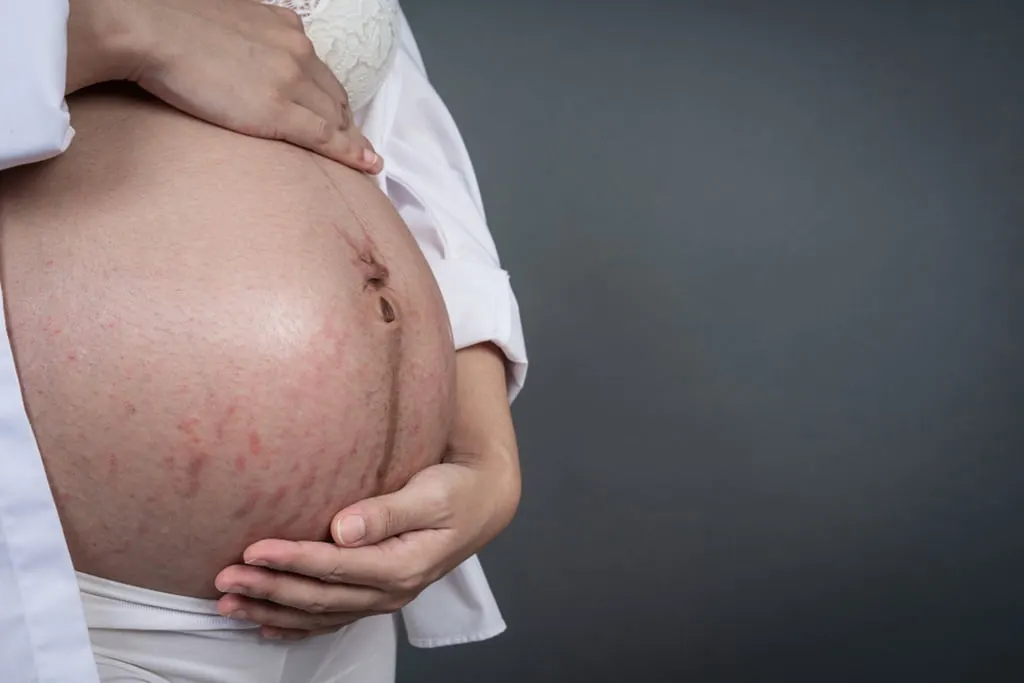
Stretch marks usually start to appear after 24 weeks of pregnancy. As mentioned above, the abdomen expands quickly and the skin can't withstand such strong stretching, so they form, and besides the abdomen, they can also appear on the buttocks, thighs, or breasts.
The ways the different types form were briefly described above. Next, let's take a quick look at the “red lines” and “white lines” mentioned earlier. Doctors also advise expecting mothers to treat the lines within 2-3 months after delivery, to keep them from becoming “persistent” stretch marks, which are harder to remove.
What Are Stretch Marks? Causes, How to Remove Them, and Prevention Methods
| Type of mark | Red marks | White marks |
|---|---|---|
| Color | Pink, purplish red | White, silvery white |
| Persistence | Temporary | Persistent |
| Appearance | Raised | Atrophic, creased |
| Treatment results | Best | More side effects (e.g., darkening) |
Treatment Options
First, we need to be upfront: at present, there is no way to treat stretch marks 100% so that they disappear. Once a scar has formed, it is difficult to resolve completely; at most, you can make the scar look better. Below we introduce several treatment options and briefly analyze their pros and cons.
As mentioned earlier, stretch marks are caused by the belly stretching, and laxity can also remain after delivery. So, if your stretch marks come with skin laxity, you can consider RF skin tightening, which firms the skin and stimulates collagen production; both help improve the overall look of stretch marks.
Thermage FLX
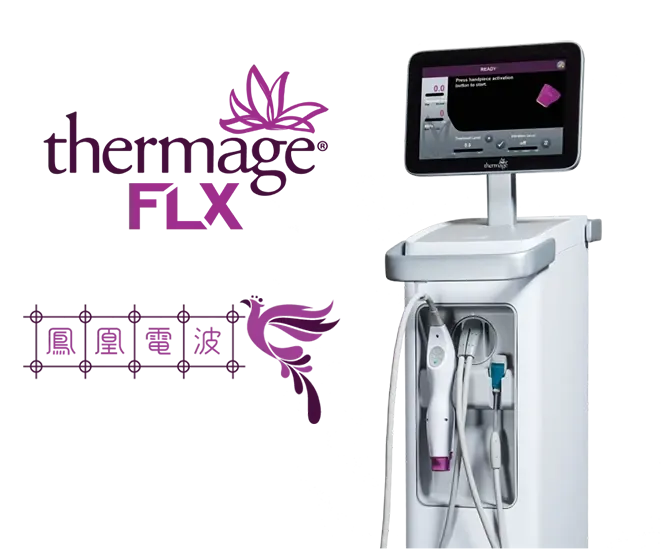
Thermage FLX uses monopolar RF, so it penetrates deeply and can treat the deeper layers. Stretch marks often come with skin laxity, so adding RF at this point delivers heat to the deeper layers of the skin, promoting collagen and elastin production and restoring firmness to the skin, and the lines become less noticeable. A similar option is Exilis.
The Latest Thermage FLX Guide: Treatment Details and Key Points Before and After the Procedure
Morpheus8

Morpheus8 uses many fine needles to penetrate the skin surface, at a depth that reaches the fat layer, to coagulate fat with RF energy, and it can also stimulate elastin production to help improve uneven, textured lines in the skin, making it especially suitable for new mothers with more abdominal fat after delivery.
A Budget Alternative to Thermage FLX? What Is Morpheus8 Microneedle RF?
Discovery Pico

An Italian doctor once published a paper on using the focused handpiece of the “Discovery Pico laser” to treat white stretch marks. The results were good, with clear improvement in before-and-after comparisons, and no problems with pigmentation!
UP Laser
Its powerful results are well recognized abroad, and it can indeed reach deep collagen and elastin. But the chance of post-treatment darkening is very high in Asians, and the pigmentation may last six months to a year before fading.
Do Stretch Marks Have to Be Treated? How to Prevent Them
Most people who want to deal with stretch marks do so for cosmetic reasons. Stretch marks are a kind of scar, so whether to treat them is a personal choice. According to the literature, two ingredients can help prevent stretch marks during pregnancy (pregnant women should not use vitamin A!). They are Centella asiatica and vitamin E. During pregnancy, you can use these two ingredients together with an “oil” for skin care, but if the belly expands too fast or you gain weight too fast, stretch marks can still form.
After delivery, if you want to treat stretch marks with skin care products, you can choose retinoic acid (the belly will look red after application, which is normal), vitamin C (helps the skin build collagen), fruit acids (AHAs), and oils (such as coconut oil, almond oil, and olive oil), which keep the skin from getting so dry and also soften the lines.
Of course! The most important thing is still not to gain weight too quickly in a short time, which is the most effective way to prevent stretch marks!
This article is for general information only. Results vary from person to person; please consult a doctor in person before deciding on any treatment.