Contents
Modern people love good food, but with little regular exercise and irregular schedules, deep fat accumulates in the arms, waist, abdomen, buttocks, and legs, leading to obesity or uneven fat distribution. Getting rid of fat through diet and exercise alone takes long-term effort and persistence, so many people turn to liposuction at an aesthetic medicine clinic to remove excess subcutaneous fat. There are four common liposuction options on the market: VASER liposuction, water-jet-assisted liposuction, laser lipolysis, and cryolipolysis. Which gives the best results? Which is the safest and best value? This article compares them all in one place.
Who Is a Good Candidate for Liposuction?
Very important, so we will say it three times! The main purpose of liposuction is to sculpt body contours, not to remove visceral fat, and it will not instantly take off 10 kg. To maintain the results after surgery, you must exercise regularly and eat a healthy diet to truly enjoy the effect of keeping the weight off after liposuction. That said, liposuction is not for everyone, and there are 3 ways to check for yourself whether you are a suitable candidate.
1. Is Your Subcutaneous Fat Thick Enough?
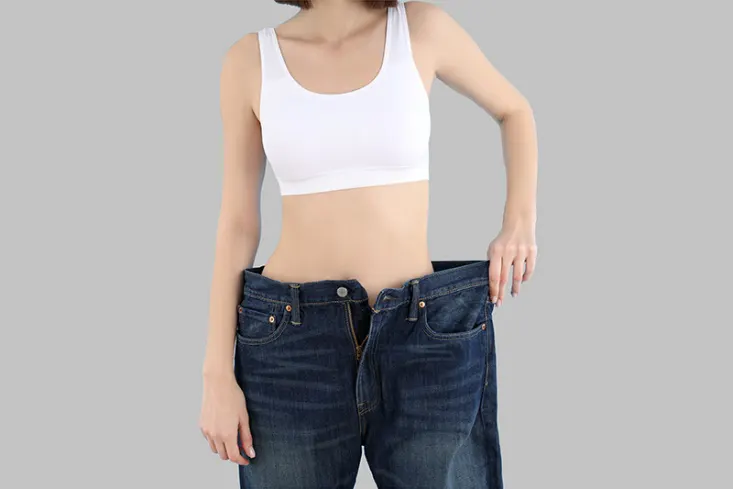
Pinch your subcutaneous fat firmly with your fingers. If the pinched thickness is more than 2 cm, you are a good candidate for liposuction. If it is less than 2 cm, liposuction is not suitable.
2. Test Your Skin Laxity
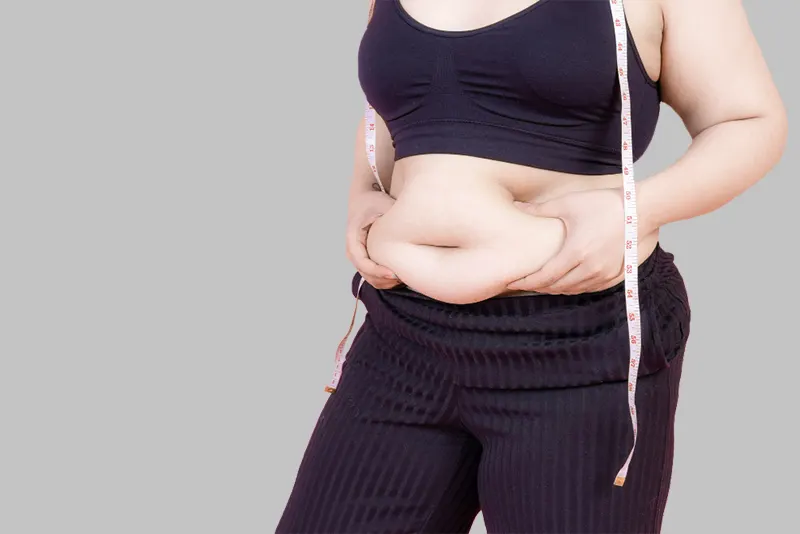
Pinch the surface of your skin firmly with your fingers. If the skin springs back immediately, it has enough elasticity and you are a good candidate for liposuction, and skin laxity is unlikely after surgery. If it does not spring back right away, the skin is prone to sagging after liposuction, and you may need to combine it with Renuvion to restore skin elasticity.
3. Test Your Muscle Contraction
Flex the area you plan to sculpt and see whether the bulk comes from fat or from well-developed muscle. If it is fat, you are a good candidate for liposuction. If it is well-developed muscle, liposuction will have quite limited results.
Who Is Not a Good Candidate for Liposuction?
1. People with serious illnesses: congenital conditions, heart or kidney disease, diabetes, or abnormal blood clotting
2. People who are severely obese overall: BMI over 30
3. Minors or people over 55
4. Pregnant or breastfeeding women
5. People allergic to anesthetics
The 4 Fat-Reduction Treatments
VASER Liposuction
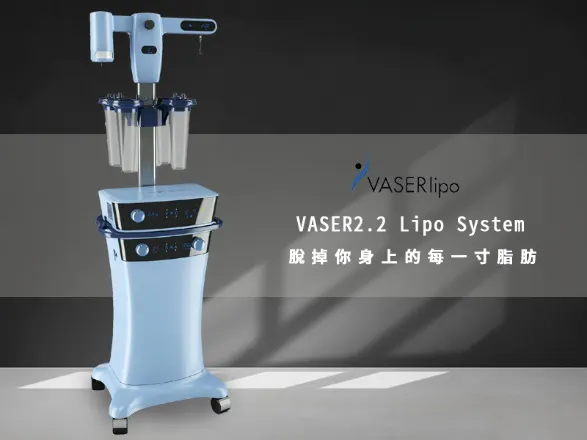
VASER liposuction is currently the most precise liposuction device. A titanium probe releases 36,000 Hz ultrasound at the treatment area to make the tissue resonate, emulsifying fat clumps while preserving connective tissue. The fat is then dispersed by a spiral water flow and finally suctioned out with a patented drainage probe, so the procedure causes little swelling and little blood loss afterward.
Unlike conventional liposuction, which can only treat deep fat and cannot sculpt superficial fat, VASER liposuction can remove deep body fat and also sculpt superficial fat. Because connective tissue is preserved during the procedure, the skin stays smooth and firm after the fat is removed, and the extracted fat has a survival rate as high as 70%, so it can be injected back into areas that need sculpting and is widely used for breast augmentation and facial fat grafting.
Pros: Low blood loss, short recovery, high fat survival rate, and the ability to sculpt superficial fat.
Cons: The highest-priced liposuction treatment on the market.
Cost: For circumferential liposuction of the waist and abdomen, VASER liposuction costs about NT$250,000.
Water-Jet-Assisted Liposuction
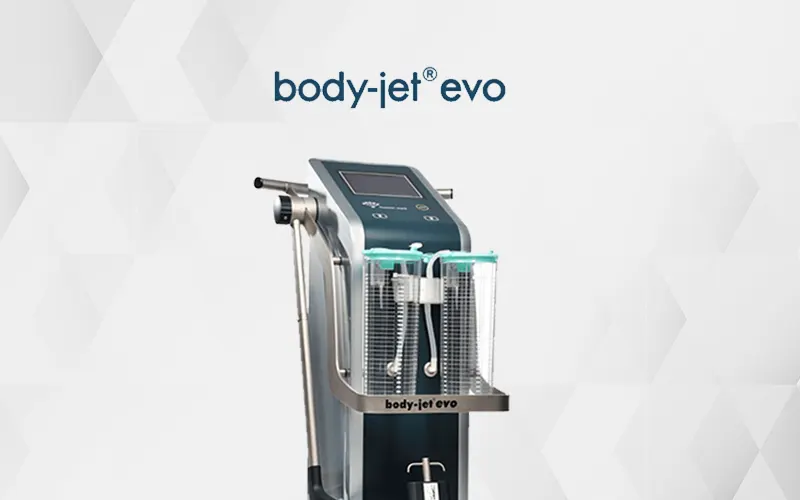
Water-jet-assisted liposuction works by using a high-pressure water flow to form a fan-shaped water jet, whose force separates fat cells from the surrounding tissue; the loosened fat cells are then removed with negative pressure. The fan-shaped flow reduces damage to tissue, nerves, and blood vessels while softening fat and removing excess localized fat.
Water-jet-assisted liposuction improves on the drawbacks of traditional liposuction, namely heavy blood loss, long recovery, and large bruises. However, compared with fat taken by VASER liposuction, the fat cells harvested by water-jet-assisted liposuction have a lower survival rate, so patients who need autologous fat transfer are not advised to choose it.
Pros: Low blood loss, low tissue damage, shorter surgery time.
Cons: Risk of an uneven skin surface after surgery, low fat survival rate, not suitable for autologous fat transfer.
Cost: For circumferential liposuction of the waist and abdomen, water-jet-assisted liposuction costs about NT$200,000.
Laser Lipolysis
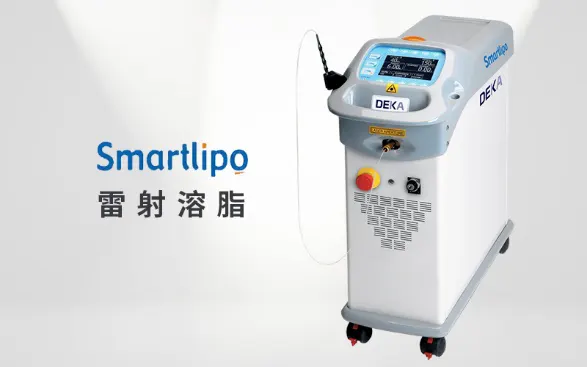
Laser lipolysis is a minimally invasive procedure. A thin probe is inserted into the fat tissue through a very small wound of only 0.3 cm, and the probe releases laser energy that uses a photoacoustic shockwave effect to shatter fat cells and reduce their number. Laser lipolysis is better suited to fine sculpting of small areas with less fat, such as the face, hands, and shoulders and neck.
Fat cells destroyed by photothermal energy cannot be reused, and cannot be transferred to other areas of the body. However, because the laser also stimulates collagen production as it releases energy, the skin regains firmness after surgery, improving the laxity that can appear after liposuction.
Pros: Small wounds, and collagen production is stimulated during fat dissolving, leaving the skin firmer after surgery.
Cons: Laser lipolysis destroys fat cells, so it cannot be used for autologous fat transfer, and it is not suitable for liposuction of large areas.
Cost: Priced per spot, about NT$15,000 per spot, and the abdomen needs 7-10 spots.
Cryolipolysis
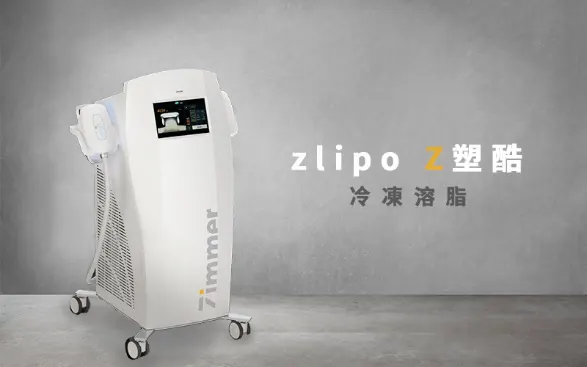
Cryolipolysis takes advantage of the fact that fat cells cannot tolerate cold and die off on their own, freezing and destroying the fat cells in the body at a low temperature of -10 to -5°C. It destroys only fat, not the surrounding tissue, and after the fat cells die off, they are cleared from the body through the lymphatic system.
Cryolipolysis is non-invasive and leaves no surgical wound, but it is better suited to small areas of localized fat. No obvious result can be seen at the time of treatment; you need to wait 1-3 months for the fat cells to rearrange and compress before the body-sculpting effect appears.
Pros: Non-invasive, no surgical wound.
Cons: Not suitable for liposuction of large areas, and results are only visible 1-3 months after treatment.
Cost: Priced per spot, about NT$10,000-20,000 per spot, and the abdomen needs 4-8 spots.
The 4 Fat-Reduction Treatments Compared
| Category | VASER Liposuction | Water-Jet-Assisted Liposuction | Laser Lipolysis | Cryolipolysis |
|---|---|---|---|---|
| Suitable areas | Localized or large-volume liposuction, superficial liposuction | Localized or large-volume liposuction | Small areas of localized fat only | Small areas of localized fat only |
| Fat-reduction effect | ★★★★★ | ★★★ | ★★ | ★★ |
| Tissue trauma | ★ | ★★ | ★★ | None |
| Surgical wound | About 0.5 cm | About 0.5 cm | About 0.3 cm | None |
| Recovery | About 1-2 weeks | About 1-2 weeks | About 1-2 weeks | About 1-2 weeks |
| Cost | Highest | High | Low | Low |
| Precautions | Excessive ultrasound energy may burn the skin | Swelling may last 1-2 weeks after surgery | Because of heat damage, only suitable for liposuction of localized areas | Risk of frostbite to the skin |
“Liposuction is not weight loss, it is body sculpting!”
The purpose of liposuction is to help people who are unhappy with their body shape sculpt their ideal curves. It is not a procedure that, once you have had liposuction surgery, instantly takes off 10 kg. To maintain the results, you still need regular exercise and a balanced diet to keep a good figure over time.
This article is for general information only. Results vary from person to person; please consult a doctor in person before deciding on any treatment.