Contents
The seasons are about to change! Does your skin have these problems too? As soon as the season shifts it turns dry and flaky, and blackheads keep multiplying... Besides switching to skincare suited to the new season, a full-face laser treatment is also a great idea at a seasonal change! Talk about summer and you'll surely think of “picosecond laser.” This article tells you why picosecond laser suits summer, what its advantages are, what it can improve, and how to care for your skin afterward!
Season Change: Your Skin Is in Trouble!
The seasons are changing again. In the changing season, big temperature differences between day and night make the capillaries on the skin surface begin to constrict, and a sudden drop in air moisture lowers the stratum corneum's water retention, and when sebum secretion decreases, oil and water fall out of balance. When the skin's natural barrier function falters like this, it naturally becomes fragile and sensitive.
In autumn and winter, the dry climate causes a large loss of skin moisture, so dryness and flaking easily appear at the change of season. In spring and summer, the hot, humid climate, which increases skin oil, clogging pores and causing redness problems such as pimples and blackheads.
So when the seasons change, we all need to pay special attention to seasonal skincare. Next, for spring and summer, we recommend the “picosecond laser” treatment that the most people choose in summer.
Getting to Know “Picosecond Laser”
“Picosecond” laser refers to “the duration of each laser pulse.” With the arrival of picosecond laser, the firing time has been shortened from the nanosecond scale of traditional lasers to the picosecond scale, producing a powerful photoacoustic shockwave within a very short pulse, 1,000 times faster than traditional lasers.
Why does shortening the time matter so much? Because the laser temperature is very high, and if the laser time is too long, it can easily cause burns. To reduce the thermal effect and tissue damage, shortening the time greatly lowers the chance of burns. That's why picosecond laser caused a sensation as soon as it came out, and it has become a godsend for many regular laser clients!
A laser with no rebound darkening! How StarWalker picosecond laser improves skin conditions
Now, how does picosecond laser work?
Picosecond laser uses ultra-short laser pulses (one trillionth of a second) to hit the melanin under the skin with enormous pressure, shattering the melanin into fine, dust-like particles, which the immune system absorbs and eliminates from the body.
Picosecond laser was originally developed to target melanin, so its effects on fading spots, acne scars, pigmentation, and tattoo removal are particularly notable. Next we'll analyze the other advantages of picosecond laser.
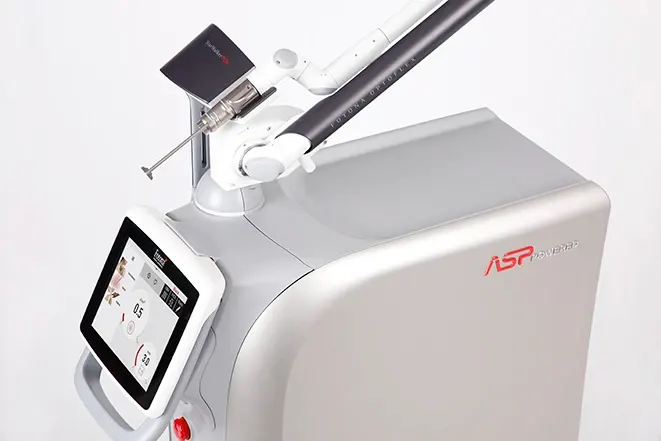
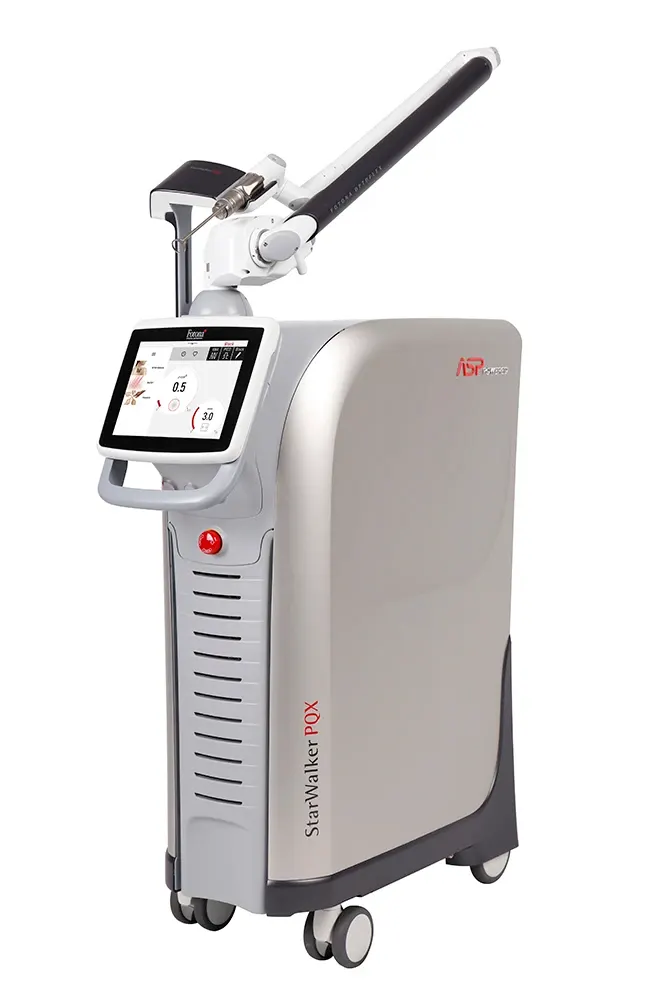
Click to learn about StarWalker PQX
Click to learn about Discovery Pico
A Summer Must-Have? Advantages of Picosecond Laser
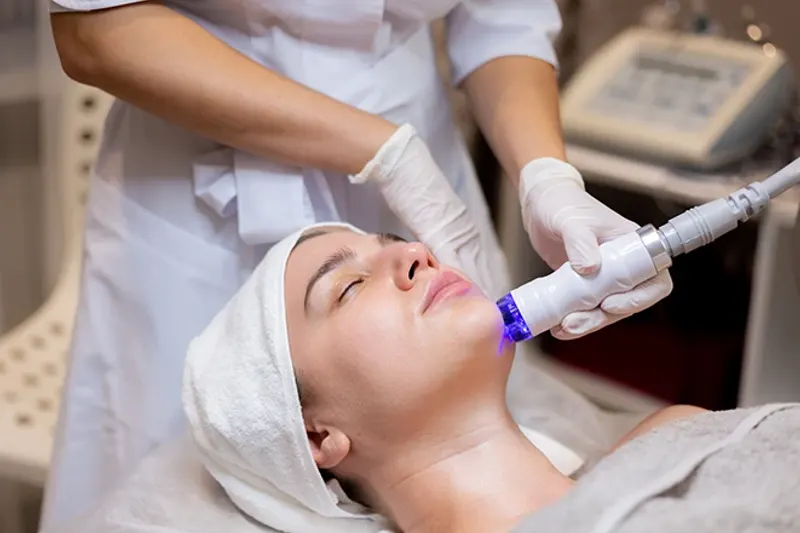
In midsummer, sun exposure increases the spots on your face, or your face turns oily the moment you step outside, and these problems trouble everyone. If you want flawless, radiant skin and a stable skin condition, picosecond laser is a very suitable choice.
Picosecond laser enables effective skin management, including knocking out melanin and improving roughness and dullness, and skin quality improves to a certain degree too. Picosecond laser is not only a treatment for uneven pigmentation and fading spots; it can also be an advanced skin management approach for improving skin quality!
4 Major Advantages of Picosecond Laser:
(1) High precision and speed
Compared with traditional lasers, picosecond laser has increased energy and shorter pulse duration, making treatment more precise and faster.
(2) Short recovery
Picosecond laser acts beneath the skin, so the skin is less likely to develop wounds, and recovery is short, lowering the skin's inflammatory response and the risk of rebound darkening from pigmentation.
(3) Less discomfort
Energy contact time with the skin is shortened and thermal damage is reduced, and with skin soothing before treatment, discomfort is greatly reduced.
(4) Helps improve superficial wrinkles
Picosecond energy applied to the skin can induce collagen growth and repair damaged skin, thereby improving superficial wrinkles.
Laser treatments unsuitable in summer? Debunking the laser rebound-darkening myth
Enlarged Pores? Check Your Pore Type
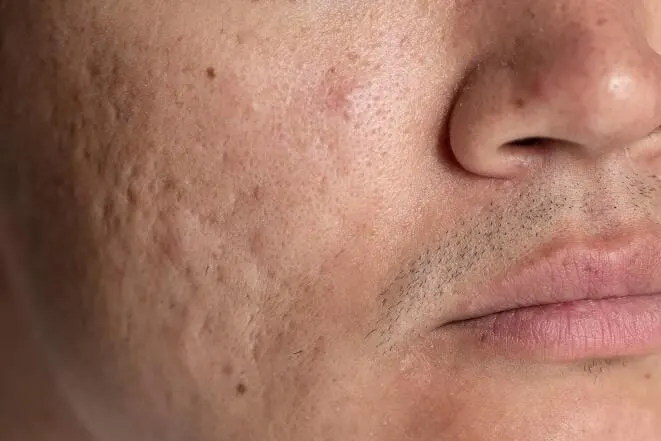
Before that, we need to understand our own pore type: what is causing the enlarged pores and other concerns, so we can find a solution that fits our situation. There are four main types of enlarged pores below; check which type you are:
Type 1: Oily
Oily-type enlarged pores are mainly caused by naturally excessive sebum secretion, and the excess oil accumulates in the pores. If left untreated for a long time, it leads to the blackheads and pimples everyone hates.
Therefore, people of this type need to cleanse the skin regularly, and also maintain a normal diet and daily routine, to keep their pores from getting even larger.
Type 2: Aging
Aging-type enlarged pores are mainly caused by increasing age, which gradually causes the skin to lose elasticity and radiance. Together with factors such as UV exposure and environmental quality, the skin cells' regenerative ability weakens, and the pores gradually loosen and become enlarged.
Therefore, people of this type need to strengthen their daily skincare to help tighten pores and slow aging.
Type 3: Dehydrated
People with dehydrated-type enlarged pores may wonder: dehydration and enlarged pores, is there a connection?
Yes! When the skin is excessively dry, skin cells become dehydrated and lose elasticity, and the rate of keratin turnover slows, leading to enlarged pores.
Therefore, people of this type should drink more water and choose skincare products with moisturizing ingredients to help the skin retain moisture and lock in water.
Type 4: Keratin buildup
Keratin-type enlarged pores are mainly caused by dead skin cells and oil clogging the pores, making the surface keratin layer too thick, which makes the skin around the pores bulge into enlarged pores. Keratin-type enlarged pores may also affect how well the skin absorbs skincare products.
Therefore, people of this type need to exfoliate regularly, and always keep skin hydrated and avoid excessive sun exposure, among other daily skincare measures.
What to do about enlarged pores!? Can picosecond laser really improve them?
What Can Picosecond Laser Improve?
Picosecond laser is especially suited to dehydrated-type pores with a weak skin barrier, shrinking pores while rebuilding the stratum corneum for healthier skin quality. It is also very suitable for aging-type pores caused by collagen loss. The picosecond laser's honeycomb handpiece amplifies and concentrates energy to improve pores and let them renew.
As for the sun spot concerns mentioned above, picosecond laser can also destroy active melanin for pigment management. Wavelength heating also shrinks the sebaceous glands, improving oiliness while also brightening skin quality and boosting overall radiance, saying goodbye to summer's oily skin.
Picosecond laser can improve the following concerns:
1. Uneven pigmentation and dullness
2. Fading spots and treating acne scars
3. Reducing fine lines and improving skin condition
4. Improving pores and roughness
5. Treating shallow acne scars and depressed scars
Thanks to its ability to stimulate collagen growth in the skin, pore shrinkage can be clearly felt after several sessions, skin condition improves, and spots and small imperfections on the face also improve to a certain degree.
How do you get rid of acne scars? Analysis and blind spots fully explained
2023 latest spot treatments at a glance, recommended by influencers across the board!
Aftercare Guide for Picosecond Laser
The biggest difference between picosecond laser and regular laser is the short pulse duration, which greatly reduces the skin's inflammatory response and shortens recovery. Most people have slight redness in the skin right after treatment, which can be eased with 10 to 30 minutes of icing and fades gradually in about 1-3 days (varies by skin type).
1. In the 1-3 days after treatment, there may be slight redness and swelling. If the treated area forms scabs, do not pick or scratch them, to avoid scarring or pigmentation; scabs fall off completely in about 7-10 days.
2. In the first week after treatment, do not exfoliate or use AHA acids, retinoic acid, salicylic acid, whitening products, or irritating products containing alcohol, to avoid rebound darkening.
3. For 2 weeks after treatment, avoid hot places such as hot springs, saunas, and heat chambers.
4. Strengthen hydration and sun protection after treatment to reduce the chance of rebound darkening.
This article is for general information only. Results vary from person to person; please consult a doctor in person before deciding on any treatment.