Contents
Ultraformer is one of the popular ultrasound lifting treatments. As collagen loss and facial aging gradually set in, ultrasound lifting and RF/ultrasound devices have become common non-invasive anti-aging options. This article explains Ultraformer results, the differences between ultrasound and RF, who they suit, and how to improve facial aging, to help you choose the right skin-tightening, anti-aging treatment at a Taipei aesthetic clinic.
What Is Ultraformer?
Ultraformer (Ultraformer III) is a popular non-invasive lifting device today. By concentrating thermal energy, it delivers energy to achieve a firming and lifting effect. The third-generation Ultraformer offers 2 focusing technologies and 6 treatment depths that act precisely on the dermis, the SMAS fascia layer and even the fat layer. While tightening the skin and stimulating collagen production, it can also improve aging, sagging tissue on the face and neck, eliminate the pesky double chin, and make the jawline more striking and perfect from every angle.

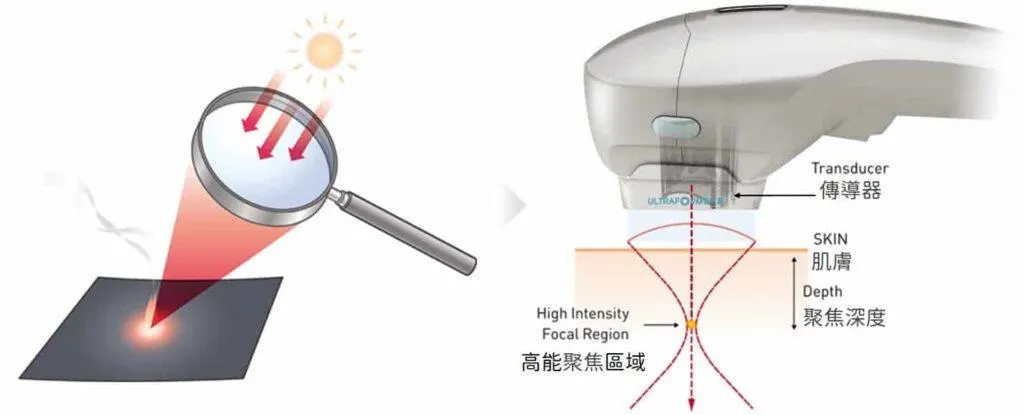
Ultraformer uses “high-intensity focused ultrasound” technology. After the energy is focused, it is delivered precisely to the target layer of the treatment area, heating deep tissue without harming the skin surface and generating 65-75°C of thermal energy, which produces contraction and lifting.
Ultraformer offers a wide range of results, improving everything from superficial static wrinkles such as forehead lines and crow’s feet to deeper contour laxity such as sagging apple cheeks and chin fat concerns. It not only tightens the fascia layer but also activates collagen-producing cells, giving the whole face a plump, firm, bouncy and smooth look.
Ultraformer Keeps Upgrading! MPT Creates “First-Love” Skin
RF and Ultrasound Myth 1: How to Choose
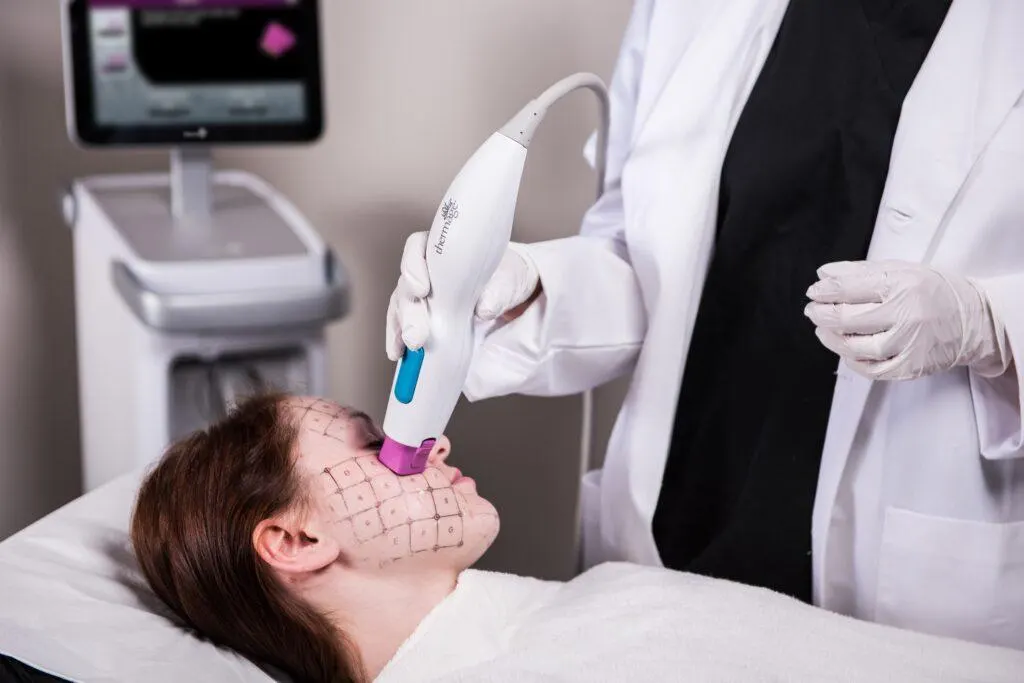
RF:
The principle is “bulk heating,” and RF devices such as Thermage FLX have a cooling system that restricts the action to the inner layers of the skin, preventing burns and the like. After the skin is heated, collagen begins to contract and regenerate, which tightens the skin.
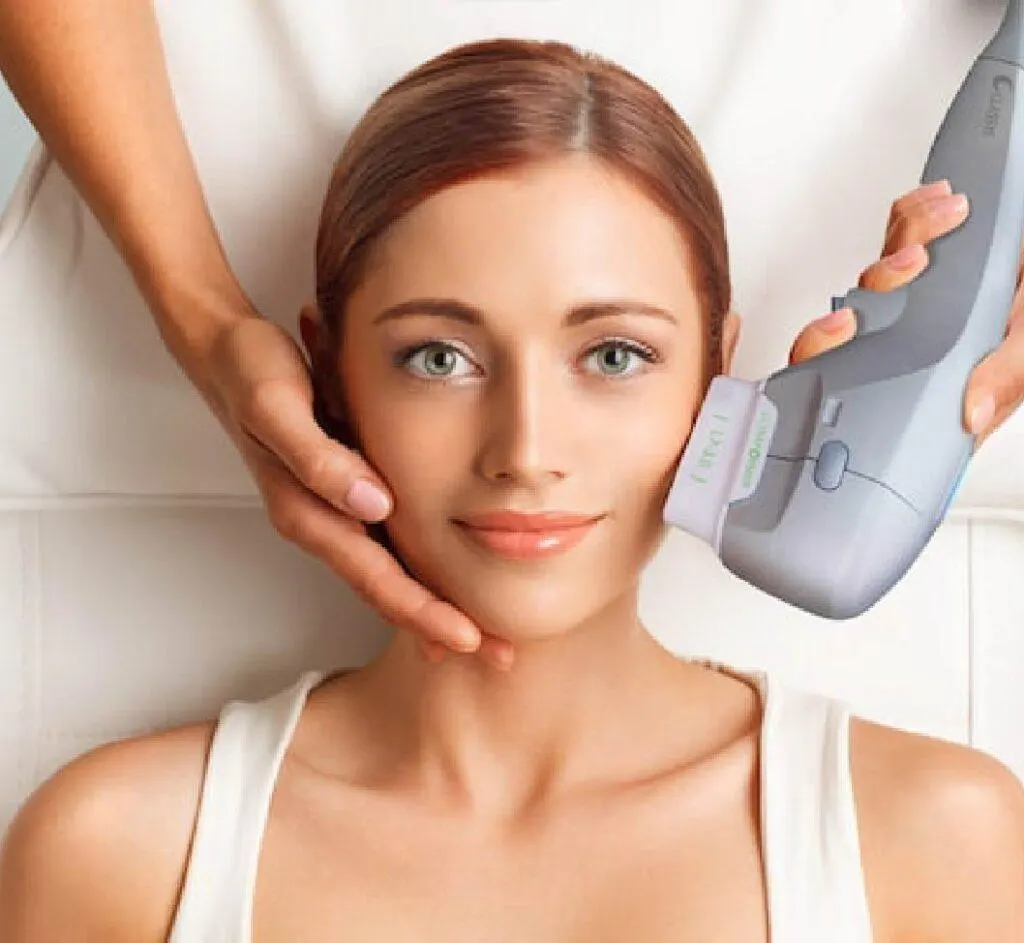
Ultrasound:
The principle is “spot heating” in the deeper fascia layer, which makes the fascia contract. Because the skin sits right above the fascia, fascia contraction pulls the skin up with it, producing a lifting effect.
In short: For skin firming, choose RF; for a lifting effect, choose ultrasound. So if your skin is soft and loose, start with RF to firm it; conversely, if your skin is sagging, start with ultrasound to lift it first!
Of course, many people also wonder what to do if the skin is both loose and sagging. In that case, a professional physician needs to evaluate you and allocate the right number of lines to achieve the best result!
RF vs. Ultrasound: Principles, Prices and Who Each Suits, All Explained!
RF and Ultrasound Myth 2: How Lines (Shots) Are Allocated
Taking Thermage FLX as an example, the most commonly used shot count is “900 shots for the full face.” If there is enough energy and the full face receives enough shots, there is basically no problem. But many people share the same concern: budget. When the budget is not enough, you can only reduce the number of shots or split the treatment into installments (for example, 300 shots at a time, completed over three sessions). Although the total is still 900 shots, the results are not the same!
The reason: RF works by heating, and collagen must reach a certain temperature before it contracts to tighten the skin. If fewer shots are given, the heating time is not long enough and heat cannot accumulate. After 300 shots, the temperature may have risen only slightly, and the results will not be good! So we recommend waiting until your budget is sufficient and completing all the shots in one session, or concentrating the shots on the same area, to achieve the ideal result, so that the money you spend is not wasted!
One last emphasis! Don’t spread the shots out, or the results will be reduced!
RF and Ultrasound Myth 3: Treatment Technique
Some people wonder why the same machine can produce different results. Do you assume that as long as it is the same machine, any physician operating it will get the same results?
Actually, no! It is like the same dish: cooked by yourself or by a Michelin-starred chef, the taste and presentation will differ. To get RF or ultrasound treatment that works well and is good value, it really tests the physician’s technique and skill in allocating shots!
A professional, experienced physician can use different approaches to make your results worth the price, so choosing the right physician and clinic really matters!
Never assume that the same machine means the same results!
RF and Ultrasound Myth 4: Insufficient Skeletal Support
The most common case is “nasolabial folds”. Some patients ask their physician why ultrasound at a previous clinic never worked. Others see an ad and rush in, getting RF right away. In fact, there is always a reason when no results are visible! Aesthetic medicine is like treating a cold: you need to “match the treatment to the problem.” If ultrasound does not work for you, the cause may be “insufficient skeletal support”. In that case, what you need is not RF or ultrasound but an injectable treatment, for example using hyaluronic acid filler to support the bone structure and deep fat pads, which can fix the problem!
In cases like this, if a professional physician had evaluated them beforehand, they would not have spent so much money for nothing: the original problem can be improved for less than 1/5 of the price of RF or ultrasound! So we recommend getting a consultation and learning the facts before you decide!
RF and Ultrasound Myth 5: Fat Buildup
Some problems are caused by too much fat, but RF and ultrasound are not cure-alls. RF can only destroy a very limited amount of fat, so if you have a full face and want to eliminate jowls, the first thing to do is “eliminate the fat,” for example with lipolysis injections or Q+ linear ultrasound, which are clearly and effectively able to destroy fat. Finally, use RF to tighten the skin, and the overall result will be better!
This article is for general information only. Results vary from person to person; please consult a doctor in person before deciding on any treatment.