Contents
- Why do scars form easily after surgery?
- The key to reducing surgical scars: choose an experienced physician
- How should you care for the wound after breast augmentation?
- If the wound is well cared for, will the scar disappear?
- What happens if breast augmentation wound care is neglected?
- How can you tell whether you have a scar-prone or keloid constitution?
- How should people with scar-prone or keloid constitutions care for their wounds after breast augmentation?
Why do scars form easily after surgery?
"Doctor, will breast augmentation leave a scar?"
I believe many people considering fat transfer or implant breast augmentation are most concerned about this question. After all, a scar looks visibly different from the original skin and easily draws attention.
First, it helps to understand how scars form.
When body tissue is damaged by an outside force, such as cutting or puncturing, a wound results. As soon as a wound appears, the body starts the physiological process of wound healing: collagen and fibroblasts rebuild and rearrange themselves within the tissue. This newly formed tissue is what people commonly call a "scar."
The key to reducing surgical scars: choose an experienced physician
"Closing one short incision takes me 3 hours."
Dr. Kuo-Chun Liao, Director of NAISS CLINIC, points out that after breast augmentation, it is not only the skin incision that must be sutured. There are also the deep fascia, superficial fascia, subcutaneous tissue, and the dermis beneath the skin, and each layer takes time and care to close.
"Scar tissue overgrows because the surgical technique is not delicate enough."
Dr. Liao uses a Japanese restaurant as an analogy: a sushi chef must cut sashimi cleanly in a single stroke so the cut is clean and does not leave strings. Surgery follows the same principle. The incision must be clean and precise, and closure must align the tissue layer by layer. As long as tension is held at the deep fascia and none is left on the skin surface, a scar is basically hardly visible once the wound has healed.
Meanwhile, at NAISS CLINIC, professional attending plastic surgeons are on site, and the same physician handles the pre-operative consultation, the surgery, and post-operative follow-up visits, so your physician has a complete picture of your condition, giving you reassurance and peace of mind.
How should you care for the wound after breast augmentation?
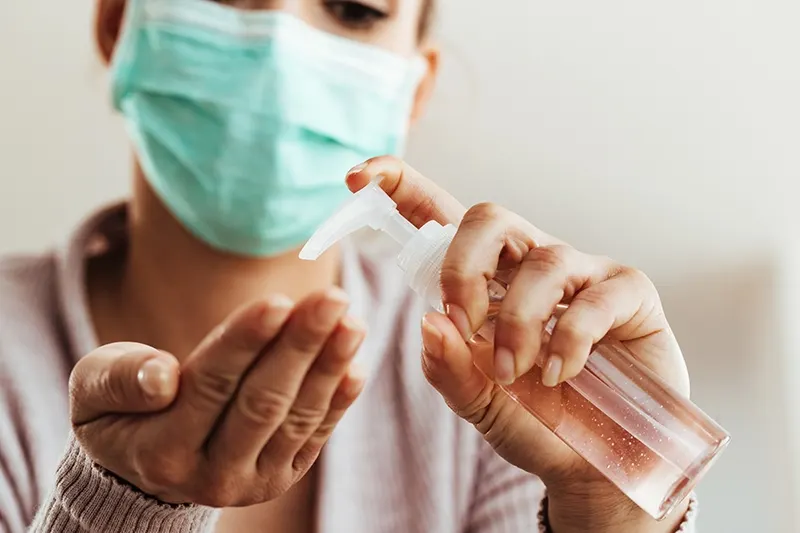
Dr. Liao points out that most patients have their stitches removed about two weeks after breast augmentation and should then start applying scar gel. Scar gel contains brightening and fading ingredients that help scar tissue repair faster and look better in shape and appearance.
If the wound is well cared for, will the scar disappear?
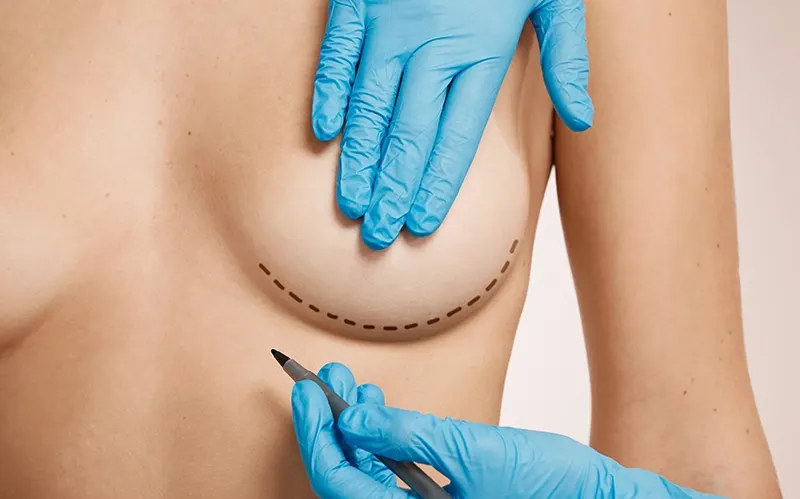
Dr. Liao explains that with good wound care, the incision leaves only a very fine white line that is normally not obvious. In addition, the body has natural skin creases. With appropriate suturing techniques and by hiding the incision in those creases, the scar gradually becomes invisible once the wound has healed.
What happens if breast augmentation wound care is neglected?
Dr. Liao says that after breast augmentation surgery, patients are asked to come in every day. Besides giving recovery IV drips, the clinic cares for the wound and checks in on the patient's daily routine. Basically, following the physician's advice is enough to take good care of the wound, but if a patient notices localized redness, swelling, or pain, they should return right away so the physician can provide follow-up treatment.
NAISS CLINIC has a professional nursing team on site, with dedicated staff helping with dressing changes at follow-up visits and assessing the wound to give appropriate treatment, speeding up the wound's healing and repair period.
What are the complications of breast augmentation? Learn the right way to speed up recovery
How can you tell whether you have a scar-prone or keloid constitution?
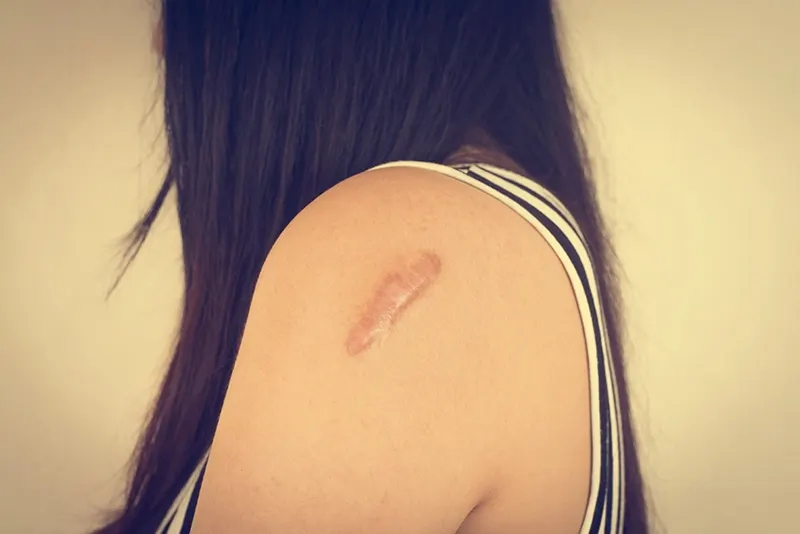
"Keloids are a myth. People who truly have keloids are very rare!"
Dr. Liao explains that keloids are related to human genetics and occur mostly in people of African descent, especially those with darker skin. Across hundreds of surgeries, only one patient has had a keloid constitution, and the probability that someone of Asian descent carries the keloid gene is extremely small.
As for a scar-prone constitution, Dr. Liao says he first checks whether the patient has had other surgeries and looks at the scars they left, which is the most accurate way to judge. However, as long as the physician assesses you before surgery and appropriate post-operative care is in place, patients really do not need to worry too much about scarring.
How should people with scar-prone or keloid constitutions care for their wounds after breast augmentation?
For patients who are scar-prone, or the one in ten thousand with a keloid constitution, Dr. Liao advises applying scar gel more diligently than usual after surgery and returning for scar-reducing injections. Every type of scar tissue has a corresponding injectable that can break it down, and with just 2-3 sessions, even patients with scar-prone or keloid constitutions will see their scars fade gradually over time.
This article is for general information only. Results vary from person to person; please consult a doctor in person before deciding on any treatment.