Contents
Fat transfer breast augmentation both sculpts the body and enlarges the breasts, which is why many people are drawn to it. But results vary from person to person, and you may have read online about calcification and lumps. How do they happen, and how should you take care of yourself after surgery? This article explains how fat transfer breast augmentation works and how the procedure is done, and summarizes its pros, cons, and side effects, as well as aftercare precautions.
What Is Fat Transfer Breast Augmentation? How Is the Procedure Done?
Fat transfer breast augmentation works by harvesting excess fat cells from your own body, for example from the thighs, abdomen, or buttocks, and using professional purification technology to inject the harvested fat back into the breasts in multiple layers. It corrects breast asymmetry, postpartum breasts that have flattened or shrunk, or naturally underdeveloped breasts, with natural-looking results that sculpt the body and enlarge the breasts in a single procedure.
The 3 Steps of Fat Transfer Breast Augmentation
1. Harvest the fat:
A small incision of about 0.2-0.5 cm is made at the chosen liposuction site to perform the fat harvesting procedure.
The latest VASER liposuction technology uses a titanium probe, the metal most compatible with the human body, that releases ultrasound to create hundreds of dense microbubbles. These separate large fat clumps into smaller ones, and a spiral stream of water then separates the small clumps into distinct individual fat cells. The process involves no tearing and none of the high heat of laser stimulation, and it does not damage the surrounding blood vessels, nerves, or connective tissue, so it can effectively reduce bleeding, bruising, and pain, leaving the skin at the wound site firm and not loose after surgery.
2. Purify the fat:
Through professional centrifuge purification technology, impurities such as water, blood, and broken fat oil droplets are removed to extract purified fat. After purification the fat is aliquoted under sterile conditions, which increases the survival rate of the fat and achieves the best filling results.
3. Inject the fat:
The fat is injected back into the breasts at the appropriate locations, using a technique that distributes the fat evenly across four layers: under the skin, on top of the pectoral muscle, within the pectoral muscle, and beneath the pectoral muscle, avoiding overinjection in any one area, since overinjection affects fat survival or causes calcification. Most importantly, fat transfer must avoid the mammary gland, because the mammary gland connects to the outside through the milk ducts and is prone to infection. Too much calcification in this area would affect future breast health and breastfeeding function.
Because the total volume injected cannot be too large, to avoid compressing the growing fat cells and lowering the survival rate, people who need a larger increase in cup size are advised to have 2-3 procedures.
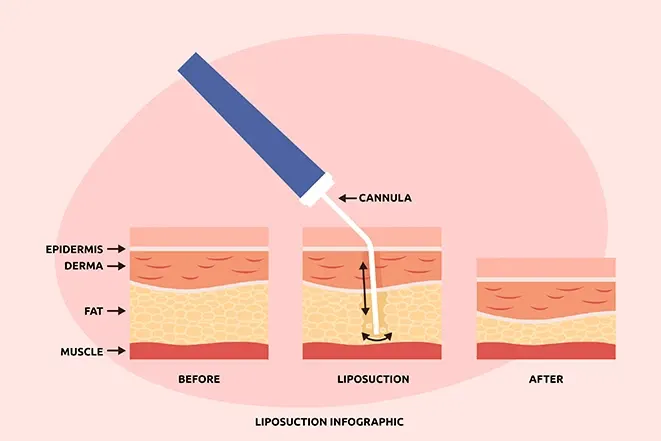
Fat transfer breast augmentation surgery takes about 3 to 4 hours, using sedation anesthesia. Before surgery, blood is drawn to find out whether the patient's health is suitable for anesthesia, and a breast ultrasound is also required to check for cysts or lumps inside the breasts. If anything is found, breast cancer screening is needed, and surgery can only proceed once everything is confirmed to be fine.
What Is Liposuction? A Quick Guide to Liposuction Types, Costs, and Precautions!
How Does Liposuction Work? A 7-Minute Guide to the Difference Between Liposuction and Weight Loss!
Fat Transfer Breast Augmentation: Pros, Cons, and Side Effects
1. Who it suits
- People whose breast shape needs adjusting (underdeveloped, uneven in size, sagging...)
- People who want both body slimming and breast enlargement
- People who do not want surgery with implants
- People who are concerned about scars from breast augmentation surgery
- People worried about hard, stone-like breasts or an unnatural breast shape after augmentation
2. Advantages
- Very small surgical scars, hardly any scarring
- Liposuction can sculpt fine areas of the body
- Natural, soft feel after surgery
- No massage needed after surgery
3. Disadvantages
- One surgery adds about 1-2 cup sizes, so it cannot quickly enlarge the breasts
- May cause calcification or lumps
- Fat purity and survival rate are unstable
- Not possible for people without enough body fat
- The transferred fat grows or shrinks with your weight
4. Side effects
- Uneven fat:
The survival rate of the transferred fat varies with the individual's constitution and aftercare.
After fat transfer breast augmentation, the breasts are more swollen for about the first month, and the observation period for fat survival is 3 months. Because this procedure uses your own fat tissue, a small portion of the fat cells will be naturally absorbed by the body after transfer, causing uneven fat distribution. The extent of absorption depends on the physician's skill, the medical equipment, and the individual's constitution. If a second fat top-up is needed, it is recommended to evaluate it after 3-6 months, once the fat has stabilized.
- Fat calcification and lumps:
Besides fat loss, more people worry about breast calcification or lumps. If the fat itself is injected in excess or too concentrated, resulting in insufficient blood oxygen supply so the fat cannot survive and becomes necrotic, most of the necrotic fat will be absorbed by the body, but fat that cannot be absorbed will calcify or form lumps.
To lower the risk of fat calcification, when a large amount of fat is needed to augment the breasts, it is recommended to do the surgery in stages, reducing fat calcification caused by pressure or insufficient blood oxygen supply; if fat calcification does occur, it can be removed surgically.
- Mastitis:
Transferred fat that irritates the mammary gland causes an inflammatory reaction. Granular bumps may appear on the breast skin, and the breast may feel swollen and firm when pressed. If you run into mammary gland inflammation, it can be treated with oral medication, so there is no need to worry too much.
To avoid these drawbacks of fat transfer breast augmentation, we recommend choosing a physician with extensive experience in fat transfer breast augmentation. Professional, skilled technique effectively reduces the risk of surgical failure.
[Fat Transfer Case Studies]
A Gem of an Article! Read This for Breast Augmentation Recommendations and How to Choose
Recovery After Surgery: What About Diet and Aftercare?
Fat transfer breast augmentation basically has no downtime. You may feel some swelling and discomfort for the first 2-3 days, but it basically does not affect daily life. To maintain the survival rate of the fat after surgery, pay attention to the following points:
1. Post-op care
- Keep the wound dry and clean, and change dressings on schedule
- Use topical or oral medication as instructed by your physician
- Return for regular follow-ups and keep a stable routine
- You can apply topical moisturizing or scar-care products (such as petroleum jelly or scar cream)
- Avoid sleeping on your stomach or side after surgery to avoid compressing the breasts
- Wear a wire-free or sports bra after surgery, and resume regular bras only after your physician's evaluation
- Avoid hot springs, hot baths, and ice or heat packs for 2 months after surgery
- Avoid lifting heavy objects for 1 month after surgery
- After 1 month, you can do chest-expanding exercises and lymphatic massage as appropriate to keep the breasts softer
- Wear a compression garment for 1-3 months after surgery, adjusting the size as your body shape changes
2. Diet and nutrition
- Avoid spicy and irritating foods after surgery
- For 3 months after surgery, we recommend not trying to lose weight, to avoid losing the transferred fat
- Eat less fried, baked, and starchy food, and keep your diet light
- Eat high-protein, nutrient-dense foods to help recovery (such as soy milk, milk, meat, avocado, high-fiber vegetables, and vitamins A/C/B...)
- You can supplement with collagen and coenzyme Q10 to boost collagen production
A physician's skill is a key factor in fat transfer breast augmentation. If you want to have the procedure, be sure to choose a professional, experienced physician who can precisely measure and transfer the fat, and do not take aftercare lightly either: eating the right foods and keeping a regular routine are what effectively maintain the fat survival rate!
This article is for general information only. Results vary from person to person; please consult a doctor in person before deciding on any treatment.