Contents
You have finally made up your mind to have surgery, only to worry that complications will show up… The biggest worry is the so-called “stone breast,” or capsular contracture, which not only distorts the breast shape but also causes stiffness and pain, and in severe cases can lead to pathological changes. What exactly is capsular contracture? What does it feel like? Today we uncover everything about capsular contracture.
Common Complications of Breast Augmentation
1. Implant position is not ideal: After surgery you may find uneven breast sizes, different heights, or a shape that does not match expectations, or even implant sagging because your own tissue does not provide enough support. Special note: People with scoliosis or uneven shoulders are more prone to implant displacement.
In general, the doctor uses a 3D breast augmentation simulator to help the patient choose a more suitable implant size and type. With the doctor's post-op instructions followed, this can usually be improved to a certain degree.
2. Wound bacterial infection: Improper handling during surgery or careless aftercare can both lead to bacterial infection of the wound. A mild infection can be diagnosed by the doctor and controlled by prescribing antibiotics; but if the infection is more serious, you may need to remove the implant first and, once the wound has fully healed, decide whether to operate again depending on the situation.
3. Hematoma: Blood or clots can accumulate after surgery, and a hematoma may appear at any time within 48 hours after surgery. Generally, a mild hematoma gradually subsides, but if it causes severe swelling and discomfort, contact your attending surgeon immediately for help with drainage or removing the clot from the wound.
4. Implant leakage or rupture: An implant that suffers a severe impact or other external force may have its outer shell damaged and ruptured, with a risk of the contents leaking. So we recommend choosing a highly cohesive gel that is less likely to leak to lower the risk.
5. Wrinkles or rippling: Rippling refers to unnatural creases or lines showing on the outside of the breast after augmentation. It happens when the implant is not fully covered by tissue after placement, so the implant itself wrinkles and visible rippling appears on the surface.
6. Nerve damage: Nerve damage usually comes from “the implant placement plane and the incision.” Surgery can cause minor damage of varying degrees to the surrounding tissue, which usually recovers gradually within a year as the nerves heal.
7. Capsular contracture (hardening of the breast): commonly known as bowl breast or stone breast. We explain it in detail below.
What Are the Complications of Breast Augmentation? 3 Tips to Reduce the Chance of Side Effects
What to Eat After Breast Augmentation? How Long Is Recovery? A Doctor Answers
What Is Capsular Contracture?
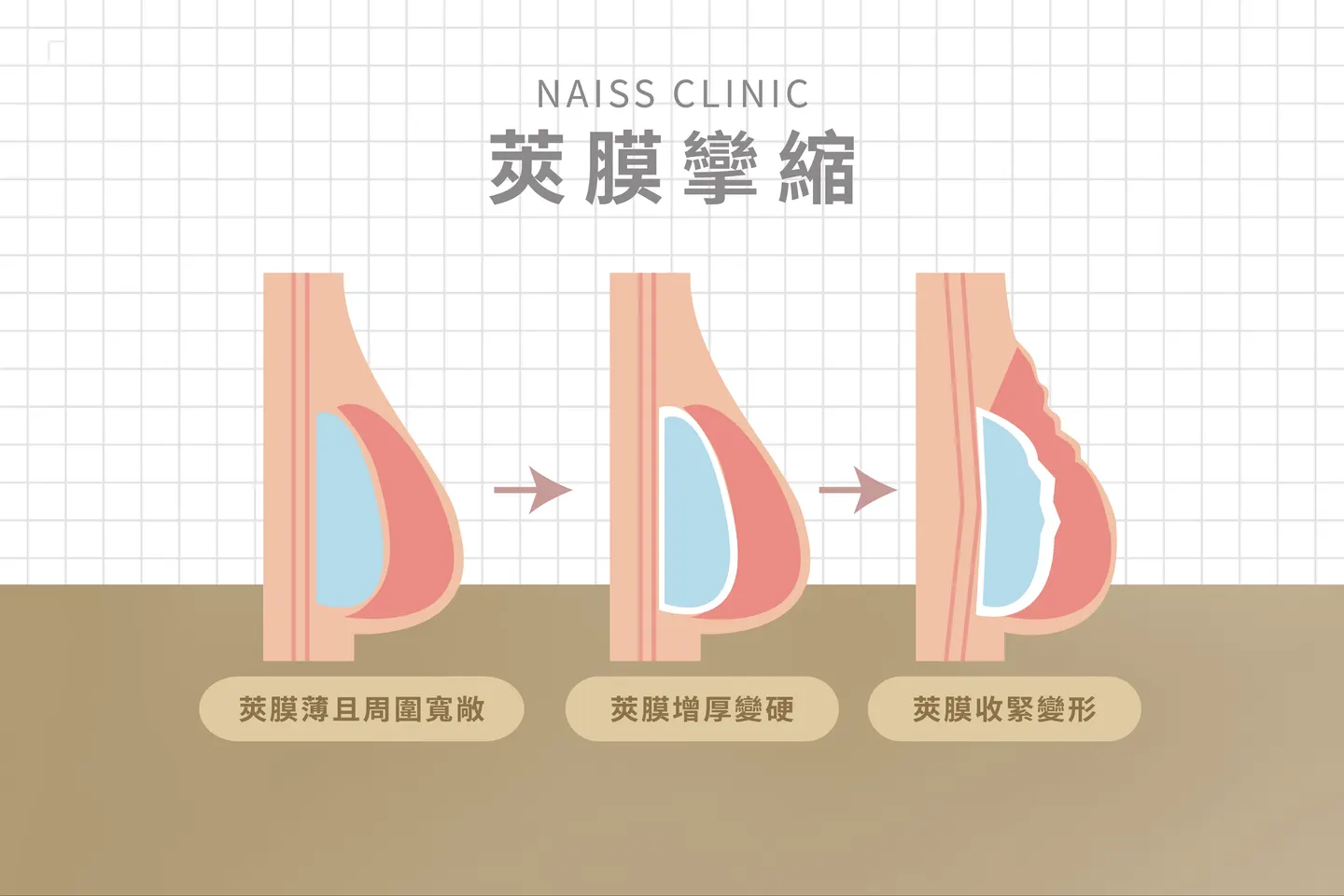
First, it helps to distinguish between “capsule” and “capsular contracture”. To the body, breast augmentation surgery is like an invader. When the immune system detects an “intrusion by a foreign object,” it activates a defense mechanism and forms a scar-like ring around the implant: “capsule tissue,” which protects the body.
In general, capsule tissue is a natural growth of collagen fibers, but if the immune system overreacts and the capsule keeps thickening and tightening, the implant has no room to sit comfortably and is squeezed, becoming deformed, hard, and unnatural. This is what is called “capsular contracture.”
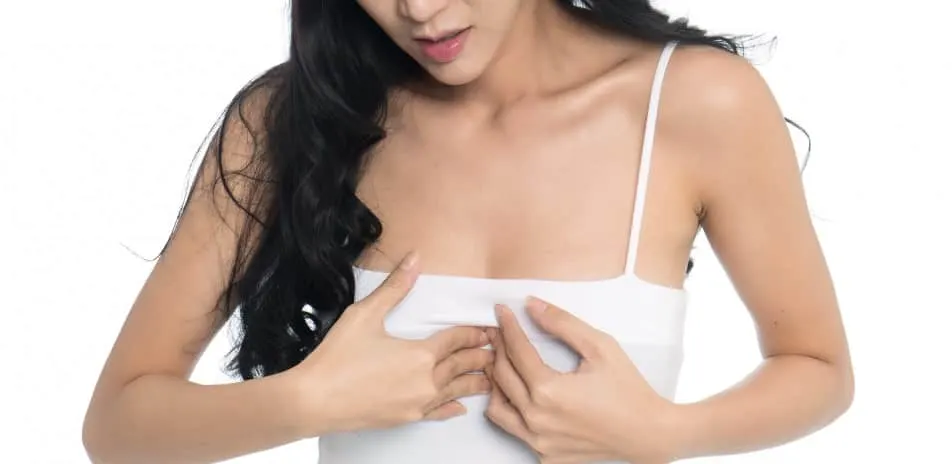
P.S. Capsular contracture not only affects the appearance of the breast; it can also make the breast feel cold and stiff, and even cause swelling and redness.
In the early days of breast augmentation, the rate of capsular contracture was as high as 20%, but as medical techniques and implant materials have continued to improve, the rate has fallen to roughly 3–8%, and some implants now have capsular contracture rates below 1%! However, capsular contracture can occur at any time after surgery and is hard to avoid completely, and the medical community has not yet identified a definitive cause.
How Can You Tell Whether You Have Capsular Contracture?
Capsular contracture is divided into four grades, each differing in its effect on appearance, feel, and discomfort. Below is a simple breakdown of the four grades to help patients keep track of their health promptly.
Grade 1:
Normal appearance, with a thin, translucent capsule; no symptoms and nothing noticeable; soft to the touch. Proper care is all that is needed.
Grade 2:
Normal appearance; the breast feels slightly firm and the implant may be palpable; moderate massage and medical care are needed, including medication to suppress contracture.
Grade 3:
Deformed appearance, with a visible implant; a slight feeling of pressure, noticeably hard to the touch, and unnatural movement; appropriate massage is needed, along with a capsulotomy to release the capsule tissue.
Grade 4:
Obvious deformity; tight pain or pain on pressure; stiff to the touch, a deformed implant, and a foreign-body sensation; capsulotomy, capsulectomy, and implant replacement surgery are required.
What to Do If Capsular Contracture Occurs After Breast Augmentation?
Does Fat Transfer Breast Augmentation Have Complications Too? What About Fat Loss?
Isn't capsular contracture something that happens with implants? Can fat transfer breast augmentation really have complications too? Fat transfer breast augmentation has the advantages of “no rejection by your own body,” “a natural, soft breast shape,” “body contouring at the same time,” and “fat injection to fill in according to different breast shapes,” but it also has two common drawbacks!
1. Cup size limits: Before surgery you will usually discuss your expected cup size with the doctor. If you want a much larger cup size, it is not advisable to choose fat transfer breast augmentation. Only a limited amount of fat can be harvested each time, and the problem of fat survival rate must also be taken into account, so a single surgery can only adjust a limited number of cup sizes. If you insist on fat transfer, more than one surgery will be needed!
2. Fat survival rate: Fat survival varies by individual constitution, with an average survival rate of about 70%.
Goodbye, Fat! These Are the Best Areas to Harvest Fat From for Fat Transfer Breast Augmentation
What Risks Does Fat Loss Carry?
| 1. Risk of inflammation or pus at the refill site after surgery | Fat is harvested using sterile technique; the risk arises if it is contaminated during harvesting. |
|---|---|
| 2. Risk of fat necrosis | Caused by insufficient local blood supply: when fat is harvested and refilled and the blood circulation cannot cope, complications may develop. |
| 3. Risk of pulmonary embolism | Generally refers to fat filling in the intimate area, when an inexperienced doctor accidentally punctures a blood vessel. |
| 4. Risk of micro fat embolism | 4. Risk of micro fat embolism If the doctor's technique during liposuction is not agile and gentle, blood loss may increase, and fat may enter the bloodstream. |
| 5. Risk of fat calcification | Although calcification is possible after fat transfer breast augmentation, the probability is very low; a skilled doctor keeps the tissue stable during transplantation to avoid the risk of calcification. |
Fat transfer breast augmentation does carry some risks. For example, the liposuction area may become “uneven,” and the augmented breast faces the risk of “fat loss” and “small lumps.” That is why choosing a professional doctor, a compliant clinic, and the safest liposuction method is so important! The NAISS team strongly recommends VASER liposuction for fat transfer breast augmentation to avoid complications and reduce risk!
Get to Know VASER Liposuction! Sculpt Mermaid Lines and Abs Lines
This article is for general information only. Results vary from person to person; please consult a doctor in person before deciding on any treatment.