Contents
Today's pursuit of a curvy figure has left more and more people with so-called "body anxiety", always feeling that they fall short somewhere. Natural advantages and disadvantages play a part too: for example, some women are naturally well endowed, while others are slim with little flesh and never gain weight no matter what they eat. Compared with the buttocks, where shape and lift can be improved through training, what about the breasts that women care about most? As anyone who has tried knows, the results training can achieve are limited, and that is when professional intervention is needed! Today we are sharing the breast augmentation choice most women make: "fat transfer breast augmentation."
What Is Fat Transfer Breast Augmentation?
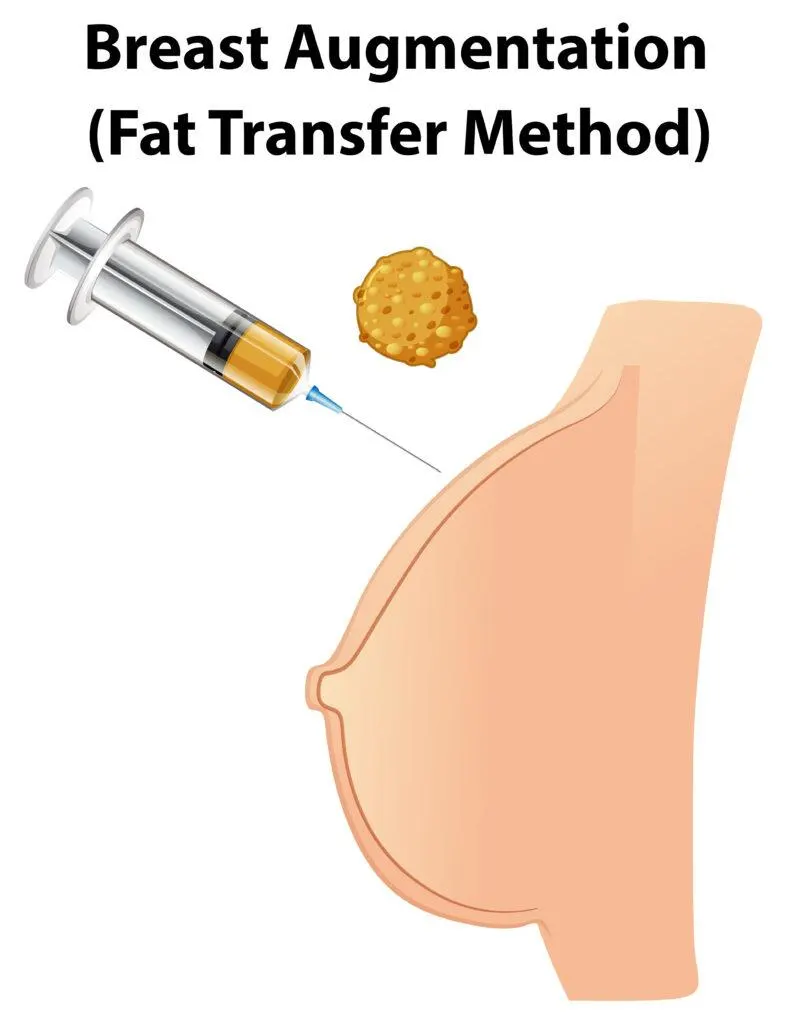
"Fat transfer breast augmentation" is a breast augmentation procedure in which a surgeon removes your own fat (that is, subcutaneous fat), purifies it using centrifugation, and then fills the breasts with the fat tissue. It can not only increase cup size but also address concerns such as breast shrinkage after childbirth, mild sagging, asymmetric breast shape, and unequal breast sizes. The visual result is also more natural, giving women confidence from the inside out, and they no longer need to worry about being noticed!
At present, "autologous fat transfer" is a relatively safe and stable surgical approach within the field of surgery, so you can consult and undergo surgery with confidence.
Surgical Procedure and Steps
Before surgery, careful examinations and evaluations are required, and surgery can only go ahead when all conditions allow.
Step 1: Pre-Operative Simulation and Evaluation
Before surgery, you need to undergo a BMI assessment, a body fat assessment, breast ultrasound or MRI, and 3D pre-operative simulation (including precise measurement of chest size, a golden-ratio "golden triangle" design, and a simulation of the ideal breast shape). Besides helping the doctor understand the breast contour and safety, the evaluation uses breast ultrasound or MRI to analyze the space and tissue condition of the breasts, so the amount of fat needed for transfer can be determined precisely, which can effectively help prevent breast edema and calcification.
Step 2: Precision Sculpting With VASER Liposuction
When NAISS CLINIC performs liposuction, it uses "VASER", and you probably already know that the liposuction stage is critical: the doctor's skill and the equipment chosen both affect the final result and recovery after surgery.
"VASER" is characterized by high fat selectivity. It emulsifies fat and, during liposuction, does not damage the connective tissue, nerves, or blood vessels between fat cells, and it can target the desired area to remove fat. With a patented drainage probe, the incision is smaller than 1 cm, achieving the "deep liposuction, superficial sculpting" effect.
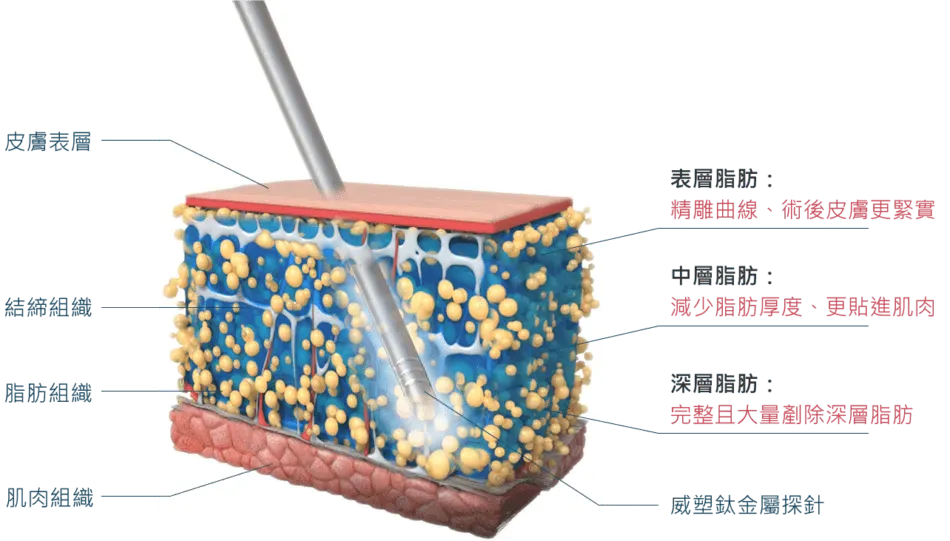
"VASER" greatly reduces tissue damage, so the recovery period is short and the skin keeps its original firmness after surgery, and it is also less likely to leave an uneven, bumpy surface. Finally, as long as you take care not to deliberately lose weight for three months after surgery, the fat can survive permanently, which greatly increases the appeal of fat transfer breast augmentation.
Step 3: Purifying the Fat
Fat removed by liposuction must be purified before it can be used! Unpurified fat contains blood, tissue fluid, and impurities from tissue other than fat. Centrifugation is used to separate and filter unwanted components such as blood and tissue fluid out of the fat before it is transferred.
Step 4: Reinjecting the Fat
In fat transfer breast augmentation, the fat is injected into the space outside the mammary gland, with only 1 to 2 cc injected at each site and spread evenly. Too much fat should not be injected at the same site, in order to avoid the calcification and infection and other problems that can arise from fat transfer breast augmentation.
Pros and Cons of Fat Transfer
The advantage of fat transfer breast augmentation is that your own fat cells are purified and used as the filler, so rejection is less likely, and it can also effectively correct uneven breast sizes and refine breast shape. Beyond adding fullness to the cup, the feel is relatively natural and soft. The injection sites are only pinhole-sized, so this is a safe, scar-free procedure with a short recovery period and very easy aftercare!
Disadvantages of "fat transfer breast augmentation":
Because this procedure harvests your own fat, the amount available is limited and varies with each person's natural condition. When the fat is reinjected, too much or too little is avoided so that the fat survival rate is not affected! (So more is not always better, and the doctor's skill is very important!)
On average, it can increase size by 1 to 1.5 cup sizes (about 250 cc to 300 cc), so it is better suited to women with a B cup or above, or to people having a second breast augmentation. Also note that the transferred fat will change as your weight goes up and down, so we recommend not deliberately losing weight for three months after surgery!
Who Is a Good Candidate for Fat Transfer Breast Augmentation?
1. Naturally underdeveloped breasts
2. People who are unhappy with their breast size or shape
3. Breast atrophy or sagging after childbirth
4. Asymmetric breast size or position
5. People who want a completely natural result and want to avoid the feeling of a foreign object
6. People who want to avoid visible scars from breast augmentation
Because the cup size that can be gained with fat transfer breast augmentation is limited, it is less suitable for women who are very slim or have very low body fat.
Before and After Surgery: What to Know
Before surgery:
1. Tell your doctor about your medical history, medication history, surgical history, and family medical history.
2. Stop taking circulation-boosting health supplements for two weeks.
3. Avoid irritating foods, tobacco, and alcohol before and after surgery (such as coffee and chili peppers).
4. Complete the basic blood tests, ECG, and other tests as your doctor instructs.
5. Do not eat or drink for eight hours before surgery, and remove nail polish and all accessories (including removable dentures and contact lenses).
After surgery:
1. Massage: Once swelling in the liposuction area has gone down, gentle massage is fine to help bruises fade. Avoid massaging the fat transfer area as much as possible, because massage can reduce fat survival.
2. Lumps appearing 1 to 2 weeks after surgery are normal and will gradually improve after one month.
3. You may shower on the day of surgery, but no tub baths.
4. Do not eat spicy foods or take circulation-boosting medications or supplements (such as fish oil, vitamin E, and turmeric).
5. The first three months after surgery are the golden period. Supplement protein and other nutrients, do not diet or try to lose fat, and wear your compression garment diligently.
This article is for general information only. Results vary from person to person; please consult a doctor in person before deciding on any treatment.