
Contents
Have you heard of "gynecomastia"? Do you look down and find your chest is bigger than your girlfriend's? Does your chest jiggle when you run? Do your breasts even show through your clothes? Situations like these can destroy your confidence and make you afraid of being laughed at. If your chest is still noticeable even though you are not overweight, you may have so-called "gynecomastia." This article helps you understand gynecomastia, teaches you a 1-step self-check, and finally tells you how to fix it!
What Is Gynecomastia?
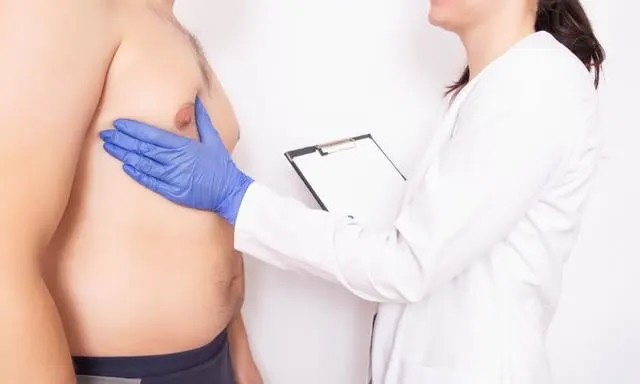
Gynecomastia is mainly caused by an imbalance between androgen and estrogen hormones. Sometimes both sides are enlarged at the same time, and sometimes only one side is. It falls into 2 types, "physiological" and "pathological":
Physiological Gynecomastia: Mainly Caused by Hormonal Changes
1. Newborns
Under the influence of the mother's estrogen, a baby boy's chest may be more noticeable, and it usually resolves on its own within 2 to 4 weeks of birth without treatment
2. Teenagers
During puberty, when teenage boys' hormone secretion is less stable, temporary breast gland growth, swelling, and pain can occur. It most often appears in the junior high and high school years. After adulthood, hormone levels return to normal and gynecomastia improves on its own. If it does not improve in adulthood, we recommend asking a medical facility.
3. Middle-aged and older men
Ages 45 to 50: Hormone levels decline, and on top of that, men are prone to being overweight and gaining body fat, which can lead to mild gynecomastia.
Ages 50 to 80: Testosterone declines and tissue ages, which easily leads to breast gland enlargement and a sagging chest, and as many as 72% develop gynecomastia
4. Fat accumulation
Eating fried foods and refined carbohydrates and not exercising regularly lead to obesity, which also causes excess fat to build up in the chest. This is "fatty" pseudogynecomastia.
Pathological Gynecomastia: Mainly Caused by Disease or Medication
1. Diseases
Such as hyperthyroidism, testicular hypoplasia, male breast cancer, alcoholism, malnutrition, liver cirrhosis, chronic hepatitis, sex chromosome abnormalities, and endocrine-related tumors
2. Medications
Such as diuretics, cancer drugs, heart disease and high blood pressure medications, ulcer treatments, antibiotics, prostate treatments, psychiatric drugs, Parkinson's disease drugs, chemotherapy drugs, HIV medications, and herbal products
The 4 Grades of Gynecomastia
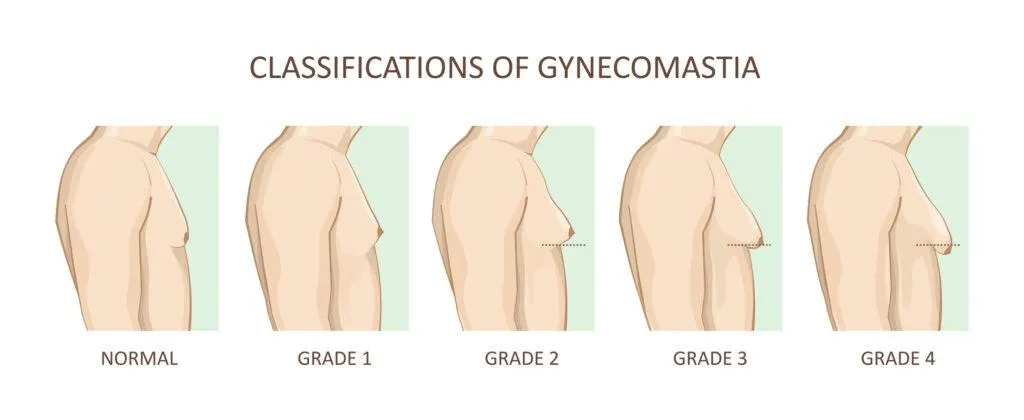
Gynecomastia is divided into 4 grades by severity, the most severe being equivalent to a woman's A to B cup. The grade is based on "the degree of breast tissue swelling" and "the border of the lower chest", which determines the grading.
Grade 1: Mild, with subtle features
Grade 2: Moderate, with obvious swelling, but the nipple is not below the lower chest line
Grade 3: Advanced, with the nipple close to the lower chest line and a loose, sagging chest
Grade 4: Severe, with the nipple below the lower chest line and an obviously female breast appearance
A 1-Step Self-Check for Gynecomastia
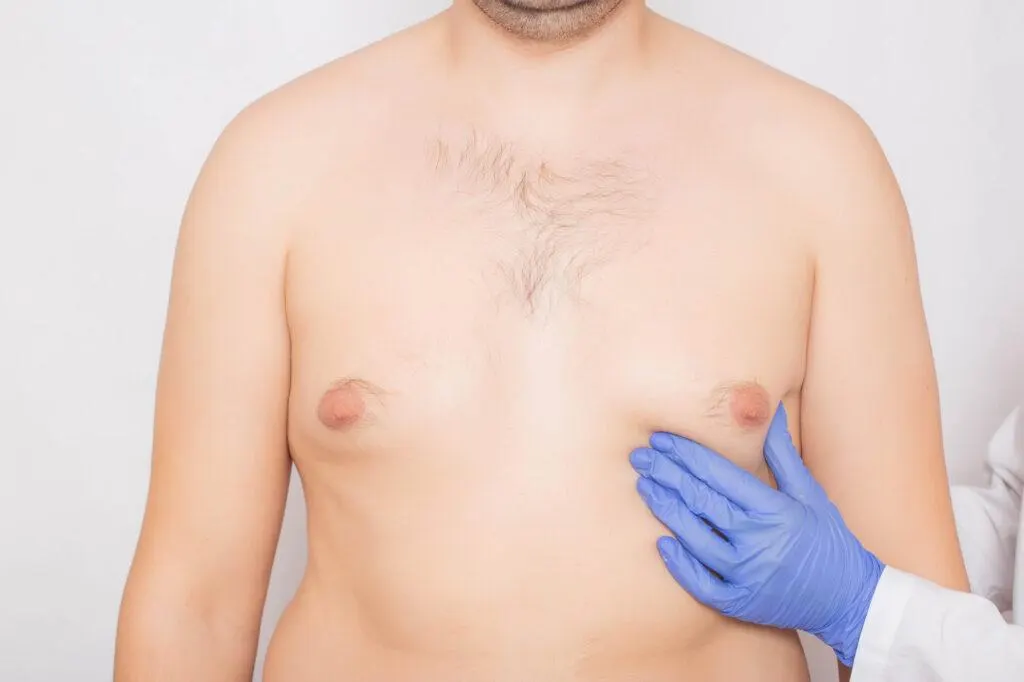
With gynecomastia, you can feel a firm, springy, disc-shaped mass of breast gland tissue around the areola. Pinch the areola area between your index finger and thumb. If the thickness exceeds 4 cm, or is thicker than the skin of your armpit, you very likely have gynecomastia. This step is only a simple self-test at home; for the details, an evaluation by a professional doctor is more accurate.
4 Ways to Improve, Prevent, and Treat Gynecomastia
1. Diet Control

Avoid refined sugar and high-fat foods, such as beverages, desserts, fried foods, and butter, and so on
2. Exercise Habits

We recommend 1 to 2 cardio sessions a week to burn fat, plus 2 to 3 weight training sessions to build muscle, maintaining healthy body function to help prevent hormonal imbalance and fat buildup in the breast.
3. Medication

Medication is one of the common treatments for gynecomastia. Commonly used drugs include anti-estrogen drugs, oral contraceptives, and others. However, medication must be evaluated and chosen according to the individual, and taken as directed by your doctor.
4. Surgery

Current treatments for gynecomastia include breast gland excision surgery, cryolipolysis, liposuction surgery, and other approaches. For patients with both fat and breast gland tissue problems, minimally invasive techniques are used to remove the breast gland and suction out the fat. After the gland tissue is removed, in most patients the gland does not grow back.
This article is for general information only. Results vary from person to person; please consult a doctor in person before deciding on any treatment.