Contents
In Taiwan's scorching summers, everyone sweats, but "excessive sweating" and "smelly sweat" trouble many people. Have you ever caught a different body odor in a packed crowd, or held your breath in an enclosed space such as the MRT or an elevator? Excessive sweating and smelly sweat can also make people feel self-conscious or directly affect their quality of life. This article explains the difference between excessive sweating and smelly sweat and tells you about ways to improve them and the treatments available.
What Is "Excessive Sweating"? What Is "Smelly Sweat"?

Sweating is actually a normal way for the body to regulate temperature, and it is mainly controlled by the sympathetic nervous system.
Hyperhidrosis: It occurs when the amount a person actually sweats exceeds the amount needed to regulate body temperature. However, if the increase in sweating is related to emotions or stress, it does not count as hyperhidrosis. Hyperhidrosis can be caused by many factors, such as genetics, hormones, and disease, and is divided into primary and secondary. Primary hyperhidrosis is mainly hereditary, while secondary hyperhidrosis has many causes, such as endocrine disorders and disease. It mostly occurs in the underarms, palms, soles of the feet, and face
Bromhidrosis: Commonly known as "underarm odor," it is caused by overactive apocrine (large sweat) glands. Apocrine glands differ from ordinary eccrine glands: eccrine glands release sweat, while apocrine gland secretions contain lipids, proteins, and the like. Apocrine glands are found mainly in the underarms, genital area, and ears, with the most in the underarms. Sweat itself actually has no smell, but when the lipids and proteins from apocrine glands interact with bacteria on the skin surface, odor is easily produced
Because both conditions commonly occur in the underarms, they are easily confused. Although they are different conditions, some people still have both at the same time.
[Further Reading]
What to Do About Hyperhidrosis?
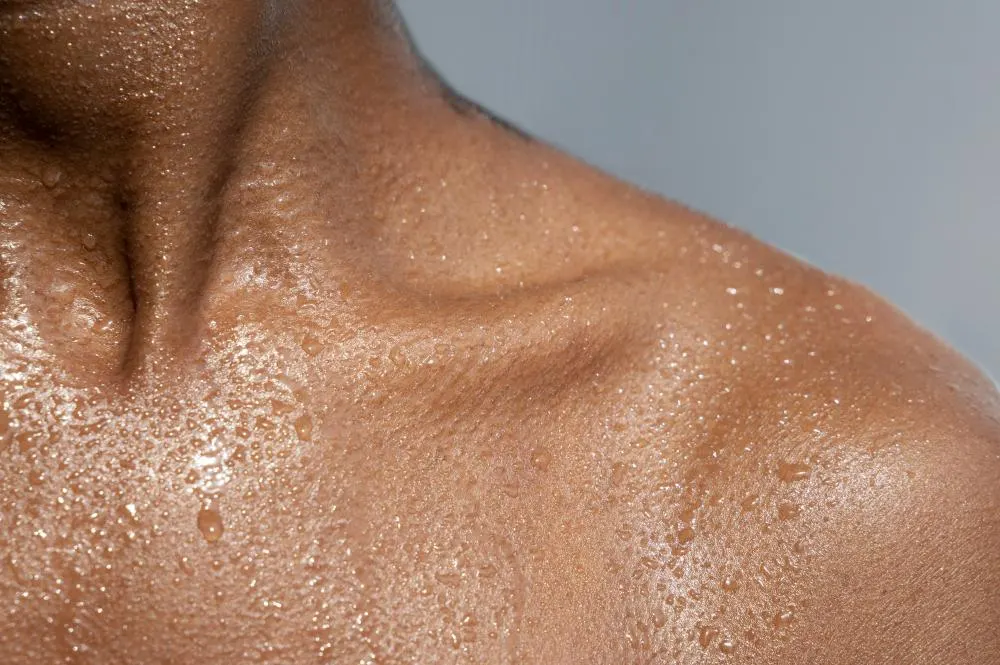
Antiperspirants: A common way to stop sweat. Over-the-counter antiperspirants can suppress sweat and suit people with mild symptoms. Antiperspirants should be applied to dry skin or before bed, not after heavy sweating, and excessive use can cause skin or hair follicle inflammation
Medication: Divided into topical ointments and oral medications, used to suppress sweat gland secretion
Iontophoresis: Using the body's electrical conductivity, hydrogen ions block sweating. Iontophoresis can reduce sweat by 60% to 80%, but the treatment requires multiple sessions and is not a once-and-for-all fix
Botulinum toxin: Botulinum toxin can suppress gland secretion, lasting about 3 to 6 months. Redness, warmth, pain, and arm weakness at the injection site are temporary and normal reactions.
Surgery: Destroying the sympathetic nerves reduces sweating and removes odor, but it may have side effects: compensatory sweating, which increases sweating in other parts of the body
What to Do About Smelly Sweat?

Antiperspirants and deodorants: A common way to stop sweat. They can suppress sweat and should be applied to dry skin or before bed, not after heavy sweating. Excessive use can cause skin or hair follicle inflammation, but antiperspirants have limited effect on apocrine gland secretion, so they usually need to be combined with a deodorant or perfume balm to cover up the odor
Botulinum toxin: The most common underarm odor treatment, it can temporarily resolve odor and sweating, and the treatment is quick, lasting about 3 to 6 months. Redness, warmth, pain, and arm weakness at the injection site are temporary and normal reactions.
miraDry: Uses microwave energy to heat and shrink the sweat glands, improving both underarm sweating and odor. There is no compensatory sweating after treatment, and 2 to 3 sessions can improve 80% of underarm odor, but improper operation can cause large areas of charring and burns
VASER minimally invasive underarm odor removal surgery: VASER liposuction technology emulsifies the fat cells, and negative pressure then suctions them out to remove the apocrine glands. The incision is only 0.5 cm, and the integrity of nerves, blood vessels, and connective tissue is preserved. VASER underarm odor treatment has the advantages of a short recovery period and almost no side effects, and you can return to daily life the day after treatment
Traditional underarm odor surgery: One or two 3 to 4 cm incisions are made in the underarm, and the dermis and apocrine glands within the area of underarm hair are cut out. Results are good and most apocrine glands are removed, but the large incision brings more complications, a long recovery period, and other drawbacks.
Underarm Odor Treatments Head to Head
| Antiperspirant | Botulinum toxin | miraDry | VASER minimally invasive | Traditional surgery | |
|---|---|---|---|---|---|
| Incision size | X | Pinhole-sized | Pinhole-sized | 0.5 cm | 3-4 cm |
| How long it lasts | 24 hours | 3-6 months | Permanent | Permanent | Permanent |
| Recovery time | X | X | X | 1 month | 3 months |
| Treatment time | X | About 10-20 minutes | About 60 minutes | About 40-60 minutes | About 1.5-2 hours |
| Effectiveness | ** | *** | **** | **** | ***** |
| Cost | * | ** | **** | **** | *** |
This article is for general information only. Results vary from person to person; please consult a doctor in person before deciding on any treatment.