Contents
- How Facial Fat Transfer Works
- Does Facial Fat Transfer Hurt? Are the Wounds Noticeable?
- What Is the Best Season for Facial Fat Transfer?
- Can I Use Someone Else's Fat for Fat Transfer?
- Which Areas Are Suited to Fat Transfer?
- Will My Face Look Uneven After Fat Transfer?
- Can Facial Fat Transfer Improve Pores?
- What Is the Difference Between Fat Transfer and Injectable Fillers?
- Key Reasons Facial Fat Transfer Fails
Who is quietly getting prettier? You can fix hollow areas without hyaluronic acid filler. The secret to this quiet makeover is “autologous fat transfer.” We often hear about fat transfer breast augmentation, but rarely about using liposuction fat to fill the face. This article introduces and analyzes “facial fat transfer.” When you first hear about it, you are sure to have many myths and doubts, so we have gathered several key points. If you have facial hollowness or early signs of aging, this article is right for you! Let's read on.
How Facial Fat Transfer Works
Facial fat transfer recycles excess fat from elsewhere on your body, purifies it by letting it settle, and then injects it into the areas you want to adjust or fill, for an immediate fuller look.Results from facial fat transfer settle about three months after the procedure, and as long as you keep good daily habits and eating habits, the results look more natural and last longer than injectable fillers such as hyaluronic acid.
Stage 1: Fat Harvesting
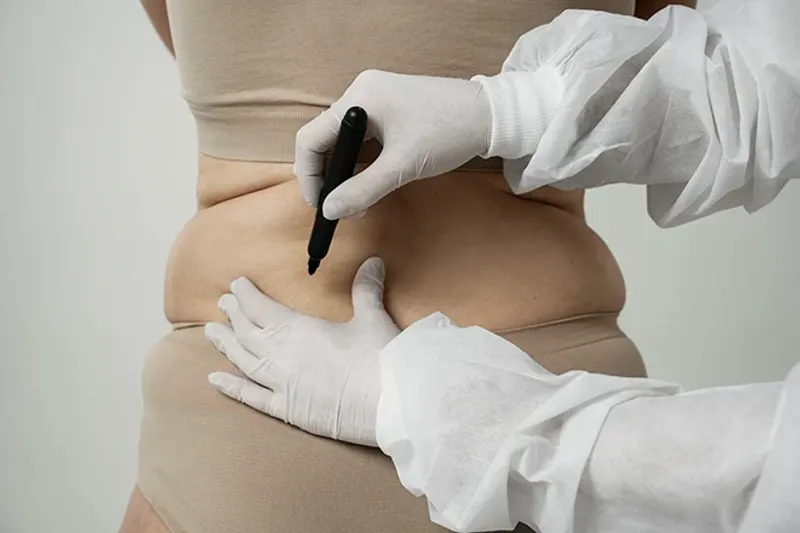
Through VASER liposuction, excess fat is harvested from your body. Areas where fat tends to accumulate include the buttocks and thighs, waist and abdomen, and arms, among others. VASER liposuction uses ultrasonic fat-dissolving technology to effectively reduce bleeding, bruising, and pain.
Stage 2: Settling and Purification
The harvested fat is processed with professional centrifugal purification technology, which removes impurities such as water, blood, and broken fat oil droplets and extracts purified fat. This not only improves the fat survival rate but also gives the best filling results.
Stage 3: Transfer
Finally, the purified fat is injected back into hollow or under-filled areas, such as the face, through wounds of about 0.2 cm, which leave almost invisible scars once healed.
Does Facial Fat Transfer Hurt? Are the Wounds Noticeable?
General anesthesia is used during the procedure, so there is no need to worry about pain. The liposuction wounds are about 0.2-0.5 cm, and the harvest area will have mild swelling and soreness afterward, a bit like the feeling of lactic acid buildup after exercise, while the transfer area (the face) will only have swelling. The procedure uses very fine needle holes, so the wounds are almost invisible afterward! That is why it gives the impression of quietly getting prettier.
What Is the Best Season for Facial Fat Transfer?
Procedures tied to the season are usually “large-area liposuction,” because recovery requires wearing certain garments, such as compression garments. Facial fat transfer is less of a concern, because the amount of fat harvested is small and you do not need to wear a body shaper afterward to maintain your shape. So facial fat transfer can be done all year round!
Can I Use Someone Else's Fat for Fat Transfer?
Absolutely not!It is very dangerous, because everyone's fat differs in “quality” and “quantity,” and transferring someone else's fat can cause rejection or tissue reactions, as well as calcification and a risk of infection. People used to say jokingly, “I'll give you my fat!” That really is just a joke. Never try it casually.
Which Areas Are Suited to Fat Transfer?
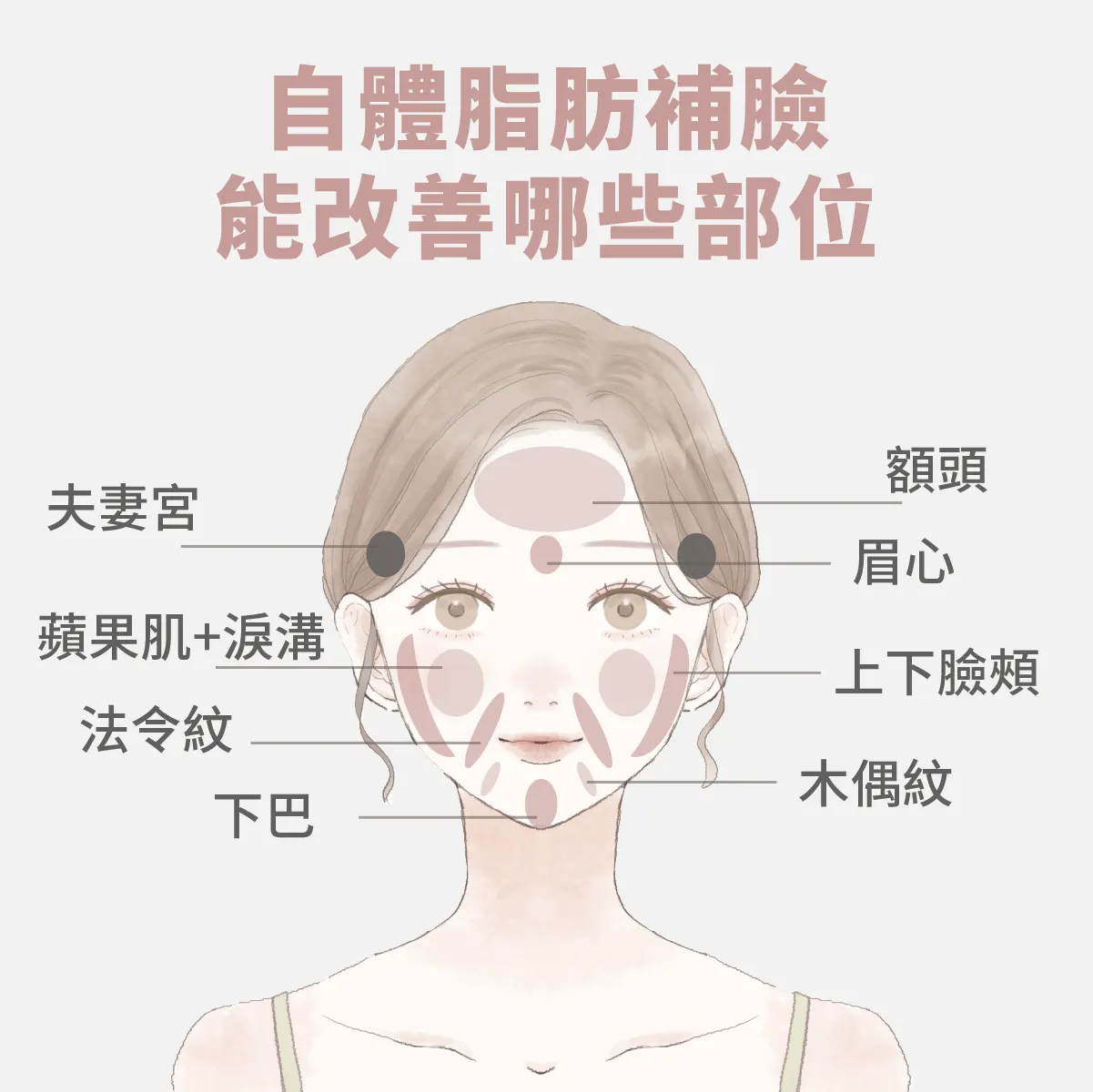
Most people think of fat transfer as being for “breast augmentation” and “buttock augmentation,” but it can also refine delicate facial contours, for example: hollow temples, a forehead you want a bit fuller, hollow apple cheeks, nasolabial folds, and the chin, can all be refined with your own fat! Notably, some clients have even used fat transfer to improve bony “claw” hands, also with good results!
Early Signs of Aging Right After Graduation? Causes and Prevention of Hollow Cheeks
Will My Face Look Uneven After Fat Transfer?
In the past, traditional filling was done by the doctor injecting by hand with a syringe, so results depended heavily on the doctor's feel and aesthetic sense, and differences in force from person to person could affect the amount injected or how evenly it was distributed. As techniques have matured, finer needles can now be used to assist the filling, achieving even and perfect results!
Can Facial Fat Transfer Improve Pores?
After the face loses fat, it often develops small pits and hollows, and fine lines look more noticeable. When your own fat is transferred into the hollow areas of the face, it can lift these hollows and smooth fine lines at the same time!
What Is the Difference Between Fat Transfer and Injectable Fillers?
- “Facial fat transfer” is using excess fat from another part of your own body to fill the areas of the face you want fuller. The procedure requires general anesthesia. The advantage of your own fat is that it does not cause rejection after filling, which greatly improves safety, and the skin looks and feels more natural afterward. If you follow your doctor's instructions for aftercare and keep a normal routine, results are generally very good.
- “Injectable fillers” work by injecting suitable substances into the facial areas you want to sculpt further. They require no surgery, have a short treatment time and a short recovery time, and are non-permanent, so the duration of results is limited and periodic top-ups are needed. Common aesthetic filler treatments include hyaluronic acid, collagen, and calcium hydroxylapatite.
Key Reasons Facial Fat Transfer Fails
The advantage of facial fat transfer is that it does not cause rejection; the drawback is that the “fat survival rate” has to be considered, and survival is affected by individual constitution and daily routine. After the procedure, be sure to follow your doctor's instructions and maintain good habits, avoiding extreme dieting, smoking, alcohol, and late nights, among others.
Key factors affecting the “fat survival rate”: because autologous fat transfer uses your own fat tissue, a small portion is absorbed by the body after transfer, and the fat survival rate is generally 50-70%, varying with individual constitution, lifestyle habits, the doctor's skill, liposuction equipment, and so on.
Ways to Improve Fat Survival
- Do not ice, heat, or massage transferred fat: freshly transplanted fat is sensitive to cold, heat, and pressure, so do not apply ice or warm compresses or massage the filled areas, to avoid lowering the fat survival rate.
- Fat survival varies with individual constitution: people who are naturally thin or do not gain weight easily, or who have irregular routines, may have a lower fat survival rate.
- Fat for transfer must be fresh: some online sources claim you can freeze harvested fat and thaw it for a second filling later to avoid another liposuction. This is a misconception! Many studies show that once fat has been frozen, its survival rate drops to just 5%. We therefore recommend having a professional doctor assess you before surgery and harvesting only an appropriate amount of fat (no need for an excess), to make sure the fat returned to your body is fresh and effective.
- Surgical method: besides the doctor's skill, the choice of liposuction device and equipment is also very important. Here are several techniques that can improve the fat survival rate:
VASER liposuction: uses stable ultrasound vibrating at 36,000 times per second to break up the fat, and according to overseas journals, the fat survival rate with VASER liposuction can be as high as 80-85%.
MAFT-GUN fat gun: compared with a hand-pushed syringe, the fat gun ensures that the depth and volume of each injection are consistent, reducing error; fat transferred with a fat gun has a higher survival rate and is less likely to harden or calcify.
Mela Puregraft bag: features a double-layer filter membrane that filters blood cells and anesthetic out of the fat, sending the impurities into a waste bag and leaving purified, clean fat.
Weicui Solution: processes fat tissue in a closed, sterile system with specially structured micron-geometry baffles, so the processed fat contains more uniformly micronized fat cells and growth factors, which can raise the fat survival rate to 85-90%. - PRP or PLT: PRP and PLT, which are rich in growth factors, can both improve the fat survival rate. They can be prepared from just a sample of your own blood and can also be used for scar repair after surgery.
Am I a Good Candidate for Fat Transfer Breast Augmentation? How to Improve Fat Survival
This article is for general information only. Results vary from person to person; please consult a doctor in person before deciding on any treatment.