Contents
- Who Needs Liposuction?
- Fat Dissolving vs. Liposuction vs. Weight Loss: What's the Difference?
- Common Causes of Failed Liposuction and Complications
- Is the Death Rate of Liposuction High? The Key Factor
- 4 Main Causes of Death in Liposuction
- Who Is Not Suitable for Liposuction?
- 6 Major Risks of Liposuction
- How to Reduce the Risks of Liposuction
- What If You Regret Liposuction?
Liposuction is no longer unfamiliar as a way to get a better figure: stubborn fat is removed surgically for quick slimming. But as everyone knows, liposuction is a major surgery that requires general anesthesia, so is it really safe? Are the risks high? Today we analyze liposuction, including the differences among fat dissolving, weight loss, and liposuction, and we also address what people care about most: “Is the death rate of liposuction high?” and “Can liposuction be fatal?” Let's take a look!
Who Needs Liposuction?
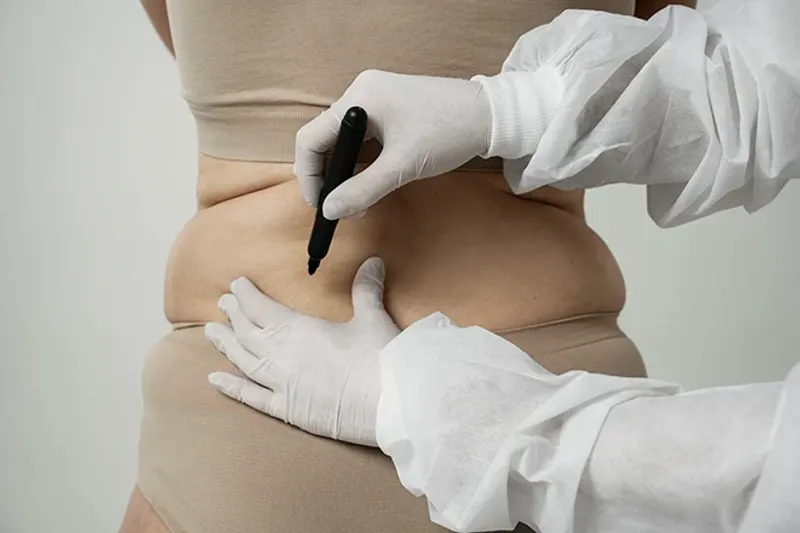
First, let's clarify what liposuction is. Liposuction is a concept of fine sculpting. If your overall body fat is high, surgery can only remove “subcutaneous fat,” and there is also a lot of “visceral fat” inside the body. So even after liposuction, you still need to pair it with diet or regular exercise to get the best contouring result!
So the people who need liposuction are those who want to sculpt their curves or slim down but have “stubborn fat that is hard to lose through exercise,” and liposuction can help in that case. Common areas of stubborn fat are the flanks in men and the saddlebags (outer thighs) in women.
Liposuction doesn't work for weight loss! Risks, principles, and myths explained
Fat Dissolving vs. Liposuction vs. Weight Loss: What's the Difference?
The number of fat cells in the body is fixed, and weight loss shrinks fat cells from “large” to “small”, so weight regain is easy if you do not keep it under control (the cells go from small back to large). By contrast, liposuction “removes” the fat cells, directly reducing fat volume. Fat dissolving “destroys” fat cells, for example by freezing or ultrasound, and the destroyed fat cells are naturally absorbed by the body. Many people wonder whether removed fat cells will grow back or increase in number. Current research shows that fat cells only get larger or smaller; they do not increase in number.
Common Causes of Failed Liposuction and Complications
Common causes of failed liposuction include improper execution by the surgeon, the patient's own constitution, inadequate post-operative care, and unrealistic expectations of liposuction results, any of which can cause the outcome to fall short of expectations. Setting aside weight regain, misperceptions, and technical issues, the following three situations are most often classified as “failed liposuction”:
1. Uneven Surface After Surgery
Obvious dents and bumps appear after surgery, so that skin that should be smooth becomes discontinuous, with step-like faults. If they have not settled after three to six months, the skin looks lumpy.
This usually comes from uneven force applied by the surgeon during surgery, which makes the depth of the liposuction layers vary and creates dents in the skin surface, or from the surgeon's misjudgment, being unable to determine the best amount to remove from each area, which leaves the subcutaneous fat in some supporting areas too thin and naturally results in an uneven surface.
2. Not Enough Fat Removed
During surgery, the surgeon first injects tumescent fluid into the area to help open up the tissue so the cannula can move in and out smoothly. If the surgeon's technique is poor, the amount of tumescent fluid and blood removed may be larger than the amount of fat, so the total fat removed is insufficient and the result fails.
3. Asymmetrical Contours
The human body's curves vary naturally in arc, and the length of the curves and the degree of undulation differ from person to person. The surgeon's aesthetic sense and experience therefore greatly affect the visual result. If proportions and lines are overlooked during surgery, the body shape looks unnatural after liposuction. The worst case is sagging buttocks, which is hard to fix, and a second liposuction may not do any better. Choosing your surgeon carefully is truly important!!
Is the Death Rate of Liposuction High? The Key Factor
According to research by the American Society for Aesthetic Plastic Surgery (ASAPS), the rate of liposuction complications is about 0.25%, and the death rate is 0.002%. The most serious complication is “fat embolism” (fat embolism syndrome, FES). Its death rate is over 50%, but its incidence is below 1 in 10,000. Another key factor affecting the death rate of liposuction is the risk from the “anesthesia process,” which varies with the “type of anesthesia.” With “general anesthesia,” the death rate is about 1 in 1,000. Besides the anesthesia process itself, whether an anesthesiologist stays with you throughout the surgery is also critical!
4 Main Causes of Death in Liposuction
Fat Embolism
A blockage caused when, through improper technique during liposuction, clumps of fat enter the blood vessels and travel through the body to other sites. Severe fat embolism may even block the arteries of the lungs and heart, causing blood oxygen to fall and the patient to die.
Therefore, the surgeon's skill and experience are the key to preventing fat embolism. As long as the surgeon operates carefully, controls the amount of bleeding, and avoids damaging blood vessels, the chance of fat entering the blood vessels and causing a blockage can be reduced.
Excessive Liposuction
Modern liposuction injects special anesthetic and tumescent fluid before the fat is removed, so in large-volume liposuction there is a large exchange of fluid: the surgeon infuses solution into the body and extracts liquefied fat.
Sepsis
After surgery, if neglected wound care leads to infection, there is a risk of “sepsis.” When microorganisms such as bacteria, viruses, and fungi invade the body, they can trigger severe inflammation in the immune system, with symptoms such as fever, a rise or fall in white blood cells, and shock, leading to multiple organ failure and even death.
Besides keeping the operating space and equipment hygienic and clean, the medical team must also have a strong sense of sterile technique to prevent infection in advance. In addition, sepsis often spreads through the whole body within hours or days and worsens rapidly, so it must be treated urgently as soon as symptoms appear, or it can become immediately life-threatening.
Accidental Injury to Other Organs
Liposuction dissolves and removes fat cells in the subcutaneous tissue and generally damages only the “fat layer.” It does not harm the epidermis, deep muscle, or other internal organs. But if the surgeon operates improperly or lacks experience and pokes the cannula directly into the abdomen, causing a ruptured intestine or internal bleeding, irreversible tragedies such as shock and cardiovascular failure can occur.
What are the complications of liposuction? Learn the types and how to avoid them!
Who Is Not Suitable for Liposuction?
If you have a systemic disease, such as cardiovascular or endocrine disease, you are not suitable for liposuction because the risk is higher and there are safety concerns. Next is the aesthetic consideration: if a person is significantly obese, after a large-volume liposuction in one session the skin will quickly sag and leave excess skin, so doctors will advise anyone who wants liposuction to lose some weight first.
Losing weight first through exercise gives the body enough time and space to prepare and lets the skin gradually rebound. With liposuction, by contrast, the skin loses that time to rebound, and its rebound is slower than after natural weight loss!
6 Major Risks of Liposuction
Cardiovascular Complications
To prevent heavy bleeding, a large amount of vasoconstrictor is injected before liposuction, but an overdose can easily cause cardiac and vascular complications.
Hemorrhagic Shock
After liposuction, bleeding continues inside the body and blood accumulates in the subcutaneous tissue. If blood volume drops too low, shock from acute circulatory failure can occur.
Acute Pulmonary Edema (Fluid in the Lungs)
To perform large-volume liposuction, large amounts of solution or fluid are injected into the treatment area, so tissue fluid or blood seeps into the lungs and causes fluid buildup, leading to symptoms such as severe coughing or difficulty breathing.
Subcutaneous Hematoma
If blood vessels rupture during liposuction and blood pools under the skin, a “subcutaneous hematoma” may form. Although a subcutaneous hematoma does not affect health, it can cause lasting swelling and pain and lengthen post-operative recovery.
Skin Burns
This is especially likely with laser lipolysis or early ultrasound liposuction. Because laser and ultrasound generate heat, improper operation can leave the skin in contact with heat for too long, causing burns and blisters, and even permanent scars.
Local Fat Necrosis
After surgery, some damaged fat may still remain in the body without being suctioned out. Generally, these fat fragments gradually break away and leave the body through circulation and metabolism. But if fat debris accumulates in the body and is not cleared in time, it can cause local fat necrosis, and severe cases may even need surgical removal!
How to Reduce the Risks of Liposuction
- Choose an experienced, well-reviewed clinic and doctor that you trust. For any aesthetic surgery, we recommend a one-on-one consultation with the doctor and visiting the clinic in person so the doctor can examine you and understand your situation, in order to give the most accurate advice and a customized treatment plan!
- Learn about the clinic's environment and equipment. The cleanliness of the waiting area or the doctor's consulting room can also show whether the clinic takes hygiene and safety seriously.
- Before surgery, be honest with your doctor about your medical history and about whether you have allergies and other related information.
- Respect and follow the doctor's professional advice, and do not push for unreasonable goals such as removing “more” or “faster,” or you may damage your health instead of sculpting your body.
How to avoid liposuction complications and failed liposuction? 3 liposuction risks you must know!
How is the cost of liposuction calculated? Is liposuction the same as dieting? A complete guide in one place!
What If You Regret Liposuction?
If you regret your liposuction, besides undergoing another liposuction procedure to correct asymmetry or insufficient fat removal, depending on your condition you may also choose autologous fat grafting to fill in depressions, or treatments with various energy-based devices, to regain your ideal figure and appearance.
| Method | Purpose |
|---|---|
| Revision surgery | Correcting the problems of the original surgery with a second liposuction, skin tightening surgery, or trimming |
| Autologous fat grafting | Filling in depressions or over-treated areas to create natural curves and a smooth surface |
| Device-assisted treatment | Using non-invasive treatments such as RF and ultrasound to improve laxity, or laser and IPL to reduce pigmentation and scars |
This article is for general information only. Results vary from person to person; please consult a doctor in person before deciding on any treatment.