Contents
Are you a man with breasts that look like a woman's? Do you work out hard but still can't get rid of the fat on your chest? You may have gynecomastia, which means excessive development or enlargement of breast tissue in men. Simply put, a man's chest protrudes like a woman's breast. It can be related to hormones, illness, medications, and more. This article explains why gynecomastia happens, how to treat it, when it is most likely to occur, common risks after surgery, and more.
Gynecomastia Symptoms: Why Does It Happen?
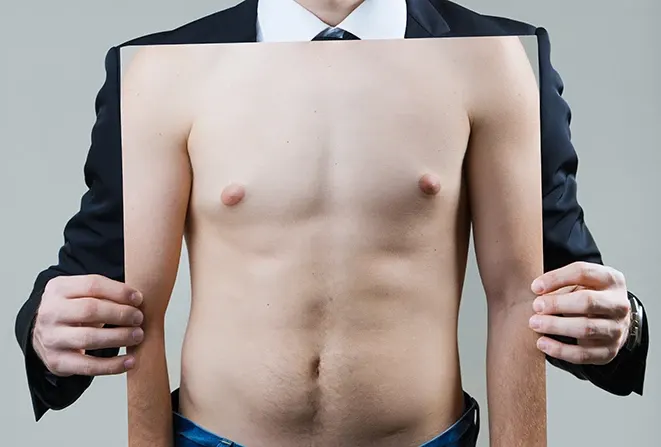
Gynecomastia is the excessive development or enlargement of breast tissue in men. It can affect both sides or only one, and simply put, the male chest protrudes in the shape of a female breast.
What problems can it cause?
Most cases do not affect physical health. However, if you have bloody nipple discharge, other discharge, a hard lump in the breast tissue, or severe pain, see a doctor promptly, as these may be related to a malignant tumor.
3 main causes of gynecomastia
1. Physiological
Caused by hormonal fluctuations, an imbalance of estrogen and androgen, abnormal fat accumulation, and similar factors.
2. Pathological
Caused by health conditions such as cirrhosis, kidney failure, and thyroid dysfunction.
3. Drug-induced
Side effects of certain medications, such as diuretics, psychiatric drugs, antibiotics, and steroids.
These are the common causes of gynecomastia, but about 25% of patients have no identifiable cause. If symptoms last more than 2 years and cannot be resolved with medication, surgery is recommended.
When Is Gynecomastia Most Likely to Occur?
1. Infancy
About 90% of newborn boys have breast enlargement after birth, and breastfed infants and toddlers may also develop gynecomastia. It usually disappears completely within 4 weeks to 1 year.
2. Puberty
About 60% of adolescents experience breast gland tissue growth, which occurs between ages 13 and 15 and usually returns to normal within a few months to two years.
3. Older age
Most common at ages 50 to 80 in men, when declining testosterone levels and increased body fat promote breast gland enlargement.
3 Types of Gynecomastia
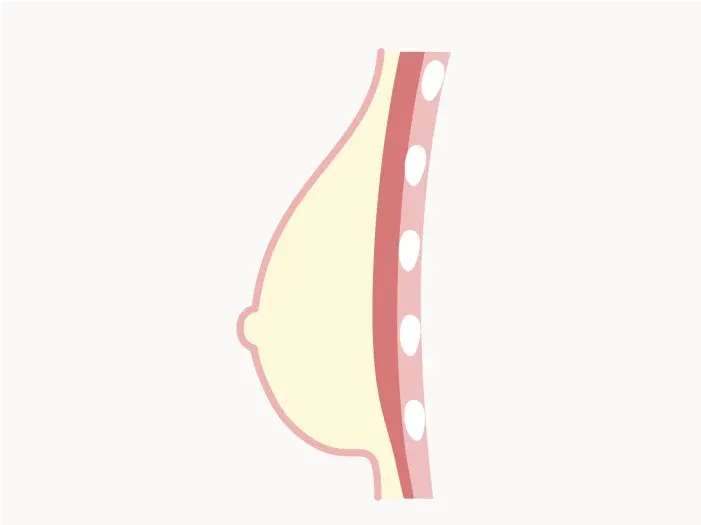
1. Fatty type (pseudogynecomastia)
The chest takes on a female appearance purely from fat accumulation alone. Patients usually have a higher BMI, and the cause is mostly excessive intake of fats and refined, processed foods, which leads to hormonal changes or fat storage.
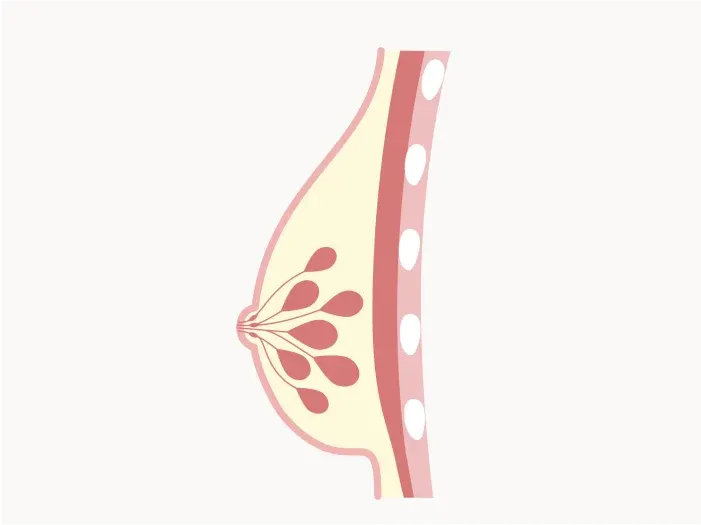
2. Glandular type
Caused by excessive growth of breast gland tissue. Patients are usually slim with more pointed nipples, and the chest contains only gland tissue with no fat. A hard lump or firm tissue can be felt beneath the nipple.
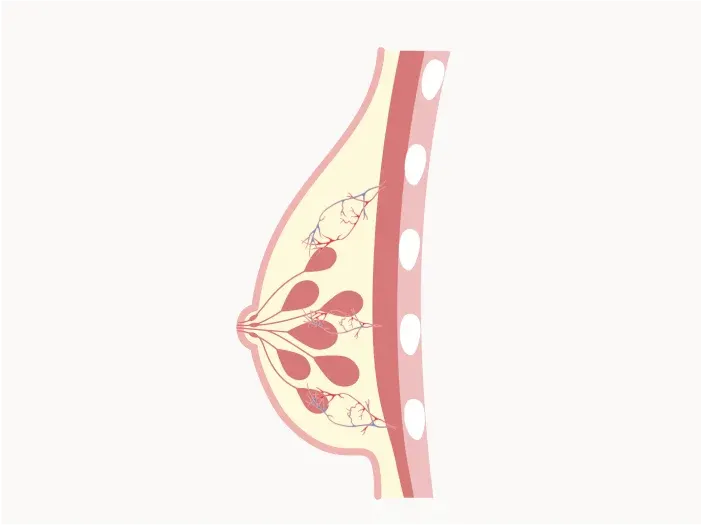
3. Mixed type
The most common type of gynecomastia, with both fat accumulation and breast gland overgrowth.
True vs. Pseudo Gynecomastia
| True | Pseudo | |
|---|---|---|
| Tissue type | Gland tissue | Fat |
| Feel | Firm and elastic | Soft |
| Cause | Hormonal imbalance | Weight gain |
One Test to Check for Gynecomastia
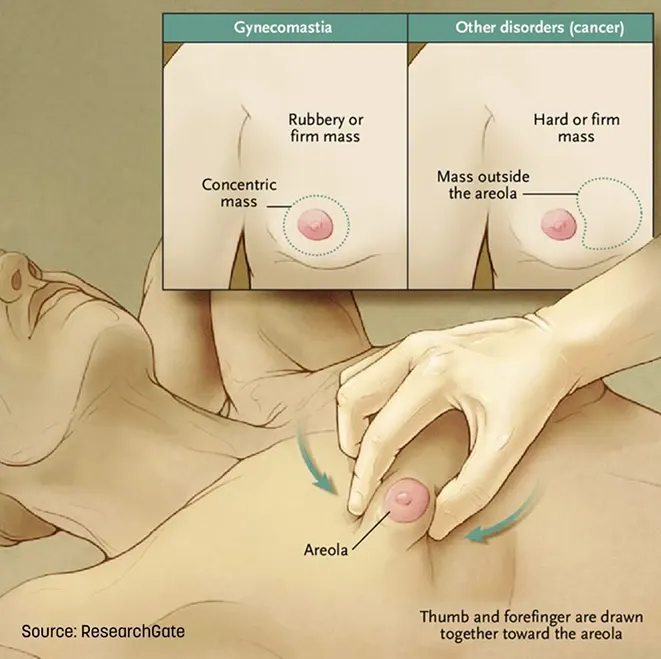
Pinch test:
- Centered on the areola, you can feel a firm, elastic lump more than 0.5 cm in diameter
- The thickness of tissue pinched up around the nipple is more than 4 cm
- The lump has clear borders, is symmetrical, and is movable
- Tenderness may be present on palpation
That is how gynecomastia is assessed. Note that a lump on one side only, a hard lump, a lump that does not move easily, a lack of tenderness, skin dimpling, nipple discharge, or swollen local lymph nodes may point to another breast condition.
How to Treat Gynecomastia: Does Working Out Help?
Gynecomastia is mainly treated through breast gland removal and liposuction:
The fatty type (pseudogynecomastia) can be treated with VASER liposuction alone to remove the accumulated fat, but post-op care matters. Otherwise the fat can still come back.
The other 2 types require breast gland removal surgery to truly improve the symptoms. Without a specific underlying cause, once the formed gland tissue of an adult man is removed, it will not grow back.
Can cryolipolysis be used?
It works only on the fatty type of gynecomastia to reduce its size, but the results are less precise. The amount of fat reduction, the resulting chest shape, and other details cannot be precisely controlled. It is not the first choice for treating gynecomastia, but it remains an option for patients who are unwilling or unable to undergo surgery.
Can working out help?
The effect is very limited! Exercise cannot eliminate breast gland tissue. Even if working out removes the outer layer of fat, the enlarged gland tissue remains, and without the fat covering to soften the contour, the protrusion can become even more noticeable.
This article is for general information only. Results vary from person to person; please consult a doctor in person before deciding on any treatment.