Contents
So frustrating! As a man, you have somehow grown large breasts… Is it because you are overweight? A hormone problem? Is what you see on your chest muscle, fat, or a medical condition? Do dieting and working out help? Have you heard of “gynecomastia”? Even with well-defined muscle lines, some men still have “puffy nipples,” and gynecomastia is actually not rare: about 1 in 5 men has it. Why does it happen? What are the common causes? How can you check and tell for yourself? This article answers these questions for anyone bothered by it, and also shares treatment options and common myths.
What Is Gynecomastia?

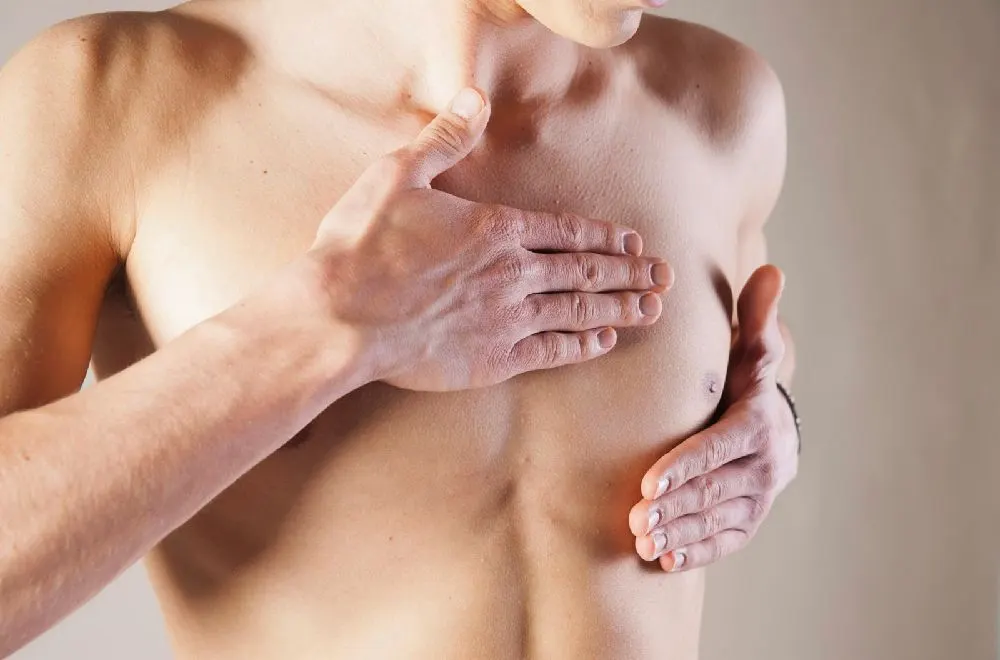
The simplest definition of gynecomastia is a man whose chest looks like a woman’s breast, and it can be assessed by appearance:
1. Puffy nipples: when the areola and nipple show a protruding, puffy look, it is typical gynecomastia.
2. A lump of tissue under the areola and nipple (visually a bit like the lower half of a woman’s breast). This appearance is caused by gynecomastia.
3. Areola size
Gynecomastia can also be divided into “true” and “pseudo” types. “Pseudo” means there is no glandular proliferation, and the chest tissue is enlarged simply because of excess body fat (obesity); “true” gynecomastia, on the other hand, comes from swelling and fibrosis of the mammary gland, and once it has formed, surgical removal of the gland tissue is recommended. According to statistics, the proportion of men in Taiwan who meet the broad definition of gynecomastia is as high as 20%, so this is not uncommon, and men have no need to feel embarrassed.
What is gynecomastia? A one-step self-check and treatment options explained
Possible Causes of Gynecomastia
- Obesity: People who are obese tend to produce more female hormones in the peripheral blood vessels, which makes gynecomastia more likely.
- Age: It is most common in infancy or puberty, and it can also occur in middle and older age. Hormones are relatively more unsettled in these three stages, so gynecomastia is more likely to develop.
- Genetics: Certain genetic conditions, such as aromatase excess syndrome, cause excessive production of female hormones and therefore lead to gynecomastia.
- Medical conditions: Cirrhosis, kidney failure, hyperthyroidism, testicular tumors, and testicular injury can also cause gynecomastia.
- Medications: Some medications may cause gynecomastia, such as heart medications, antidepressants, and antibiotics.
- Diet: Consuming too much soy milk, fried chicken cutlets, or plasticizers can all contribute to gynecomastia.
How Gynecomastia Differs From a Typical Male Chest
In a typical adult male, the mammary gland tissue has no special function and is mostly atrophied. There is no proliferation under the nipple, and the fat below the nipple is evenly distributed. In patients with gynecomastia, by contrast, the gland tissue is relatively well developed, so you can feel “lumps or hard masses” and, of course, “fat accumulation” under the nipple, which makes a man’s chest look fuller. Gynecomastia usually involves both of these conditions together.
Gynecomastia Grading Reference
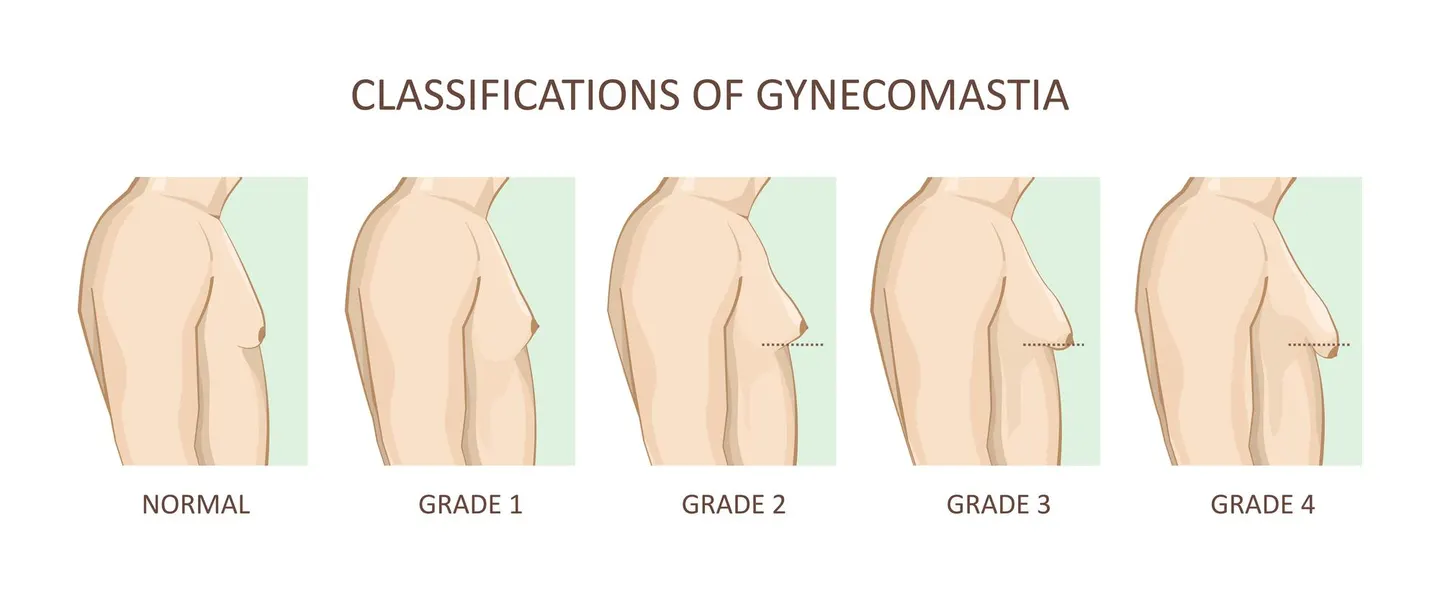
Grade 1 (Mild): The tissue around the areola is slightly swollen, and the features are not very noticeable
Grade 2 (Moderate): The tissue swelling is obvious, but the nipple has not yet dropped below the inframammary fold line
Grade 3 (Significant): The nipple is close to the baseline, the chest is loose, and excess skin and tissue appear
Grade 4 (Severe): The nipple is below the baseline, and the chest has a clearly feminine breast appearance
Gynecomastia vs. Breast Cancer
Some symptoms of gynecomastia are somewhat similar to breast cancer, so many patients become especially anxious or choose the wrong treatment. The symptom that causes the most anxiety is a “lump.” In gynecomastia, the lump is always located directly beneath the nipple and areola; with breast cancer, by contrast, it can appear anywhere on the chest wall.
In terms of feel, the lump in gynecomastia is relatively elastic, regular in shape, and movable, while a breast cancer lump feels irregular, very hard, and immovable, and may even come with other symptoms, such as dimpling or discharge.
Can Gynecomastia Come Back After Surgery?
Will the breasts grow back after treatment? This question has to be answered in two parts: the “mammary gland tissue” and the “fat.”
If the overgrown mammary gland tissue is removed during surgery, it generally will not come back, as long as no future disease or medication causes the gland to proliferate again. If the issue is fat, however, weight gain or regaining weight in the future will increase the fatty tissue and can still make the appearance unattractive.
Two Common Treatment Myths (Medication and Working Out)
By now you probably understand the common causes of gynecomastia, and many patients ask whether losing weight or working out can fix the problem. According to doctors, dieting and working out can indeed reduce fat, but they cannot reduce overgrown mammary gland tissue, and if the gland tissue is not reduced, the problem you are concerned about is not solved.
Many people online also say that “medication” can treat this condition. However, treating gynecomastia with drugs generally means taking “hormone”-related medications, and their effect on gynecomastia is limited. Moreover, long-term use of hormone drugs may cause endocrine disorders or other hormone problems, so the side effects may well be stronger than the treatment effect.
Surgical Options
There are several surgical options for gynecomastia:
Traditional liposuction
It can gradually reduce a large chest, but if the mammary gland is not addressed, the “puffy nipple” look will still remain.
Mammary gland excision surgery
If the chest is relatively large, the incision for gland excision will necessarily be longer (about half the circumference of the areola). An overly long incision can leave an obvious scar, which is not ideal aesthetically.
VASER liposuction
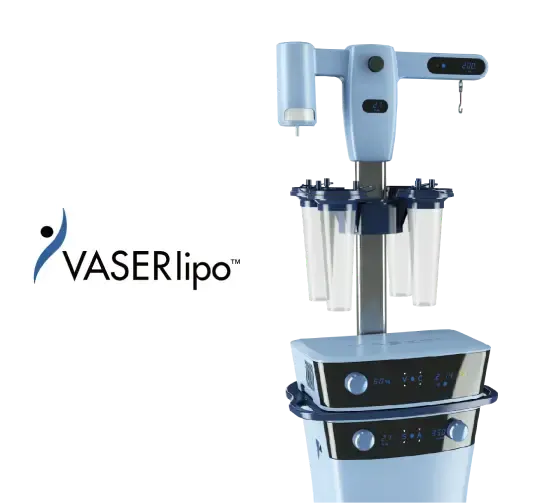
Using a fine probe, fat is emulsified with ultrasound energy and then removed. Because the patented probe does not create an open wound, it greatly reduces the risk of infection and the downtime after surgery.
As mentioned above, gynecomastia usually has multiple causes, so there is now a combined surgical technique: “4D Chest Contouring”
4D Chest Contouring is paired with LSSA sound-wave liposculpting, which uses high-frequency ultrasonic vibration and accumulated ultrasound energy to thoroughly break down solid fatty tissue and emulsify it into liquid fat. A minimally invasive lifting technique is then used to address stubborn hardened mammary gland tissue at the same time, delivering contouring, tightening, and other combined results.
| Surgical method | 4D Chest Contouring | Traditional liposuction | VASER liposuction |
|---|---|---|---|
| Features | 1. Short procedure 2. Precisely destroys mammary gland tissue and emulsifies fatty tissue 3. Paired with LSSA sound-wave liposculpting to remove excess tissue | Can remove fat over a large area, but cannot finely sculpt the shape of the chest | Acts only on fat, with little damage to surrounding tissue, and preserves connective tissue; small incisions, firm and smooth skin after surgery, and faster recovery Besides removing deep fat from the body, VASER liposuction can also use the ultrasound’s “superficial liposuction” property to sculpt a man’s pectoral muscle lines |
| Blood loss | Low | High | Low |
| Incision size | As small as 0.5 cm | Large | As small as 0.5 cm |
| Recovery period | 5-10 days | 4-5 weeks | 4 weeks |
Read more:
Will You Regain Fat After VASER Liposuction? 3 Key Tips to Keep Your Contours
How Is Liposuction Priced? Is It the Same as Weight Loss? A Complete Guide
This article is for general information only. Results vary from person to person; please consult a doctor in person before deciding on any treatment.