
Contents
Modern people love good food, but with little regular exercise and irregular schedules, deep fat accumulates in the arms, waist, abdomen, buttocks, and legs, leading to obesity or uneven fat distribution. Getting rid of fat through diet and exercise alone takes long-term effort and persistence, so many people turn to liposuction at an aesthetic medicine clinic to remove excess subcutaneous fat. There are four common liposuction options on the market: VASER liposuction, water-jet-assisted liposuction, laser lipolysis, and cryolipolysis. Which gives the best results? Which is the safest and best value? This article compares them all in one place.
Aegyo Sal, Eye Bags, Tear Troughs, and Dark Circles: How to Tell Them Apart
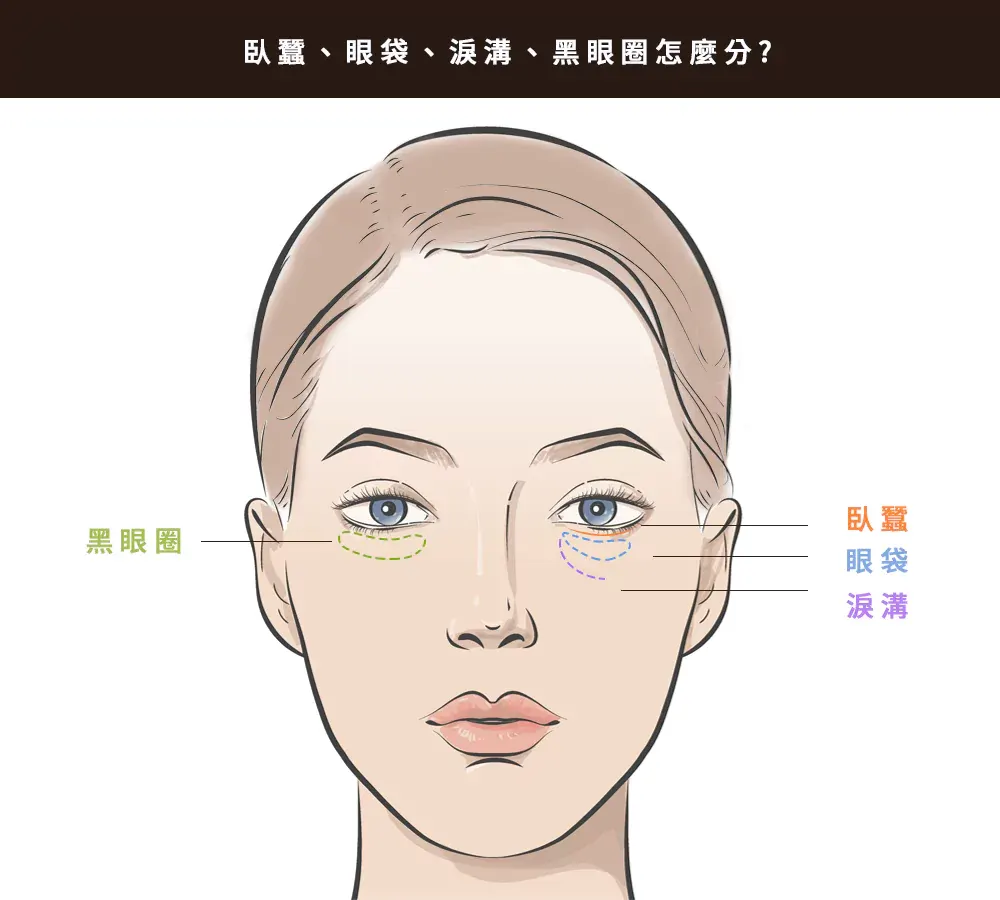
Aegyo Sal (Lower Eyelid Bulge)
Aegyo sal, the small bulge just under the lower lashes, is created by muscle contraction and rises noticeably when you smile. People who have it look as though their eyes are smiling, and their eyes appear larger, which adds greatly to cuteness and likability. It is also known as “peach blossom eyes.” Some people create aegyo sal with eye makeup, minor cosmetic procedures, or surgery to get captivating eyes. The common methods are hyaluronic acid filler injections and artificial dermis implants.
However, some people have such a prominent bulge that it is mistaken for eye bags. Because aegyo sal comes from muscle contraction, an overly large one can be reduced with botulinum toxin injections.
Eye Bags
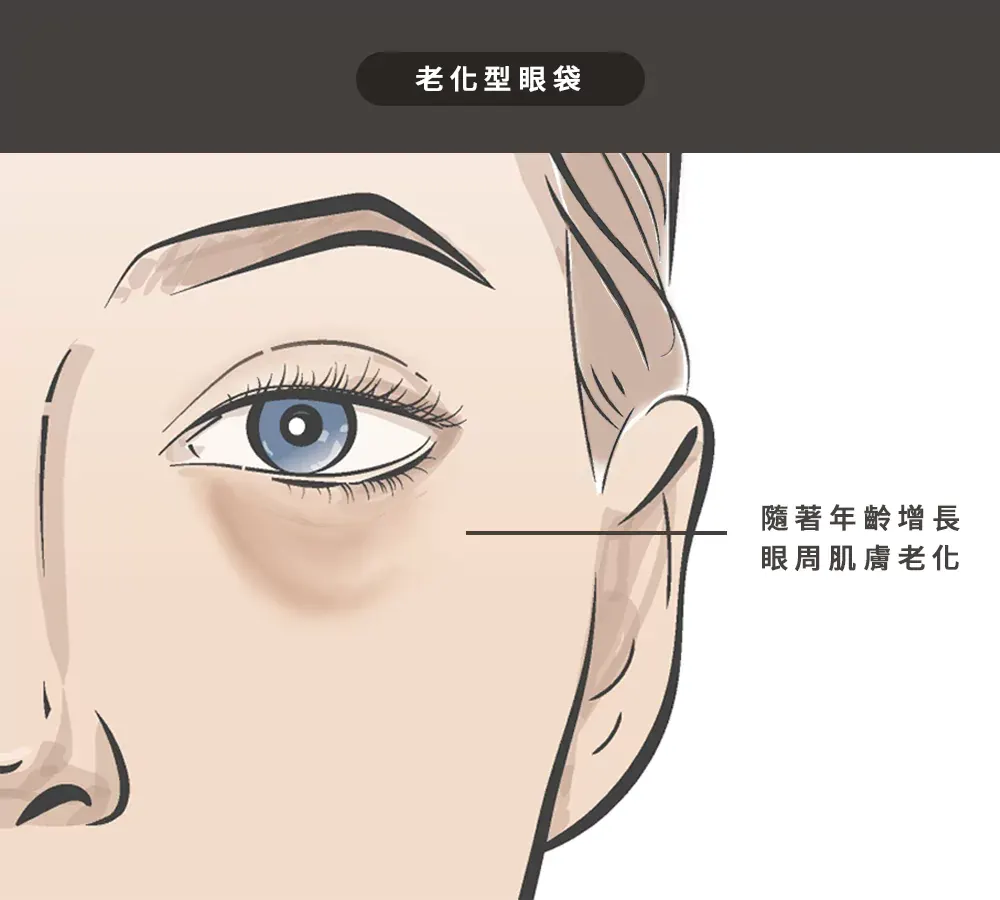
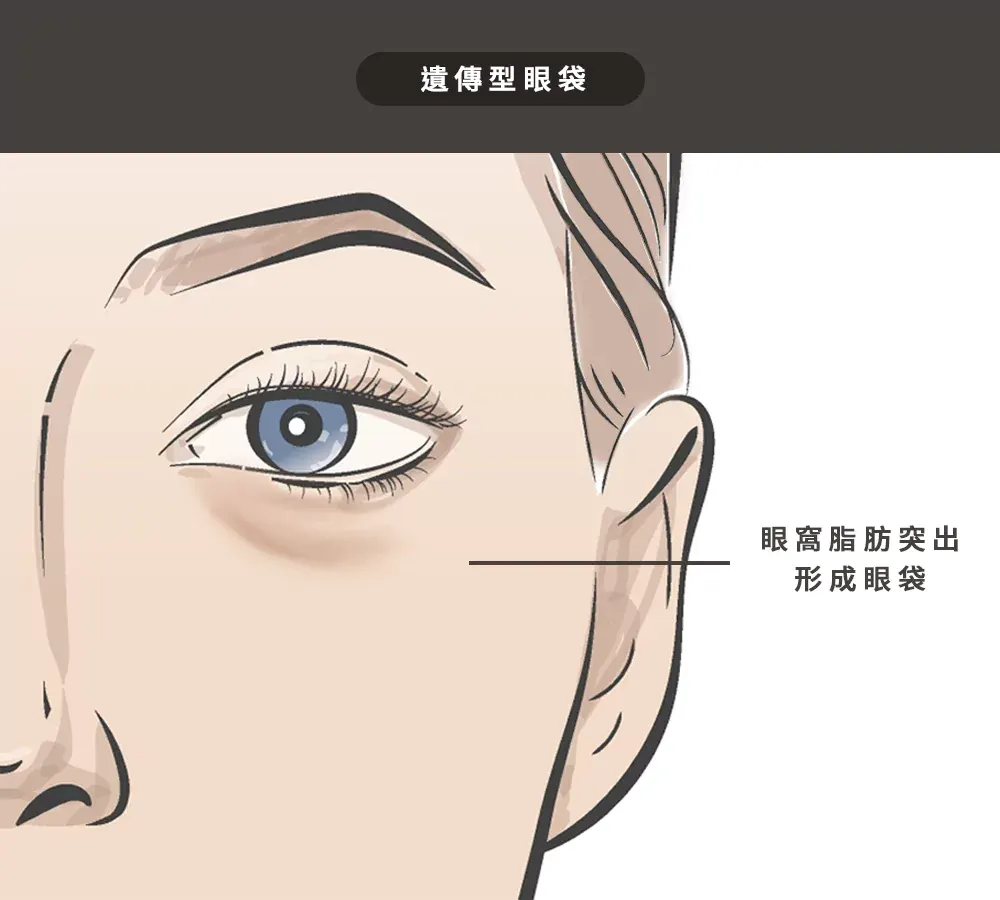
Eye bags are the most common problem around the eyes. They are raised in three dimensions and cannot be covered with makeup. Located below the aegyo sal, they are about 2-3 times as thick, and come in congenital and acquired forms. Congenital eye bags are mostly hereditary, with naturally thicker fat under the eyes. Acquired eye bags result from aging, eye strain, and long-term pulling on the skin around the eyes, which makes the fat in the eye socket protrude and creates obvious bags.
However eye bags form, people who have them look older than their peers. By cause, eye bags fall into 3 types:
- Puffy Eye Bags
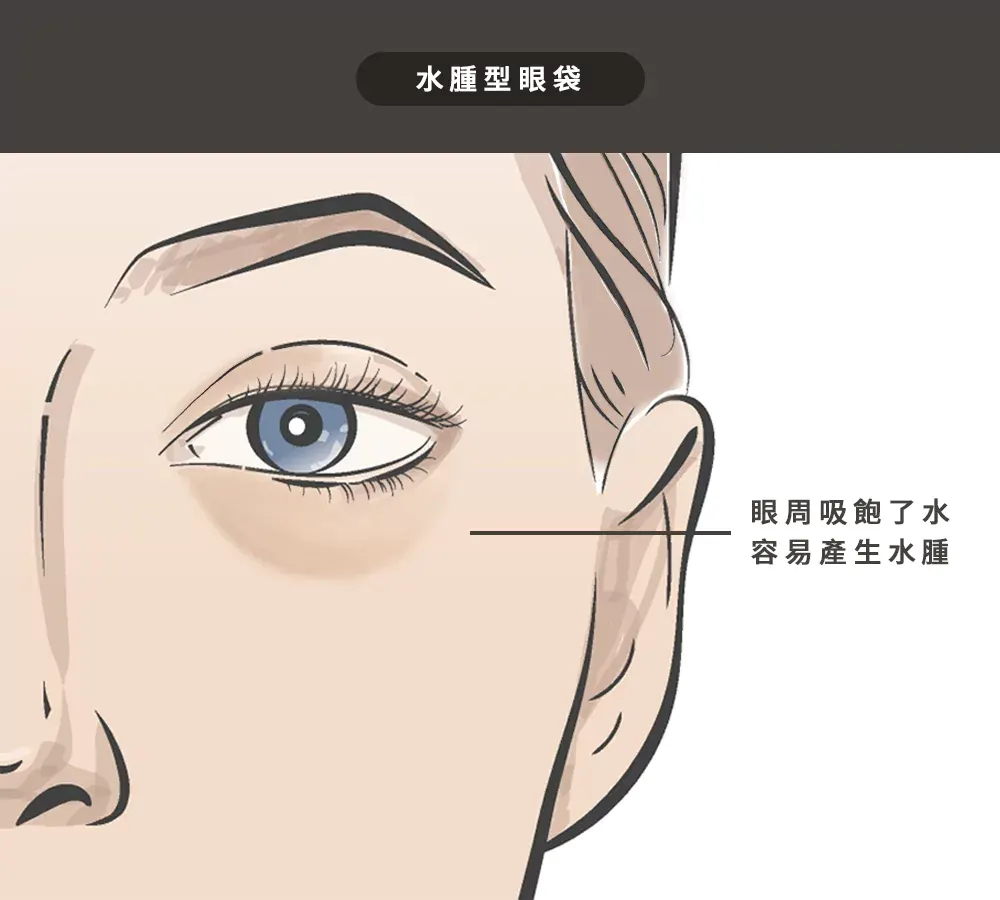
Puffy eye bags, also called puffy eyes, are usually swelling caused by late nights, drinking too much water before bed, or eating too much salt. The sodium in salt traps water in the body, and the area around the eyes soaks up the water and swells. This often appears when you wake up in the morning and usually improves after a few hours. - Hereditary Eye Bags
Hereditary eye bags usually appear in younger people and are mostly caused by a congenital buildup of excess fat that makes the eye socket fat protrude. Another kind comes from a congenitally well-developed orbicularis oculi muscle, whose shape bulges with facial expressions and looks like an eye bag. This is also called a pseudo eye bag. - Aging-Related Eye Bags
Aging-related eye bags develop as the skin around the eyes ages and loosens with time, letting the fat around the eyes slide down with gravity and forming bags that sag and bulge outward.
Tear Troughs
Everyone actually has tear troughs! The tear trough is a ligament that sits close against the orbital bone, a structure we are born with. With age, the tissue along the edge of the orbital bone shrinks or sags, forming an obvious hollow, which is how tear troughs develop. They do not affect daily life, but they deepen the shadows of dark circles and eye bags, making you look older and less energetic.
Dark Circles
Dark circles are another eye-area concern for many people. They have many causes, most related to heredity, stress, and lack of sleep, and a few caused by medical conditions. They are a form of skin darkening that can make you look tired. There are 3 common types of dark circles.
- Pigmented Dark Circles
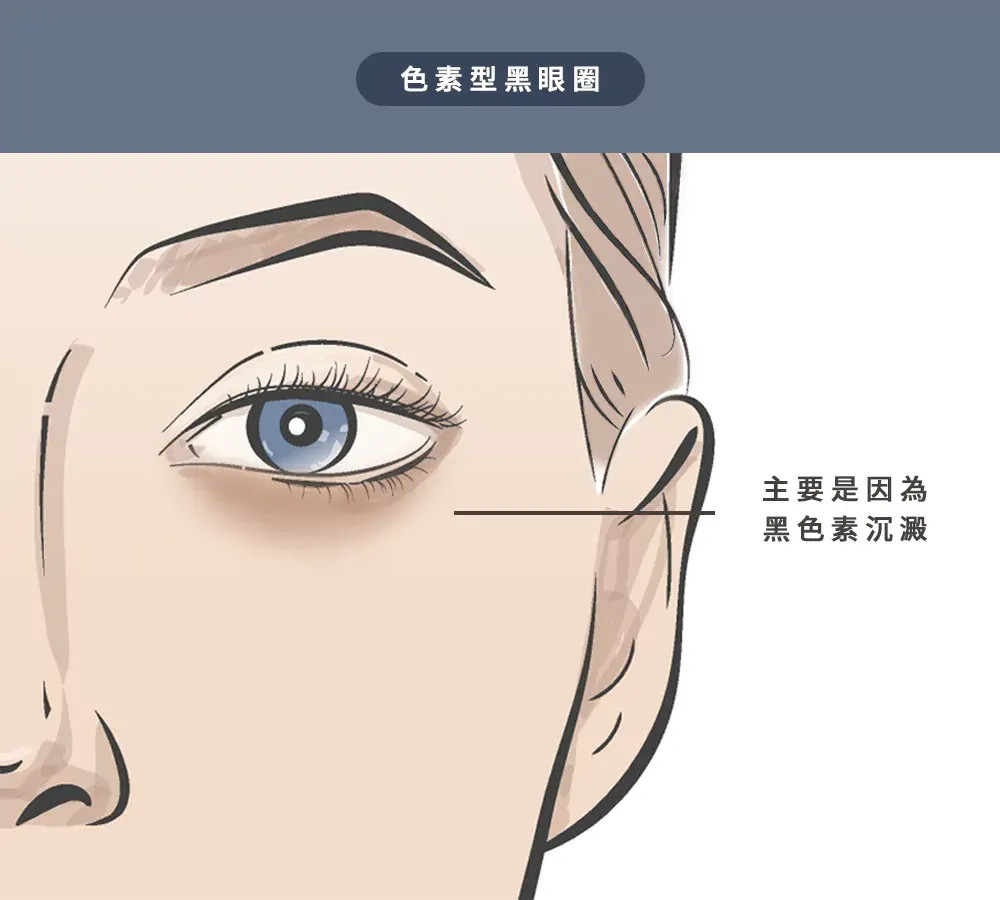
Pigmented dark circles are caused by a buildup of melanin, which may result from heredity, melanin deposits after inflammation, or excessive sun exposure. - Vascular Dark Circles
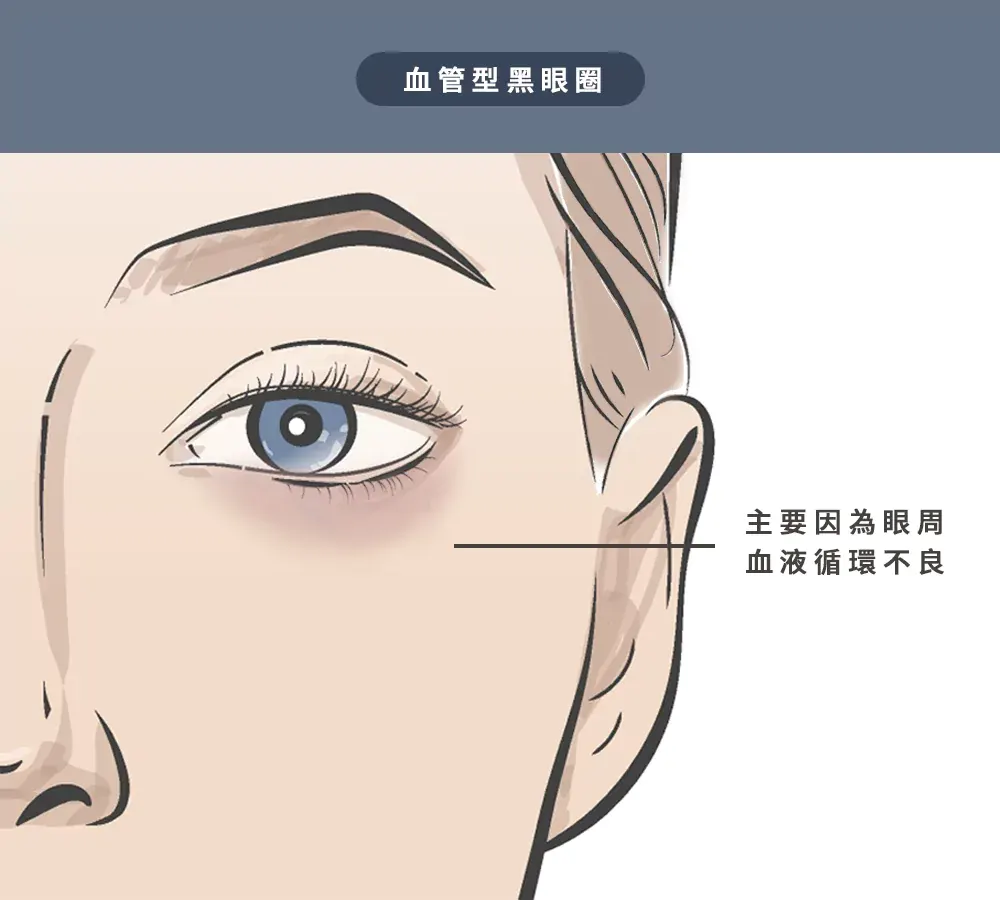
Vascular dark circles are mainly caused by poor blood circulation. Common causes include allergic rhinitis, sinusitis, long-term late nights, eye strain, and stress, which impair circulation around the eyes, leaving local tissue oxygen-deprived and congested and producing a dark color. - Structural Dark Circles
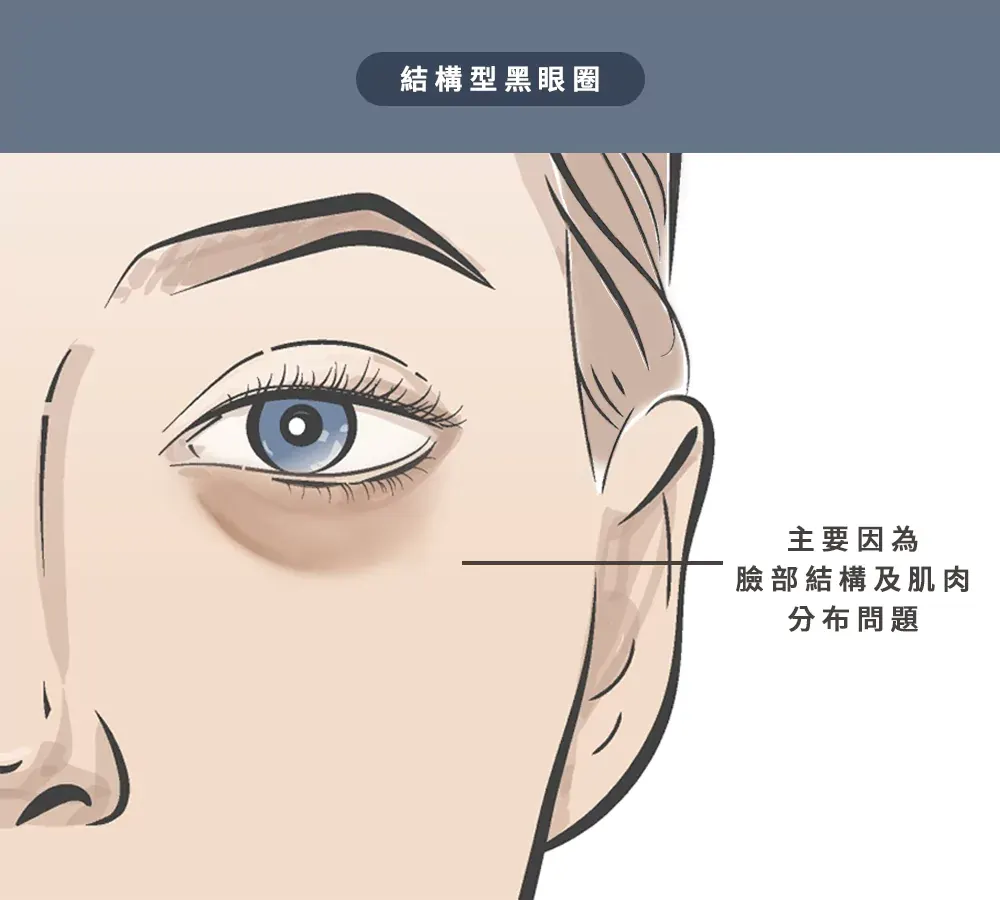
Structural dark circles are mainly caused by dents or unevenness in the surface of the skin, such as overly prominent aegyo sal, deep tear troughs, large eye bags, or sunken eye sockets, which create shadows that look like dark circles.
How to Treat Troublesome Eye-Area Problems
Treating Tear Troughs
Hyaluronic acid filler injections can fill the tear troughs, which reduces shadows and visually lightens dark circles. However, injection must be extremely precise, because a crooked placement creates an unnatural bulge. NAISS CLINIC has board-certified plastic surgeons on-site and a complete post-procedure care team, so patients can feel safe and secure with any treatment.
Treating Eye Bags
Whatever type of eye bags you have, if eye bags are the only concern, you can choose inner-incision (transconjunctival) or outer-incision (transcutaneous) eye bag surgery, which removes the excess fat in the eye socket using minimally invasive techniques. If you also have tear troughs, dark circles, loose skin under the eyes, or fine lines under the eyes, we recommend the 5-in-1 hidden-scar eye bag surgery, which solves all of these under-eye problems in one procedure and is a very high-value option.
Inner-Incision Eye Bag Surgery
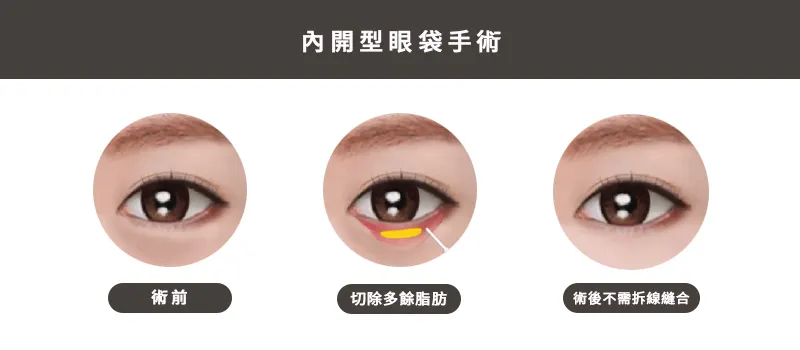
Inner-incision eye bag surgery suits younger people and those with mild eye bags.
Pros: No visible incision, no stitches to remove, short recovery.
Cons: Cannot also address loose skin around the eyes, so it suits a limited range of patients.
Outer-Incision Eye Bag Surgery
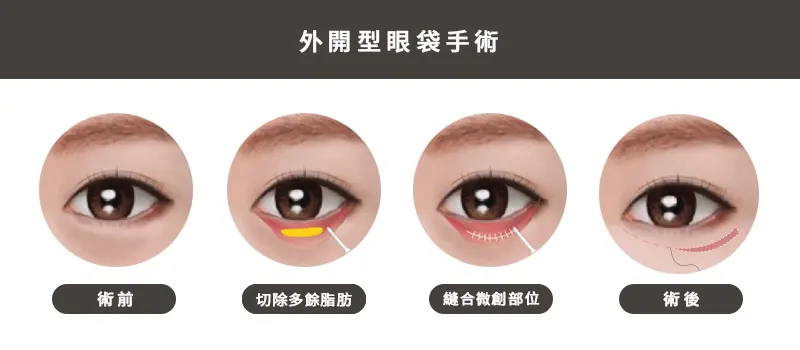
Outer-incision eye bag surgery suits middle-aged and older people and those with severely loose skin around the eyes.
Pros: Besides removing the excess fat in the eye socket, it also lifts the area under the eyes and smooths fine lines around the eyes.
Cons: Requires a follow-up visit to remove stitches, and recovery is longer.
5-in-1 Hidden-Scar Eye Bag Surgery
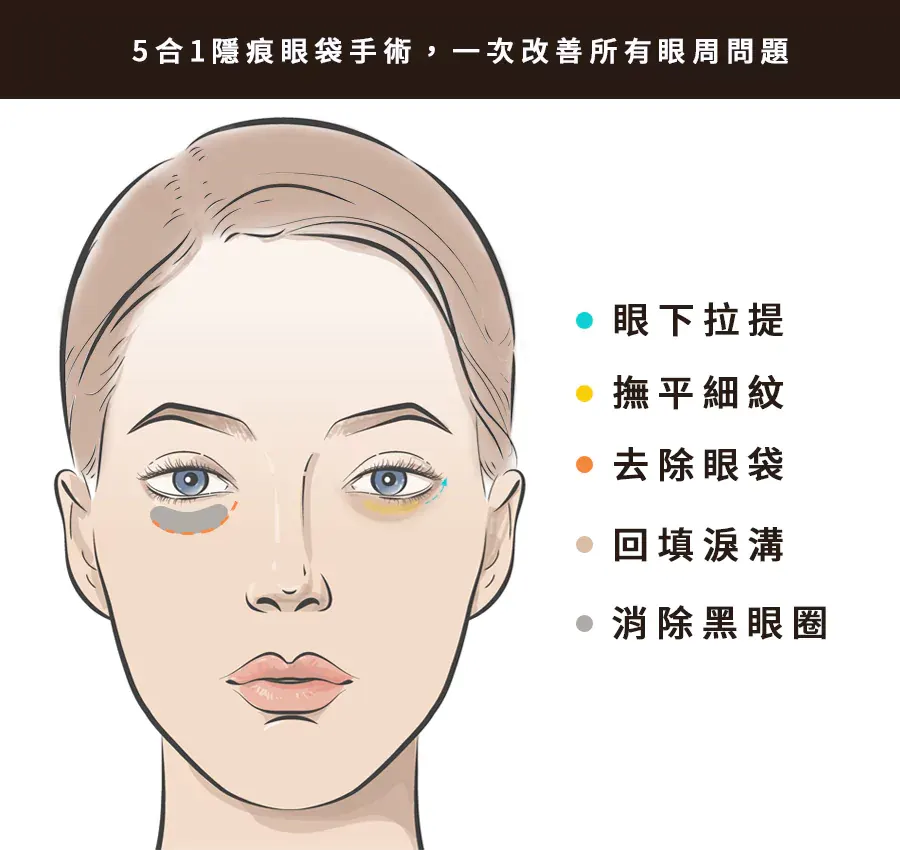
5-in-1 hidden-scar eye bag surgery is an improved version of standard eye bag surgery. After the excess fat is removed from the eye socket, it is placed back into the hollow of the tear trough to improve the dark circle shadows caused by the tear trough. At the same time, the orbicularis oculi muscle is adjusted and excess loose skin is removed, lifting the under-eye area and smoothing fine lines around the eyes. One surgery can improve multiple eye-area problems, but it is technically demanding, takes longer, and costs more.
Comparing Eye Bag Surgery Types
| Item | Inner-Incision Eye Bag Surgery | Outer-Incision Eye Bag Surgery | 5-in-1 Hidden-Scar Eye Bag Surgery |
|---|---|---|---|
| Suitable for | Younger people with mild eye bags | Middle-aged and older people with severely loose skin around the eyes | Eye bags combined with tear troughs, dark circles, fine lines, or loose skin under the eyes |
| Procedure time | About 1 hour | About 1.5 hours | About 2 hours |
| Recovery | About 7 days | About 7-14 days | About 7 days |
| Pros | No visible incision, no stitches to remove, short recovery | Lifts the under-eye area and smooths fine lines | Fills the tear trough, removes dark circles, smooths fine lines, lifts the under-eye area, short recovery |
| Cons | Suits a limited range of patients | Requires a follow-up visit to remove stitches, longer recovery | Technically demanding, higher cost. |
How to Treat Dark Circles
Besides the 5-in-1 hidden-scar eye bag surgery above, which can improve dark circles, different treatments can be matched to different types of dark circles.
Pigmented Dark Circles: Picosecond Laser
Picosecond laser targets melanin, using instantaneous energy to break the pigment into fine dust that the body then clears through its natural metabolism, improving pigmented dark circles.
Vascular Dark Circles: Dye Laser
A dye laser selectively destroys vascular lesions according to their size and depth. When hemoglobin absorbs the laser wavelength, its temperature rises, and the unhealthy vessel walls rupture from the heat and are absorbed by the body. It does not damage the surrounding tissue, and besides improving dark circles, it can also treat skin problems such as acne, rosacea, and chronic eczema.
Structural Dark Circles: Hyaluronic Acid and Collagen Stimulators
Both injectables give an “instant filling” effect, eliminating structural dark circles caused by hollows in the skin. When a collagen stimulator is used, once the filler is metabolized by the body, the space is taken over by the body’s own newly produced collagen, so the result is more natural and longer lasting than hyaluronic acid.
This article is for general information only. Results vary from person to person; please consult a doctor in person before deciding on any treatment.