Contents
- 7 Types of People Who Are Suited for Breast Augmentation
- Common Method 1: Fat Transfer Breast Augmentation
- Common Method 2: Implant Breast Augmentation
- Self-Test: Are You Better Suited for Fat Transfer or Implants?
- 1. Mentor Breast Augmentation
- 2. Perle Breast Augmentation
- 3. Sebbin Breast Augmentation
- 4. Motiva Breast Augmentation
- Implant Material Comparison
- 4 Breast Augmentation Incision Types Compared
- 4 Implant Placement Planes Compared
- Common Complications of Breast Augmentation
- Before Breast Augmentation: What to Know
- After Breast Augmentation: What to Know
- Post-Augmentation Massage Guide
- Recommended for Breast Augmentation: NAISS CLINIC
- FAQ
Breast augmentation is how many modern women achieve their ideal figure. It comes in two forms: fat transfer breast augmentation and implant breast augmentation. This up-to-date guide covers the pros and cons, suitable candidates, a comparison of implant brands and materials, incision locations, implant placement, complications, post-op massage, case studies, and pre- and post-op instructions. A must-read before breast augmentation!
7 Types of People Who Are Suited for Breast Augmentation
Breast augmentation is not only for people with small breasts. Beyond adding size, more importantly it can change breast shape and restore a full, dimensional look. Here are the 7 groups best suited for breast augmentation:
Learn more: Who Shouldn't Get Breast Augmentation? What Breast Augmentation Can Do and Who It Suits
Common Method 1: Fat Transfer Breast Augmentation
What Is Fat Transfer Breast Augmentation?
Fat transfer breast augmentation can be understood as a liposuction-and-refill procedure. Using VASER liposuction, excess fat is harvested from other areas of the body, separated from blood and fluid using professional centrifugal purification, and then transferred into the breasts, correcting breast asymmetry, postpartum outward splaying or shrinkage of the breasts, or naturally poor breast development, and achieving both body contouring and breast enhancement in a single procedure!
Learn more:
Fat Transfer Breast Augmentation Cost Revealed! Doctor Names the 3 Types of People Best Suited
What Is Autologous Breast Augmentation? Procedure Steps and Key Precautions
Advantages of Fat Transfer Breast Augmentation
Disadvantages of Fat Transfer Breast Augmentation
Learn more: Am I a Good Candidate for Fat Transfer Breast Augmentation? How to Improve Fat Survival Rate
Case studies:
Common Method 2: Implant Breast Augmentation
What Is Implant Breast Augmentation?
Implant breast augmentation involves a 3-4 cm surgical incision through which a silicone implant is placed to enlarge the breasts. Compared with the limitations of fat transfer, breast implants offer better stability and support, a wider range of sizes, and more customizable treatment design, and as implant materials continue to advance, both feel and safety have improved significantly.
Advantages of Implant Breast Augmentation
Disadvantages of Implant Breast Augmentation
| Fat transfer breast augmentation | Implant breast augmentation | |
|---|---|---|
| Incision size | 0.2 cm | 3-4 cm |
| Recovery | About 5-7 days | About 1-2 months |
| Post-op massage | No | Yes |
| Pros | 1. Breast enhancement and slimming in one procedure 2. Uses your own fat cells, so allergy and rejection are unlikely 3. Incisions are only 0.2 cm, with a short recovery 4. Natural appearance and realistic feel 5. No massage needed after the procedure | 1. Can increase several cup sizes in one procedure 2. Free to choose the breast size you want 3. Implant materials can be chosen to suit your needs 4. Certain implant brands can now closely mimic the feel of natural breasts |
| Cons | 1. Limited cup size increase (an average of 1-2 cup sizes) 2. Fat survival rate affects the results 3. Breast size may change with weight gain or loss 4. Improper handling may cause calcification or lumps 5. Not possible for those without enough body fat | 1. There is a chance of rejection after surgery, leading to capsular contracture 2. Larger incision and a longer recovery 3. Certain implants require massage after surgery 4. Rippling may occur |
Self-Test: Are You Better Suited for Fat Transfer or Implants?
How do you choose between fat transfer and implants for breast augmentation? First, understand your body type and preferences:
Q1: What is your body type?
(A) Curvy (B) Lean
Q2: What breast feel do you prefer?
(A) Softer (B) Firmer
Q3: How many cup sizes do you want to go up?
(A) About 1 cup size (B) More than 1 cup size
Q4: Do you want breast augmentation done in one go?
(A) I can accept multiple touch-ups (B) I want a one-time, lasting solution
Q5: Can you accept an incision scar after surgery?
(A) No (B) Yes
Q6: Can you accept regular massage after surgery?
(A) No (B) Yes
If your quiz results show more A answers, you are suited for “fat transfer breast augmentation”; conversely, more B answers mean you are suited for “implant breast augmentation”.
There are currently 4 major implant brands on the market, namely Mentor breast augmentation, Perle breast augmentation, Sebbin breast augmentation, and Motiva breast augmentation. Each is described in detail below:
1. Mentor Breast Augmentation
Mentor is an implant brand with triple certification from the U.S. FDA, EU CE, and Taiwan TFDA. It offers 4 implant types: Queen Wave, Smooth, Velvet, and Teardrop:
1. Queen Wave
Queen Wave carries a lifetime warranty. In response to the smaller frames and narrower rib cages that Asian women naturally have, it was developed with the latest AI precision-filling technology, which adjusts the ratio of highly cohesive, high-viscosity gel fill to suit different body types and sizes, lowering the rate of rippling. It also comes in a variety of specifications, so even patients with less ideal natural conditions can easily achieve a rounded, full, ideal breast shape.
Case studies:
2. Smooth
The classic Mentor implant uses the most fluid Grade 1 memory gel, with an ultra-soft wavy feel that moves naturally even during motion. It comes in three levels of fullness, but because the gel fill rate is low, people with insufficient breast tissue are more prone to rippling after implantation, and regular massage is required after surgery.
Case studies:
3. Velvet
The best-selling entry-level model in the Mentor line. The implant surface has fine velvet-like micro-texture, which provides better adhesion and can also help with loose skin, and shows a high degree of biocompatibility, allowing the implant to fit snugly against the tissue while lowering the chance of capsular contracture, with no massage needed after surgery.
Mentor Classic (Velvet) has a firmer feel with less noticeable movement, suiting people whose breasts already have a certain degree of fullness, and it can also be paired with fat transfer, for a more natural, perfect breast shape.
4. Mermaid Teardrop
The Mentor Mermaid implant has a teardrop shape, thin at the top and thicker at the bottom, and is the best choice for adjusting breast shape, allowing finely tuned distribution of the upper, middle, and lower volume, with a range of proportions developed for different breast conditions to maximize the possibilities for breast shape. It uses Grade 3 memory gel, giving a bouncy, resilient feel, with no massage needed after surgery and lower pain.
| Mentor Premium (Queen Wave) | Mentor Classic (Smooth) | Mentor Classic (Velvet) | Mermaid Teardrop | |
|---|---|---|---|---|
| Shape | Round | Round | Round | Teardrop |
| Post-op massage | No | Yes | No | No |
| Feel | Soft and wavy | Soft and wavy | Bouncy and full | Bouncy and full |
| Pros | 1. Lifetime warranty program 2. 30% greater softness 3. Capsular contracture rate under 1% 4. AI precision-filling technology reduces the chance of rippling 5. Suitable for Asian women | 1. Soft feel 2. Smaller surgical incision 3. Low implant edge visibility after surgery | 1. High tissue adhesion 2. Implant is less likely to shift 3. No massage needed after surgery 4. Capsular contracture is less likely | 1. Natural breast shape 2. Full range of sizes, so you can freely choose the implant size |
| Cons | 1. Expensive | 1. High chance of rippling for those with insufficient breast tissue 2. Massage required after surgery | 1. The implant is thicker, so an underarm incision is not suitable | 1. Larger surgical incision 2. Requires a certain breast size; not suitable for those below a B cup |
Learn more:
4 Types of Mentor Breast Implants Explained! Which One Is Right for Me? Pros, Cons, and FAQs
2. Perle Breast Augmentation
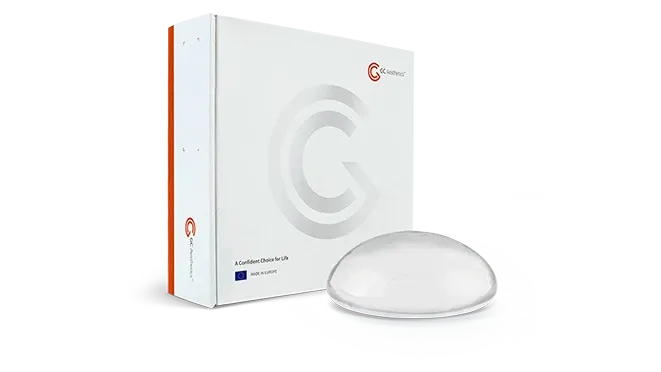
Made by GC Aesthetics®, a British brand with 40 years of history, with a lifetime warranty. It comes in 2 models, Perle and Yingbo:
1. Perle
PERLE™ is a 100% filled jelly silicone implant. Based on volume and base width, it comes in Moderate, High, and Extra High profiles, offering 38 sizes to choose from.The surface layer uses BioQ technology, with low surface roughness that reduces inflammation and capsular contracture rates and makes placement through the incision easier. The shell uses the reinforced Ultra-link™ shell, a high-performance elastic gel layer with impact resistance of up to 1/2 ton and elongation of 620%. Meanwhile, the Emunomic™ dynamic breast-tissue gel gives a natural breast tissue contour whether standing or lying down, with 100% fill that reduces rippling after surgery.
Learn more:
The Newest Breast Implant Material of 2024! What Is PERLE? Advantages and Differences at a Glance
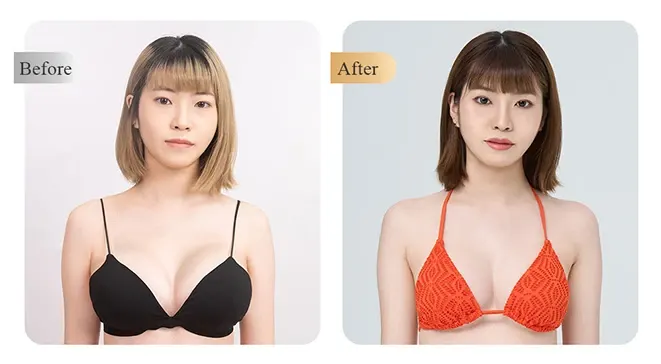
[Case Study]
2. Yingbo
Yingbo is a 100% filled implant, less prone to rippling after surgery, with a smooth surface and soft feel. It uses the SiloGard™ 360° protective barrier layer to minimize gel diffusion, a Nagotex® silicone shell surface that effectively increases adhesion and minimizes capsular contracture, and sixth-generation Silogel™ gel, which is highly cohesive, 100% filled with a soft feel and elongation of up to 540%.
3. Sebbin Breast Augmentation
Sebbin is a new breast implant material developed by Sebbin in France, known as the “Champs-Élysées Sebbin,” which combines the advantages of smooth and velvet surfaces, with a micro-textured round shape that lowers the chance of capsular contracture and means no massage is needed after surgery, and it also provides a lifetime warranty for peace of mind. The filler used in Sebbin implants is a biocompatible, medical-grade material with extremely high softness, making it a breast implant material that comes close to the feel of natural breasts.
The shell uses a Nanoskin nano-micro-textured surface, whose extremely low roughness leads it to be classified as “smooth” under the international ISO standard. The interior is filled with biocompatible Naturgel memory gel, whose high-viscosity formula gives it high elasticity, so it can be placed through a smaller incision and is unlikely to deform or rupture after implantation, and the smaller wound shortens recovery.
Case studies:
Learn more:
What Is “Sebbin Breast Augmentation”?
What Is Sebbin Champs-Élysées? Does It Sag Easily? Sebbin vs. Motiva Compared
4. Motiva Breast Augmentation
1. Motiva 1.0 Breast Augmentation
Motiva implants contain 4D flowing gel with good fluidity and a 100% full fill. The surface has nano silk velvet texture, so after placement the implant matches the skin closely and provides excellent elongation, letting the implant change shape with gravity to mimic the dynamic look of real breasts and lower the chance of capsular contracture after breast augmentation. In addition, Motiva takes a natural teardrop shape when standing and spreads into a disc shape when lying down, in line with ergonomics.
Case studies:
2. Motiva 2.0 JOY Breast Augmentation
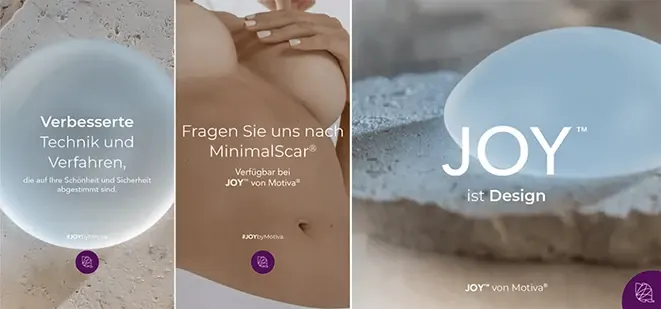
Motiva 2.0 is the second-generation implant launched by the manufacturer in 2023. Compared with the first generation, it adds “4 upgrades and 2 carry-overs.” For the silicone, a highly realistic silicone (MOTIVA SUPERSILICONES®) was developed, greatly improving softness, with a more natural feel and a more natural drape when standing. The surface design is more compatible with human tissue, so besides a lower chance of capsular contracture, the implant is less likely to slide or shift after placement. In addition, Motiva 2.0 uses a special technology (TRUEMONOBLOC+®) for better elasticity, so the incision is smaller, recovery is shorter, and the scar is less noticeable.
| Motiva 1.0 | Motiva 2.0 JOY | |
|---|---|---|
| Pros | 1. Only maintenance massage is needed after surgery, with a low chance of capsular contracture 2. The manufacturer offers a 10-year warranty plan 3. Ergonomic design improves the natural look of breast augmentation | 1. Withstands high pressure and is highly elastic, and more closely matches the feel of human tissue 2. Extremely compatible with human tissue, greatly reducing rejection and inflammation after implantation 3. High-fluidity, high-elasticity gel design 4. Rupture rate below 1% 5. RFID micro safety chip implanted 6. The manufacturer offers a 10-year warranty plan |
| Cons | Less soft; compared with real breasts, the feel is bouncier | High implant cost |
Learn more:
More Realistic and Softer! Motiva 2.0 Arrives: How Much Does It Cost? How Does It Differ from the First Generation?
Implant Material Comparison
| Queen Wave | Smooth | Velvet | Teardrop | Perle | Yingbo | Sebbin | Motiva | |
|---|---|---|---|---|---|---|---|---|
| Manufacturer | USA | USA | USA | USA | UK | UK | France | USA |
| Feel | Soft | Soft | Bouncy | Bouncy | Soft | Soft | Soft | Bouncy |
| Incision (cm) | 3-4 | 3-4 | 4-5 | 4-5 | 3-4 | 3-4 | 3-4 | 3-4 |
| Warranty | Lifetime | None | None | None | Lifetime | Lifetime | Lifetime | 10 years |
| Post-op massage | No | Yes | No | No | No | No | No | No |
| Capsular contracture rate | <1% | Reduced by massage | Low | Low | Small | Small | <1% | <1% |
| Cost | NT$300,000-450,000 | NT$180,000-210,000 | NT$190,000-220,000 | NT$240,000-280,000 | NT$320,000-360,000 | NT$250,000-280,000 | NT$280,000-380,000 | NT$320,000-360,000 |
4 Breast Augmentation Incision Types Compared
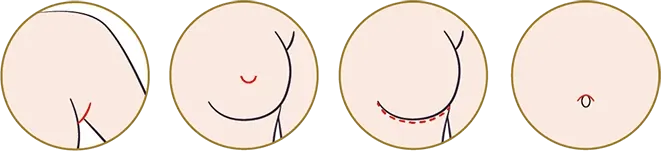
After choosing an implant material, the next big concern is the incision location. Hiding the scar is an important consideration. The four common incision locations are as follows:
1. Underarm (axillary) incision
The armpit naturally has many folds. A small incision of about 3-4 cm made in the armpit hides the scar within the folds where it is hard to notice, making it suitable for women who do not want scars on the breast. However, because the incision is far from the breast, recovery is longer. In addition, if your job involves carrying or large movements after surgery, an underarm incision is not recommended, as it can easily slow wound healing.
If an underarm incision is made without endoscopic assistance, it can cause unnecessary damage such as imprecise dissection and heavy bleeding. Therefore, when choosing underarm breast augmentation, we recommend professional endoscopic equipment and a skilled surgeon to ensure precise dissection and reduced bleeding.
2. Inframammary fold incision
The inframammary fold is the most common incision location for breast augmentation. An incision of about 3.5-5.5 cm is made at the lower edge of the breast, close to the pectoralis major muscle, and at the same time it stays away from the main nerves and creates an appropriate, ideal space for placing the implant. However, the area under the breast comes into contact with the underwire of a bra, so long-term friction easily causes hyperpigmentation, and the scar can also show when lying flat.
3. Periareolar (areola) incision
An incision at the areola limits the implant volume (cc) that can be used! The doctor makes an incision around about 1/3 to 1/2 of the areola and then places the implant. For Asian women, whose areolas are naturally darker, this method leaves only a faint, inconspicuous scar around the areola that is hard to notice, and it can be combined with areola reduction surgery. However, it is less suitable for patients with small areolas or a keloid tendency. In addition, placing the implant through the areola may damage the mammary glands, increasing the chance of capsular contracture.
4. Navel (umbilical) incision
Transumbilical breast augmentation was quite popular in the era of saline implants. An incision of about 1.5-4 cm is made around the navel, and the implant is carried through a subcutaneous tunnel in the superficial layer of muscle using a subcutaneous and pectoralis major dissector, and then placed. The advantages of this method are that it leaves no wounds on the breast, aftercare is easy, and the infection risk is lower. However, because the surgical path and dissection range are longer, positioning is more difficult, and there are more restrictions on implant size, patient body type, and placement plane, it is relatively rare in Taiwan.
| Underarm | Inframammary fold | Areola | Navel | |
|---|---|---|---|---|
| Suitable for | Those who do not want any scar on the breast | Those with full breast tissue or a distinct inframammary crease | Those with an areola of a certain size | Those who do not want any scar on the breast |
| Incision size | About 3-4 cm | About 4-5 cm | Cut around 1/3 to 1/2 of the areola | About 1.5-4 cm |
| Recovery | Longer | Shorter | Shorter | Longest |
| Pros | 1. No breast augmentation scar on or around the breast at all 2. Does not damage breast gland tissue | 1. Best breast shape and position after surgery 2. Low surgical difficulty and does not damage breast gland tissue | 1. The scar is easy to hide 2. Can be combined with areola reduction surgery 3. Low surgical difficulty | 1. Highly concealed scar 2. Does not damage breast gland tissue |
| Cons | 1. Far from the breast, so higher surgical difficulty 2. Large dissection space and longer recovery time | 1. The breast augmentation scar is easier to notice | 1. Easily damages breast gland tissue 2. May affect nipple sensitivity 3. Higher infection risk | 1. Farthest from the breast, so higher technical barrier and surgical cost 2. Large dissection space and long recovery time 3. Contour precision is harder to control |
4 Implant Placement Planes Compared
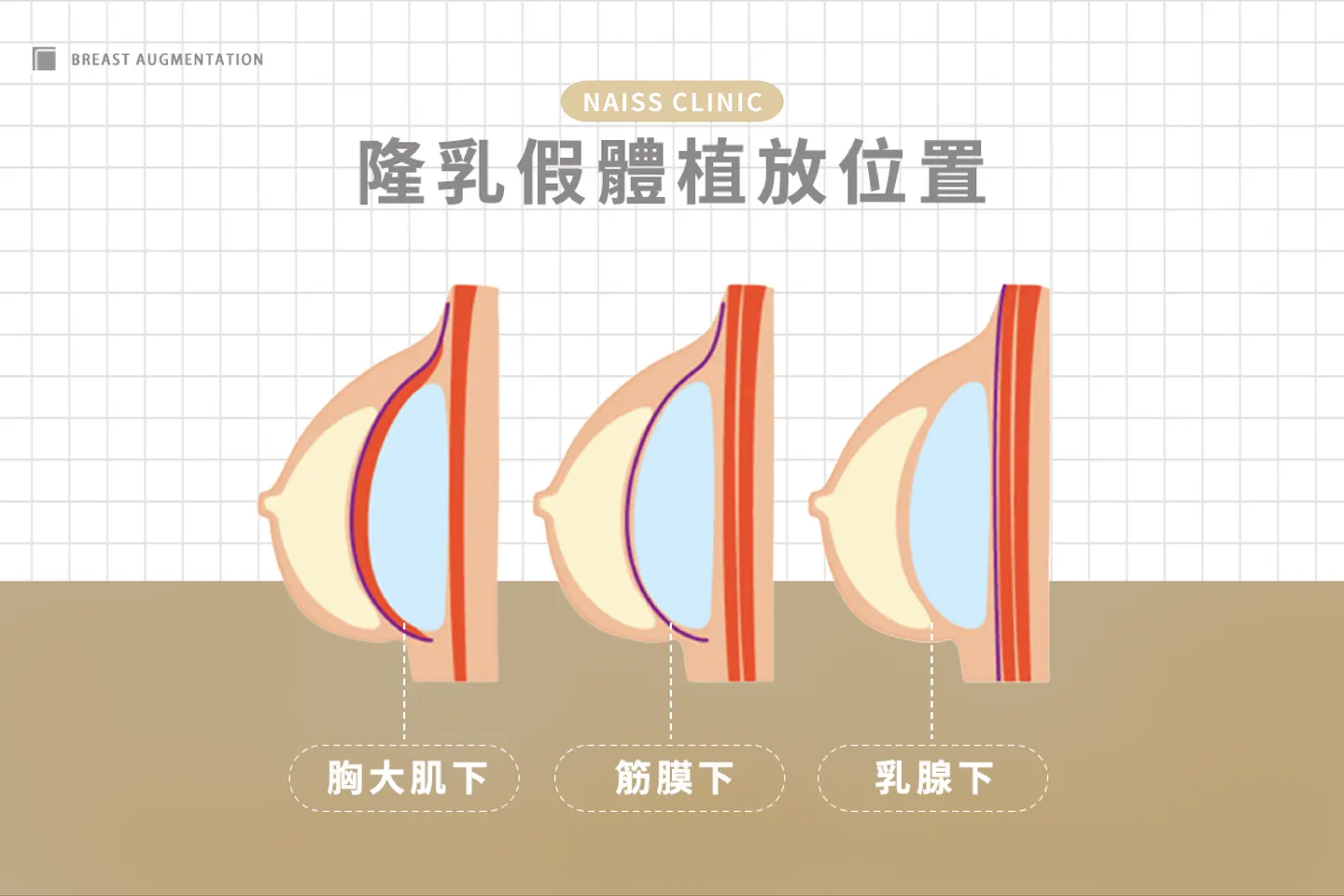
Besides incision choice, choosing the implant placement plane is also important in breast augmentation. Common implant planes include under the breast tissue (subglandular), under the pectoralis major (submuscular), and under the fascia (subfascial), as well as the dual-plane placement, which combines the advantages of the former:
1. Under the breast tissue (subglandular)
The implant is placed between the breast tissue and the pectoralis major. Because the fascia and pectoralis major do not need to be dissected, the surgery is simpler, and the resulting breast shape is firmer and fuller. However, this approach easily reveals a foreign-body feel, which is less favorable for slim people, with higher infection and capsular contracture rates; most doctors do not recommend placing implants under the breast tissue.
2. Under the pectoralis major (submuscular)
The implant sits in front of the chest wall, extending from the collarbone and sternum out to the upper arm. Placing the implant between the pectoralis major and the ribs means more tissue covers the implant, so it is more stable and supportive, helps improve how the breast feels, and can also ease rippling. The drawbacks are a longer recovery and more noticeable pain after surgery.
3. Under the fascia (subfascial)
The fascia is a very thin layer of connective tissue covering the pectoralis major, only 1-2 mm thick. In subfascial augmentation, a space is created between the fascia and the pectoralis major and the implant is placed there. The advantages are less bleeding during dissection and less noticeable pain after surgery, as well as a lower chance of postoperative infection and capsular contracture. However, if the subcutaneous fat is thin, the edges of the implant will be more noticeable.
4. Dual plane (half muscle, half fascia)
Dual-plane breast augmentation, commonly called “half fascia, half muscle,” places the upper half of the implant beneath the lower layer of the pectoralis major and the lower half under the fascia. The muscle coverage increases tissue thickness at the upper edge of the breast and the center of the breast line, thereby creating a full breast shape with centered cleavage; meanwhile, the lower edge of the breast, which is not covered by muscle, also avoids displacement and bouncing caused by muscle movement, is not easily squeezed out of shape, keeps the breast looking natural and soft, and overcomes the difficulty of forming cleavage in traditional surgery.
Common Complications of Breast Augmentation
Both fat transfer and implant breast augmentation carry some chance of the following:
1. Hematoma
Breast augmentation hematoma refers to a condition in which “blood abnormally accumulates in the surgical area within 48 hours after breast augmentation surgery,” causing tight, painful, or even swollen breasts. Common causes include surgical technique and pre-existing medical history.
If this happens, you must “notify your attending doctor immediately” for treatment. We also remind patients to have a detailed discussion with the doctor before surgery and to tell the doctor about their personal medical history.
2. Wrinkling / Rippling
Wrinkling after breast augmentation is caused by “a mismatch or unevenness between the implant and the surrounding tissue.” For example, a gel fill that is not 100% or a lack of adequate fat coverage can lead to rippling or wrinkles.
Women with a smaller or flat, slender frame who choose a smooth-surface implant are prone to gaps, wrinkles, or rippling after surgery because of insufficient upper-chest or subcutaneous fat! So we recommend choosing a fully gel-filled implant that suits your own breast fat to avoid these problems!
3. Unnatural breasts, size or height differences
After implant breast augmentation, complications such as uneven breast size and asymmetrical position may occur. They happen most often with traditional breast augmentation, because early techniques were not mature and instruments could not be used to calculate the exact dissection space of the breast. Today, breast augmentation can rely on endoscopic assistance, which not only reduces bleeding points but also speeds up wound recovery.
4. Surgical infection
Any surgery carries a risk of infection, which is usually introduced during the procedure. Possible causes include instruments, attire, or equipment at the clinic that were not sterilized properly, or lower immunity on the day of surgery. So choose your clinic carefully, and treat any infection immediately to keep it from developing into sepsis.
5. Capsular contracture
The most common complication of breast augmentation. When an implant is placed, the body activates a protective mechanism and forms a thin membrane that wraps around the foreign object. If the reaction is excessive, it can squeeze and deform the implant, and the breast feels rock-hard, like a “stone breast,” causing unbearable pain and affecting appearance. Mild cases can be improved with massage; for severe cases, seek medical care immediately. To prevent capsular contracture, you need to choose a suitable implant and a skilled doctor.
Learn more:
How Much Do You Know About Breast Augmentation Complications? Understanding “Capsular Contracture”
6. Nerve damage
After implant breast augmentation, nerve damage may occur, usually when surgical instruments compress the nerves around the breast during the procedure, causing injury or irritation that leads to abnormal sensation, numbness, or pain. In general, most patients gradually recover from the damaged nerves within 1 year after surgery.
To reduce and prevent these side effects, we recommend using endoscopic equipment during breast augmentation, which effectively reduces bleeding points, lowers the chance of postoperative infection, and speeds up wound recovery. In addition, choosing an experienced plastic surgeon also lowers the chance of complications.
Learn more:
Avoid Breast Augmentation Complications! 4 Major Risks You Must Know
What Are the Complications of Breast Augmentation? Learn the Right Way to Speed Up Recovery!
Before Breast Augmentation: What to Know
After Breast Augmentation: What to Know
Post-Augmentation Massage Guide
Although many implant materials advertise no need for massage after surgery, if you want softer breast tissue, NAISS CLINIC recommends diligent gentle “maintenance massage” after breast augmentation.
Once the incisions have mostly healed, you can begin gentle massage, once in the morning and once in the evening, 5-10 minutes each time. Treat breast massage as a health exercise to maintain a natural look and stability over the long term.
1. Basic inward-push massage (for normal breast shape or breasts that splay outward)
Perform an inward-pushing motion for 2 minutes each time, once every 30 minutes to 1 hour, at least 4-5 times a day.
First cross your arms over your chest with your fingertips touching the bottom of the implants. Use the tips of your fingers to push the implants toward the middle until a clear cleavage line forms between the breasts. (If you cannot keep it up for 2 minutes, you can do it in segments, as long as you reach 2 minutes in total.)
2. Basic outward-push massage (for breasts that sit close together)
Perform an outward-pushing motion for 1 minute per side each time, once every 30 minutes to 1 hour, at least 4-5 times a day.
Use the palm on the same side (right hand for the right breast, left hand for the left breast) to push the implant outward from its inner edge. While pushing outward, do not let go; add the other palm to assist, and the palm on the same side must press firmly against the ribs. (If you have a dominant hand or posture issues, you can switch hands: use the opposite palm to push the implant from the inside outward, with the other palm assisting.)
Learn more:
Breast Augmentation Massage Guide: What You Should Know About Breast Augmentation
Recommended for Breast Augmentation: NAISS CLINIC
Now that you understand breast augmentation in detail, you are probably starting to picture your ideal figure. At this point you may be wondering which aesthetic clinic you should choose for breast augmentation.
We suggest 3 selection principles to help you avoid pitfalls on the road to a better you:
NAISS CLINIC meets all 3 criteria and also offers hardware and services that surpass the industry standard:
Learn more:
Breast Augmentation Recommendations! How to Choose the Material, Clinic, and Doctor
FAQ
If my breasts are different sizes, can breast augmentation improve that?
Most people’s breasts are naturally not the same size. Adjusting the size of the implants can make the two sides look closer. If there is also sagging, a breast lift may be considered together, but a professional doctor’s evaluation is still required.
Can I breastfeed after breast augmentation?
The implant placement plane and the incision used generally do not damage the mammary glands and ducts, so breastfeeding is possible.
How much rest is needed after breast augmentation?
In general, a feeling of tightness is more noticeable for 1-3 days after surgery, but it does not affect daily life.
How much does breast augmentation cost?
The price of breast augmentation varies with the surgical method, the choice of implant, and the precision of the surgical equipment. For special needs or more difficult procedures, the cost also fluctuates. A single jelly silicone breast augmentation costs about NT$200,000 and up. Please ask a professional clinic for detailed pricing.
Will the breast augmentation scar disappear completely?
Breast implants on the market today are all designed with high elasticity. With professional endoscopic equipment during surgery, an incision of only about 2-4 cm is needed to place the implant, and the closure usually leaves a fine, faint line. Although it is hard for it to disappear completely, it can be hidden in a special location or made as invisible as possible with scar lasers and similar methods
If you are particularly concerned about scars, we recommend an “underarm incision.” It hides the scar in the armpit fold, making it hard to see with the naked eye and also avoiding any marks on the breast
How soon can the incision touch water after breast augmentation?
After breast augmentation, keep the wound as dry as possible and avoid water for 3 days; we recommend cleaning your body with sponge baths. If you accidentally get wet, dry off as soon as possible and replace the gauze or cosmetic tape holding the incision. Normally, you can shower as usual after 3 days; apply waterproof tape over the incision to prevent moisture and infection
In addition, for 1 month after surgery, avoid swimming, hot springs, saunas, and other high-heat activities or soaking in water for long periods
How should I choose the incision location if I have keloid scarring?
People with keloids can still have surgery! However, because of excessive proliferation of fibroblasts, it is hard to control the dissection space or changes in the wound scar during surgery, so keloid-prone people have a harder time controlling breast augmentation scars than others
If you are keloid-prone, we recommend choosing an “underarm” or “navel” incision, as far from the breasts as possible, so scar overgrowth does not spoil the aesthetic result
This article is for general information only. Results vary from person to person; please consult a doctor in person before deciding on any treatment.