Contents
- Do Non-Invasive Fat-Reduction Treatments Really Work?
- Cryolipolysis vs. CMSlim: What’s the Difference?
- How Effective Is Cryolipolysis, and How Long Does It Last?
- How Effective Is CMSlim, and How Long Does It Last?
- Cryolipolysis vs. CMSlim: How Much Do They Cost?
- Who Are CMSlim and Cryolipolysis For? Which Works Better?
- Do CMSlim and Cryolipolysis Have Side Effects?
- Do You Need to Watch Your Diet After CMSlim or Cryolipolysis? How to Combine Them?
- Are CMSlim and Cryolipolysis Expensive? Is the Gym a Better Deal?
- FAQ
Fitness is booming! Losing weight is no longer just about the number on the scale. More people want a better physique and defined muscle lines, and besides working out at the gym, aesthetic medicine now offers new body contouring options, such as cryolipolysis and the muscle-building, fat-burning treatment that uses dynamic magnetic waves, “CMSlim,” both of which have become very popular fat-loss choices in recent years. But what is the difference between cryolipolysis and CMSlim? Do these non-invasive fat-reduction methods really work? This article answers it all in one place.
Do Non-Invasive Fat-Reduction Treatments Really Work?
With advances in aesthetic medicine, “non-invasive fat reduction” has become a popular way to refine body shape. Many people wonder: with no surgery and no downtime, can you really see results?
In fact, non-invasive fat reduction is not positioned as “weight loss.” It is a sculpting treatment that improves localized fat and body contours. Through different technologies (such as cryolipolysis or CMSlim), it can help reduce fat or strengthen muscle definition to a certain degree.
However, note that these treatments are better suited to fine-tuning, such as fat accumulation in the abdomen, flanks, or thighs, and are not mainly meant for rapid weight loss.
In short:
- Can improve localized fat
- A non-surgical treatment, usually with no obvious downtime
- Cannot replace diet control and exercise
- Results usually take time to build up and be evaluated
Therefore, non-invasive fat reduction is better suited to people whose “weight is stable but who want firmer curves and better-looking contours.” If you want to lose weight quickly or lower your body fat percentage, you still need to adjust your lifestyle habits to get a better result.
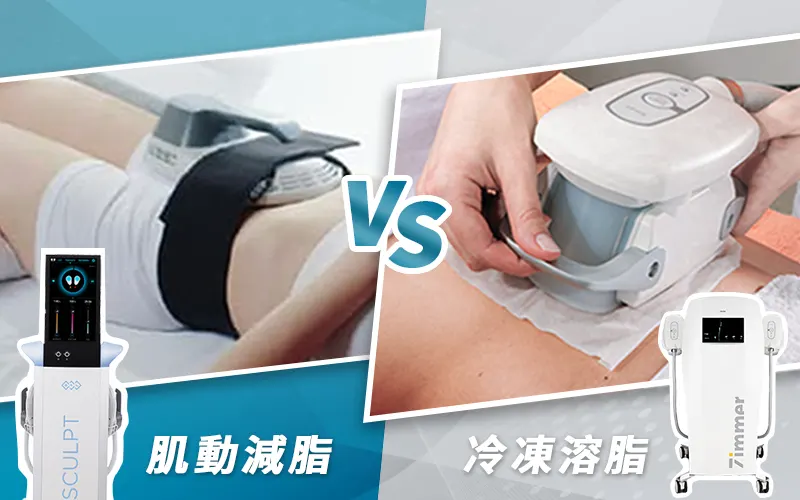
Cryolipolysis vs. CMSlim: What’s the Difference?
| Item | Cryolipolysis | CMSlim |
|---|---|---|
| How it works | Freezes fat cells with low temperatures | Electromagnetic stimulation makes muscles contract |
| Effect | Reduces fat cells | Fat loss + muscle building and shaping |
| Best for | Noticeable localized fat | Soft, flabby areas and insufficient muscle |
| Time to results | About 1-2 months | About 2-4 weeks |
| Sensation during treatment | Cold suction feeling | Muscle contraction feeling |
| Recovery | Almost none | Almost none |
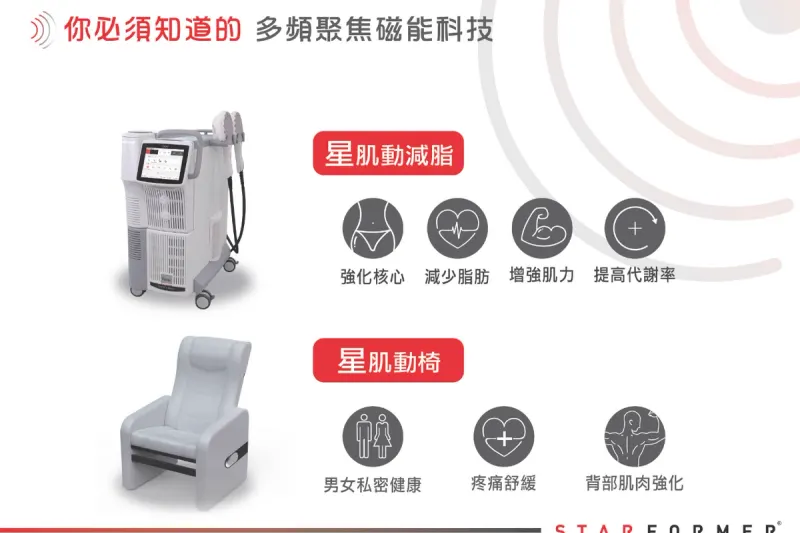
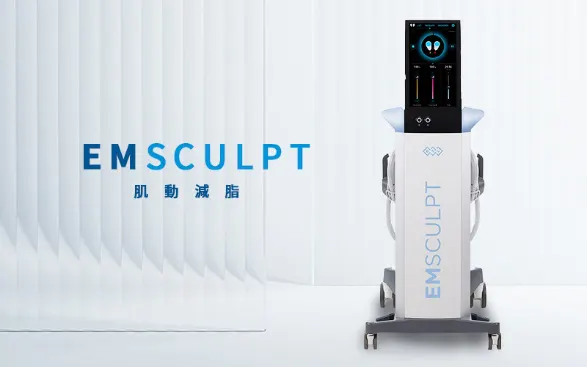
The CMSlim devices on the market are non-invasive, need no anesthesia during treatment, and have no downtime. They produce “supramaximal muscle contractions” that voluntary exercise cannot achieve, making the muscles expand and contract with high intensity, which stimulates muscle growth while burning deep subcutaneous fat. They target the abdomen, the area modern people worry about most: in just 30 minutes the muscles contract 20,000 times. By training the muscles and increasing muscle strength, the basal metabolic rate rises and fat burning improves, achieving both muscle building and fat loss.
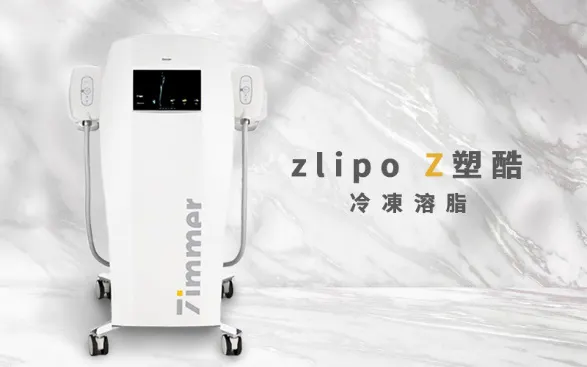
Cryolipolysis can treat localized stubborn fat, using the fact that fat cells cannot tolerate cold and die off on their own by cooling them at a low temperature of -10 to -5°C. The cold destroys only fat, not the surrounding tissue, and once the fat cells have died off, the body metabolizes and clears them. In the 1-3 months after treatment, the remaining fat cells rearrange and compress, producing a body-sculpting effect.
According to clinical research, after a complete course of CMSlim, muscle mass increases by an average of 16% and fat mass decreases by 19%. After a single cryolipolysis session, the treated area loses an average of 22.4% of its fat!
How Effective Is Cryolipolysis, and How Long Does It Last?
Cryolipolysis uses low temperatures to destroy fat cells so the body naturally metabolizes and clears them.
✔ Results
- Reduces fat thickness in specific areas
- Smoother contours
✔ Time to results
- Changes begin to appear in about 4-8 weeks
- More noticeable at 2-3 months
✔ How long it lasts
- Once fat cells are reduced, the results last
- But you still need to maintain your weight and lifestyle habits
How Effective Is CMSlim, and How Long Does It Last?
CMSlim uses high-frequency electromagnetic stimulation to make muscles contract at high intensity.
✔ Results
- Builds muscle mass
- Improves laxity and contours
- Supports fat metabolism
✔ Time to results
- Firming can be felt in about 2-4 weeks
- Results are better with a continued course
✔ How long it lasts
- Maintenance sessions are needed regularly
- Results are more stable when combined with exercise
Cryolipolysis vs. CMSlim: How Much Do They Cost?
Actual costs vary by area, number of sessions, and equipment.
Cryolipolysis
- About NT$15,000-40,000 per area
CMSlim
- About NT$8,000-20,000 per session
Factors affecting price:
- Size of the treated area
- Treatment plan (number of sessions)
- Equipment and clinic
Who Are CMSlim and Cryolipolysis For? Which Works Better?
CMSlim
1. People who do not exercise regularly and lack muscle mass
2. People who do weight training or work out regularly
3. Postpartum mothers with diastasis recti
4. People who want to improve sagging buttocks
5. People who want better body lines
Building muscle and breaking down fat both take time before clear results show. We recommend completing 4 CMSlim sessions within two weeks, with clear results visible 2-6 weeks after the last session. How long results last varies from person to person, generally 6-12 months. If you keep a regular routine and eating habits, keep exercising and training, and get adequate protein, the results can last longer.
Cryolipolysis
1. People who want to treat localized fat such as upper-arm flab (“bat wings”), the waist and abdomen, the back and buttocks, and the inner and outer thighs
2. People who want to slim down but fear the risks of surgery and the pain and recovery afterward
3. People who are too busy to exercise and want to sculpt their curves quickly
4. People with localized fat that exercise and dieting cannot get rid of
With cryolipolysis, the dead fat cells have to go through metabolism before being cleared from the body, so you will not see results right after treatment. Results usually begin to appear gradually 4-6 weeks after treatment, and the full effect shows after 2-3 months, once the dead fat cells in the body have been completely metabolized. As long as you keep eating normally and exercising regularly, with your weight unchanged, the results can be maintained stably over the long term.
Do CMSlim and Cryolipolysis Have Side Effects?
CMSlim makes the muscles contract to their limit within 30 minutes, which may cause side effects such as muscle soreness, temporary muscle cramps, joint or tendon pain, or skin redness. Symptoms generally improve within a few days. Cryolipolysis uses low temperatures to make fat cells die off. During treatment the skin turns pink, and you may feel cold, stiffness, redness, and swelling, which resolve on their own about 2 hours after the session. If your skin is more sensitive, a little hives may appear after treatment, but this also goes away on its own over time, so there is no need to worry too much.
Do You Need to Watch Your Diet After CMSlim or Cryolipolysis? How to Combine Them?
Whether you use CMSlim to build muscle and lose fat in a short time, or rely on cryolipolysis to eliminate fat cells, if you keep eating greasy, high-calorie food after the treatment, your figure will still go out of shape and the results will disappear. We recommend eating more protein, green vegetables, and unsweetened soy milk, cooking by pan-frying, baking, or boiling, and cutting back on seasonings to maintain your shape and prolong the results.
Are CMSlim and Cryolipolysis Expensive? Is the Gym a Better Deal?

Compared with gym costs, is CMSlim or cryolipolysis a better deal? Before answering, first consider whether you want the sense of achievement from exercise or simply want body contouring. Currently the market price for a 4-session CMSlim course is NT$90,000-120,000, and cryolipolysis is NT$25,000 per spot, with 4-8 spots usually treated on the abdomen. At a gym, you have to count monthly fees and personal training session fees. Whichever method you choose, you need to combine it with diet control for more noticeable results.
FAQ
Does cryolipolysis really make you lose weight?
It can reduce the thickness of localized fat, but it is not a method for overall weight loss.
Can CMSlim replace exercise?
No, but it can support muscle training.
How soon does cryolipolysis work?
Results gradually appear in about 1-2 months.
How soon does CMSlim work?
You begin to feel firmer in about 2-4 weeks.
Will the fat come back after cryolipolysis?
Fat can still increase if your diet gets out of control.
Which works better?
It depends on your needs: fat reduction and muscle shaping serve different purposes.
Can I have both treatments at the same time?
In some cases they can be combined, subject to the doctor’s evaluation.
How many sessions do I need to see results?
It varies by individual, and a treatment plan is usually recommended.
Does cryolipolysis or CMSlim hurt?
Only mild discomfort, which most people can tolerate.
Is there downtime after cryolipolysis or CMSlim?
There is almost no downtime, and you can carry on with normal life.
This article is for general information only. Results vary from person to person; please consult a doctor in person before deciding on any treatment.