Contents
- Q1: What Can Cause Breast Cancer in Women?
- Q2: Does Breast Augmentation Increase the Risk of Breast Cancer?
- Q3: When Is the Best Time for Reconstruction in Breast Cancer Patients?
- Q4: What Are the Methods of Breast Reconstruction? How Long Is Recovery?
- Q5: If You Choose Autologous Reconstruction, Which Site Is Recommended Most?
- Q6: After a Total Mastectomy, Can the Areola and Nipple Be Reconstructed?
- Q7: If Implants Were Used for Reconstruction, Does Regular Breast Screening Cause Problems?
- Q8: After Recovering from Breast Cancer Reconstruction, Does It Affect Follow-Up Monitoring?
- Q9: After Total Mastectomy and Reconstruction, the Breast Looks Complete and Natural but Has No Sensation. What Can Be Done? Can It Recover?
Q1: What Can Cause Breast Cancer in Women?
Dr. Kuo-Chun Liao explains that the BRCA genes are a special gene mutation linked to family history, and people who carry them are more likely to develop breast cancer or common gynecologic cancers. If testing shows a positive result for these genes, preventive mastectomy is usually recommended in advance to avoid breast cancer and keep cancer cells from spreading through the body, which could lead to an uncontrollable outcome.

Besides genes, acquired lifestyle habits are also a cause. If someone already carries a special gene mutation and also has poor lifestyle habits, it makes matters worse and the chance of developing breast cancer is even higher. Dr. Liao further points out that habitual late nights, for example, throw off the body clock and affect melatonin secretion, and medical research has confirmed a strong correlation between melatonin and the likelihood of cancer.
Q2: Does Breast Augmentation Increase the Risk of Breast Cancer?
The answer is no!
Dr. Liao explains that breast implants are subject to strict approval standards worldwide. Before going to market, they must pass 8-10 years of rigorous testing, starting with animal studies to confirm they are harmless before human trials can begin. With approval such as the US FDA or the EU CE mark, an implant that has either one can be used with confidence, so having breast augmentation does not increase the chance of developing breast cancer.
Q3: When Is the Best Time for Reconstruction in Breast Cancer Patients?
After a mastectomy, breast cancer patients who want reconstruction need to be assessed for whether radiation therapy will be needed after surgery, which determines whether reconstruction can be performed immediately after the breast is removed.
Today, thanks to advances in implant materials and reconstruction surgery, it is possible to perform reconstruction immediately after the breast cancer tissue is removed. Dr. Liao says that the breast is not just a body organ; it also represents a woman’s affirmation of her self-image and self-esteem, and a mastectomy has a major impact on a woman’s body, mind, and spirit. With breast reconstruction, however, the breast’s appearance is rebuilt on the same day the cancer cells are removed, and recovery afterward can be like that of any healthy woman, who may even confidently put on a swimsuit and play in the water. Reconstruction surgery for breast cancer patients is a great help to quality of life and self-image.
Q4: What Are the Methods of Breast Reconstruction? How Long Is Recovery?
Breast reconstruction can be done in 2 ways: implant breast augmentation or fat transfer breast augmentation.
Dr. Liao explains that implant breast augmentation involves small wounds and is relatively simple, and recovery usually takes about a week. But when an autologous abdominal flap is used for reconstruction, the wound is large, and the patient needs about 2 weeks of hospitalization with extra-careful wound care, so overall recovery is longer.
Early-stage breast cancer is better suited to implant reconstruction:

For carcinoma in situ or stage 1 and 2 breast cancer, the cancer cells may not have spread yet, so only part of the tissue needs to be removed, the defect is smaller, and reconstruction is simpler and easier, making implants the first choice.
Late-stage breast cancer is better suited to autologous reconstruction:
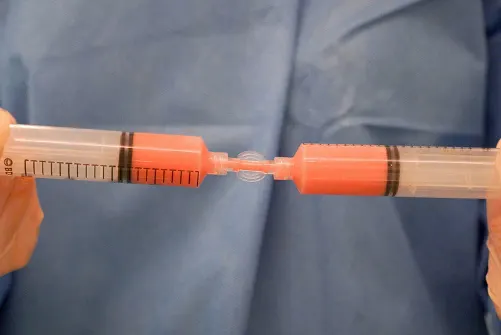
For stage 3 and 4 breast cancer, the breast may need to be removed entirely, and when even deep breast tissue and underarm lymph nodes are within the area of removal, autologous abdominal flap transfer is recommended to rebuild the large wound defect caused by the tissue removal.
Dr. Liao points out that in late-stage breast cancer, radiation therapy is usually needed after the cancer cells are removed, and autologous abdominal flap reconstruction is strongly recommended, because abdominal tissue acts like a thick, sturdy wall that protects normal cells from the destructive attack of radiation. With implant reconstruction, the chest tissue is thin and has to bear the radiation energy, which in turn leads to poor healing after surgery.
Q5: If You Choose Autologous Reconstruction, Which Site Is Recommended Most?
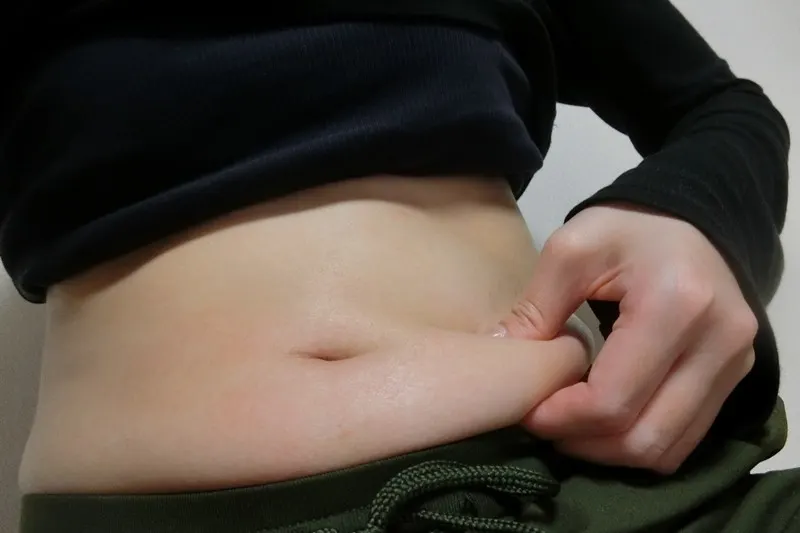
Dr. Liao points out that the abdominal flap is the first-choice site for autologous transfer, and besides breast reconstruction, you also get the benefit of slimming. The excess abdominal fat can be used to rebuild a full breast shape, and for postpartum women or those with a fuller figure, as much as 400 cc of fat can be harvested, and reaching a D cup is feasible.
Another advantage of the abdominal flap is that it carries its own blood supply, making it an entirely different procedure from ordinary liposuction fat transfer to the breast. With the liposuction transfer method, if the fat cells filled into the breast are not completely absorbed, calcifications may form, and a biopsy is needed to determine whether they are malignant. However, with abdominal flap tissue that carries its own blood circulation, there is no calcification problem, concerns about malignancy are removed, and long-term follow-up after surgery is very safe.
Q6: After a Total Mastectomy, Can the Areola and Nipple Be Reconstructed?
Dr. Liao points out that the nipple is cylindrical in structure. Looked at geometrically, when opened out it resembles a hexagon, so a hexagonal dissection space can be designed and then folded back like origami to rebuild the shape of the nipple.
For the color of the areola, once the wound has healed and the stitches are removed, tattooing can create a soft pink shade, since a pink areola and nipple are the more popular color for the breast’s appearance. With appropriate shape design plus tattooing technique, the reconstructed nipple and areola are highly realistic and look natural and good.
Q7: If Implants Were Used for Reconstruction, Does Regular Breast Screening Cause Problems?
Dr. Liao says that although an X-ray examination requires compressing the breast, today’s implants are quite tough and will not rupture even if twisted hard for 8 turns or rolled into a twist. However, conditions at the time of the exam differ, and the compression may be applied by a metal edge, so improper external force can still cause an implant to rupture.
Dr. Liao advises that if you are having an X-ray breast exam, you should tell the radiologist in advance so they can control the compression force of the machine. Of course, if you have other concerns, you can have an ultrasound or MRI instead for a more detailed examination.
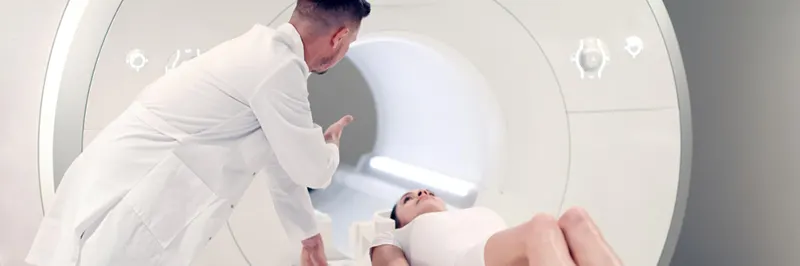
After a total mastectomy and reconstruction, breast cancer will not occur again in that breast. But Dr. Liao reminds patients that those with severe disease need to watch for cancer cell spread, which can travel through the blood or lymphatic circulation to the brain, bones, and internal organs. Even after treatment is complete, long-term follow-up and regular imaging are still needed.
Q8: After Recovering from Breast Cancer Reconstruction, Does It Affect Follow-Up Monitoring?

Dr. Liao points out that long-term follow-up is very important for breast cancer patients. The easiest way is self-examination by hand, palpating in a 360-degree clockwise pattern. If you feel a lump, return to the clinic promptly for the doctor to examine it. You should also come to the clinic for regular follow-up every six months to a year, using CT, ultrasound, or MRI to check for possible recurrence or metastasis of the breast cancer.
Q9: After Total Mastectomy and Reconstruction, the Breast Looks Complete and Natural but Has No Sensation. What Can Be Done? Can It Recover?
Dr. Liao admits that nerve recovery is indeed a problem. The original breast tissue has been completely removed, and although reconstruction can restore basic touch, the breast was removed to save the patient’s life, so it can never return to its original sensitivity. Breast tissue and abdominal tissue have completely different structures; the technique simply uses the idea of “moving a mountain” to relocate abdominal tissue to the breast, and with different function and structure, the original sensitivity of the areola and nipple cannot be restored.
Although body pain, hair loss, vaginal dryness, surgical scars, and loss of breast sensitivity are all side effects of breast cancer treatment, getting breast cancer is a test in life. Facing it with a positive attitude and accepting treatment and reconstruction with optimism, life after cancer can still be even more fulfilling!
This article is for general information only. Results vary from person to person; please consult a doctor in person before deciding on any treatment.