Contents
Keeping a youthful appearance is a goal for many who care about their looks, and bouncy, plump skin is the key to a youthful face. But collagen quietly declines over time, so what can you do? This article walks you through the 4 major causes of collagen loss and the symptoms that appear, how to supplement collagen through your daily diet, how to choose collagen products, and how Sculptra, commonly nicknamed the "youthful face injection," helps skin regain elasticity.
4 Major Causes of Collagen Loss
1. Aging
Collagen is the source of the skin's elasticity, but collagen loss begins at age 20 and accelerates after 25, and after 40, about 1% of collagen is lost every year. Most people begin to notice it around age 30. The body does produce collagen on its own, but as we get older, production gradually fails to keep up with the rate of loss, so more and more traces and symptoms become visible.
2. UV Rays
UVA in ultraviolet light is highly penetrating and can reach the dermis directly, damaging collagen fibers, causing the skin to lose elasticity and speeding up collagen loss. It also promotes melanin production, which makes the skin look dull, so sun protection should be a priority in daily life, to keep the skin from being exposed to UV rays.
3. Staying Up Late / Lack of Sleep
Frequently staying up late or having poor sleep quality disrupts the circadian rhythm, so that the body does not have enough time to repair itself, which reduces collagen synthesis.
4. Poor Diet and Lifestyle Habits
In daily life, excessive intake of high-sugar, high-fat foods easily increases oxidative reactions and chronic inflammation in the body, changing the structure of collagen so that it loses its original supportive function and the skin gradually sags. In addition, long-term smoking and drinking also speed up the formation of advanced glycation end products (AGEs), increasing their deposition in the skin and various tissues, which has a negative effect on collagen synthesis and breakdown, leading to collagen loss.

4 Major Symptoms of Collagen Loss
1. Dry, Dull Skin / Wrinkles
Collagen loss reduces the skin's water retention and support, so the skin becomes dry and dull, and starts to show sagging, drooping, and wrinkles. It can also make the skin more easily injured and slower to heal.
2. Dry, Red, Swollen Eyes
Because the cornea contains a large amount of collagen, collagen loss easily causes dry eyes, and at the same time a lack of collagen can also mean the cornea may thin and lose elasticity, making it more prone to infection and disease; in severe cases it may cause blurred vision, and pain, redness and swelling, and a foreign-body sensation are common complications.
3. Calcium Loss / Osteoporosis
Collagen is one of the components of bone, and calcium attaches to collagen, so a lack of collagen loosens bone structure and increases fracture risk, and may also make the joints more fragile, leading to joint pain, stiffness, and degenerative joint disease.
4. Brittle Hair and Nails
Hair follicles sit at the junction between the deep dermis, where collagen clusters, and the subcutaneous fat, and the middle layer of the hair also contains collagen, which affects hair thickness, elasticity, and moisture. When the body lacks collagen, the health of the follicles and nails is easily affected, leading to hair loss and nail breakage, making hair and nails look dry, split, and dull, and prone to breaking.

How to Supplement Collagen in Daily Life
1. Through Diet
Collagen is a protein found only in animals, so it exists only in animal foods. Eating more high-protein foods regularly helps maintain collagen production, for example fish, beef, pork, and other meats, as well as eggs and dairy. In addition, because collagen-rich foods tend to be high in calories, fat, and cholesterol, eat them in moderation to avoid putting too much burden on the body.
2. Through Nutrients
Vitamin C is an important coenzyme for collagen synthesis, so getting enough vitamin C also helps produce collagen. You can eat more vitamin C-rich fruits and vegetables such as guava, kiwi, bell peppers, and gai lan (Chinese broccoli), and you can also take antioxidant nutrients to help the body clear excess free radicals.
3. Collagen Supplements
There are many collagen powders, drinks, and capsules on the market. You can choose according to the following suggestions:
- Choose products made with small-molecule dipeptides and tripeptides, which are easier for the body to absorb and use. Different extraction and hydrolysis methods also affect quality and absorption rate, so choosing a product with a patented process or scientific research to back it up offers more assurance.
- Collagen extracted from fish has finer particles than collagen extracted from other meats, and its structure is closest to human collagen, making it the easiest for the body to break down and absorb.
- Small packages of collagen are better than large jars: besides being portable, they keep the product fresher and prevent it from absorbing moisture and spoiling if stored too long.
- Choose vitamin C as the supporting ingredient, because vitamin C is a key nutrient in collagen synthesis.
In addition, for collagen products to work at their best, it is best to take them before bed or on an empty stomach, when collagen is absorbed more quickly, and take them regularly at a fixed dose every day to see results.
Sculptra: The "Youthful Face Injection" for a Younger-Looking You
The above are several ways to supplement collagen in daily life, but all of them take a long time to show results. If you want to quickly address signs of aging such as hollowing, sagging, loss of elasticity, and more visible lines, the most effective approach is to let your skin "produce" its own collagen, and Sculptra is a "long-lasting collagen stimulator" that effectively stimulates collagen production, strengthening the underlying structure from the root so the skin regains elasticity and plumpness.
What Is Sculptra?
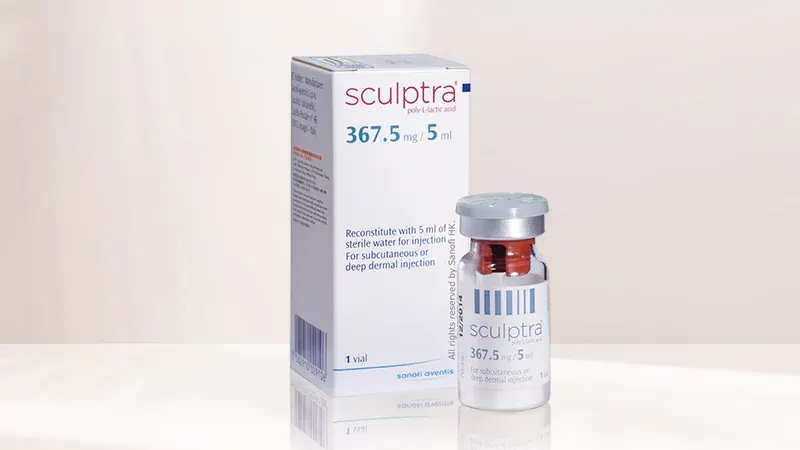
Sculptra, commonly nicknamed the "youthful face injection," has 3D poly-L-lactic acid (PLLA) as its main ingredient, a very safe substance that does not trigger rejection in the body, breaks down and is metabolized by the body on its own, and has been used in medicine for more than 30 years. After it is injected into the dermis, it will gradually stimulate fibroblasts and elastic fibers, causing them to regenerate and produce collagen, progressively repairing hollows, sagging, fine lines, and other concerns. The effect becomes more and more noticeable over time, restoring the skin's elasticity. Massage is needed after the procedure so that the Sculptra powder is distributed evenly beneath the skin.
Three Major Advantages of Sculptra
1. Gradual Results
Sculptra stimulates fibroblasts and elastic fibers in a gradual way, letting the body generate its own collagen, with natural results: you look better quietly, and the subtle adjustments are not easily noticed!
2. High Safety, Fully Absorbable
After Sculptra is injected, it can be 100% absorbed and broken down by the body, with no rejection, and there are almost no side effects, making it an aesthetic medicine treatment with an extremely high safety profile.
3. Long-Lasting Results
Compared with other collagen treatments, Sculptra's injection results last longer. It takes about 3 months after injection for new collagen to form and restore the skin's elasticity and plumpness, and the results can last up to 2 years.
Sculptra vs. Other Treatments
| Sculptra | Ellansé | AestheFill | |
|---|---|---|---|
| Nickname | "Youthful face injection" | "Girl injection" | "Elf injection" |
| Main ingredient | Poly-L-lactic acid (PLLA) | Polycaprolactone (PCL) | Poly-D,L-lactic acid (PDLLA) |
| Formulation | Vial / powder | Syringe / gel | Vial / spherical powder |
| Filling effect | Results appear after 1-3 months | Immediately noticeable | Results appear after 1 month |
| Duration | ✭✭✭✭✭ | ✭✭✭ | ✭✭✭✭ |
| Collagen stimulation | ✭✭✭✭ | ✭✭✭✭ | ✭✭✭ |
| Skin texture | Bouncy and firm | Feels similar to hyaluronic acid | Soft and elastic |
| Price | ✭✭ | ✭✭✭ | ✭✭✭✭ |
| Post-treatment massage | Yes | No | No |
The Best Value Option! Sculptra, Ellansé, and AestheFill: Prices, Pros and Cons Revealed
If you want to restore facial plumpness through collagen stimulation and want longer-lasting results, we recommend Sculptra. NAISS CLINIC has an experienced team of physicians, and the procedure is safe and professional, helping you regain youthful, elastic skin!
This article is for general information only. Results vary from person to person; please consult a doctor in person before deciding on any treatment.