Contents
- How does massage help slow capsular contracture?
- Some implants are marketed as not requiring massage after surgery, but can you really skip massage entirely?
- How soon after surgery should massage start, and how long should it continue?
- Can "stone breast" really be caused by massage from an outside aesthetician?
- Besides post-operative massage, do you also need a compression band?
- When someone with breast implants lies down, the breasts always spread outward. Is there a way to improve this?
After implant breast augmentation, the body's immune system forms a capsule around the implant, because a foreign object has been placed in the body. Without breast massage, the capsule keeps getting thicker, and within about 1-3 months the breasts gradually become hard and misshapen. There is up to a 30% chance of developing capsular contracture, which leaves the breasts rock-hard, a condition nicknamed "stone breast."
How does massage help slow capsular contracture?
"Massage is like a stretching exercise: the more you stretch, the more flexible the body becomes!"
Dr. Kuo-Chun Liao, Director of NAISS CLINIC, explains that skin works on the same principle: massage is stretching for the skin, and it mainly helps the breasts become softer. That said, capsular contracture is largely related to individual constitution or unhealthy lifestyle habits. The most common is smoking, because nicotine irritates the wound. Based on years of surgical case follow-up, if someone smokes heavily, the capsule and scar tissue are both prone to overgrowth.
Breast Augmentation Massage Tutorial: Everything You Should Know About Breast Augmentation
How Much Do You Know About Breast Augmentation Complications? Understanding Capsular Contracture
Some implants are marketed as not requiring massage after surgery, but can you really skip massage entirely?
Dr. Liao says that in the early days, people pictured post-augmentation massage as pushing hard and roughly. Now, thanks to more advanced implant materials, along with the endoscopic breast augmentation technique, which allows the surgical dissection space to be created more precisely, blood loss and the chance of capsular contracture are lower.
Dr. Liao notes that post-operative massage has now become a relaxing, maintenance-style massage. If a patient wants deeper cleavage, they gather the breasts inward and hold them in place for 5 to 10 minutes; for a fuller look in the upper chest, they lift the breasts upward and hold for 5 to 10 minutes. The whole process does not even require anyone's help, and patients can do this maintenance massage on their own.
How soon after surgery should massage start, and how long should it continue?
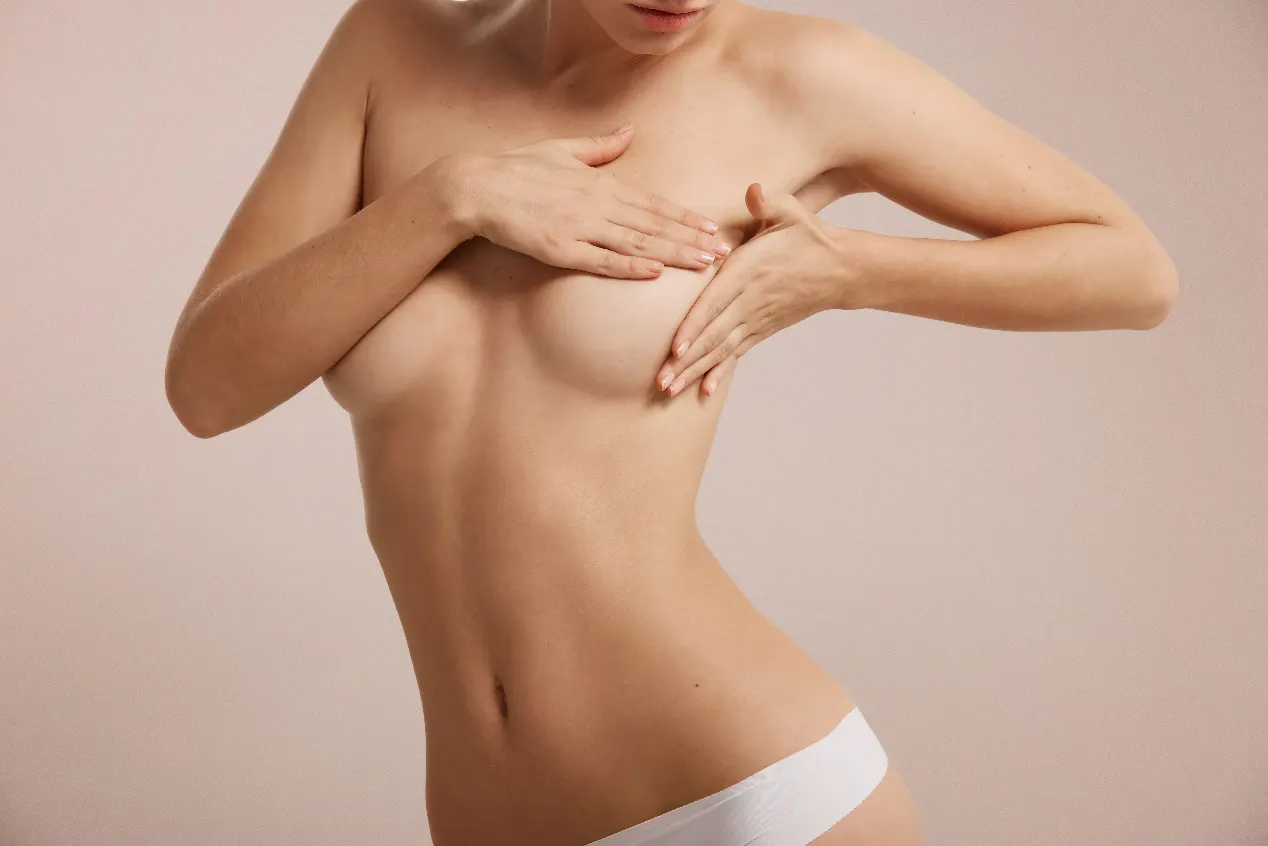
Dr. Liao says massage should begin once the surgical wounds have mostly healed, about one month after surgery, once in the morning and once in the evening, 5-10 minutes each time. He recommends treating massage like a health exercise: just as you care for your face every day, your breasts need daily care too, which greatly helps maintain a natural look and stability over the long term.
Can "stone breast" really be caused by massage from an outside aesthetician?
"Massage looks simple, but you still need to follow your physician's advice!"
Dr. Liao points out that everyone's body type is different, which affects the dissection space created in surgery and which areas need extra massage. Patients are advised to follow their physician's recommendations and massage specific areas, such as extra work on the cleavage or upward lifting. Massage by outside aestheticians is not recommended, because they lack the training and may knead and press carelessly, and may even push the implant out of position. Incorrect force, overly rough movements, or wrong massage technique will all backfire on the breasts.
Besides post-operative massage, do you also need a compression band?
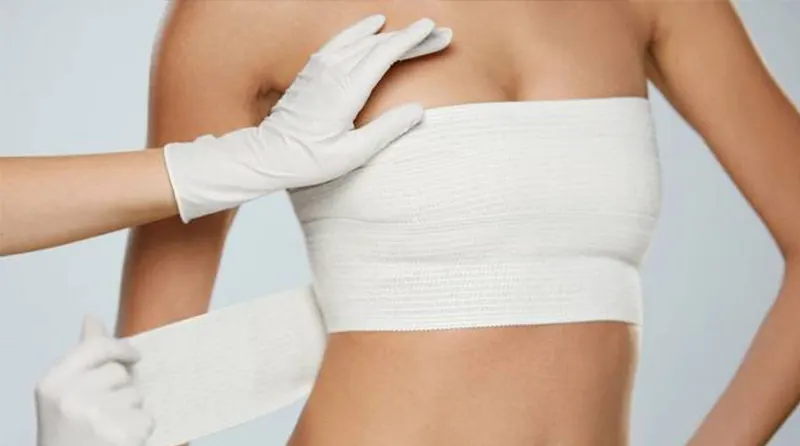
The compression band prevents the implants from shifting and helps reduce swelling. Through physical compression and immobilization, it speeds up local lymphatic circulation, which helps the swelling go down. Dr. Liao points out that it is generally worn 24 hours a day for 1 month, after which you can begin massaging the breasts by hand; however, since every case differs, follow the advice your physician gives at follow-up visits. About one month after surgery, once the surgical swelling has all subsided, the breasts look more natural.
When someone with breast implants lies down, the breasts always spread outward. Is there a way to improve this?
"Don't be too shy about breast augmentation. Choosing the right implant size is important!"
Dr. Liao says bluntly that breasts usually spread outward when lying down because the implants are too small. If a patient's body could support an E cup but, out of shyness, conservatism, or a preference for a natural look, they choose only a C cup, there is not enough support, and the implants easily shift in the body, spreading outward especially when lying down.
Dr. Liao also explains that before breast augmentation surgery, the patient's frame width and size are actually measured. The implant must fit the breast space, and if bigger is needed, go bigger. As long as an appropriate dissection space is designed, the breasts keep a very natural feel whether lying on your back, standing, or lying face down.
This article is for general information only. Results vary from person to person; please consult a doctor in person before deciding on any treatment.