Contents
Breast augmentation surgery is something many women consider, and a major procedure like this requires analysis and thorough preparation to avoid making the wrong choice. Our editors have compiled information on breast augmentation, hoping to help those who are still weighing their options get up to speed on the basics more quickly and efficiently!
1. What Is Breast Augmentation?
Breast augmentation is an "invasive" surgical procedure. Although medical technology has advanced, and tools such as endoscopes can reduce wounds and the risk of bleeding, it still takes time for the incisions to heal. You may feel swelling and discomfort in the first 3 days after surgery, and it is best to avoid too much arm movement.
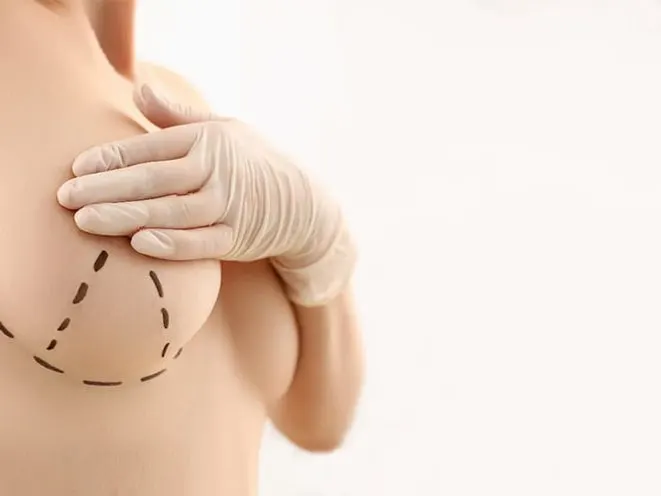
Definition:
It mainly gives women the opportunity to increase breast size and improve breast shape. The surgery usually involves placing a bulking or filling material beneath the breast tissue to increase the volume and fullness of the breasts
2. Common Breast Augmentation Methods and Materials
Breast augmentation falls into two main types: implant augmentation and fat transfer augmentation. Fat transfer augmentation uses VASER liposuction to make the surgery safer and lower the risks associated with liposuction.
Common breast implants include Mentor breast augmentation, Sebbin breast augmentation, Perle breast augmentation, and Motiva breast augmentation, offering the most suitable option for different groups. Each of the five surgical methods has its own specialist surgeons, and the most complete and professional pre-op examinations are provided to reduce all risks and errors.
What Is Sebbin Breast Augmentation?
Best for Asians? Key Facts About Mentor Queen Wave Breast Augmentation!
4 Types of Mentor Breast Augmentation Explained! Which One Is Right for Me? Pros, Cons, and FAQs
3. What You Need to Know Before Surgery...
(1) Pain level:
Breast augmentation is an invasive treatment, and general anesthesia is used during surgery, so pain and discomfort are unavoidable once the anesthesia wears off and for several days after. Being mentally prepared in advance, and knowing how to relieve pain, will help your recovery go more smoothly!
(2) Risks and complications:
Invasive surgery always carries potential risks, including infection, bleeding, bruising, implant displacement, and capsular contracture and others. Learning about the possible complications and how to avoid them in advance (for example, choosing a manufacturer-certified clinic, a professional and experienced surgeon, and a facility with professional equipment) can reduce all risks and concerns to a minimum!
(3) Expected results and limitations:
Breast augmentation can help you reach your ideal cup size, but note that different materials have different limitations. For example, fat transfer augmentation has prerequisites for cup size gain and liposuction conditions. So besides keeping realistic expectations, you also need to have a thorough discussion and plan with your surgeon. We also recommend doing some homework before surgery! Understanding the characteristics of breast implants will help you choose and set expectations that are ideal and realistic.
(4) Recovery:
Recovery time varies by surgical method and individual circumstances. Recovery times found online are averages, and your physician must evaluate you to give a more accurate timeline! (Of course, good aftercare can also speed up recovery!)
(5) Incision sizes vary:
Common incision locations are: the armpit, the areola, and the lower breast fold. Each location has a different incision size and recovery time. For East Asians, a common concern is hyperpigmentation, so take this into account before surgery when deciding where the incision should be!
(6) Where the implant is inserted:
The armpit is a popular choice because the scar is not easily exposed. Operating through the areola can achieve more direct results but may carry a higher risk of infection. The lower breast fold usually allows faster recovery but may be accompanied by scarring.
Breast Augmentation Massage Guide and Everything You Should Know
How to Care for Scars After Breast Augmentation? How Long Until They Fade? A Physician Answers!
4. Case Studies
Mentor Breast Augmentation Cases
Sebbin Breast Augmentation Cases
Motiva Breast Augmentation Cases
Don't Just Wish, Act Now! Shake Off a Flat Chest: A Patient's Mentor Classic (Smooth) Review
Chasing Western-Style Curves for a Full F Cup: A Patient's Mentor Premium (Queen Wave) Review
5. Common Q&A
Q: Will people be able to tell I had breast augmentation?
A: The biggest worry for most people is probably looking "too fake" after augmentation, where a procedure meant to boost confidence backfires. What causes breasts to look too fake after augmentation?
1) Shape differences: this relates to the pocket (dissection space) created during surgery. When the space is insufficient, the whole breast looks stiff, and when lying down it looks like two mountains standing upright on the chest, which is unnatural. When there is enough space, lying down produces a "lateral spread" effect that looks more natural.
2) Choosing the size: choose a size that suits you. Within a reasonable range, based on your own body and needs, choosing a medium-large or maximum size makes it less obvious that you have had work done! During the pre-op consultation, implant sizers and 3D simulation can be used to balance the size you imagine with a size that is realistic for your body.
3) Choosing the incision: if the incision is placed at the areola or the lower breast fold, the scar will be more noticeable during intimate moments; to avoid this, you can choose an armpit incision!
Q: How long is the recovery period after breast augmentation?
A: For office workers doing desk jobs, you can usually return to work about 1-2 days after surgery. However, for more physically demanding or active jobs, we recommend returning to work only after fully recovering, which takes about 2 weeks.
Q: Will the implant edges be obvious after augmentation?
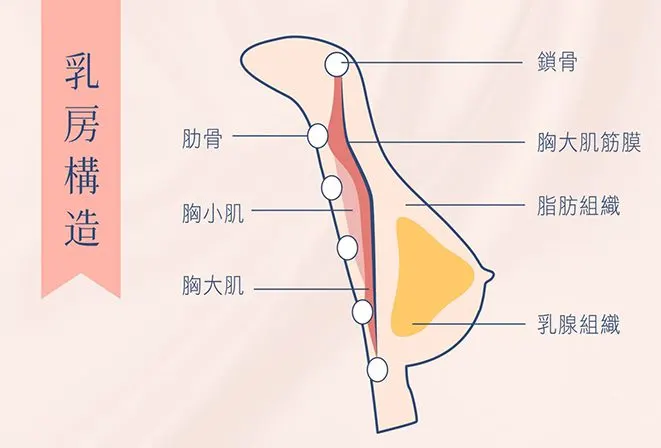
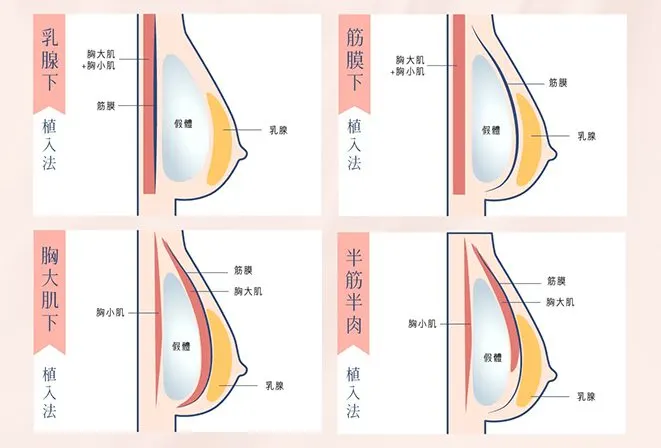
A: On the question of obvious edges, it depends on where the implant is placed! The traditional thinking is that the deeper the implant is placed, the less likely the edges will show, but for very thin people, even the shape of the bones beneath the pectoral muscle is visible, so of course the implant edges will still be noticeable. As for placement under the fascia and placement under the mammary gland, which have similar advantages, disadvantages, and indications, the fascia is a tissue with tension. With the implant beneath the fascia, the upper chest looks straighter (more realistic) because of the fascial tension, and the lower chest has a natural drape, a beautiful teardrop shape. However, it is not suitable for people with thin breast tissue, as the wrinkles at the upper edge of the implant will be more noticeable!
Who Shouldn't Get Breast Augmentation? What It Can Do and Who It Suits
6. How to Choose Implants and a Clinic: NAISS CLINIC's Facilities and Equipment
By now, faced with so many different materials, how do you choose the breast implant that suits you best? From the introductions above, we can see that every implant material has its advantages and disadvantages. Whichever surgery you choose, you should base your choice on your body type and your preferred breast shape, along with your other needs, to arrive at the ideal plan.
Breast augmentation is not about picking the newest, most expensive, or largest implant. It is about understanding your own needs, discussing and evaluating them with a professional surgeon, and entrusting a customized plan to an experienced plastic surgeon with an eye for aesthetics, so you can create the ideal breasts that fit your body's curves.
Take the often-discussed Sebbin and Motiva: although both use a nano-textured surface shell, Motiva feels bouncier and firmer, while Sebbin feels relatively softer.
NAISS CLINIC is committed to providing every customer with the most complete, highest-quality service, so it holds itself to high standards for its environment and equipment, and is especially distinguished by professional medical-center-grade equipment that safeguards your beauty.
7. About the NAISS CLINIC Physician Team

NAISS CLINIC has abundant medical resources: we have seven attending physicians in plastic surgery alone, and the clinic also has a resident anesthesiologist!
(Major invasive surgery requires an anesthesiologist present throughout so that any unexpected events during surgery can be monitored and handled immediately)
This article is for general information only. Results vary from person to person; please consult a doctor in person before deciding on any treatment.