Contents
- Capsular contracture is not the scary part. What is scary is...
- These unhealthy habits are the real key to capsular contracture
- How can you avoid capsular contracture? 4 tips from our physician
- Capsular contracture is graded into 4 levels by severity
- What should you do if capsular contracture does happen?
- Can capsular contracture come back after surgery?
Capsular contracture is not the scary part. What is scary is...
After an implant is placed in the body, the body treats it as an invading foreign object and activates its self-defense immune mechanism, forming a thin, soft layer of scar-like fibrous tissue (the capsule) around the implant. The capsule forms naturally; it helps isolate the implant from other body tissue and holds the implant in the space the physician created during surgery.
Without regular breast massage, the capsule becomes thicker and harder, and may even keep contracting and squeezing the breast implant inward. This is capsular contracture, which produces the rock-hard "stone breast" people often talk about. In severe cases it can cause pain and distortion of the breast's appearance. However, NAISS CLINIC is certified by the manufacturer, and all implants it provides come with a reassuring warranty of 10 years to lifetime. Should capsular contracture unfortunately occur, the warranty can also help with treatment, so there is no need to worry excessively.
These unhealthy habits are the real key to capsular contracture
Dr. Kuo-Chun Liao, Director of NAISS CLINIC, advises maintaining a regular daily routine. Staying up late or reversing day and night in particular raises the body's inflammation markers and disrupts hormones, leaving the body in a state of chronic inflammation. Patients who smoke or do not massage as their physician instructed are also prone to capsular contracture.
How can you avoid capsular contracture? 4 tips from our physician
Dr. Liao explains that patients who want to avoid capsular contracture can effectively lower the chance of it by taking care of these 4 points:
1. Choose the right implant material
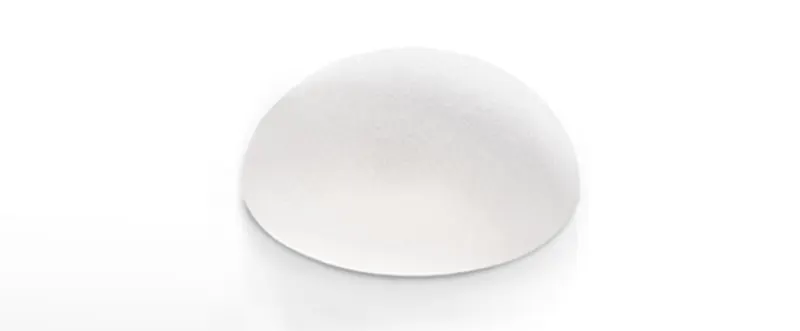
Textured breast implants, with a rough surface that does not slide easily, conform well to breast tissue and are less prone to capsular contracture than smooth-surface breast implants.
2. A sterile operating room at medical center standard
One cause of capsular contracture is closely linked to infection during breast augmentation surgery. NAISS CLINIC uses advanced hospital-grade equipment together with a sterile operating room at medical center standard, and performs surgery with a true "no-touch" technique, ensuring the surgery takes place in a safe, sterile environment and avoiding post-operative bacterial infection that could lead to capsular contracture.
3. Use endoscopic breast augmentation
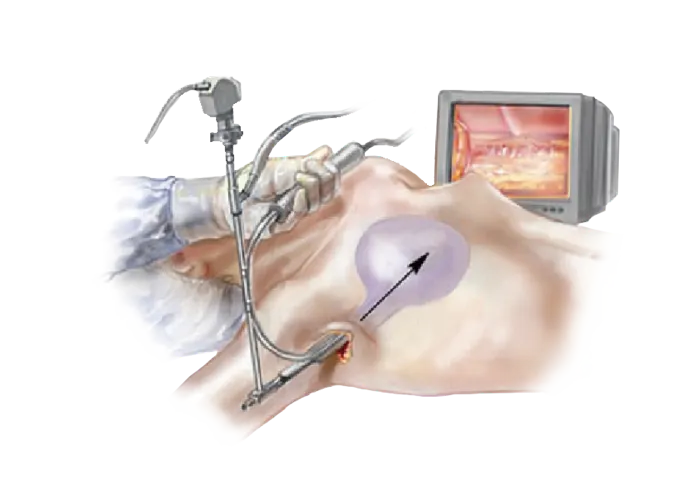
NAISS CLINIC has professional attending plastic surgeons on site and uses endoscopic breast augmentation, which magnifies the operating field locally so the physician can dissect the implant pocket more precisely, protect breast tissue, and reduce blood loss and the chance of hematoma, making surgery safer and more reliable.
4. Post-operative care
Besides following your physician's advice and doing correct, thorough massage to keep the capsule tissue soft, you can also take the supplement Yu Feng Rou, which contains anti-inflammatory and antioxidant ingredients, to lower the chance of capsular contracture. NAISS CLINIC also has a professional nursing team on site, with dedicated staff to help with dressing changes at follow-up visits and to assess the wound and give appropriate treatment to speed healing.
Capsular contracture is graded into 4 levels by severity
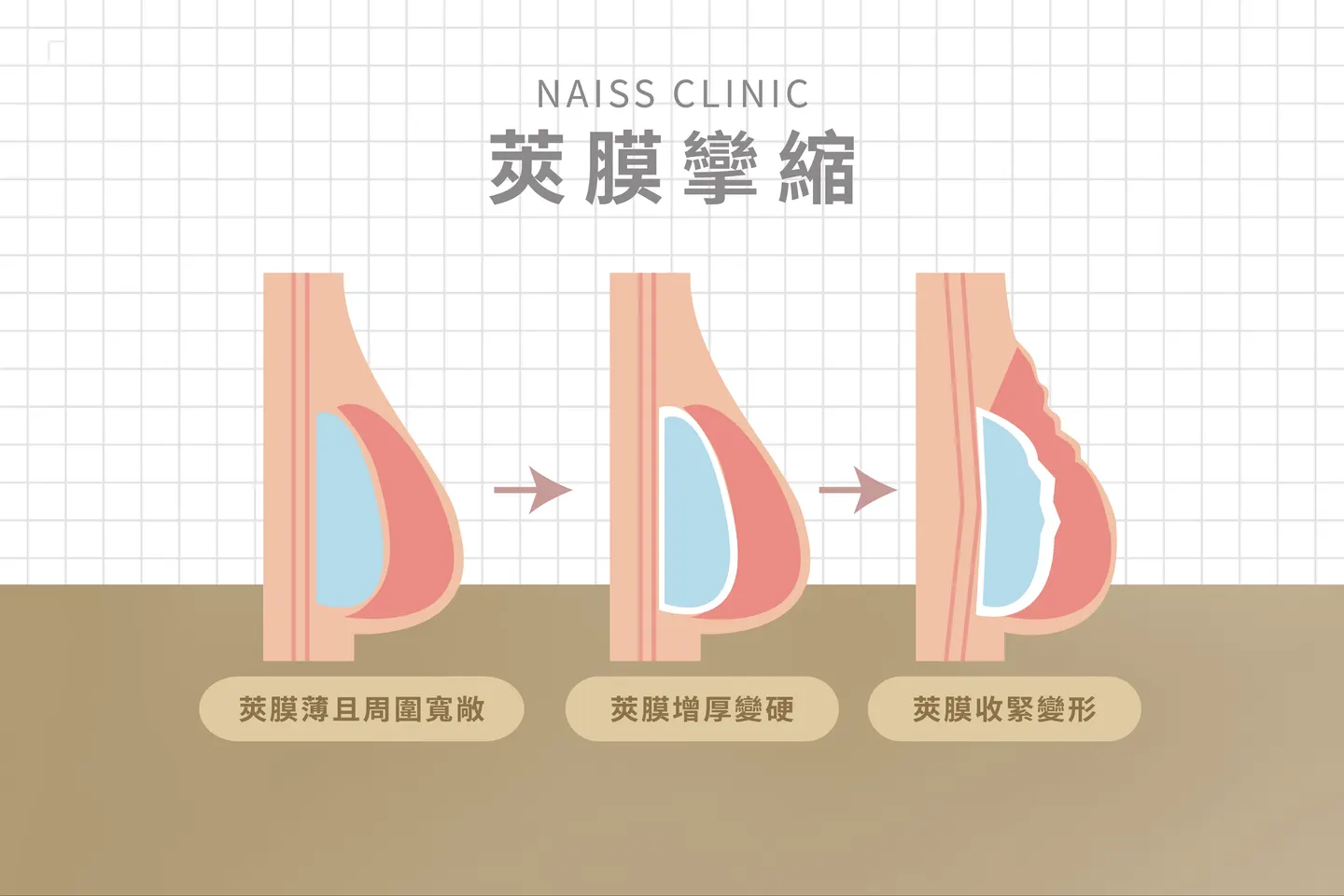
Dr. Liao points out that capsule tissue is a normal physiological response: whenever a non-absorbable implant is placed, a capsule forms. Medically it is classified into four grades:
Grade 1
A normal capsule, a thin, balloon-like membrane. The breast is soft and smooth, with a natural size and shape, which means care has been reasonably good.
Grade 2
The breast looks normal but feels slightly firm to the touch. The capsule is thicker and the implant can be felt. Diligent massage to loosen it and regular follow-up visits are needed.
Grade 3
The breast feels very firm, affecting overall balance. The implant can be seen and felt, and the breast no longer moves naturally.
Grade 4
The breast is hard and distorted. The implant is clearly palpable and visible. Severe cases may involve pain, and if it keeps worsening it may lead to infection.
What should you do if capsular contracture does happen?
Dr. Liao explains that Grade 1 and 2 capsular contracture can be treated with massage combined with medication, but Grade 3 and 4 require surgery.
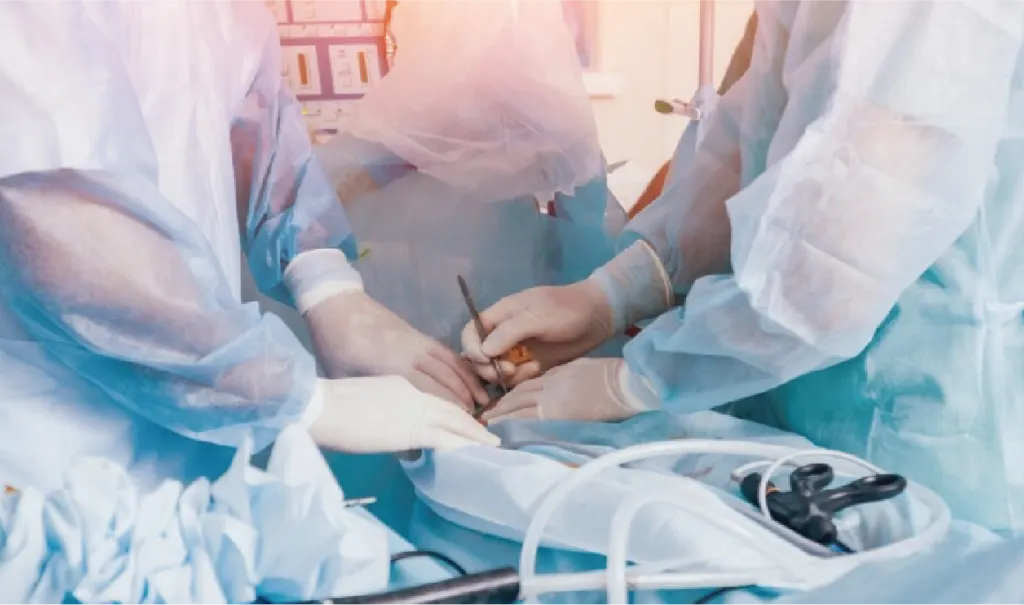
During surgery, the implant is first removed, the overgrown capsule tissue is cut away, a new space is dissected, and a new implant is placed, which makes it a revision (secondary) breast augmentation. Dr. Liao says he does not recommend putting the original implant back after surgery, because after sitting in the body for a while there is no way to determine whether it is still sterile, and putting it back into the breast tissue can easily cause wound infection. A brand-new implant is normally used, since it has been sterilized by the manufacturer, and placing a new implant is the safest approach for the patient.
Can capsular contracture come back after surgery?
Dr. Liao explains that surgery is not a one-time cure that eradicates capsular contracture. Developing capsular contracture means the patient's post-operative care was incorrect or their daily habits were unhealthy. If the routine does not improve, capsular contracture can still happen again.
This article is for general information only. Results vary from person to person; please consult a doctor in person before deciding on any treatment.