Contents
If you have the same question, this article breaks down the three ways to supplement hyaluronic acid: topical, oral, and injectable. Each method differs completely in results and in who it suits.
Topical Hyaluronic Acid
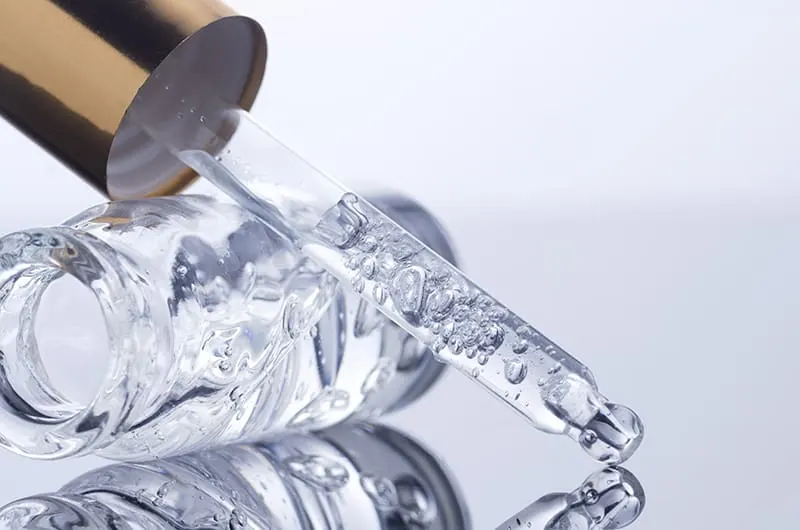
Topical hyaluronic acid only hydrates the outermost layer of the skin. It is mostly added to skincare products such as lotions, toners, serums, and sheet masks. Hyaluronic acid molecules are large, so the moisturizing effect is quick and can be used to boost hydration in specific areas. However, because the molecules are large, the skin does not absorb them easily, and the effect is short-lived.
Does this mean that the smaller the molecular weight of the hyaluronic acid you apply, the better?
To pass through the stratum corneum and reach the dermis, topical hyaluronic acid would need a molecular size below 500 daltons. However, the smallest hyaluronic acid known today has a molecular weight of roughly several thousand daltons, far above the threshold for penetrating the skin.
The difference between hyaluronic acid molecular weights mainly lies in how much water they can absorb. When using hyaluronic acid skincare, it is best to pair it with a cream or lotion to lock in moisture. When choosing a topical hyaluronic acid product, remember that a smaller molecular weight does not mean it works better!
Oral Hyaluronic Acid

Unlike topical hyaluronic acid, oral hyaluronic acid can be absorbed and used by the body whether its molecular weight is large or small. Large-molecule hyaluronic acid is broken down into small fragments by probiotics in the intestines, absorbed in the small intestine, and then carried to the skin or joints. Small-molecule hyaluronic acid can be absorbed directly by the body more quickly.
Oral hyaluronic acid is mostly sold as a health food. It is meant for maintenance, focusing on improving hydration from the inside out and adjusting the body's condition. It supplies water to any area of the body that is lacking it, for a whole-body moisturizing effect.
Because hyaluronic acid is a nutrient that already exists in the human body, taking it does not harm the body. If you are hesitant about aesthetic medicine or have a limited budget, oral hyaluronic acid is a good choice.
How Do You Choose an Oral Hyaluronic Acid Supplement?
Oral hyaluronic acid comes from three sources: chicken comb extract, Streptococcus zooepidemicus fermentation, and natural production by probiotics.
Hyaluronic acid from chicken comb extract is limited by solvent and regulatory issues, so its concentration is lower, usually under 80%. It is an animal-derived product, so vegetarians cannot take it.
Hyaluronic acid obtained through Streptococcus zooepidemicus fermentation reaches a higher concentration, with purity of up to 95%. It is fully vegan and suitable for everyone.
Whichever type you choose, the daily dose is 80 mg or less. Hyaluronic acid naturally produced by probiotics is not subject to this limit. By comparison, however, hyaluronic acid from Streptococcus zooepidemicus is absorbed better by the body.
Injectable Hyaluronic Acid

Injecting hyaluronic acid is the fastest way to supplement it, and it can improve localized concerns. For example, injecting hyaluronic acid into facial hollows can address nasolabial folds and tear troughs, while injecting it into the joints has a lubricating effect that can relieve joint pain, reduce joint wear, and improve flexibility.
Because hyaluronic acid retains moisture so well, people with very dry skin can use injections to increase skin hydration. Besides making the skin feel plumper and softer, it also helps makeup go on more smoothly.
If you choose injectable hyaluronic acid, pay attention to how molecular weight applies to different areas. For contouring and sculpting, choose large-molecule hyaluronic acid. To fill facial hollows, choose medium-molecule hyaluronic acid. To fill delicate areas or for long-lasting hydration, choose small-molecule hyaluronic acid.
How quickly injected hyaluronic acid is absorbed varies from person to person. On average, large-molecule hyaluronic acid lasts about 1.5 years, medium-molecule lasts 6-9 months, and small-molecule has the shortest duration, lasting only about 6 months.
Topical vs. Oral vs. Injectable Hyaluronic Acid: Full Comparison
| Topical Hyaluronic Acid | Oral Hyaluronic Acid | Injectable Hyaluronic Acid | |
|---|---|---|---|
| Benefits | Boosts skin hydration | Hydrates the skin deeply, improves fine lines, and delays the formation of shallow wrinkles | Hydrates the skin deeply, smooths wrinkles, and fills and contours the face |
| Pros | Fast-acting, with very noticeable hydration | Lowest risk, almost no side effects, and the lowest price | Immediate and long-lasting results |
| Cons | Very short-lasting, and costly over the long term, so poor value | Must be taken long term before results show | Highest price; the treated area may swell afterward; highest risk |
| Best for | People who are hesitant about aesthetic medicine or unwilling to have invasive treatments | People who are hesitant about aesthetic medicine or unwilling to have invasive treatments, and who have a limited budget | People who want immediate results |
There are many ways to supplement hyaluronic acid, but it cannot be obtained through a normal diet. Choose the method that suits you best, and enjoy a fuller, plumper, more radiant complexion!
This article is for general information only. Results vary from person to person; please consult a doctor in person before deciding on any treatment.