Contents
Want a bigger bust and a slimmer figure at the same time? Worried about large breast augmentation scars? Fat transfer breast augmentation delivers slimming and a fuller bust in one procedure, but did you know it isn't right for everyone? This article covers the cost of fat transfer breast augmentation and, at the end, gives you 3 self-checks to see whether it suits you!
4 Situations Where Fat Transfer Breast Augmentation Fits
1. Postpartum breast shrinkage
During pregnancy and breastfeeding, the breasts go through many changes, and after giving birth many women find their breasts less full than before. The main reason is that the breast is supported by the pectoralis major and the fibrous structures between it and the chest wall, and after birth, as the breasts swell and body weight increases, the connective tissue is stretched loose; once breastfeeding stops, the mammary glands begin to shrink and the breasts sag easily. In addition, rapid weight loss shortly after giving birth can also cause the breasts to sag
2. Not wanting an implant inside the body
Many women worry about the side effects of implants. Rather than putting a foreign object in the body, they would rather use their own fat to increase breast size
3. Wanting to slim down and enlarge the bust at the same time
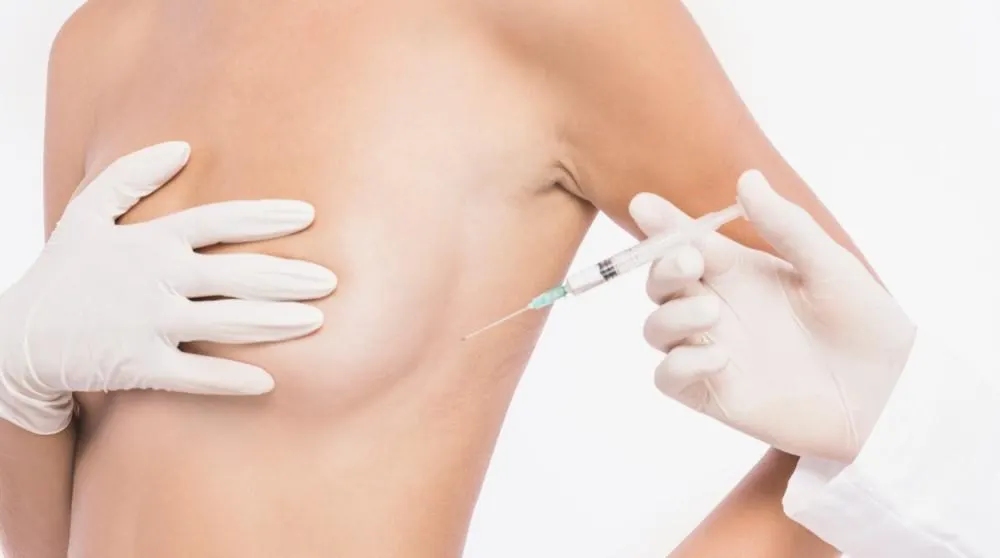
Because fat transfer breast augmentation requires liposuction, in which excess fat is removed from your own body and injected back into the breasts, it is very well suited to people who want to slim down and enlarge the bust at the same time.
4. Wanting to fix an unnatural look after augmentation
A small number of people develop rippling and a ball-like look after implant breast augmentation. In that case, their own fat can be used to fill in and improve the unnatural look after implant augmentation
4 Drawbacks and Possible After-Effects of Fat Transfer Breast Augmentation
1. Fat survival rate
Based on the clinic's past cases, the average fat survival rate for most people is 50%-70%. Three to six months after the procedure, if the fat survives in the grafted area, it means the fat cells are getting enough blood supply and nutrients. Because the body may absorb some of the grafted fat, the ideal cup size may not be reached, so most people still choose an implant.
2. Calcification / lumps
When an appropriate amount of fat is grafted, calcification and lumps are less likely, because fat grafting requires evenly distributing an appropriate amount of fat. If too much fat is placed during fat transfer breast augmentation, or the grafted clumps are too large, fat cells may die from lack of nutrients, and any dead fat that the body cannot absorb may cause calcification, cysts, or lumps. To avoid this, a professional doctor will assess the appropriate injection volume rather than simply trying to increase cup size.
3. Uneven liposuction areas
Unevenness in the liposuction area has two possible causes. The first is different tissue healing speeds during recovery, in which case you must wear the compression garment for the length of time your doctor recommends. The second is a surgical error, with too much fat removed because of poor control of force, in which case the doctor must perform repeated corrective fat grafting, which takes at least 1-2 years.
4. Only 1 to 1.5 cup sizes per session
Because the body absorbs some of the grafted fat, the average gain is only 1-1.5 cup sizes, though some cases have gained more than 2 cup sizes, depending on whether there is enough of your own fat to harvest, the doctor's experience and expertise, and, finally, the use of VASER liposuction, which can achieve a fat survival rate of up to 80%.
Fat Transfer Breast Augmentation Cost
The cost of fat transfer breast augmentation is affected by many factors, such as the complexity of the surgery, the doctor and clinic you choose, and the techniques and equipment used. But in general, the price of fat transfer breast augmentation ranges from about NT$120,000 to NT$200,000, and we recommend visiting the clinic directly for a consultation to hear the doctor's professional advice
Aftercare for Fat Transfer Breast Augmentation
1. Avoid losing weight
During the aftercare period, high-intensity exercise burns fat and lowers the fat survival rate, but light exercise is fine. One week after surgery you can start with walking and brisk walking. For the first month, focus on lower-body exercise and avoid movements that use the chest muscles; overly vigorous exercise is not suitable, and if you normally do weight training, pause it first. One month after surgery you can do simple chest-expanding exercises, but increase the intensity gradually to shape the lines of your figure.
2. Avoid smoking
The nicotine in cigarettes constricts blood vessels, delays wound healing, and lowers the fat survival rate, so do not smoke for one week before surgery or during the aftercare period.
3. Avoid squeezing the breasts or wearing tight clothing
We recommend not wearing a bra for 1 month after surgery, using nipple covers instead if necessary. If you really need to wear one, wait at least 2 weeks and wear a wireless bra, avoiding thick or padded styles and choosing thin gauze or cotton.
4. Wear your post-op compression garment diligently
Because fat transfer breast augmentation is performed together with liposuction, you need to wear a compression garment starting right after surgery, for at least 8 hours a day, ideally for up to 3 months and at minimum for 1 month. The compression garment helps reduce swelling and improve body shape.
5. Healthy diet
Right after surgery: drink plenty of fluids
1-2 weeks after surgery: eat plenty of high-quality protein
3 Self-Checks: Is Fat Transfer Breast Augmentation Right for You?
When deciding whether to have fat transfer breast augmentation, you can first use the following 3 simple criteria to judge whether you are a suitable candidate:
1. BMI of 18-20 or above: whether you have enough fat available for grafting
2. Localized excess fat: you have localized excess fat that you want to remove through liposuction
3. Not comfortable with a foreign object implanted in the body: you want breast augmentation but cannot accept an implant inside the body
Fat transfer is a type of breast augmentation combined with VASER liposuction. Although your own fat is unlikely to be rejected, it still has drawbacks and after-effects. Choosing a professional and experienced doctor can lower the surgical risks, and using VASER liposuction can greatly improve the fat survival rate. Finally, if you are considering fat transfer breast augmentation, try the 3 self-checks above to see whether it suits you.
This article is for general information only. Results vary from person to person; please consult a doctor in person before deciding on any treatment.