Contents
- Part 1: Why Does Breast Augmentation Have Complications?
- Part 3: How to Lower the Risk of Complications
- Part 4: Who Is More Likely to Regret Breast Augmentation?
- Part 5: Recovery and What to Expect After Surgery
- Part 6: How to Care for Yourself After Breast Augmentation: 8 Key Points
- Part 7: The 3 Main Causes of Regret After Breast Augmentation, and What to Do
- Part 8: What If I Regret Breast Augmentation? Can the Implants Be Removed?
As aesthetic medicine advances, breast augmentation has become a very mature procedure, but many people still worry: "Will I have complications?" "Will I regret it?" In fact, every surgery carries risk. Understanding the common complications of breast augmentation, why they happen, and how to prevent them lets you evaluate your options before surgery and reduce unnecessary risk.
This article covers the 7 most common complications of breast augmentation, along with prevention tips recommended by doctors, to help you make a more confident choice before augmentation.
Part 1: Why Does Breast Augmentation Have Complications?
Although breast augmentation technique is quite mature, it is still an invasive procedure in nature, so complications can still occur. They are usually related to the following factors:
- Differences in the surgeon's technique and experience
- Implant material and size selection
- Individual constitution (such as immune response and tendency to scarring)
- Postoperative care and lifestyle habits
For example, when an implant is placed, the body naturally forms a protective layer (the capsule). If the reaction is excessive, it can become "capsular contracture," making the breast hard or misshapen.
Therefore, complications of breast augmentation do not have a single cause; they are the combined result of "surgery + constitution + aftercare".
Part 2: Common Complications of Breast Augmentation (Full Breakdown)
Will breast augmentation have complications? What are the risks? This is the biggest worry for many women before they decide to have surgery to look their best. Although breast augmentation has advanced a lot and avoids many of the problems of traditional surgery, it is not 100% problem-free. The most important thing is to find a good clinic and a skilled surgeon, which greatly reduces the risk. Now let's look at the complications that can occur after breast augmentation!
Below are the 7 most common complications of breast augmentation, with their causes and how to prevent them:
1. Capsular Contracture ("Stone Breast")
The most common complication of breast augmentation. When an implant is placed, the body activates a defense mechanism and forms a thin membrane (capsule tissue) that wraps around the foreign object to separate it from the body. The capsule is actually a normal fibrous reaction, but if it overreacts (the capsule becomes too thick), the implant has no room and is squeezed under high tension, becoming deformed. The breast then feels hard, like a "stone breast" or "bowl breast," which is painful and affects appearance.
Mild cases can be improved with massage; for severe cases, seek medical care immediately. To prevent capsular contracture, you must choose a suitable implant and a skilled surgeon.
Implant Displacement and Poor Implant Position
This is a complication more common with traditional augmentation methods. Some people notice after surgery that the breasts are different sizes, sit at different heights, or have a shape that doesn't match expectations. Possible causes include capsular contracture displacing the implant, an insufficiently dissected implant pocket during surgery, and inadequate or incorrect fixation after surgery. Implants can also slide down when the body's own tissue provides too little support, which happens more often in patients with scoliosis or uneven shoulders. To prevent it, besides a good evaluation before surgery, you can use 3D breast augmentation simulation to choose a suitable implant, and after surgery you should follow your doctor's instructions on massage, return for regular checkups, and wear the support band or bra properly. Mild displacement can be managed with massage or bra support; if it does not improve, a second surgery may be needed to adjust it.
Implant Rupture and Leakage
An implant can rupture if it is hit or squeezed by strong external force or other factors, causing the breast to deflate, but this happens more often with saline implants, and usually the fix is simply another operation to replace it. Implant technology has improved a lot: shells have been made tougher and the gels are highly cohesive silicone gels, so the rupture rate has dropped significantly, and even if gel leaks, it has no immediate effect on health.
Hematoma
A hematoma is an abnormal collection of blood or blood clots in the surgical area within 48 hours after surgery, causing abnormal swelling of the breast, tightness, or pain. Mild hematomas usually subside gradually; if you feel strong discomfort, return to the clinic immediately for treatment by your doctor (drainage or minimally invasive clot removal).
Nerve Injury
Because breast augmentation requires dissecting breast tissue to place the implant, nerves and surrounding tissue are inevitably damaged to some degree, which can cause numbness, reduced sensation, or oversensitivity in the nipple, areola, and parts of the breast skin after surgery. This usually recovers gradually within a year as the nerves heal, but a small number of cases do not recover clinically. We recommend having your doctor evaluate you before surgery and telling them your full medical history and medication history.
Rippling
Rippling means unnatural folds or lines appearing in the breast after augmentation. It occurs because the implant is not fully covered by tissue once placed. Besides being visible to the eye, the implant's wrinkles can also be felt by touch. It appears more often in women with a slim frame and little fatty tissue, but it can also easily appear if the implant size doesn't match your body type. If it is caused by being too thin, you can consider gaining weight or fat transfer, but we still recommend a proper evaluation before surgery to choose a suitable implant and size.
[Read more]
Who Should Not Get Breast Augmentation? What the Surgery Can Do and Who It Suits
Fat Transfer Breast Augmentation Costs Revealed! A Doctor Explains the 3 Types of People Best Suited
Part 3: How to Lower the Risk of Complications
In fact, most complications of breast augmentation can be reduced through the right choices and care:
Before Surgery
- Choose an experienced, professional surgeon
- Get a complete physical evaluation
- Choose a suitable material and size
After Surgery
- Take medication and attend follow-ups as your doctor directs
- Massage regularly (depending on the material)
- Avoid vigorous exercise and impact
Good postoperative care effectively lowers the risk of complications.
Part 4: Who Is More Likely to Regret Breast Augmentation?
In our consultations, we have found that most cases of dissatisfaction are not failed surgeries but a mismatch between preoperative planning and expectations.
For example, some people want a big upgrade all at once but overlook their own body proportions, resulting in an unnatural look afterward; others do not fully understand differences in breast shape, material characteristics, or the recovery process before surgery, creating a gap between expectations and the actual result.
Therefore, before breast augmentation, getting a professional doctor's evaluation and communicating thoroughly to learn the right size and method for you is the way to lower the risk of regret, and it is the most critical step.
Part 5: Recovery and What to Expect After Surgery
Early Stage (About the First Week)
In the first week after breast augmentation, the breasts usually show noticeable swelling and tightness, sometimes with mild pain. These are normal healing reactions. The most important thing at this point is keeping the wound stable. You are usually advised to wear a special bra or chest band to hold the breast shape, and to avoid lifting heavy objects, overextending your arms, or any movement that may put pressure on the chest, so that the tissue can heal in a relatively stable state.
Middle Stage (About 1 Week to 1 Month)
From one week to one month after surgery, the wound gradually heals and the swelling and discomfort ease noticeably. Daily life can gradually resume, such as regular work or light activity. However, avoid vigorous exercise or high-intensity training, and keep attending follow-ups as your doctor instructs to make sure recovery is stable and nothing abnormal occurs.
Stabilizing Stage (About 1 to 3 Months)
In the one-to-three-month stage, the feel and shape of the breasts gradually become soft and natural, and the tightness slowly fades. If your doctor judges it appropriate, massage or related care usually begins at this point to help the breast shape look more natural and lower later risks such as capsular contracture, making the overall result more stable.
Overall, recovery after breast augmentation varies with individual constitution, surgical method, and aftercare habits, and takes from several weeks to several months. We recommend continuing follow-ups to ensure the result and safety.
Part 6: How to Care for Yourself After Breast Augmentation: 8 Key Points
- 1. Take medication as your doctor advises: After surgery, your doctor may prescribe medications such as painkillers or antibiotics to ease discomfort and prevent infection. Take them correctly as directed.
- 2. Wear a suitable bra: Choose a well-fitting sports bra or supportive bra to support and protect the breasts, which helps reduce swelling and pain.
- 3. Avoid vigorous exercise: After surgery, avoid strenuous physical activity and repetitive weightlifting so wound healing is not affected. Ask your doctor when you can return to normal exercise.
- 4. Keep the wound clean: Keep the wound clean as your doctor advises; dressings may need to be changed regularly.
- 5. Avoid hot baths and swimming: Avoid soaking in hot water during the first few weeks after surgery, or you may increase the risk of infection.
- 6. Attend regular follow-ups: Attend follow-up visits as your doctor instructs to make sure recovery after breast augmentation is going well and to address any problems.
- 7. Maintain a healthy lifestyle: Develop healthy habits, including a balanced diet, moderate exercise, and quitting smoking, to help maintain breast health.
- 8. Watch for abnormal symptoms: If you notice abnormal swelling, redness, pain, bruising, or a wound that does not heal, contact your doctor immediately.
Breast augmentation is, after all, a surgery, so some risk is inevitable. A bigger cup size is also not always better; aesthetics matter most! To avoid regret, do your homework in advance, choose your clinic and doctor carefully, and have a full, detailed consultation before surgery, which will reduce the risk of a poor result.
Part 7: The 3 Main Causes of Regret After Breast Augmentation, and What to Do
The Look After Surgery Differs From Expectations
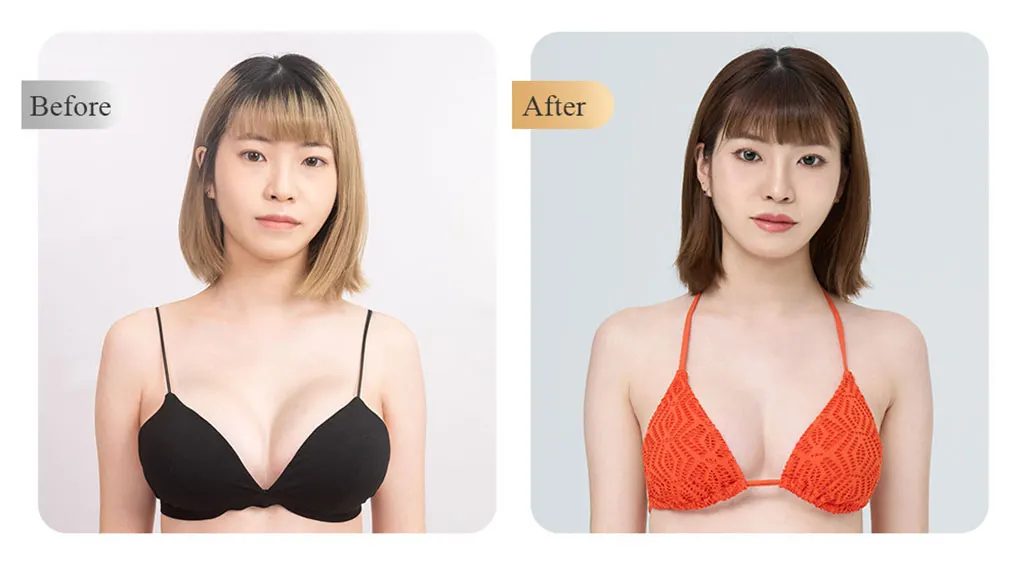
As for appearance, Asian women tend to prefer a naturally draping breast shape, so the most common complaints are an upper chest that is too full, or breasts that do not flatten naturally when lying down. However, after normal breast augmentation it takes 3 to 6 months for the result to look increasingly natural, so if the breasts still don't look very natural 1 to 3 months after surgery, there is no need to be too anxious. Wait until 3 to 6 months and see whether they look natural by then.
The Feel After Surgery Differs From Expectations
The feel may be related to constitution, lifestyle habits, and the volume (cc) of the implant. Young women who have not been through pregnancy and milk engorgement have firmer skin, so if an implant that is too large is placed, the skin looks very tight and the feel is poor. The amount of fat in the breast also strongly affects the feel, especially now that many women's chest fat has decreased because of working out; even with a softer implant, the feel may still fall short of the ideal. Of course, you can also combine it with fat transfer breast augmentation to improve the feel after surgery.
The Size After Surgery Differs From Expectations
If the breasts end up too large or too small, it is usually because the preoperative consultation and communication with the doctor were not thorough! For size issues, we suggest choosing a clinic that offers 3D simulation so you can clearly see the postoperative appearance before surgery.
Part 8: What If I Regret Breast Augmentation? Can the Implants Be Removed?
Implant Removal
Simple implant removal is done through the original incision and does not damage the breast tissue further. Recovery takes about 1 to 3 months, but the breasts will be more deflated or loose than before augmentation, and will improve slightly after about six months. How much they improve depends on how long the implant was in place. If it is removed within 3 to 6 months after augmentation, the effect is smaller; if it is removed after many years, the breasts will definitely become noticeably looser and more sagging because of the lack of support and aging.
Implant Replacement
If the problem is size, you can choose to replace the implant with a larger or smaller volume. Some people also choose newer implants as new products come out (for example, Perle and Motiva 2.0), and some replace the implant because of capsular contracture or rupture (common with early saline implants) with a safer one that has a lower capsular contracture rate.
Removing Implants and Switching to Fat Transfer
Some people choose fat transfer breast augmentation because they fear capsular contracture again. Since the breast has been stretched by an implant before, the skin tissue is less tight than in someone who has never had augmentation, and the breast has more elastic room for fat to fill, so the result after surgery looks more natural and the fat survival rate is higher. Even so, doctors still recommend maintaining your weight or gaining about 2 to 3 kg after surgery.
How Much Do You Know About Breast Augmentation Complications? Understanding "Capsular Contracture"
How Is Breast Augmentation Surgery Done? The Complete Process, Start to Finish!
2023 Breast Implants Compared: Mentor, Sebbin, Motiva: Which Is Best for You?
2023 Implant Evolution! Introducing Motiva 2.0 JOY
This article is for general information only. Results vary from person to person; please consult a doctor in person before deciding on any treatment.